Realistic Simulation in the Primary Assessment of Pre-Hospital Trauma: Satisfaction and Self-Confidence in the Learning of Nursing Technicians and Ambulance Drivers
Abstract:
Objective: To evaluate the experience of realistic simulation in the prehospital setting using the Student Satisfaction and Self-Confidence in Learning Scale (SCLS)
Method: Descriptive, cross-sectional, quantitative study involving 98 prehospital care professionals, nursing technicians, and ambulance drivers at hub B of a regulatory complex in northern Paraná state. The method included briefing, theoretical-practical class, scenario and case simulations, followed by debriefing. Participants completed the SCLS to assess the feelings developed during teaching through realistic simulation
Result: In the overall assessment, the agreement index ranged from 93% to 100% for all questions. In terms of satisfaction, 100% considered that the simulation provided various teaching materials and activities to promote learning (item 2) and liked the way the teacher taught through it (item 3). In terms of self-confidence in learning, 94% agreed that they are developing skills through simulation (item 8)
Conclusion: The realistic simulation generated satisfaction among professionals with the teaching method, while they recognized their shared responsibility in the learning process
Keywords:
job satisfaction; simulation training; nursing professionals; pre-hospital care; emergency medical services
Resumo:
Objetivo: Avaliar a experiência da simulação realística no ambiente pré-hospitalar por meio da Escala de Satisfação e Autoconfiança na Aprendizagem (ESAA)
Método: Estudo descritivo, transversal e quantitativo, participaram 98 profissionais de atendimento pré-hospitalar, técnicos de enfermagem e condutores de ambulância, no polo B de um complexo regulador no norte do estado do Paraná. O método incluiu um briefing, aula teórico-prática, simulações de cenário e caso, seguidas de debriefing. Os participantes preencheram a ESAA para avaliar os sentimentos desenvolvidos durante o ensino por meio de simulação realística
Resultado: Na avaliação geral, o índice de concordância variou entre 93 % e 100 % para todas as questões. Na dimensão satisfação, 100 % consideraram que a simulação forneceu diversos materiais didáticos e atividades para promover a aprendizagem (item 2) e gostaram da forma como o professor ensinou por meio dela (item 3). Na dimensão da autoconfiança na aprendizagem, 94% concordaram que estão desenvolvendo habilidades por meio da simulação (item 8)
Conclusão: A simulação realística gerou satisfação dos profissionais com o método de ensino, ao mesmo tempo em que reconheceram sua corresponsabilidade no processo de aprendizagem
Palavras-chave:
satisfação no trabalho; treinamento por simulação; profissionais de enfermagem; atendimento pré-hospitalar; serviços médicos de emergência
Resumen:
Objetivo: Evaluar la experiencia de la simulación realista en el entorno prehospitalario mediante la Escala de Satisfacción y Autoconfianza en el Aprendizaje (ESAA)
Método: Estudio descriptivo, transversal y cuantitativo, en el que participaron 98 profesionales de la atención prehospitalaria, técnicos de enfermería y conductores de ambulancia, en el polo B de un complejo regulador en el norte del estado de Paraná. El método incluyó una sesión informativa, una clase teórico-práctica, simulaciones de escenarios y casos, seguidas de una sesión de análisis. Los participantes completaron la ESAA para evaluar los sentimientos desarrollados durante la enseñanza mediante la simulación realista
Resultado: En la evaluación general, el índice de concordancia varió entre el 93 % y el 100 % para todas las preguntas. En la dimensión de satisfacción, el 100 % consideró que la simulación proporcionó diversos materiales didácticos y actividades para promover el aprendizaje (ítem 2) y les gustó la forma en que el profesor enseñó a través de ella (ítem 3). En la dimensión de la autoconfianza en el aprendizaje, el 94 % estuvo de acuerdo en que están desarrollando habilidades a través de la simulación (ítem 8)
Conclusión: La simulación realista generó satisfacción entre los profesionales con el método de enseñanza, al tiempo que reconocieron su corresponsabilidad en el proceso de aprendizaje
Palabras clave:
satisfacción laboral; formación en simulación; profesionales de enfermería; atención prehospitalaria; servicios médicos de emergencia
Introduction
Trauma can be understood as a deterioration of the integrity of an individual’s body, which is generally the result of accidents, falls, and other external actions. 1)
Its epidemiology is a matter of extreme importance due to the high rates of hospitalization and mortality both nationally and globally. Data indicate that more than nine people die per minute from trauma or violence. Trauma has a very significant impact, representing 18% of the global cost of disease. Traffic accidents are the leading cause of death from trauma in the world, causing more than one million deaths per year. 2 In Brazil in 2020, traffic collisions alone were responsible for more than 190,000 hospitalizations in public hospitals. 3)
In addition to open fractures and brain injuries, proper trauma management requires a thorough physical examination, highlighting the importance of appropriate planning to find the best solution for the patient’s situation, thus preventing the condition from worsening. This is organized using a protocol that systematizes and standardizes trauma care. The Advanced Trauma Life Support (ATLS) and Prehospital Trauma Life Support (PHTLS) protocols recommend using the XABCDE mnemonic, as well as an approach that prioritizes patient care according to the type of trauma suffered. 1)
Professionals working in prehospital care gain the power to increase life expectancy and quality of life by providing qualified and appropriate care. This can only be achieved if there is a comprehensive understanding of the basic principles of assessment and practices within their competencies. 4)
The use of realistic simulation as an active methodology is an important means of improving trauma care teaching. The use of this active methodology will contribute to self-confidence, the ability to intervene in traumatic accidents, crisis management, leadership, teamwork and critical thinking of students, health professionals and prehospital care care providers. 5)
Pamela Jeffries developed the Nursing Education Simulation Framework, later updated in conjunction with the National League for Nursing (NLN), established the model currently used for nursing applications, NLN/Jeffries Simulation Theory, which presents realistic simulation through three stages: briefing, simulation, and debriefing. In the briefing, the facilitator provides theoretical support, containing all the necessary information for the trainee’s performance during the scenario, as well as instructions on physical space, equipment, time, clinical case and the objective of the experience provided. In the simulation or scenario, the participants involved perform their actions according to what is proposed, and in this way a result of this simulation is created, which depends on the assistance provided in the activity, this being evaluated in the debriefing. In this phase, reflection and discussion takes place between the facilitator and all those involved, to observe positive points and errors in the simulation in a broad way, always based on scientific evidence. 6)
Evaluating this active methodology and its progress is essential to promote improvements, ensuring a coherent and impartial analysis, it is recommended to use a scientifically tested and approved tool. In this way, the simulation results will be evaluated according to the complexity and objectives defined previously. 7)
Furthermore, it is possible to apply the Student Satisfaction and Self-Confidence in Learning Scale (SCLS), presented by the NLN, which aims to measure the individual’s satisfaction and self-confidence acquired through high-fidelity simulation. The scale is a five-point Likert scale, which has a non-applicable option when the participant considers that it does not relate to the simulated activity performed, consisting of 13 items, divided into two dimensions, satisfaction, composed of five items, and self-confidence in learning, composed of eight items. 8)
SCLS aims to demonstrate the fundamental role of satisfaction and self-confidence within simulated teaching. Satisfaction, when associated with simulation, refers to the pleasure and contentment of performing correct actions in that experience. In turn, self-confidence represents the reflected conviction of one’s own judgment, the security that the act performed was accurate. Obtaining this confidence is essential for the transition from theoretical knowledge to practice. 9)
This research is valuable because it focuses on continuing education, a fundamental aspect for the constant improvement of professionals already trained and working in their fields. In a scenario of rapid social, technological, and methodological transformations, the continuous updating of knowledge becomes essential to guarantee the quality of services provided, adaptation to new demands, and the strengthening of professional competencies. In this context, simulation not only improves technical skills but also team leadership skills, which are extremely important in emergency situations, enhancing practical learning and preparedness for critical contexts. In addition to promoting technical development, continuing education encompasses not only specific content in the field of work but also these “team leadership” skills, which are extremely important in emergency situations. By investigating the practices, challenges, and impacts of continuing education, this study contributes to the development of more effective lifelong learning strategies, reinforcing the commitment to excellence and professional responsibility.
Finally, an analysis of the data provided by the SCLS through its questions is extremely valuable to verify the effectiveness and importance of this active methodology for participants. In this sense, the objective was to evaluate the experience of realistic simulation in the pre-hospital environment using the SCLS.
This article explores the relevance of realistic simulation as an active methodology in pre-hospital trauma care, highlighting its role in the training of healthcare professionals. Initially, it addresses the epidemiology of trauma and the importance of proper management based on recognized protocols. Next, it presents realistic simulation as a pedagogical tool grounded in the NLN/Jeffries Simulation Theory. Finally, it proposes an evaluation of this methodology using the Student Satisfaction and Self-Confidence in Learning Scale, reinforcing the impact of continuing education on professional development and improved patient care.
Methodology
This is a descriptive, quantitative, cross-sectional study. It was conducted using the SCLS, in Portuguese, translated and validated by Almeida et al., 2015, and was applied to nursing technicians and ambulance drivers who participated in training with realistic simulation in the primary assessment of pre-hospital trauma. 8)
The training was conducted in the municipality that is the headquarters of the Advanced Life Support unit of the B region of the Mobile Emergency Care Service (SAMU) 17th region of the state of Paraná, from December 2021 to March 2022. The study population consisted of 98 professionals who, through their municipal managers, were informed about the training project and expressed their willingness to participate voluntarily after the invitation was extended. Region B comprises 14 municipalities, which will henceforth be referred to as municipalities one through fourteen. The professionals work in municipal hospitals and ambulances, providing prehospital care in urgent, emergency, and trauma situations in the surrounding cities and highways.
A pre-briefing and briefing were conducted through a theoretical and practical update of the primary trauma care protocol (XABCDE). The information about the case was presented, along with the materials and equipment available for treatment, as the participants deemed necessary. They were informed that the treatment would take 10 minutes, acting according to the trauma care protocol previously presented. With the realistic simulation scenario organized, the participants were divided into pairs based on compatibility; the others waited in an isolated and supervised location, avoiding visualization of the scenario.
The case to be handled by the participants involved a motorcycle collision with a barrier at a speed of 100 km/h. The driver lost control of the motorcycle and collided with a wall, becoming unconscious. The victim was a male, approximately 40 years old. The scene was witnessed by a passerby who, after the collision, approached the victim, removed the helmet, and ran to the city hospital for help. The victim was a trained actor capable of simulating the signs of airway obstruction by blood, followed by mental confusion after airway clearance, with periorbital and right retroauricular hematoma, abrasions all over the body, no fractures in extremities, and an open wound in the chest with signs of pneumothorax.
Throughout the care provided, the professionals were observed by 5 experienced prehospital care nurses, including 2 specialists in emergency and urgent care nursing, 1 Master’s degree holder and 2 Doctoral candidates in nursing with experience in simulation, where the checklist for care of polytrauma patients was completed, respecting the modified trauma care checklist of the World Health Organization (WHO), as the use of the checklist in the evaluation of care for trauma victims has contributed to improving care, minimizing errors and increasing the quality of life of patients. 10)
In this study, the facilitator, a Master’s student and specialist in interventional nursing with an emphasis on urgent and emergency care and critical care patients, with experience in simulation, conducted the scenario and debriefing.
At the end of the simulation, the pair of professionals were directed to a private room along with the facilitator for a debriefing session focused on sound judgment, also known as Promoting Excellence and Reflective Learning in Simulation (PEARLS), which brings together three strategies: when the facilitator stimulates the participant’s emotions during the simulation (self-assessment), being able to provide help to reframe feelings (focused discussion facilitation) so that they can achieve the best results (directive feedback and/or teaching), as PEARLS provides an adaptable framework, which includes decision-making, improvement of skills and techniques based on analysis and reflection. 11,12)
The satisfaction and self-confidence in learning were measured by the Student Satisfaction and Self-Confidence in Learning Scale (SCLS), validated for the Brazilian context, 8 that shows good internal consistency, with a Cronbach’s alpha greater than 0.80, which demonstrates adequate reliability of the instrument. The SCLS follows the Likert-scale pattern, which is easy to understand and self-administered, where each item corresponds to a value/point capable of measuring behavioral sciences as they will provide the degree of agreement. 13 Within the responses evaluated in the SCLS, the agreement index of the presented responses was used, regarding the representativeness of the items in relation to the content under study, which was divided into two dimensions: satisfaction, with five items (questions 1 to 5), and self-confidence, with eight items (questions 6 to 13). The response options in the SCLS are 1: Strongly disagree with the statement, 2: Disagree with the statement; 3: Undecided/neither agree nor disagree with the statement, 4: Agree with the statement and 5: Strongly agree with the statement. Thus, for the evaluation of the scale, the agreement index considered the sum of responses “4” and “5” as the best responses, both for the evaluation of each item and for the overall evaluation of the instrument.
The purpose of the SCLS was to evaluate participants’ perceptions of the teaching methods used in the simulation. This included analyzing the variety of teaching materials and activities provided during the simulation, evaluating how the teacher conducted the teaching through the simulation, and the effectiveness of the teaching materials in motivating and contributing to learning. Furthermore, participants assessed the suitability of the teaching method using the simulation, as well as their perception of confidence and mastery of the activity’s content. The SCLS also addressed whether the simulation included the necessary content for mastering the subject matter and whether it was possible to develop essential skills and acquire knowledge through it. Participants also recognized the individual responsibility to learn what is necessary during the simulation activity, as well as the importance of the teacher’s role in guiding what needs to be learned in the topic developed during the simulation. These aspects were the main focus of analysis in the SCLS. Thus, in this study, the most relevant items of the SCLS were listed: items 2, 3, 6, 8, 10 and 13.
The data were entered and organized using the Statistical Package for the Social Sciences (SPSS), version 30 (IBM, 2023), which enabled the systematization and statistical treatment of the collected information. The analysis was quantitative and descriptive in nature, expressed in absolute and relative values (frequencies and percentages) for categorical variables such as sex, professional category, level of education, completion of a trauma course, and self-perception of competence. Results regarding self-confidence in learning were presented using percentage agreement indices, highlighting the degree of acceptance by participants in relation to the statements proposed in the assessment instrument. Thus, the analysis was eminently descriptive, allowing for the interpretation of the distributions and trends observed in the data. This research was authorized by all participating municipalities and approved by the Research Ethics Committee (CEP) of a public university in Paraná, under number 4.880.119 and CAE number 28941520.3.1001.5231, version 3.
Results
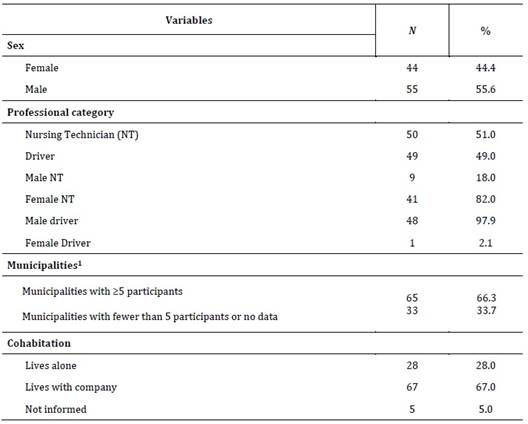
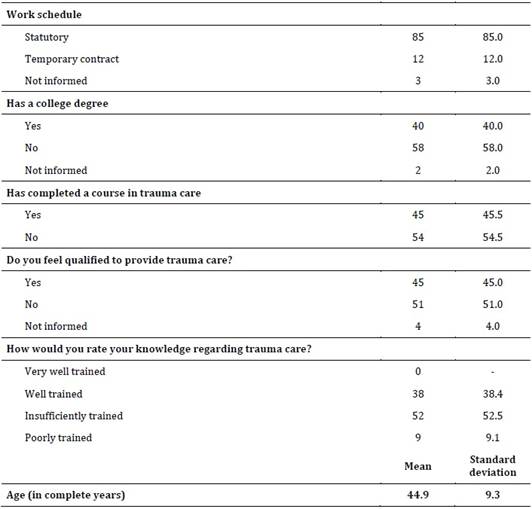
Regarding the profile of the study participants, it was found that 44 (44.4 %) were female and 55 (55.6 %) were male, with an average age of 44.9 years. In terms of professional category, 50 (51 %) were nursing technicians and 49 (49 %) were drivers. Of these, only 45 (45.5 %) had completed a trauma care course, while 54 (54.5 %) had not. Regarding higher education, 40 (40 %) had a degree and 58 (58 %) did not. Prior to the simulation, when asked how they rated their knowledge regarding trauma care, 38 (38.4 %) rated themselves as well-trained, 52 (52.5 %) as insufficiently trained, and 9 (9.1 %) as poorly trained.T4 T5
Sociodemographic and professional characteristics of the participants. Northern Paraná, Brazil, 2022
Of all 14 municipalities invited to participate in the simulation, the municipality with the highest number of participants was municipality number six, with 29 participants (29.6 %), followed by municipality number one, with 14 participants (14.3 %). Five municipalities had no participants, totaling nine municipalities that are part of pole B of a SAMU regulatory complex in northern Paraná. T6
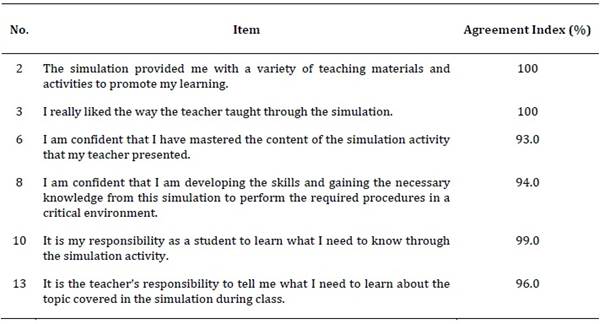
Descriptive statistics of the most relevant items in the assessment and self-confidence in learning of pre-hospital professionals who participated in the realistic simulation. Paraná, Brazil, 2024
In the satisfaction dimension, 100% considered that the simulation provided a variety of teaching materials and activities to promote learning (item 2) and how the teacher taught me through the simulation (item 3). Items six (confidence in mastering the content of the simulation activity presented by my teacher) and eight (confidence in developing skills and obtaining the necessary knowledge from this simulation), referring to the self-confidence in learning dimension, showed 93 % and 94 % respectively in situations involving trauma, critical environments, and actions that would have to be taken to save a life.
Regarding the items that address responsibility, 96 % of participants agreed that it is the teacher’s responsibility to tell them what they need to learn (item 13), and 99 % agreed that the responsibility lies with the student participating in the simulation (item 10).
The agreement index for the 13 questions related to learning and simulation ranged from 93 % to 100%, with an average of 97.6 % for learning and 98.2 % for simulation, indicating an excellent agreement index in both situations, since, as one author 15) states, the minimum value for the agreement index should be 80 %, as it justifies the “importance of this consensus value to be recognized”. 13)
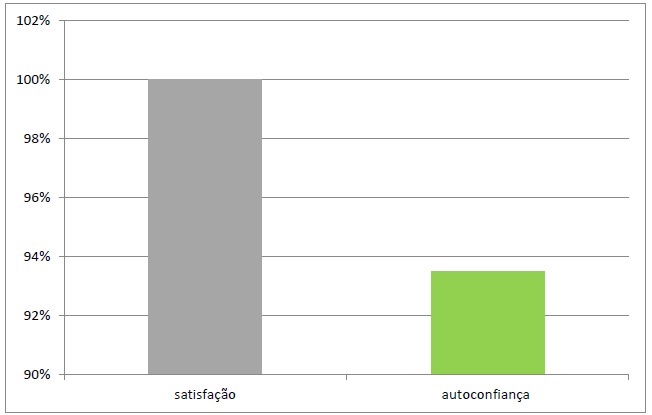
Although the composite items for assessing self-confidence had the lowest agreement rates across the entire scale, compared to the satisfaction items, they still prove that participants who considered themselves less qualified in this type of training felt more confident by having this practice scenario, even though they still felt insecure due to the simulation’s theme. F2
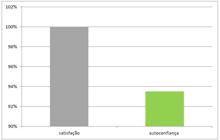
Comparison of the mean percentages of the dimensions of satisfaction (satisfação) and self-confidence (autoconfiança) in learning among prehospital care professionals who participated in the realistic simulation. Paraná, Brazil, 2024.
High agreement is observed in both dimensions, with a slight predominance in satisfaction (100%) compared to self-confidence (97.6 %).
Discussion
Based on the results obtained, the scale sought to identify the evaluation of extra-hospital professionals regarding the satisfaction and self-confidence experienced through simulation for providing care for trauma victims, and the items were sufficient to assess the event studied.
Analysis of these dimensions using the Student Satisfaction and Self-Confidence in Learning Scale showed that the items with the highest agreement are those belonging to the assessment of participant satisfaction, while those with the lowest agreement are present in the assessment of confidence. This shows that participants feel more satisfied than self-confident, just as articles that used the same scale obtained similar results. 13,16-18)
Participant satisfaction may be related to contextual factors, such as the learning environment they experienced, the quality of the instructor’s mediation, and the pedagogical resources available during the simulation. These elements contribute to a positive and motivating experience, which can directly influence the perception of satisfaction with the simulation activity. On the other hand, self-confidence may require a more prolonged consolidation process, being less susceptible to immediate changes after a single participation in a simulation session, especially when dealing with highly complex situations such as trauma care. Therefore, studies that explore the relationship between satisfaction and self-confidence in greater depth can reinforce the understanding of these constructs and how they connect in the learning process through clinical simulation, offering a basis for improving teaching practices and assessment tools.
In one study, the author agrees with the results obtained in this research, which, according to the scale, showed excellent responses, good participant performance, with averages of 4.0-4.8 across all items. 16) The participants in this simulation were students who obtained a higher level of agreement on item 13 (teacher responsibility) with an average of 4.7, showing a discrepancy in results with the present study. Unlike other research, 14) which shows item 13 as having the lowest average score (3.7), disagreeing with the fact that the teacher is primarily responsible for providing what participants should learn. The study was developed with health professionals, corroborating the present study, which strengthens the idea that the main person responsible for learning is the simulation participant themselves, with an average of 4.6 in item 10 (responsibility of the participant/student).
This shows that, due to the profile of the participants, as trained professionals already working in the market, the majority believe that knowledge of trauma situations should be learned and developed independently through simulation. However, even with a lower agreement rate, as in item 13, the instruction provided in the theoretical class prior to the simulation is essential, and there must be a balance between the two actors (teacher and student) within this high-fidelity instruction to achieve better results and learning.
The healthcare field is constantly changing; it is necessary to stay updated, thus the importance of training and development opportunities for trained professionals. In a survey conducted, nurses highlighted the great importance of permanent and continuing education. This is because they recognize that this approach serves as an essential tool to improve and update their professional practices, allowing the exchange of experiences with the team and thus providing more effective care to users of the health system. 19)
The participation of professionals in simulations not only enhances their technical skills, but is also fundamental to strengthening their self-confidence and job satisfaction. Simulated scenarios offer professionals the chance to face challenges, risk free, promoting a sense of mastery and competence.
In one study, two groups of nurses were selected, a control group (CG) and an experimental group (EG), where respectively, one participated in the simulation activity and the other obtained the simulation strategy combined with theory. 5) The result was a higher level of self-confidence in the EG than in the professionals exposed to simulation alone.
In this same context, satisfaction and self-confidence are correlated in the learning process, specifically, theoretical classes and teaching materials prior to realistic simulation, as an example item 2 (simulation provided a variety of teaching materials and activities to promote learning) in the present research, which obtained a 100% agreement rate. A study by other authors had a similar result, with 94.3 % agreement on the same item. 20)
In light of this, nursing is a profession that demands a balanced combination of theoretical knowledge and practical skills due to its complexity. Therefore, it plays a crucial role in professional development and in providing quality healthcare.
Nursing values care based on ethical and collective principles and commitments and patient safety. Understanding these fundamentals is essential for improving teaching practices, contributing to a more solid, comprehensive and effective training of future professionals. This enables them to face complex challenges and to act ethically, reflectively and humanely in the exercise of the profession. 21)
Current research revealed that the lowest agreement rates were recorded in item 6, with 93 %, which addresses self-confidence regarding the content of the simulation, and in item 8, with 94 %, which is characterized by confidence in the development of skills and knowledge in relation to the simulation. Confidence is an indispensable variable in nursing education, because when individuals possess this feeling, they tend to develop interventions and conduct in a safer and more effective way. Acquiring theoretical knowledge and recognizing one’s own ability to perform a given function are essential elements in this process.
In healthcare, self-confidence plays an essential role, especially for the critically ill patient, who is in a serious condition, with an imminent risk of worsening or even death. The patient is vulnerable, clinically fragile, and needs immediate care. Consequently, the impact of self-confidence, or the lack thereof, on patient care directly reflects on the quality of care provided, positively or negatively influencing the patient’s clinical outcome. 22)
The study showed high agreement in both dimensions assessed, with a slight predominance in satisfaction (100%) compared to self-confidence (97.6 %). This finding corroborates recent studies, which indicate that clinical simulation tends to generate high levels of satisfaction among participants, as simulation promotes active involvement and a positive perception of learning, even if self-confidence presents subtle variations among individuals. 23)
The slight superiority of satisfaction in relation to self-confidence may suggest that participants feel fully satisfied with the methodology employed, although they may still present slight insecurities regarding the practical application of the acquired knowledge, a common aspect in simulated learning environments. The support of the recent reference 23) strengthens the credibility of the interpretation, showing alignment with the current literature on the positive impact of simulation in nursing education. Another study conducted in the Philippines 24) found that 4th year nursing students showed high levels of satisfaction (~4.46/5) and self-confidence (~4.44/5) with simulation-based learning, which was related to the characteristics of the simulation design and correlated with these results.
Study Limitations
This study presents some limitations that should be considered when interpreting the results. Firstly, it is a cross-sectional design, which does not allow for inferring causal relationships between participation in the simulation and the levels of satisfaction and self-confidence of the professionals. Furthermore, the sample was one of convenience and voluntary participation, composed of professionals indicated by municipal managers, which limits the generalization of the findings to other pre-hospital populations. Another point is the use of a self-report instrument (SCLS), susceptible to social desirability bias, which may overestimate the perception of satisfaction and self-confidence. Finally, a longitudinal evaluation was not performed, making it impossible to analyze the long-term impact of the simulation on clinical practice.
Practical implications
Despite the limitations, the results reinforce the relevance of realistic simulation as an active methodology in the training of pre-hospital professionals. The high levels of satisfaction and self-confidence observed indicate that periodic simulation sessions can significantly contribute to continuing education, strengthening the technical and psychological preparedness of professionals in critical situations. The systematic implementation of this pedagogical approach has the potential to positively impact on the quality of patient care, promoting safety, continuous updating, and greater competence in trauma cases. Furthermore, the integration of simulations into regular training programs can stimulate critical reflection, safe decision-making, and shared responsibility between professionals and instructors, strengthening the healthcare system as a whole.
Therefore, it can be considered that the simulation has a positive result according to SCLS, demonstrating in its participants great satisfaction in obtaining the opportunity to simulate a critical experience lived in their daily lives with safety and foundation, seeking to improve their services.
Conclusion
This study made it possible to measure the satisfaction and self-confidence of pre-hospital professionals from nine municipalities in northern Paraná after a realistic simulation.
The results revealed that healthcare professionals felt more satisfied than self-confident, although the values found were high (93%), and agreed that learning from the provided education is their own responsibility, thus making it essential for them to continuously seek improvement in their field of work.
Realistic simulation has had a positive impact on the satisfaction of trained professionals. The combination of theory with active methodology provided workers with updated knowledge and improved skills.
Therefore, it can be concluded that satisfaction and self-confidence are directly involved in the learning process, in the acquisition of knowledge, and in decision-making. This research also highlighted the importance of continuing education for already graduated healthcare professionals, providing a judgment-free environment where they can clarify doubts and improve their skills. In this way, the aim is to ensure safe and qualified patient care.
References
- 1. Fidélis GR. Satisfação dos estudantes de enfermagem frente à simulação realística no ensino do trauma (Trabalho de conclusão de curso). São Paulo, Brasil: Fundação Educacional do Município de Assis (FEMA); 2021.
- 2. Advanced Trauma Life Support. Manual do Curso de Alunos. 10ª ed. Chicago: American College of Surgeons; 2018.
-
3. Secretaria de Vigilância em Saúde e Ambiente. Cenário brasileiro das lesões de motociclistas no trânsito de 2011 a 2021 (Internet). Bol Epidemiol. 2023;54(6). Disponível em: https://www.gov.br/saude/pt-br/centrais-de-conteudo/publicacoes/boletins/epidemiologicos/edicoes/2023/boletim-epidemiologico-volume-54-no-06/
» https://www.gov.br/saude/pt-br/centrais-de-conteudo/publicacoes/boletins/epidemiologicos/edicoes/2023/boletim-epidemiologico-volume-54-no-06/ - 4. National Association of Emergency Medical Technicians. Prehospital Trauma Life Support (PHTLS). 9ª ed. Burlington: Jones & Bartlett Learning; 2019.
-
5. Mesquita HCT, Santana BS, Magro MCS. Efeito da simulação realística combinada à teoria na autoconfiança e satisfação de profissionais de enfermagem. Esc Anna Nery. 2019;23(1):e20180270. doi: 10.1590/2177-9465-EAN-2018-0270
» https://doi.org/10.1590/2177-9465-EAN-2018-0270 - 6. Jeffries PR, Rogers KJ. Simulation in Nursing Education: From Conceptualization to Evaluation. 2ª ed. New York: National League for Nursing; 2012.
- 7. Conselho Regional de Enfermagem do Estado de São Paulo. Manual de Simulação Clínica para Profissionais de Enfermagem. São Paulo: COREN-SP; 2020.
-
8. Almeida RGS, Mazzo A, Martins JCA, Baptista RCN, Girão FB, Mendes IAC. Validação para a língua portuguesa da Simulation Design Scale. Texto Contexto Enferm. 2015;24(4):934-940. doi: 10.1590/0104-0707201500004570014
» https://doi.org/10.1590/0104-0707201500004570014 -
9. Costa RRO, Medeiros SM, Coutinho VRD, Mazzo A, Araújo MS, Feitosa RMM. Satisfação e autoconfiança na aprendizagem de estudantes de enfermagem: ensaio clínico randomizado. Esc Anna Nery. 2020;24(1):e20190094. doi: 10.1590/2177-9465-EAN-2019-0094
» https://doi.org/10.1590/2177-9465-EAN-2019-0094 -
10. Lashoher A, Schneider EB, Juillard C, Stevens K, Colantuoni E, Berry WR, et al. Implementation of the World Health Organization Trauma Care Checklist Program in 11 centers across multiple economic strata: effect on care process measures. World J Surg. 2017;41(4):954-962. doi: 10.1007/s00268-016-3759-8
» https://doi.org/10.1007/s00268-016-3759-8 -
11. Oliveira TMN, Dellaroza MSG, Martins EAP. Avaliação do debriefing na simulação realística da reanimação cardiopulmonar para profissionais socorristas. Int J Dev Res. 2021;11(5):47077-47081. doi: 10.37118/ijdr.21966.05.2021
» https://doi.org/10.37118/ijdr.21966.05.2021 -
12. Eppich W, Cheng A. Promovendo excelência e aprendizagem reflexiva em simulação (PEARLS): desenvolvimento e fundamentação para uma abordagem combinada de análise de simulação de cuidados de saúde. Simul Healthc. 2015;10(2):59-65. doi: 10.1097/SIH.0000000000000072
» https://doi.org/10.1097/SIH.0000000000000072 - 13. Pereira MGN. Simulação clínica no manejo das vias aéreas com máscara laríngea (Tese de doutorado). Londrina: Universidade Estadual de Londrina; 2024.
-
14. De Rocco KMW, Pereira MGN, Almeida CL, Haddad MCL, Martins EAP. Realistic simulation as a training strategy for the health team. Enfermería: Cuidados Humanizados. 2023;12(2):e3329. doi: 10.22235/ech.v12i2.3329
» https://doi.org/10.22235/ech.v12i2.3329 - 15. Pasquali L. Testes referentes a construto: teoria e modelo de construção. In: Pasquali L, organizador. Instrumentação psicológica: fundamentos e práticas. Porto Alegre: Artmed; 2010, p. 165-198.
-
16. Almeida CL. Simulação realística: estratégias de ensino-aprendizagem no atendimento ao trauma (Tese de doutorado). Londrina: Universidade Estadual de Londrina ; 2022. Disponível em: https://repositorio.uel.br/srv-c0003-s01/api/core/bitstreams/fa85aa39-12da-4ce0-915b-7f2d66fef799/content
» https://repositorio.uel.br/srv-c0003-s01/api/core/bitstreams/fa85aa39-12da-4ce0-915b-7f2d66fef799/content -
17. Meska MHG, Franzon JC, Cotta Filho CK, Pereira Junior GA, Mazzo A. Satisfaction and self-confidence of nursing students in simulated scenarios with the use of unpleasant odors: randomized clinical trial. Sci Med. 2018;28(1):e31051. doi: 10.15448/1980-6108.2018.1.28693
» 10.15448/1980-6108.2018.1.28693 -
18. Souza CC, Santos WG, Salgado PO, Prado Junior PP, Toledo LV, Paiva LC. Avaliação da “satisfação” e “autoconfiança” em estudantes de enfermagem que vivenciaram experiências clínicas simuladas. Rev Esc Enferm USP. 2020;54:e03628. doi: 10.1590/S1980-220X2018038303583
» https://doi.org/10.1590/S1980-220X2018038303583 -
19. Caetano MGL, Oliveira DM de, Polati AM, Aleixo MT, Aleixo MT, Amaral V de S. Educação permanente no âmbito do sistema único de saúde: um enfoque para as expectativas de enfermeiros da estratégia de saúde da família. Pesq Proced Enferm. 2023;2:26-41. doi: 10.51859/amplla.ppe3149-2
» https://doi.org/10.51859/amplla.ppe3149-2 -
20. Teixeira A, Tavares JP, Cogo ALP. Satisfação e autoconfiança de estudantes de enfermagem como atuantes e observadores em simulação realística. Rev Gaúcha Enferm. 2022;43:e20210344. doi: 10.1590/1983-1447.2022.20210344.pt
» https://doi.org/10.1590/1983-1447.2022.20210344.pt - 21. Abreu Filho HM. Avaliação de práticas educativas, satisfação e autoconfiança na aprendizagem em estudantes de enfermagem (Dissertação). São Paulo: Universidade Federal de São Paulo; 2023.
-
22. Almeida RGS, Mazzo A, Martins JCA, Baptista RCN, Girão FB, Mendes IAC. Autoconfiança no cuidado ao paciente crítico: pré e pós-intervenção simulada. Rev Bras Enferm. 2019;72(6):1618-1623. doi: 10.1590/0034-7167-2018-0640
» https://doi.org/10.1590/0034-7167-2018-0640 -
23. Silva LM, Oliveira RA, Santos PF. Simulação clínica e desenvolvimento de competências em enfermagem: percepção de satisfação e autoconfiança dos estudantes. Rev Bras Enferm. 2023;76(4):e20230045. doi: 10.1590/0034-7167-2023-0045
» https://doi.org/10.1590/0034-7167-2023-0045 -
24. Gaspar AD, Banayat AC. Undergraduate Student Nurses’ Satisfaction, Self-confidence, and Perception of High-fidelity Simulation-based Learning on Critically-ill Patients. Acta Med Philipp. 2024;58(12):110-117. doi:10.47895/amp.v58i12.10240
» https://doi.org/10.47895/amp.v58i12.10240