Breastfeeding Practices and Care Among Mothers in a Primary Health Facility
Abstract:
Objective: To analyze the relationship between breastfeeding practices and mothers’ perception of the quality of care for their children under 1 year of age in a primary health care center in Peru.
Methods: A quantitative method, analytical type of research and cross-sectional design were used in a sample of 202 mothers of children under 1 year of age from the Growth and Development Control area of the Mazamari Health Center, using the SERVQUAL instrument and a questionnaire on exclusive breastfeeding practices.
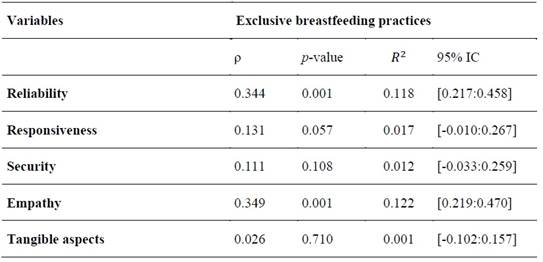
Results: Exclusive breastfeeding practices were significantly related, with weak magnitude and positive direction with the dimensions of quality of care: reliability (ρ = 0.344; p = 0.001) and empathy (ρ = 0.349; p = 0.001); however, no significant correlation was found between responsiveness (p = 0.057), safety (p = 0.108) and tangible aspects (p = 0.710).
Conclusion: Higher levels of trust in health professionals and empathy of health personnel are related to exclusive breastfeeding practices in mothers of children under 1 year of age who attended the Mazamari Health Center.
Keywords:
breast feeding; quality assurance; health care
Resumen:
Objetivo: Analizar la relación de las prácticas de lactancia materna y percepción de las madres sobre la calidad de atención a sus niños menores de 1 año en un centro de salud de atención primaria en Perú.
Materiales y método: Se siguió un método cuantitativo, tipo de investigación analítico y diseño transversal en una muestra de 202 madres de niños menores a 1 año del área de Control de Crecimiento y Desarrollo del Centro de Salud Mazamari, mediante el instrumento SERVQUAL y un cuestionario sobre prácticas de lactancia materna exclusiva.
Resultados: Las prácticas de lactancia materna exclusiva se relacionaron significativamente, con magnitud débil y dirección positiva con las dimensiones de calidad de atención: fiabilidad (ρ = 0.344; p = 0.001) y empatía (ρ = 0.349; p = 0.001); sin embargo, no se encontró correlación significativa entre capacidad de respuesta (p = 0.057), seguridad (p = 0.108) y aspectos tangibles (p = 0.710).
Conclusión: Mayores niveles de confianza en los profesionales de salud y empatía del personal de salud se relacionan con las prácticas de lactancia materna exclusiva en madres de niños menores a 1 año que acudieron al Centro de Salud Mazamari.
Palabras clave:
lactancia materna; garantía de la calidad; atención de salud
Resumo:
Objetivo: Analisar a relação entre as práticas de amamentação e a percepção das mães sobre a qualidade do atendimento aos seus filhos menores de 1 ano em um centro de saúde de atenção primária no Peru.
Materiais e métodos: Foi utilizado um método quantitativo, com um tipo de pesquisa analítica e desenho transversal em uma amostra de 202 mães de crianças menores de 1 ano na área de Controle de Crescimento e Desenvolvimento do Centro de Saúde Mazamari, por meio do instrumento SERVQUAL e um questionário sobre práticas de amamentação exclusiva.
Resultados: As práticas de amamentação exclusiva apresentaram uma relação significativa, com magnitude fraca e direção positiva, com as dimensões de qualidade de atendimento: confiabilidade (ρ = 0,344; p = 0,001) e empatia (ρ = 0,349; p = 0,001); no entanto, não foi encontrada nenhuma correlação significativa entre capacidade de resposta (p = 0,057), segurança (p = 0,108) e aspectos tangíveis (p = 0,710).
Conclusão: Níveis mais altos de confiança nos profissionais de saúde e empatia da equipe de saúde estão relacionados às práticas de amamentação exclusiva em mães de crianças menores de 1 ano que frequentaram o Centro de Saúde Mazamari.
Palavras-chave:
amamentação; garantia da qualidade; atenção à saúde
Introduction
In recent decades, the quality of healthcare has emerged as a global issue, leading to increased morbidity and higher costs associated with maintaining the overall health of citizens. 1 In this context, low levels of care quality have become one of the main barriers to address public health challenges. 2
Despite its implications for citizens’ adherence to national health coverage, current evidence suggests that the quality care remains suboptimal, particularly in low and middle-income countries, where issues such as service efficiency, equity, and follow-up have been problematic. 3
The quality of healthcare refers to the degree to which health services provided to the population meet standards and align with efficient practices to satisfy health demands. This includes trust in the staff, perceptions of institutional responsiveness, perceived safety in intervention procedures, and the availability of tangible resources, such as technology, in health centers. 4,5
At the international level, the Western Pacific region has focused on strengthening both individual and systemic capacities to assess quality of care outcomes, accountability, and action-oriented measures for improvement. (6) In Asia, studies have shown that conditional incentives and improved services have been linked to significant improvements in quality-of-care indicators and client satisfaction within healthcare institutions. 7)
One of the main outcomes of improved care quality is a reduced risk of death among vulnerable populations such, as infants, 8 which in turn lowers long-term chronic care costs, reduces economic productivity loss, and prevents chronic diseases. 9,10) As a result, prioritizing the quality of care has led to better public health outcomes from the earliest stages of life. For instance, the implementation of international breastfeeding programs has increased breastfeeding practices by 30%, improving the quality of care for infants and children. 11,12 In fact, international maternal breastfeeding programs have resulted in a 30 % increase in breastfeeding rates, compared to 26 % in cases of poor care. 13
In Latin American, improvements in care quality based on facility infrastructure, equipment and supply hygiene, accountability and public transparency have been associated with high levels of service satisfaction. 14 However, accessibility (74.51 %) and care coordination (56.86 %) have been among the least addressed indicators of care quality. 15 Similar to global trends, the focus on quality of care in maternity care in Latin America has prevented approximately 13,000 infant deaths, mainly through the promotion of breastfeeding. 16,17 This underscores the urgent need for public health initiatives to promote breastfeeding guidelines as a strategy to improve child survival rates.
On the national level, a moderate quality of care has been reported among 37.9 % to 39.2 % of patients attending health centers. 18 Additionally, at more specific levels, a higher proportion of participants rated quality of care as moderate in the following dimensions: reliability (52.2 %), responsiveness (50 %), safety (50 %), empathy (53 %), and tangible elements (54.5 %). 19
Consequently, quality of care levels have positively impacted the management of physical diseases across different age groups 21 and improved the organizational environment of healthcare institutions. 22 Therefore, quality of care represents a key pillar of public health, particularly in primary care, as it serves as the first point of contact for mothers, 23 and offers a cost-effective strategy for improving health outcomes in low-resource settings. 23,24 Despite its significance, primary care faces barriers such as late referrals, inadequate health worker and poor infrastructure which hinder the provision of adequate quality maternal healthcare. 25
The deficiencies in primary care have led to a perception of poor quality of care, resulting in lower utilization of maternal health services, particularly during critical periods such as labor and delivery. 26) During the pandemic, these vulnerabilities in primary care systems became even more apparent, emphasizing the need to improve service delivery and integrate mental health services into maternal care. 26
In this regard, comprehensive initiatives aimed at improving the quality of maternal care have been shown to increase breastfeeding rates, including practices like skin-to-skin contact immediately after birth and exclusive breastfeeding. 12,27 However, these initiatives should be integrated with health personnel training to further enhance breastfeeding initiation and continuation rates. 28
In the context of developing countries, there is evidence of a greater impact on the quality of primary care, leading to lower rates of breastfeeding initiation and duration, particularly among the most vulnerable populations. 29 Its effects on maternity care extend to infant care, 30 respectful maternity care, 31 childbearing labor, 32 and the social processes surrounding childbirth. 33
For this reason, the international community has recognized the need to end hunger and achieve food security in alignment with the Sustainable Development Goals (SDGs).34,35) Likewise, scientific literature has highlighted that exclusive breastfeeding provides multiple benefits for newborns, such as the transfer of various immunological properties and improved digestion. It also contributes to the maturation of organs such as the lungs and digestive tract, facilitates brain maturation and neurological development, and is associated with a higher IQ. 36
Recent studies have aimed to include indicators of exclusive breastfeeding to evaluate its impact on the quality of health care. 37) Additionally, programs focused on improving the quality of maternal care have been developed to promote the holistic development of childcare, with an emphasis breastfeeding. 38
In this context, it is of vital importance to evaluate how mothers attending the Control of Growth and Development (CRED) service benefit, as their participation in this unit contributes to improved infant health. CRED, also known as “well-child checkups”, plays a key role in ensuring the overall well-being of children by monitoring infants’ weight and height, assessing psychomotor skills; ensuring the timely administration of vaccines according to the established schedule; providing age-appropriate iron supplements in the form of drops or syrup, offering guidance on proper childcare and screening for diseases such as anemia and parasitosis. 39
Despite the importance previously described, few studies have directly addressed the relationship between these variables. Therefore, the objective of this study was to analyze the relationship between breastfeeding practices and mothers’ perceptions of the quality of care for their children under one year of age attending the Mazamari Health Center in 2023.
Materials and Methods
The study had a quantitative approach, as it employed logical methods to test the hypotheses and allowed for the objective measurement of the study variables. 40,41 It was based on an analytical typology, as it examined the structure of relationships between the study variables based on the sample units. 42 The research design was cross-sectional with exposure to the instruments measured at a specific point in time, allowing researchers to identify associations between variables without establishing causality. 43
The sample size was calculated using the G*’Power sample analysis package with the exact test of normal bivariate correlations, with an a priori calculation setting the parameters at: No. tails: 2; 𝜌 𝐻𝑖 = 0.25; α = 0.05; 1- α = 0.95; 𝜌 𝐻𝑜 = 0.00. A critical value was obtained with a power of 95.068 % CI (-0.138:0.138) representing a sample equivalent to 202 mothers of children under one year of age attending the Mazamari Health Center in the CRED service between the second week of November 2023 and the second week of December 2023. Participants were selected according to eligibility criteria. The study included: mothers with children under 1 year of age who attended during the selected period, who belonged to the district of Mazamari and who voluntarily agreed to participate in the study. The exclusion criteria were: mothers who had children under 1 year of age and who had a medical history that prevented them from communicating; mothers who did not regularly attend the Mazamari Health Center, specifically the CRED service.
In this way, a non-probabilistic sampling criterion was established, as the equal probability of users being selected for the study sample was not guaranteed. The selection was based on convenience, meaning participants were chosen according to their proximity to the researcher, specifically those who attended within the established time period.44
Measuring Instruments
The SERVQUAL service quality instrument, developed by Zeithaml et al. 45 in the United States, is a questionnaire designed to determine service quality. It was applied to a population of 56 external users at the HHV Rehabilitation Center. This questionnaire consists of 22 items of Expectations and 22 for Perception, with an individual completion time of approximately 20 minutes. It employs an ordinal measurement scale, rating from 1 as the lowest value to 7 as the highest value, based on a modified Likert scale. In Peru, Castillo 46 evaluated the content validity of SERVQUAL through expert assessment, achieving optimal levels of clarity, relevance, and pertinence for external users in Lima. Regarding reliability, Cronbach’s alpha coefficient was calculated, yielding a value of 0.831, which indicates adequate internal consistency. These findings support the suitability of the instrument for application of the current study.
Exclusive Breastfeeding Practices Questionnaire. The measurement instrument was developed by Obregón 47 with the objective of assessing the knowledge and practices of exclusive breastfeeding among Peruvian mothers. It consists of 24 items segmented into two dimensions: knowledge (items 1 to 16), and practices (items 17 to 24) featuring alternative response styles. Validity was established using the judges’ criteria, with the participation of eight experts-four methodologists and four specialists in the field-who reviewed the variable. There was statistically significant concordance among the judges (p = 0.008). On the other hand, the reliability coefficients were 0.640 for SCI knowledge and 0.620 for SCI practices; therefore, the instrument demonstrated acceptable reliability.
Data Collection Procedure
Permissions were requested from the health institution for the administration of the instruments. Data were then collected using a package of instruments SERVQUAL and the Exclusive Breastfeeding Practices Questionnaire at the facility. After the application, a code was assigned to ensure with the ethical principles guiding the study, and the data were transferred to a Microsoft Excel spreadsheet for analysis using IBM SPSS 26.0 statistical software.
Data Analysis
Tables of frequencies and percentages for the levels of the study variables were created for tabulation, and graphs relevant to the nature of the data were generated. Pie charts were used for the dichotomous categories of exclusive breastfeeding practices and grouped bar charts were used for variables with more than two categories of the SERVQUAL dimensions.
Descriptive analysis was then conducted using the mean, standard deviation, skewness coefficient and kurtosis. Additionally, the measures of kurtosis and skewness allowed for the establishment of parameters for approximation to normality, helping to examine how the data are distributed for statistical inference. 48
The normality of the data was examined using the Kolgomorov-Smirnov test (n > 50) to determine whether the data conformed to a normal distribution. The non-parametric Spearman’s Rho test was used in the correlation analysis, as the evidence collected suggested the absence of statistical normality in the study, following the cut-off points proposed by Akoglu: 49 spurious (ρ = 0); poor (± 0.1 a ± 0.2); fair (± 0.3 a ± 0.5); moderate (± 0.6 a ± 0.7); very strong (± 0.8 a ± 0.9) y perfect (ρ = ± 1.00) for the interpretation of the magnitude of the relationship.
The study was supervised by professors from the Postgraduate’s Unit of the Universidad Nacional Mayor de San Marcos and authorization for the administration of the surveys was obtained from the administrative staff of the Growth and Development Area CRED of the Mazamari Health Center from the Satipo Health Network in Peru, via n.° 374-2023-GRJ-DRSJ-RSS-MM. After being informed about the research, each participant completed an informed consent form. The privacy and confidentiality of the participants’ personal information were protected.
Results
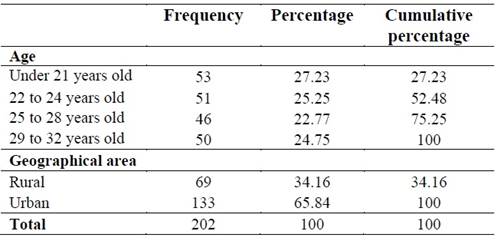
With respect to the characteristics of the sample (Table 1), there was a higher proportion of people under 21 years of age (27.23 %), followed by the range of 22 to 24 years (25.25 %), 29 to 32 years (24.75 %) and a smaller proportion of the sample between 25 and 28 years (22.77 %). On the other hand, the majority of the participants came from the urban region (65.84 %).
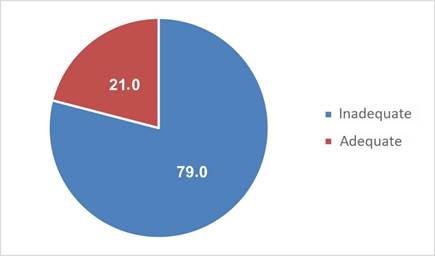
The frequency analysis identified that exclusive breastfeeding practices were predominantly inadequate (n = 166; 79 %) in contrast to an adequate level in 44 mothers of children under 1 year of age who attended the health center (21 %).F4
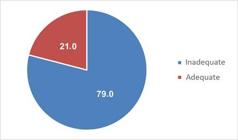
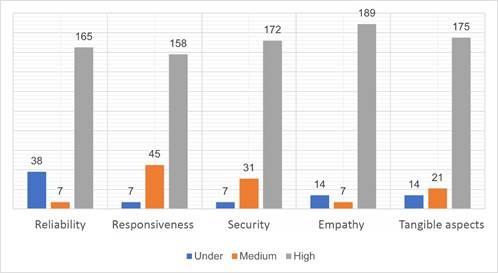
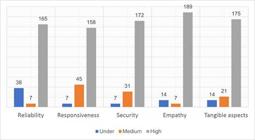
Figure 2 identifies that there was a higher frequency of high levels of reliability (n = 165), responsiveness (n = 158), security (n = 172), empathy (n = 189) and tangible aspects (n = 175) of the mothers in the sample. Thus, there was less frequency in the low level with the exception of the empathy (n = 14) and reliability (n = 38) dimensions.
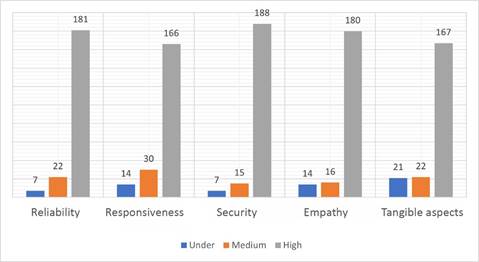
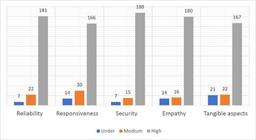
In Figure 3, it was detected that there was a higher frequency of high levels of reliability (n = 181), responsiveness (n = 166), security (n = 188), empathy (n = 180) and tangible aspects (n = 167) of the participants.
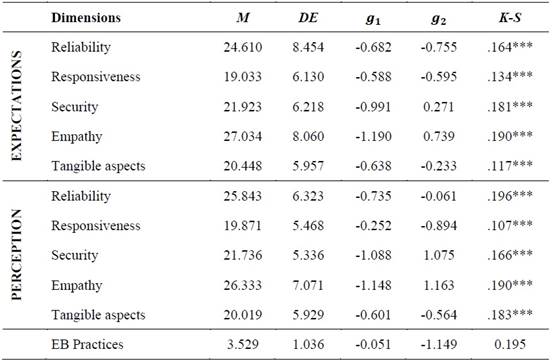
In Table 2 it was observed that there was stability between the scores of the dimensions of quality of care expectations and perceptions, as well as exclusive breastfeeding (EB) practices (-2: +2), which implies a data approximation suitable for establishing statistical inference. The K-S coefficients were associated with significance levels below 0.05, therefore, non-parametric tests, such as Spearman’s ρ test, were used for the correlational analysis, as they allow estimating statistical inference in robust scenarios.
Consequently, at the overall score level, there was no statistically significant correlation between the dimensions of quality of care dimensions and exclusive breastfeeding practices (p > 0.05). However, in between-dimension analysis, there was a statistically significant correlation between the reliability dimension of quality of care with exclusive breastfeeding practices (ρ = 0.344; p = 0.001) as well as between empathy and expectation of quality of care (ρ = 0.349; p = 0.001). The magnitudes of these correlations were categorized as fair and showed a positive direction. Thus, if mothers perceive greater trust and empathy in the health professionals at the institution, there is a higher probability that they will adopt exclusive breastfeeding practices in their daily lives (Table 3).
Discussion
Ensuring optimal care conditions to promote behaviors that directly benefit citizens and develop the quality of life in public environments represents a pillar of integrated health aligned with public health policies in various nations. In this sense, the present study aimed to analyze the relationship between breastfeeding practices and mothers’ perception of the quality of care for their children under one year of age attending the Mazamari Health Center in Peru in 2023. The findings indicated that reliability, responsiveness, empathy and tangible aspects were significantly related to exclusive breastfeeding practices with a positive direction and weak magnitude.
In a more in-depth analysis, the significant relationship between reliability and exclusive breastfeeding practices has been partially corroborated by Gil-Estevan and Solano-Ruiz, 50 who reported that trust in health professionals is a predominant factor for mothers when implementing breastfeeding practices. Likewise, Debnath 51 found that trust in healthcare professionals shape the continuity of medical care and motivates new mothers to practice exclusive breastfeeding, highlighting that reliability of the care provided in these settings is crucial for fostering an environment conducive to exclusive breastfeeding. Along these lines, the perception of trust in the institution has been shown to allow for greater integration of cultural experiences, which can increase breastfeeding rates. 52
In this sense, the significant relationship between responsiveness and EB practices has been corroborated by Feltner et al., 53 who reported that public health policies in institutions have made it possible to ensure maternal health through determinant variables such as breastfeeding practices. Thus, efficiently responding to a mother’s consultations and concerns can increase her confidence and willingness to continue exclusive breastfeeding. Addressing issues such as nipple pain, sucking difficulties or anxiety is essential for ensuring effective resolution and avoiding premature discontinuation of exclusive breastfeeding.
Likewise, the significant relationship between empathy and exclusive breastfeeding practices was partially corroborated by Squizato et al., 54 who indicated that variables involved in maternal self-efficacy, such as empathy, serve as protective factors that increase the likelihood of mothers initiate, continuing and maintain breastfeeding practices, as it strengthens the mother-child bond and provides physical and psychological health for both. Additionally, physicians’ empathy, derived from prior experiences, enhances professional engagement with mothers, which can translate into more effective support and encouragement for exclusive breastfeeding practices. 55) For that reason, Decety & Fotopoulou 56 noted that the therapeutic effects of empathy in physician-patient relationships extend beyond mere clinical outcomes, positively influencing patient adherence to health recommendations.
Based on contrasting findings, it is established that mothers who feel understood and emotionally supported are more likely to trust the guidance provided by primary care physicians and to continue with EB, because they have gained greater awareness of its benefits.
In addition, the significant relationship between the tangible aspects and exclusive breastfeeding practices has been corroborated by previous studies 57 - 59 which emphasize the importance of facilities, supplies and technology in health institutions as predominant factors in maternal health, particularly in breastfeeding. These factors help strengthen the integral bond between mother and newborn under different conditions. The rationale for this corroboration is that the presence of trained staff, such as lactation consultants, and physical resources, such as breastfeeding pillows, can facilitate the initial adaptation to breastfeeding. Additionally, the provision of tangible educational materials, such as breastfeeding booklets and books, improves mothers’ understanding and commitment to the practice. Moreover, the availability of breastfeeding support services, such as telephone helplines or support groups, ensures mothers have ongoing access to advice as they progress through their breastfeeding journey.
The limitations of the present study include the sample size and geographic delimitation, which pose challenges for generalizing the findings to other healthcare settings. Additionally, the cross-sectional design limits the liability to establish causality among the study variables. Despite the robust inferential analysis accounting for the absence of normality, the study’s conclusions should be confined to the specific sample analyzed.
Another significant limitation is the availability of information, as the quality of care has been widely studied across various professional and interdisciplinary health disciplines. However, its direct relationship within the context of maternity has not been extensively addressed, representing only 0.17 % of scientific articles indexed in SCOPUS, and even less in the context of postnatal experiences. Consequently, there is limited comparative information, despite its importance for individual development. 60
Conclusions
The study concluded that when mothers perceive greater trust in health professionals and empathy from staff there is a greater relationship with exclusive breastfeeding practices for their infants under one year of age.
The implications of the findings lie in establishing a foundation, along with existing evidence, for institutions to continue promoting training in soft skills, such as trust and empathy, among health professionals. This would strengthen and encourage the adoption of exclusive breastfeeding practices, contributing to the socio-biological development of newborns and aiding in the reduction of malnutrition rates in the community.
Finally, it is recommended that future studies increase the sample size and include a larger number of institutions to enhance the generalizability of the data and develop external validity. Additionally, future research should consider employing an experimental design to examine the causality of quality of care as a predictor variable for exclusive breastfeeding practices in mothers of children under one year of age.
References
-
1. World Health Organization, Organisation for Economic Co-operation and Development, The World Bank. Delivering quality health services: A global imperative for universal health coverage (Internet). Ginebra, Suiza: WHO, OECD, WB; 2018. Disponible en: https://documents1.worldbank.org/curated/en/482771530290792652/pdf/127816-REVISED-quality-joint-publication-July2018-Complete-vignettes-ebook-L.pdf
» https://documents1.worldbank.org/curated/en/482771530290792652/pdf/127816-REVISED-quality-joint-publication-July2018-Complete-vignettes-ebook-L.pdf -
2. Zafra Tanaka JH, Veramendi Espinoza L, Villa Santiago N. Problemas en la calidad de atención en salud: oportunidad de mejora. An Fac Med. 2015;76(1):87-88. doi: 10.15381/anales.v76i1.11084
» https://doi.org/10.15381/anales.v76i1.11084 -
3. Yanful B, Kirubarajan A, Bhatia D, Mishra S, Allin S, Di Ruggiero E. Quality of care in the context of universal health coverage: a scoping review. Health Res Policy Sys. 2023;21(1):21. doi: 10.1186/s12961-022-00957-5
» https://doi.org/10.1186/s12961-022-00957-5 -
4. Ibarra L, Espinoza B. Servqual: una propuesta metodológica para evaluar la percepción de la calidad. Rev Iberoam Cienc. 2014;1(4):107-20. Disponible en: http://reibci.org/publicados/2014/septiembre/3300110.pdf
» http://reibci.org/publicados/2014/septiembre/3300110.pdf -
5. Bustamante M, Zerda-Barreno E, Obando F, Tello-Sánchez M. Fundamentos de calidad de servicio: el modelo Servqual. Rev Empresarial. 2019;13(2):1-15. doi: 10.23878/empr.v13i2.159
» https://doi.org/10.23878/empr.v13i2.159 -
6. Loreche AM, Pepito VCF, Hartigan-Go KY, Dayrit MM. Measuring quality of care for universal health coverage in the Western Pacific. Int J Qual Health Care. 2023;35(4): mzad084. doi: 10.1093/intqhc/mzad084
» https://doi.org/10.1093/intqhc/mzad084 -
7. Ahmed T, Arur A, De Walque D, Shapira G. Incentivizing quantity and quality of care: evidence from an impact evaluation of performance-based financing in the health sector in Tajikistan. Econ Dev Cult Change. 2023;71(2):667-707. doi: 10.1086/715579
» https://doi.org/10.1086/715579 -
8. Gathron EL. Strategically positioned: breastfeeding advocacy and the hands-on nurse. Creat Nurs. 2017;23(3):192-200. doi: 10.1891/1078-4535.23.3.192
» https://doi.org/10.1891/1078-4535.23.3.192 -
9. Phillips K. Breastfeeding as a method of health promotion. LOJNHC (Internet). 2019 (citado 2024 sep 20);2(2), 181-184. doi: 10.32474/LOJNHC.2019.02.000134
» https://doi.org/10.32474/LOJNHC.2019.02.000134 -
10. Masi AC, Stewart CJ. Role of breastfeeding in disease prevention. Microb Biotechnol. 2024;17(7):e14520. doi: 10.1111/1751-7915.14520
» https://doi.org/10.1111/1751-7915.14520 -
11. Nelson JM, Perrine CG, Freedman DS, Williams L, Morrow B, Smith RA, et al. Infant feeding-related maternity care practices and maternal report of breastfeeding outcomes. Birth. 2018 Dec;45(4):424-431. doi: 10.1111/birt.12337
» https://doi.org/10.1111/birt.12337 -
12. Feldman-Winter L, Ustianov J, Anastasio J, Butts-Dion S, Heinrich P, Merewood A, et al. Best Fed Beginnings: a nationwide quality improvement initiative to increase breastfeeding. Pediatrics. 2017;140(1):e20163121. doi: 10.1542/peds.2016-3121
» https://doi.org/10.1542/peds.2016-3121 -
13. Alves RDV, De Oliveira MIC, Domingues RMSM, Pereira APE, Leal MDC. Breastfeeding in the first hour of life in Brazilian private hospitals participating in a quality-of-care improvement project. Reprod Health. 2023;20(Suppl2):10. doi: 10.1186/s12978-022-01538-z
» https://doi.org/10.1186/s12978-022-01538-z -
14. Takamune DM, Cury GSA, Ferrás G, Herrerias GSP, Rivera A, Barros JR, et al. Quality of care in patients with inflammatory bowel disease from a public health center in Brazil. World J Clin Cases. 2022;10(33):12184-12199. doi: 10.12998/wjcc.v10.i33.12184
» https://doi.org/10.12998/wjcc.v10.i33.12184 -
15. Monteiro VCM, Aiquoc KM, Xavier SSDM, Silva De Paula WKA, De Souza NL, Pinto ESG. Avaliação do grau de implantação dos atributos da atenção primária à saúde como indicador da qualidade da assistência prestadas às comunidades quilombolas no estado do Rio Grande do Norte. Enferm Glob. 2022;21(4):484-530. doi: 10.6018/eglobal.507371
» https://doi.org/10.6018/eglobal.507371 -
16. Betran AP, De Onis M, Lauer JA, Villar J. Ecological study of effect of breastfeeding on infant mortality in Latin America. BMJ. 2001;323(7308):303-306. doi: 10.1136/bmj.323.7308.303
» https://doi.org/10.1136/bmj.323.7308.303 -
17. Gribble K, Mathisen R, Ververs MT, Coutsoudis A. Mistakes from the HIV pandemic should inform the COVID-19 response for maternal and newborn care. Int Breastfeed J. 2020;15(1):67. doi: 10.1186/s13006-020-00306-8
» https://doi.org/10.1186/s13006-020-00306-8 -
18. Vinces C. Calidad de la atención en relación con la satisfacción de los usuarios del centro de salud Zorritos - I4 Tumbes 2021 (Tesis de Maestría). Tumbes, Perú: Universidad Nacional de Tumbes; 2023. Disponible en: https://repositorio.untumbes.edu.pe/handle/20.500.12874/64034
» https://repositorio.untumbes.edu.pe/handle/20.500.12874/64034 -
19. Davila B. Calidad de atención y satisfacción de los usuarios que acuden al Centro de Salud Mental Comunitario de Bellavista-Región San Martín (Tesis de Maestría). Chiclayo, Perú: Universidad César Vallejo; 2023. Disponible en: https://hdl.handle.net/20.500.12692/126674
» https://hdl.handle.net/20.500.12692/126674 -
21. Hilario J, Soto A, Céspedes B, Arias Y. Organizational climate and quality of care according to professionals from a health center in Huánuco, Peru. Rev Cubana Enferm. 2022;38(2):e5154. Disponible en: http://www.scielo.sld.cu/pdf/enf/v38n2/1561-2961-enf-38-02-e5154.pdf
» http://www.scielo.sld.cu/pdf/enf/v38n2/1561-2961-enf-38-02-e5154.pdf -
22. Bandyopadhyay S, Pal D, Dasgupta A, Datta M, Paul B. Status of maternal health care services: an assessment study in slums of Kolkata. J Family Med Prim Care. 2020;9(9):4861-4868. doi: 10.4103/jfmpc.jfmpc_688_20
» https://doi.org/10.4103/jfmpc.jfmpc_688_20 -
23. Yitbarek K, Tuji A, Alemayehu YK, Tadesse D, Tadele A, Tsegaye S, et al. Effect of USAID-funded obstetric ultrasound service interventions on maternal and perinatal health outcomes at primary healthcare facilities in Ethiopia: a propensity score matching analysis. BMJ Open. 2022;12(10):e065351. doi: 10.1136/bmjopen-2022-065351
» https://doi.org/10.1136/bmjopen-2022-065351 -
24. Tiruneh GT, Demissie M, Worku A, Berhane Y. Community’s experience and perceptions of maternal health services across the continuum of care in Ethiopia: a qualitative study. PLoS One. 2021;16(8):e0255404. doi: 10.1371/journal.pone.0255404
» https://doi.org/10.1371/journal.pone.0255404 -
25. Birmeta K, Dibaba Y, Woldeyohannes D. Determinants of maternal health care utilization in Holeta town, central Ethiopia. BMC Health Serv Res. 2013;13:256. doi: 10.1186/1472-6963-13-256
» https://doi.org/10.1186/1472-6963-13-256 -
26. Ekawati FM, Putri DAD, Novitasari DA, Muchlis M. Provision of maternal health service in Indonesian primary care during the COVID-19 pandemic. J Family Med Prim Care. 2023 Jul;12(7):1320-1330. doi: 10.4103/jfmpc.jfmpc_2201_22
» https://doi.org/10.4103/jfmpc.jfmpc_2201_22 -
27. Pérez-Escamilla R, Martinez JL, Segura-Pérez S. Impact of the Baby-Friendly Hospital Initiative on breastfeeding and child health outcomes: a systematic review. Matern Child Nutr. 2016;12(3):402-417. doi: 10.1111/mcn.12294
» https://doi.org/10.1111/mcn.12294 -
28. Cummins A, Symon A. Transforming the Quality Maternal Newborn Care Framework into an index to measure the quality of maternity care. Birth. 2023 Mar;50(1):192-204. doi: 10.1111/birt.12694
» https://doi.org/10.1111/birt.12694 -
29. Nuliana W, Lusmilasari L, Rustiyaningsih A. Relationship between mother care behavior and quality of life stunting children in Kota Masohi District, Central Maluku Regency. IJPHRD. 2020;11(8):332-338. doi: 10.37506/ijphrd.v11i8.10945
» https://doi.org/10.37506/ijphrd.v11i8.10945 -
30. Aoki A, Mochida K, Kuramata M, Sadamori T, Sapalalo P, Tchicondingosse L, et al. Association between the quality of care and continuous maternal and child health service utilisation in Angola: longitudinal data analysis. J Glob Health. 2023;13:04073. doi: 10.7189/jogh.13.04073
» https://doi.org/10.7189/jogh.13.04073 -
31. Manu A, Pingray V, Billah SM, Williams J, Kilima S, Yeji F, et al. Implementing maternal and newborn health quality of care standards in healthcare facilities to improve the adoption of respectful maternity care in Bangladesh, Ghana, and Tanzania: a controlled before and after study. BMJ Glob Health. 2023;8(11):e012673. doi: 10.1136/bmjgh-2023-012673
» https://doi.org/10.1136/bmjgh-2023-012673 -
32. Kujawski SA. Maternal health infrastructure and interpersonal quality of care during childbirth: an examination of facility delivery in Malawi. Matern Child Health J. 2021;25(3):460-470. doi: 10.1007/s10995-020-03081-4
» https://doi.org/10.1007/s10995-020-03081-4 -
33. Gao X, Kelley DW. Understanding how distance to facility and quality of care affect maternal health service utilization in Kenya and Haiti: a comparative geographic information system study. Geospat Health. 2019;14(1). doi: 10.4081/gh.2019.690
» https://doi.org/10.4081/gh.2019.690 -
34. Gómez Gil C. Objetivos de Desarrollo Sostenible (ODS): una revisión crítica. Papeles de Relaciones Ecosociales y Cambio Global. 2018;140(1):107-118. Disponible en: https://www.cvongd.org/ficheros/documentos/ods_revision_critica_carlos_gomez_gil.pdf
» https://www.cvongd.org/ficheros/documentos/ods_revision_critica_carlos_gomez_gil.pdf - 35. Hernández C, Cruz J. Hambre cero y alimentación sostenible: el papel de la investigación agraria para el desarrollo: libro de actas. Madrid, España: Editorial Agrícola Española; 2019.
-
36. Santillán M. Lactancia materna en el neonato críticamente enfermo como calidad en la atención médica. Rev CONAMED. 2018;23(2):55-57. Disponible en: https://www.medigraphic.com/pdfs/conamed/con-2018/con182a.pdf
» https://www.medigraphic.com/pdfs/conamed/con-2018/con182a.pdf -
37. Rondón A, Salazar D. Calidad de atención del profesional de enfermería en el servicio de maternidad I del Hospital Universitario Ruiz y Páez, Ciudad Bolívar (Tesis de Grado). Cumaná, Venezuela: Universidad del Oriente; 2010. Disponible en: http://ri2.bib.udo.edu.ve/bitstream/123456789/1217/2/18%20Tesis.%20WX9%20R771.pdf
» http://ri2.bib.udo.edu.ve/bitstream/123456789/1217/2/18%20Tesis.%20WX9%20R771.pdf -
38. Alvarracin C. Programa de mejoramiento de la calidad de atención en el cuidado de los niños lactantes y preescolares del centro infantil del buen vivir “Virgen de las Mercedes” Santa Isabel, provincia del Azuay, 2012 (Tesis de Maestría). Loja, Ecuador: Universidad Técnica Particular de Loja; 2013. Disponible en: http://dspace.utpl.edu.ec/handle/123456789/6812
» http://dspace.utpl.edu.ec/handle/123456789/6812 -
39. Ministerio de Salud. Control de Crecimiento y Desarrollo (CRED) para menores de 11 años (Internet). Perú: Gobierno de Perú; 2023. Disponible en: https://www.gob.pe/32588-control-de-crecimiento-y-desarrollo-cred-para-menores-de-11-anos
» https://www.gob.pe/32588-control-de-crecimiento-y-desarrollo-cred-para-menores-de-11-anos -
40. Ghanad A. An overview of quantitative research methods. Int J Multidiscip Res Approaches (Internet). 2023 (citado 2024 sep 20);6(8):3794-3803. doi: 10.47191/ijmra/v6-i8-52
» https://doi.org/10.47191/ijmra/v6-i8-52 -
41. Nzabonimpa JP. Quantitizing and qualitizing (im-)possibilities in mixed methods research. Methodol Innov. 2018;11(2):205979911878902. doi: 10.1177/2059799118789021
» https://doi.org/10.1177/2059799118789021 - 42. Pereyra L. Metodología de la investigación. Ciudad de México, México: Klik; 2020.
-
43. Setia M. Methodology series module 3: cross-sectional studies. Indian J Dermatol. 2016;61(3):261-264. doi: 10.4103/0019-5154.182410
» https://doi.org/10.4103/0019-5154.182410 -
44. Otzen T, Manterola C. Técnicas de muestreo sobre una población a estudio. Int J Morphol. 2017;35(1):227-232. doi: 10.4067/S0717-95022017000100037
» https://doi.org/10.4067/S0717-95022017000100037 - 45. Zeithaml V, Parasuraman A, Berry L. Delivering quality service: balancing customer perceptions and expectations. Nueva York, NY: Simon and Schuster; 1990.
-
46. Castillo L. Modelo SERVQUAL de la calidad de servicio y la satisfacción del usuario externo en el Centro de Rehabilitación en Sustancias Psicoactivas del Hospital Hermilio Valdizán, Lima - 2018 (Tesis de Maestría). Piura, Perú: Universidad César Vallejo; 2018. Disponible en: https://repositorio.ucv.edu.pe/handle/20.500.12692/31268
» https://repositorio.ucv.edu.pe/handle/20.500.12692/31268 -
47. Obregón J. Conocimientos y prácticas sobre lactancia materna exclusiva de las madres primíparas en un centro materno infantil de Lima, 2018 (Tesis de Grado). Lima, Perú: Universidad Nacional Mayor de San Marcos; 2019. Disponible en: https://hdl.handle.net/20.500.12672/10376
» https://hdl.handle.net/20.500.12672/10376 -
48. Ferrando P, Anguiano-Carrasco C. El análisis factorial como técnica de investigación en psicología. Pap Psicol. 2010;31(1):18-33. Disponible en: https://www.papelesdelpsicologo.es/pdf/1793.pdf
» https://www.papelesdelpsicologo.es/pdf/1793.pdf -
49. Akoglu H. User’s guide to correlation coefficients. Turk J Emerg Med. 2018;18(3):91-93. doi: 10.1016/j.tjem.2018.08.001
» https://doi.org/10.1016/j.tjem.2018.08.001 -
50. Gil-Estevan D, Solano-Ruiz C. Diversidad cultural y lactancia materna: prestación de cuidados culturalmente competentes en Atención Primaria. Index Enferm (Internet). 2017 (citado 2024 sep 20);26(3), 162-165. Disponible en: Disponible en: https://www.index-f.com/index-enfermeria/v26n3/11021.php
» https://www.index-f.com/index-enfermeria/v26n3/11021.php -
51. Debnath F, Mondal N, Deb AK, Chakraborty D, Chakraborty S, Dutta S. Determinants of optimum exclusive breastfeeding duration in rural India: a mixed method approach using cohort and content analysis design. Int Breastfeed J. 2021;16(1):13. doi: 10.1186/s13006-021-00359-3
» https://doi.org/10.1186/s13006-021-00359-3 -
52. Shanmugam J, Kumar M, Jayaraj NP, Rajan P. Maternal experiences during pregnancy, delivery and breastfeeding practices: a community-based analytical cross-sectional study. Indian J Community Med. 2024;49(3):532-538. doi: 10.4103/ijcm.ijcm_636_22
» https://doi.org/10.4103/ijcm.ijcm_636_22 -
53. Feltner C, Weber RP, Stuebe A, Grodensky CA, Orr C, Viswanathan M. Breastfeeding programs and policies, breastfeeding uptake, and maternal health outcomes in developed countries (Internet). Rockville (MD): Agency for Healthcare Research and Quality (US); 2018 (citado 2023 dic 16). AHRQ Comparative Effectiveness Reviews. Disponible en: Disponible en: http://www.ncbi.nlm.nih.gov/books/NBK525106/
» http://www.ncbi.nlm.nih.gov/books/NBK525106/ -
54. Squizato L, Silva ADD, Martinelle E, Machineski GG, Toso BRGDO, Viera CS. Autoeficacia materna en la atención al recién nacido prematuro y del mantenimiento de la lactancia materna. Cogitare Enferm. 2023;28:e87287. doi: 10.1590/ce.v28i0.87287
» https://doi.org/10.1590/ce.v28i0.87287 -
55. Hoyt-Austin AE, Phillipi CA, Lloyd-McLennan AM, King BA, Sipsma HL, Flaherman VJ, et al. Physician personal breastfeeding experience and clinical care of the breastfeeding dyad. Birth. 2024;51(1):112-120. doi: 10.1111/birt.12772
» https://doi.org/10.1111/birt.12772 -
56. Decety J, Fotopoulou A. Why empathy has a beneficial impact on others in medicine: unifying theories. Front Behav Neurosci (Internet). 2015 (citado 2024 sep 20);8:457. doi: 10.3389/fnbeh.2014.00457
» https://doi.org/10.3389/fnbeh.2014.00457 -
57. Dumphy D, Thompson J, Clark M. A breastfeeding quality improvement project in rural primary care. J Hum Lact. 2016;32(4):633-641. doi: 10.1177/0890334416662240
» https://doi.org/10.1177/0890334416662240 -
58. Bartick M, Stuebe A, Shealy KR, Walker M, Grummer-Strawn LM. Closing the quality gap: promoting evidence-based breastfeeding care in the hospital. Pediatrics. 2009;124(4):e793-802. doi: 10.1542/peds.2009-0430
» https://doi.org/10.1542/peds.2009-0430 -
59. Pallás C, Soriano J, Colomer J, Cortés O, Esparza J, Sánchez-Ventura J, et al. Apoyo a la lactancia materna en atención primaria. Pediatr Aten Primaria. 2019;21 (82):191-201. Disponible en: https://scielo.isciii.es/pdf/pap/v21n82/1139-7632-pap-21-82-191.pdf
» https://scielo.isciii.es/pdf/pap/v21n82/1139-7632-pap-21-82-191.pdf -
60. Ashinyo M, Duti V, Dubik S, Amegah K, Alhassan R. Experiences of postnatal mothers with quality of care, including water, sanitation, and hygiene amenities during the outbreak of COVID-19 in Ghana: an institutional cross-sectional study. Public Health Pract (Oxf). 2023;5(1):1-11. doi: 10.1016/j.puhip.2023.100361
» https://doi.org/10.1016/j.puhip.2023.100361