Relationship Between Complications and Quality of Life Among Hemodialysis Patients at a National Hospital in Huancayo, Peru, 2022
Abstract:
Introduction: Hemodialysis patients represent a highly vulnerable population, given that the treatment condition alters and modifies their daily interaction with their environment, limiting their activities
Objective: To establish the relationship between post-hemodialysis complications and quality of life in patients in a national hospital in Peru, in the city of Huancayo
Materials and Methods: Quantitative approach and correlational scope, with participation of 140 people by census sampling type, which guaranteed the representativeness of the sample by collecting all the population units that undergo hemodialysis in the Daniel Alcides Carrión Hospital of Huancayo. The SF-36 Health Questionnaire was applied, and a self-report data collection form was used to evaluate post-hemodialysis characteristics such as arterial hypertension, arterial hypotension, nausea, vomiting, headache and cramps
Results: The study found that there is a moderate significant correlation between the variables (p = 0.000; Rho = -0.451), indicating that as patients present greater complications, their perception of quality of life is lower. In addition, significant correlations were found between hemodialysis patient's complications and their physical health (p = 0.000; Rho = -0.479), and mental health (p = 0.000; Rho = -0.366)
Conclusions:
Keywords:
hemodialysis units; chronic renal insufficiency; quality of life
Resumen:
Introducción: Los pacientes en hemodiálisis representan una población altamente vulnerable, dado que la condición de tratamiento altera y modifica su interacción diaria con su medio, limitando sus actividades
Objetivo: Establecer la relación entre las complicaciones poshemodiálisis y la calidad de vida en pacientes de un hospital nacional de Perú, en la ciudad de Huancayo
Materiales y Métodos: Enfoque cuantitativo y de alcance correlacional, con participación de 140 personas por tipo de muestreo censal, que garantizó la representatividad de la muestra al recopilar todas las unidades poblacionales que se realizan hemodiálisis en el Hospital Daniel Alcides Carrión de Huancayo. Se aplicó el cuestionario de Salud SF-36 y se utilizó una ficha de recolección de datos a modo de autorreporte para evaluar las características de la poshemodiálisis como hipertensión arterial, hipotensión arterial, náuseas, vómitos, cefalea y calambres
Resultados: El estudio encontró que existe una correlación significativa moderada entre las variables (p = 0.000; Rho = -0.451), lo que indica que a medida que los pacientes presentan mayores complicaciones, su percepción de calidad de vida es menor. Además, se encontraron correlaciones significativas entre las complicaciones del paciente en hemodiálisis y su salud física (p = 0.000; Rho = -0.479), y mental (p = 0.000; Rho = -0.366).
Conclusiones: Mayores indicadores de complicaciones poshemodiálisis tuvieron una repercusión negativa en la percepción de calidad de vida, lo que recalca la necesidad de desarrollar y programar campañas enfocadas en fortalecer la calidad de vida en términos físicos y mentales para facilitar la adherencia al tratamiento
Palabras clave:
unidades de hemodiálisis en hospital; insuficiencia renal crónica; calidad de vida
Resumo:
Introdução: Os pacientes em hemodiálise representam uma população altamente vulnerável, uma vez que a condição de tratamento altera e modifica sua interação diária com o meio, limitando suas atividades
Objetivo: Estabelecer a relação entre as complicações pós-hemodiálise e a qualidade de vida em pacientes de um hospital nacional do Peru, na cidade de Huancayo
Materiais e Métodos: Enfoque quantitativo e de alcance correlacional, com participação de 140 pessoas por tipo de amostragem censitária, o que garantiu a representatividade da amostra ao coletar todas as unidades populacionais que fazem hemodiálise no Hospital Daniel Alcides Carrión, em Huancayo. Aplicou-se o questionário de Saúde SF-36 e utilizou-se uma ficha de coleta de dados em forma de autorrelato para avaliar as características da pós-hemodiálise, como hipertensão arterial, hipotensão arterial, náuseas, vômitos, cefaleia e cãibras
Resultados: O estudo constatou que há uma correlação significativa moderada entre as variáveis (p = 0,000; Rho = -0,451), indicando que, à medida que os pacientes apresentam maiores complicações, sua percepção de qualidade de vida é menor. Além disso, foram encontradas correlações significativas entre as complicações dos pacientes em hemodiálise e sua saúde física (p = 0,000; Rho = -0,479) e mental (p = 0,000; Rho = -0,366)
Conclusões: Indicadores mais altos de complicações pós-hemodiálise tiveram um impacto negativo na percepção de qualidade de vida, ressaltando a necessidade de desenvolver e programar campanhas focadas no fortalecimento da qualidade de vida em termos físicos e mentais para facilitar a adesão ao tratamento
Palavras-chave:
unidades de hemodiálise em hospital; insuficiência renal crônica; qualidade de vida
Introduction
In recent decades, successive changes in the lifestyles of contemporary adults have led to significant consequences, including reduced physical activity, dietary restrictions, unbalanced nutritional intake, and increased body mass. 1
Chronic kidney disease (CKD) is defined as a reduction in kidney function, indicated by an estimated glomerular filtration rate (GFR) of less than 60 mL/min per 1.73 m², or the presence of markers of kidney damage such as albuminuria, hematuria, or abnormalities detected through laboratory tests or imaging studies persisting for at least three months. 1
Globally, it is estimated that 9 % of the population is affected by chronic kidney disease (CKD), (2) positioning it as one of the leading causes of morbidity and mortality. CKD accounts for over one million deaths annually, placing it among the 15 leading causes of death worldwide. 3) Moreover, during the COVID-19 pandemic, it was observed that patients with CKD exhibited significantly higher rates (OR = 5.81; p = 0.000). 4
The prevalence of chronic kidney disease (CKD) in Latin America and the Caribbean is estimated at around 10 %, which is slightly higher than the global average. 5) This is worrisome, as CKD directly exacerbates the economic burden on already strained public health budgets. 6) Studies have shown that its prevalence is significantly higher among older adults and individuals with lower socioeconomic status, with poverty being a major contributing factor to the increased incidence of CKD in challenged countries. 6
In Peru, reports indicate that the overall prevalence of CKD ranges from 11 % to 13.2 % in the general population. 7) In urbanized regions, however significantly higher rates have been observed, reaching up to 20.7 %. 8) Likewise, CKD has resulted in the loss of 31,924 years of life due to premature deaths, calculated by multiplying the number of registered deaths by life expectancy. Additionally, it has caused approximately 16,117 years lived with disability, estimated by multiplying the number of cases by the severity and duration of disability. 9
In this regard, the scientific community has focused on comparing interventions to assess the quality of evidence for their implementation in CKD treatment, primarily through meta-analyses of randomized clinical trials. These studies have demonstrated that hemodialysis is a highly credible procedure for reducing mortality. 10) However, prolonged exposure to regular hemodialysis sessions and increased hospitalization rates have negatively impacted the health of CKD patients, posing an ongoing challenge for public health. 11
In that sense, patients undergoing renal replacement therapy may experience a number of complications after hemodialysis, such as cardiovascular issues resulting from electrolyte imbalances and fluid overload 12) as well as secondary conditions like mineral and bone disorders. These can lead to complications such as renal osteodystrophy, significantly affecting patients’ quality of life and mobility. 13
In this regard, numerous studies have emerged aiming to elucidate the biological determinants of chronic renal failure. 14) Likewise, biopsychosocial factors such as stress, mental health and social support can influence quality of life and access to care in a bidirectional manner, affecting the patient’s physical health through the disease process. 15
At the center of efforts to explain the complications arising from CKD, the biopsychosocial model has become a key focus for the interdisciplinary community due to its integration of quality-of-life considerations. (16) This model emphasizes individuals’ ability to perceive and perform various activities, which is closely associated with a favorable state of health. Quality of life, in this context, is based on two interrelated dimensions: physical health and mental health. 17
In relation to physical health, the focus is on bodily functioning and includes aspects such as physical functioning, role limitations due to physical health, bodily pain and general health perceptions. 16,17) On the other hand, mental health emphasizes understanding and exploring the human experience, including emotional well-being, psychological resilience and cognitive function. 16,17
Despite its significant as a public health issue, Peruvian hospitals lack sufficient capacity to meet the high demand of patients with kidney failure. As a result, several private clinics in Peru have been contracted directly by the Ministry of Health (MINSA), through the Intangible Solidarity Health Fund (FISSAL), to provide hemodialysis services to patients. Despite these efforts, between 2015 and 2022, only 1,009 patients received a transplant, while 727 patients are currently on the waiting list.
As a result of research into the complications associated with CKD and their impact on quality of life, studies have aimed to address theoretical gaps. Bodessova et al. 18) highlighted that physical activity levels, disease severity, and the socio-labor situation of hemodialysis patients are significant factors that directly affect their quality of life.
Along these lines, Lovatón and Chalco, 19) concluded that the majority of patients who had been on hemodialysis treatment for more than two years reported a good to fair level of quality of life. They emphasized the importance of protective factors, such as the support of family and friends, and the crucial role of health professionals in maintaining quality of life.
Bayhakki et al. (20) noted that intra-hemodialysis complications have a significant and negative effect on the quality of life of CKD patients (p=0.015). Armiyati et al. (21) confirmed these findings, noting that such complications comprehensively compromise the condition of patients and significantly decrease their quality of life
Accordingly, Ali et al. (22) noted that post-hemodialysis procedures can lead to increased anxiety and depression, which correlate with lower quality of life scores. Therefore, the psychological impact of these complications highlights the need for holistic treatment strategies that address both physical and mental health. Similar findings were corroborated by Jafari et al. 23) who reported that the burden of care experienced by hemodialysis caregivers may indirectly affect patients’ quality of life
The aim of our study is to establish the relationship between post-hemodialysis complications and quality of life in patients at a national hospital in Huancayo, Peru.
Methodology
Participants
The sample for this study consists of 140 prevalent patients with CKD undergoing hemodialysis at the Daniel Alcides Carrión Hospital in Huancayo, Peru. These patients were financed by FISSAL and attended the hospital between February 13, 2023 and August 17, 2023. Inclusion criteria for the sample were as follows: the presence of a medical history, consistent exposure to hemodialysis procedures, age range over 18 years, and the signing of informed consent. Exclusion criteria were limited to cases where participants did not complete the measurement instruments or were not consistently receiving the intervention procedures. Consequently, a census sampling method was used, as it included the entire population to ensure representativeness, facilitated by logistical, economic and practical conditions.
Study design
This study framed within a quantitative approach, as hypotheses are established based on objectively measurable data that provide a concrete representation of reality through the empirical verification of facts, allowing for the calculations of the statistical probability of their occurrence. 24) An analytical typology was used to break down intra-hemodialysis or post hemodialysis complications and quality of life into dimensions, establishing relationships and interaction parameters among them. 25
In this sense, the study was established as a cross-sectional research design, as the measurements were taken at a specific time, place and within a defined context for sample units that make up the participants. 25
Measuring instruments
The SF-36 Health Questionnaire, developed by Ware and Sherbourne 26 was used to assess quality of life by measuring physical function, physical role, bodily pain, general health, vitality, social function, emotional role and mental health. The questionnaire consists of 36 items and was administered to individuals over the age of 14, either individually or collectively.
The SF-36 has been validated by Bartolo and Limaylla, 27 in the province of Huancayo for patients with chronic kidney disease. This validation was conducted through the evaluation of four specialized judges, with average scores of 91.5, 90.5, 79.5 and 84.5, placing it in the “very good” category and confirming its applicability in the clinical population. In this study, reliability was corroborated through internal consistency, with a coefficient α of 0.935, indicating acceptable reliability.
Regarding the evaluation of post-hemodialysis complications, a record card was created to document information during dialysis sessions over a period of one month. This record included the presence of conditions such as arterial hypertension, arterial hypotension, nausea, vomiting, headache and cramps. The data were then recorded by the nursing and medical staff in the clinical history of each patient.
The reliability of the information recording card was evaluated based on the binary standardization of the card’s items, allowing for the summation of symptoms per session. Internal consistency reliability was calculated using the α coefficient, which was found to be 0.710, indicating an acceptable level of reliability for the application of the instrument in this study.
Data collection procedure
Data collection was carried out at the Daniel Alcides Carrión Hospital in Huancayo, Peru, with the consent of the administrative staff. The professionals in charge were instructed to ask patients to complete the informed consent form and the SF-36 at the beginning of the sessions, as well as to fill out the information registration form during the sessions. The instruments were then stored in a package for each patient and transferred for digitization into a Microsoft Excel spreadsheet (version 2023). Following this, the database was cleaned using decision rules to identify missing values and data outside the established range for each measuring instrument.
Data análisis
First, the spreadsheet was imported into SPSS 23.0 statistical software to perform the statistical procedures. Second, an exploratory data analysis was conducted to describe the characteristics of the sample. Third, the Kolmogorov-Smirnov normality test was performed, given the robustness of the test for sample sizes greater than 50 units, which indicated the absence of normality. As a result, nonparametric tests were deemed appropriate for inferential analysis. Fourth, the Spearman’s Rho nonparametric correlation test was applied, using the following cut-off points proposed by Akoglu (2018): spurious (r or rho = 0); weak (± 0.1 to ± 0.3); moderate (± 0.4 to ± 0.6); strong (± 0.7 to ± 0.9); and perfect (r or Rho = ± 1.00). 28
Ethical aspects
The study was supervised and approved by the Ethics Committee of the Universidad Continental under Official Document No. 0206-2022-VI-UC. Authorization was obtained to conduct the surveys at the Clínica San Andrés, the Centro Médico Especializado en Riñón, and the Hospital Regional Docente Clínico Quirúrgico Daniel Alcides Carrión, with approval from the respective management teams. All participants were informed about the nature of the study and signed the informed consent form, ensuring the confidentiality and privacy of their data.
Results
Participants
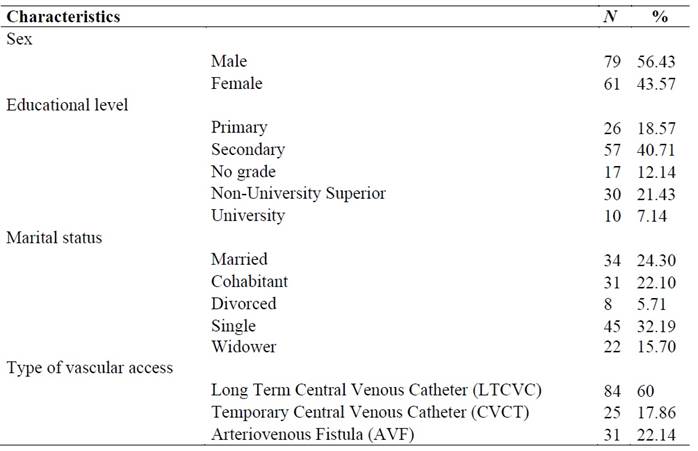
The patients surveyed ranged in age from 18 to 83 years, with a mean age of 54.16 ± 13.32 years. Of the total, 79 participants (56.43 %) were male. Table 1 presents the population characteristics in relation to educational level, marital status, and type of vascular access used.
Descriptive análisis
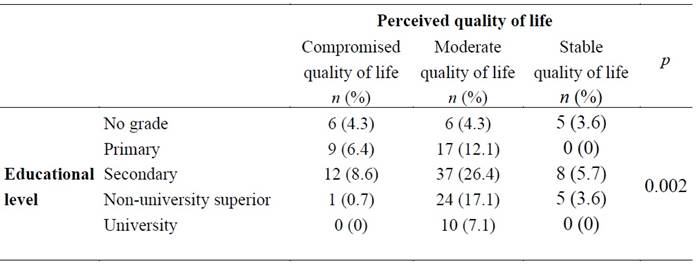
The analysis revealed a significant relationship between educational level and perceived quality of life, with higher educational levels associated with better quality of life perceptions (p < 0.05). Table 2 shows this result.
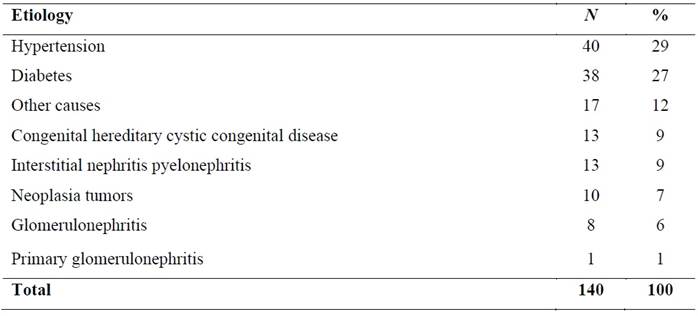
The most common etiologies of CKD in this group were diabetes and arterial hypertension, which together accounted for 56 % of the cases, while other causes were less frequently reported (Table 3).
Relational análisis
Spearman’s correlation analysis revealed a significant, moderate negative correlation between the study variables (Rho = -0.451, p = 0.000), indicating that post-hemodialysis complications may contribute to a decline in quality of life, particularly affecting patients’ ability to carry out daily activities (Table 4).
The analysis of the physical and mental health dimensions also revealed correlation coefficients indicating a moderate negative relationship with physical health (Rho = -0.479) and a weak negative relationship with mental health (Rho = -0.366). Thus, greater post-hemodialysis complications result in a lower perception of physical and mental health. This result suggests that the physical and mental health of patients tends to improve as perceived complications decrease (Table 5). However, it was evident that there was a greater impact on the physical sphere, so that more complications may have a lower impact on the perception of physical health.
The analysis of the global quality of life score showed significant negative correlations in several dimensions of the SF-36 test (Table 6). General health has a correlation of -0.504, physical function -0.432, physical role -0.440, emotional role -0.361 and mental health -0.407. Vitality has a correlation of -0.287 with a significance of 0.001. However, social role and bodily pain show weaker correlations of -0.120 and -0.164 respectively; social role does not reach statistical significance (p = 0.156) and bodily pain is borderline (p = 0.052).
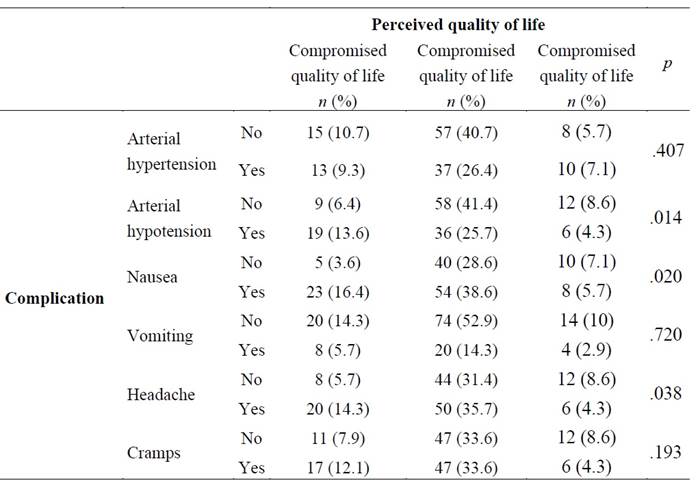
Table 7 illustrates the relationship between specific post-hemodialysis complications and perceived quality of life. Arterial hypotension (p = 0.014), nausea (p = 0.020), and headache (p = 0.038) showed statistically significant associations with quality of life, suggesting that these complications may negatively influence patients’ well-being. In contrast, arterial hypertension (p = 0.407), vomiting (p = 0.720), and cramps (p = 0.193) did not demonstrate significant correlations, indicating a comparatively lesser impact on patients’ quality of life.
Discussion
Scientific evidence has established the evaluation of quality of life as a key cross-cutting element in mitigating the impact of complications experienced by patients undergoing hemodialysis.
The patients of the sample were predominantly male (56.43 %) and generally younger compared to other studies (M 54.16 years). In terms of educational level, 40.71 % had completed secondary education, while 7.14 % had completed or were currently attending university. The most common type of vascular access among the participants was the Long-Term Central Venous Catheter (LTCVC).
Descriptive findings indicated that diabetes and arterial hypertension were the leading causes of CKD, accounting for 27 % and 29 % of cases respectively. These results align with existing literature, which identifies these two conditions as the primary etiologies of CKD. (15) This underscores the critical importance of preventing and effectively managing these chronic diseases to reduce the risk of progression to CKD.
Other less common causes of CKD were also identified, including interstitial nephritis pyelonephritis (9 %), congenital hereditary cystic diseases (9 %) and various other conditions (9 %).
In relation to the type of vascular access used in hemodialysis, our sample was characterized by a high rate of central venous catheters use and a very low rate of use of definitive venous access use. Although catheters are a useful resource for immediate access,19) potential complications such as catheter orifice infections, thrombosis or tunnelitis and catheter-related bacteremia, were not the focus of this study. The high prevalence of Long Term Central Venous Catheter (LTCVC) is attributed to its ease of effective management in terms of infection control and maintenance, particularly in patients with limited vascular access options, 29) compared to the use of Arteriovenous Fistula (AVF), which are associated with latent problems such as maturation failure and thrombosis that may limit their effectiveness.30
With respect to the main objective of the study, which was to analyze the relationship between quality of life and hemodialysis complications, this research provides valuable insight into the impact of health complications on the lives of CKD patients. A moderate, negative correlation coefficient (Rho = -0.429) was found, indicating that as patients’ perceived health complications decrease, their perceived quality of life improves.
This finding is consistent with and aligns with previous research results that have found complications are associated with a decrease in quality of life in hemodialysis patients.31) Furthermore, it was evidenced that there is a significant inverse effect on quality of life and intra-hemodialysis complications among 105 regular hemodialysis patients from three hemodialysis centers in Riau province, Indonesia (p = 0.015). 20
Health complications can affect patients in various ways, including deterioration of their physical condition, limitation of their daily activities, and compromise the condition of CKD patients undergoing hemodialysis, directly reducing their life expectancy. 21
Complementary to the main findings, it has been shown that psychosocial support and coping strategies improve the quality of life of patients with CKD, being a crucial aspect highlighted in this study. Thus, it is emphasized that the psychosocial experiences of young patients with CKD can significantly influence their quality of life. 15) This suggests that, in addition to medical interventions, it is essential to provide psychosocial support to help these patients manage their disease.
This study also underscores the importance of using validated scales to assess quality of life in people with advanced CKD, 17) allowing for more accurate comparison between different groups of patients and over time, in order to identify specific areas of need and target interventions more effectively.
The analysis of the findings allows us to identify a series of methodological aspects that could reduce the probability of replicating the results. In this regard, the lack of control over independent variables limits the ability to determine the experimental effect of complications on the dimensions of quality of life among patients. Similarly, the sample size for cross-sectional studies is a key methodological component, as it provides the power and robustness needed for inferential tests to effectively contrast statistical hypotheses. These limitations highlight the need to contextualize the findings for a comprehensive interpretation of the data.
Conclusions
The results of this research showed that post-hemodialysis complications have a negative impact on the quality of life of hemodialysis patients, implying that the greater presence of indicators such as arterial hypertension, arterial hypotension, nausea, vomiting, headache and cramps is associated with a lower perceived quality of life. This evidence supports the importance of preventing and controlling complications in the care of patients with chronic renal failure undergoing hemodialysis, in order to improve their quality of life.
The practical implications of these conclusions lie in the need to promote intervention procedures focused on improving quality of life to mitigate the progression or deterioration of CKD patients on hemodialysis. At a methodological level, the findings provide a direct basis for the predictive estimation of the impact of complications on quality of life and offer scientific information to support the development of preventive tools at a moderate level.
Consequently, it is recommended to encourage the development of experimental investigations with controlled groups to evaluate the statistical effect of complications on the quality of life of CKD patients undergoing hemodialysis. Likewise, increasing the sample size would enhance the efficacy of inferential statistical tests and allow for the calculation of a coefficient of determination, providing a basis for linear regression studies to further examine the role of the study variables.
References
-
1. Kalantar-Zadeh K, Jafar TH, Nitsch D, Neuen BL, Perkovic V. Chronic kidney disease. Lancet (Internet). 2021 (citado 2024 sep 10);398(10302):786-802. doi: 10.1016/s0140-6736(21)00519-5
» https://doi.org/10.1016/s0140-6736(21)00519-5 -
2. Harambat J, Madden I. What is the true burden of chronic kidney disease in children worldwide? Pediatr Nephrol (Internet). 2023 (citado 2024 sep 15);38(5):1389-93. doi: 10.1007/s00467-022-05816-7
» https://doi.org/10.1007/s00467-022-05816-7 -
3. Rebouças Filho PP, da Silva SPP, Almeida JS, Ohata EF, Alves SSA, Hercules Silva F dos S. An approach to classify chronic kidney diseases using scintigraphy images. En: Anais Estendidos do XXXII Conference on Graphics, Patterns and Images (SIBRAPI Estendido 2019). Sociedade Brasileira de Computação; 2019. doi: 10.5753/sibgrapi.est.2019.8318
» 10.5753/sibgrapi.est.2019.8318 -
4. Cai R, Zhang J, Zhu Y, Liu L, Liu Y, He Q. Mortality in chronic kidney disease patients with COVID-19: a systematic review and meta-analysis. Int Urol Nephrol (Internet). 2021 (citado 2024 sep 16);53(8):1623-1629. doi: 10.1007/s11255-020-02740-3
» https://doi.org/10.1007/s11255-020-02740-3 -
5. Sequeiros-Buendia DA, Villa-Ato CS, Weiss-Carlini M, Carrillo-Larco RM. Prevalence of chronic kidney disease in the general population in Latin America and the Caribbean: Protocol for a systematic review and meta-analysis. medRxiv (Internet). 2021. doi: 10.1101/2021.01.26.21250540
» https://doi.org/10.1101/2021.01.26.21250540 -
6. Alvarez-Elías AC, Lou-Meda R, Exeni R, Exantus J, Bonilla-Felix M, González-Camac S, et al. Addressing health inequities and disparities in children with kidney disease in disadvantaged areas: The Latin American and Caribbean experience. Curr Pediatr Rep. 2023;11(2):40-49. doi: 10.1007/s40124-023-00287-2
» https://doi.org/10.1007/s40124-023-00287-2 -
7. Bravo-Zúñiga J, Saldarriaga EM, Chávez-Gómez R, Gálvez-Inga J, Valdivia-Vega R, Villavicencio-Carranza M, et al. Effectiveness of adherence to a renal health program in a health network in Peru. Rev Saude Publica (Internet). 2020 (citado 2024 sep 10); 54:80. doi: 10.11606/s1518-8787.2020054002109
» https://doi.org/10.11606/s1518-8787.2020054002109 -
8. Saldarriaga EM, Bravo-Zúñiga J, Hurtado-Roca Y, Suarez V. Cost-effectiveness analysis of a strategy to delay progression to dialysis and death among chronic kidney disease patients in Lima, Peru. Cost Eff Resour Alloc (Internet). 2021 (citado 2024 sep 10);19(1):70. doi: doi: 10.1186/s12962-021-00317-0
» 10.1186/s12962-021-00317-0 - 9. Salud Md. Boletín Epidemiológico. 10th ed.: Centro Nacional de Epidemiología; 2022.
-
10. Kim JY, Steingroever J, Lee KH, Oh J, Choi MJ, Lee J, et al. Clinical interventions and all-cause mortality of patients with chronic kidney disease: An umbrella systematic review of meta-analyses. J Clin Med (Internet). 2020 (citado 2024 sep 10);9(2):394. doi: 10.3390/jcm9020394
» https://doi.org/10.3390/jcm9020394 -
11. Eswarappa M, Anish LS, Prabhu PP, Chennabasappa GK, Gireesh MS, Rajashekar R, et al. Health-related quality of life of patients with chronic kidney disease on maintenance hemodialysis and its determinants: A study from a tertiary hospital in South India. Turk J Nephrol. 2024;33(3):279-288. doi: 10.5152/turkjnephrol.2024.22484
» https://doi.org/10.5152/turkjnephrol.2024.22484 -
12. Dembowska E, Jaroń A, Gabrysz-Trybek E, Bladowska J, Gacek S, Trybek G. Quality of life in patients with end-stage renal disease undergoing hemodialysis. J Clin Med (Internet). 2022;11(6):1584. doi: 10.3390/jcm11061584
» https://doi.org/10.3390/jcm11061584 -
13. Perwiraningtyas P, Sutriningsih A, Metrikayanto WD. Non-pharmacological management of pruritus in chronic kidney disease patients at Panti Waluya Sawahan hospital. Jcsh (Internet). 2021;2(2):38-41. doi: 10.26699/jcsh.v2i2.art.p038-041
» https://doi.org/10.26699/jcsh.v2i2.art.p038-041 -
14. Qian CH, Mao W, Lu C. Risk factors of renal insufficiency in patients with chronic obstructive pulmonary disease: A systematic review and meta-analysis. Research Square (Internet). 2023. doi: 10.21203/rs.3.rs-3545324/v1
» https://doi.org/10.21203/rs.3.rs-3545324/v1 -
15. Martinez M. Experiencias psicosociales del adulto joven con diagnóstico de enfermedad renal crónica en estadio V. CuidArte (Internet). 2023 (citado 2024 sep 26);12(23). doi: 10.22201/fesi.23958979e.2023.12.23.82877
» https://doi.org/10.22201/fesi.23958979e.2023.12.23.82877 - 16. Sunariyanti, E, Haris, RNH, Lestari, T, Nur’aini Megawati, S. The review of patients’ quality of life with chronic kidney failure. En: Proceedings of the 4th International Conference on Sustainable Innovation 2020-Health Science and Nursing (ICoSIHSN 2020). París, Francia: Atlantis Press; 2021.
-
17. Lacomba-Trejo L, Mateu-Mollá J, Carbajo Álvarez E, Poves Gómez M, Galán Serrano A. Calidad de vida relacionada con la salud y percepción de amenaza de la enfermedad en pacientes con enfermedad renal crónica avanzada. Rev Colomb Nefrol. 2021;8(3):e393. doi: 10.22265/acnef.8.3.393
» https://doi.org/10.22265/acnef.8.3.393 -
18. Bodessova S, Sagandykova N, Danebek K, Sultanova B, Baurzhan M. Impact of work status on quality of life in patients with end-stage renal disease during the first year of hemodialysis. Research Square (Internet). 2024. doi: 10.21203/rs.3.rs-4574063/v1
» https://doi.org/10.21203/rs.3.rs-4574063/v1 -
19. Lovaton JM, Chalco IA. Calidad de vida de los pacientes sometidos al tratamiento de hemodiálisis (Memoria de grado). Lima, Perú: Universidad Privada Norbert Wiener; 2021. Disponible en: https://hdl.handle.net/20.500.13053/5125
» https://hdl.handle.net/20.500.13053/5125 -
20. Bayhakki B, Utomo W, Pristiana Dewi A, Lai CKY. Evaluation of dialysis adequacy, interdialytic weight gain and quality of life of hemodialysis patients within Coronavirus disease 2019 pandemic. Open Access Maced J Med Sci (Internet). 2021 (citado 2024 sep 26);9(G):190-4. doi: 10.3889/oamjms.2021.6625
» https://doi.org/10.3889/oamjms.2021.6625 -
21. Armiyati Y, Hadisaputro S, Chasani S, Sujianto U. Factors Contributing to Intradialytic Hypertension in Hemodialysis Patients. South East Asia Nursing Research (Internet). 2021 (citado 2024 sep 26);3(2):73-80. doi: 10.26714/seanr.3.2.2021.73-80
» https://doi.org/10.26714/seanr.3.2.2021.73-80 -
22. Ali M, Ejaz A, Iram H, Solangi SA, Junejo AM, Solangi SA. Frequency of intradialytic complications in patients of end-stage renal disease on maintenance hemodialysis. Cureus (Internet). 2021 (citado 2024 sep 30);13(1):e12641. doi: 10.7759/cureus.12641
» https://doi.org/10.7759/cureus.12641 -
23. Jafari H, Ebrahimi A, Aghaei A, Khatony A. The relationship between care burden and quality of life in caregivers of hemodialysis patients. BMC Nephrol (Internet). 2018 (citado 2024 oct 1);19(1):321. doi: 10.1186/s12882-018-1120-1
» https://doi.org/10.1186/s12882-018-1120-1 -
24. Jiménez V. Triangulación metodológica cualitativa y cuantitativa. Revista sobre estudios e investigaciones del saber académico (Internet). 2020 (citado 2024 oct 1);14(14):76-81. Disponible en: Disponible en: https://revistas.uni.edu.py/index.php/rseisa/article/view/276/231
» https://revistas.uni.edu.py/index.php/rseisa/article/view/276/231 -
25. Guamán Chacha KA, Hernández Ramos EL, Lloay Sánchez SI. El proyecto de investigación: la metodología de la investigación científica o jurídica. Conrado (Internet). 2021 (citado 2024 oct 29);17(81):163-168. Disponible en: Disponible en: http://scielo.sld.cu/scielo.php?pid=S1990-86442021000400163&script=sci_arttext&tlng=en
» http://scielo.sld.cu/scielo.php?pid=S1990-86442021000400163&script=sci_arttext&tlng=en -
26. Ware Jr JE, Sherbourne CD. The MOS 36-item short-form health survey (SF-36). I. Conceptual framework and item selection. Med Care. 1992;30(6):473-483. Disponible en: https://pubmed.ncbi.nlm.nih.gov/1593914/
» https://pubmed.ncbi.nlm.nih.gov/1593914/ -
27. Bartolo P, Limaylla E. Calidad de vida en pacientes con Insuficiencia Renal Crónica en Hemodiálisis en la Clínica H&S Occupational S.A.C. Huancayo 2021 (Tesis). (Internet). Huancayo, Perú: Universidad de Roosevelt; 2021. Disponible en: http://repositorio.uroosevelt.edu.pe/handle/20.500.14140/775
» http://repositorio.uroosevelt.edu.pe/handle/20.500.14140/775 -
28. Akoglu H. User’s guide to correlation coefficients. Turk J Emerg Med. 2018;18:91-3. doi: 10.1016/j.tjem.2018.08.001
» https://doi.org/10.1016/j.tjem.2018.08.001 -
29. Allon M, Brouwer-Maier DJ, Abreo K, Baskin KM, Bregel K, Chand DH, et al. Recommended clinical trial end points for dialysis catheters. Clin J Am Soc Nephrol (Internet). 2018 (citado 2024 oct 29);13(3):495-500. doi: 10.2215/CJN.12011116
» https://doi.org/10.2215/CJN.12011116 -
30. Wen M, Li Z, Li J, Zhou W, Liu Y, Liu H, et al. Risk factors for primary arteriovenous fistula dysfunction in hemodialysis patients: A retrospective survival analysis in multiple medical centers. Blood Purif (Internet). 2019 (citado 2024 oct 29);48(3):276-282. doi: 10.1159/000500045
» https://doi.org/10.1159/000500045 -
31. Carrillo-Algarra AJ, Torres-Rodríguez GA, Leal-Moreno CS, Hernández-Zambrano SM. Escalas para evaluar la calidad de vida en personas con enfermedad renal crónica avanzada: Revisión integrativa. Enferm Nefrol (Internet). 2018 (citado 2024 oct 29);21(4):334-347. doi: 10.4321/s2254-28842018000400003
» https://doi.org/10.4321/s2254-28842018000400003