Satisfaction of Elderly People with Primary Care and Associated Factors
Abstract:
Introduction: Assessing satisfaction with health services means diagnosing a reality so that services can adapt and meet minimum quality standards. Thus, evaluating people's satisfaction with Primary Health Care (PHC) can be understood as an important indicator of the quality of the service provided.
Objective: To analyze the satisfaction of older adults with the services provided in PHC and the associated factors.
Method: A study involving 310 older adults who were users of a Basic Health Unit in southern Brazil, through face-to-face home interviews. A structured instrument was used, covering sociodemographic variables, lifestyle habits, clinical profile, service usage, and satisfaction indicators. Descriptive and inferential analyses were conducted (Mann-Whitney U, chi-square or Fisher’s exact test, p < 0.05). Open-ended responses were analyzed using a word cloud to identify areas for improvement.
Results: A total of 96.5 % of participants reported being satisfied with the services, with 35.2 % stating they were very satisfied. Positive highlights included concern for the patient’s needs (54.5 %) and clarity of the information provided (53.9 %). The least satisfactory aspect was the lack of consideration for the patient’s opinion in treatment planning (55 %). Nevertheless, 80.65 % said they would recommend the service to other older adults. A significant association was found between being seen quarterly and higher satisfaction (p = 0.031).
Conclusion: Satisfaction is linked to continuity of care, accessibility, and the bond with professionals. However, active listening and infrastructure were critical points of dissatisfaction. Investing in structural improvements and strengthening humanized practices are essential to improve the quality of care and increase older adults’ adherence to health services.
Keywords:
aged; primary health care; patient satisfaction; health service quality
Resumo:
Introdução: Avaliar a satisfação com os serviços de saúde significa diagnosticar uma realidade para que os serviços possam se adaptar e atender aos padrões mínimos de qualidade. Assim, a avaliação da satisfação das pessoas com o atendimento na APS pode ser entendida como um importante indicador da qualidade do serviço prestado
Objetivo: Analisar a satisfação de pessoas idosas com os serviços da Atenção Primária à Saúde e os fatores associados.
Método: Estudo com 310 pessoas idosas usuárias de uma Unidade Básica de Saúde no sul do Brasil, por meio de entrevistas domiciliares presenciais. Utilizou-se um instrumento com variáveis sociodemográficas, hábitos de vida, perfil clínico, uso dos serviços e indicadores de satisfação. Foram realizadas análises descritivas e inferenciais (testes U de Mann-Whitney, qui-quadrado ou Fisher, p < 0,05). Respostas abertas foram analisadas por meio de nuvem de palavras para identificar áreas de melhoria.
Resultados: 96, 5% dos participantes declararam estar satisfeitos com os serviços, sendo 35,2 % muito satisfeitos. Destacaram-se positivamente a preocupação com as necessidades do paciente (54,5 %) e a clareza das informações (53,9 %). O indicador com pior avaliação foi a falta de consideração da opinião do paciente na elaboração do tratamento (55 %). Ainda assim, 80,65 % recomendariam o serviço a outras pessoas idosas. Observou-se associação significativa entre ser atendido trimestralmente e maior satisfação (p = 0,031).
Conclusão: A satisfação está relacionada à continuidade do cuidado, acessibilidade e vínculo com os profissionais. No entanto, a escuta ativa e a infraestrutura foram pontos críticos de insatisfação. Investir em melhorias estruturais e fortalecer práticas humanizadas são fundamentais para qualificar a atenção e aumentar a adesão das pessoas idosas aos serviços de saúde.
Palavras-chave:
pessoa idosa; atenção primária à saúde; satisfação do paciente; qualidade dos serviços de saúde
Resumen:
Introducción: Evaluar la satisfacción con los servicios de salud significa diagnosticar una realidad para que estos se adapten y cumplan con estándares mínimos de calidad. Así, la evaluación de la satisfacción de las personas con atención primaria en salud (APS) puede entenderse como un indicador importante de la calidad del servicio prestado.
Objetivo: Analizar la satisfacción de personas mayores con los servicios de APS y los factores asociados.
Método: Estudio con 310 personas mayores usuarias de una unidad básica de salud del sur de Brasil, por medio de encuestas domiciliarias presenciales. Se utilizó un instrumento con variables sociodemográficas, hábitos de vida, perfil clínico, uso de servicios e indicadores de satisfacción. Se realizaron análisis descriptivos e inferenciales (pruebas U de Mann-Whitney, chi-cuadrado o Fisher, p < 0,05). Respuestas abiertas se analizaron por nube de palabras para identificar áreas de mejora.
Resultados: El 96,5 % manifestó estar satisfecho con los servicios y el 35,2% muy satisfecho. Destacaron como positivos la preocupación con las necesidades del paciente (54,5 %) y la claridad en la información (53,9 %). La menor satisfacción se relacionó con la falta de consideración de la opinión del paciente al planificar el tratamiento (55 %). Aun así, el 80,65% recomendaría el servicio a otras personas mayores. Se identificó asociación significativa entre ser atendido trimestralmente y mayor satisfacción (p = 0,031).
Conclusión: La satisfacción se relaciona con la continuidad del cuidado, accesibilidad y vínculo con los profesionales. Sin embargo, la falta de escucha activa y deficiencias en la infraestructura son críticas. Son fundamentales mejoras estructurales y el fortalecimiento de prácticas humanizadas para mejorar la atención y aumentar la adhesión de las personas mayores a los servicios de salud.
Palabras clave:
persona mayor; atención primaria de salud; satisfacción del paciente; calidad de los servicios de salud
Introduction
Older adults’ satisfaction with Primary Health Care (PHC) services has received increasing attention in public health research, particularly due to the rapid aging of the global population and its impact on adherence to proposed treatments. 1,2 In the health-care quality context, assessing satisfaction entails diagnosing the current state so that, by identifying gaps, services can adapt and meet minimum quality standards. Satisfaction of older adults with PHC can therefore be understood as a key indicator of the quality of care delivered. 3
It largely reflects users’ perceptions of the care received, including access to the services they deem necessary, continuity of care, patient reception and therapeutic bonding, and the system’s ability to resolve health problems. 2 Thus, quality can be measured by evaluating users’ needs and expectations-the very population for whom programs are designed and whom they aim to satisfy. 1 Examining how users appraise services yields information that enables adjustments for better balance and suitability to this population’s needs. 3
Although many older adults rate the care they receive positively, specific aspects substantially shape their perceptions of health services. 4,5 Frequently cited factors include clinical approaches such as checking vital signs, access to resources like medications and diagnostic tests, availability of medical and specialist appointments, and elements related to bonding and professionals’ attentive listening. 6 These elements indicate that the more users’ needs are met, the greater the recognition and satisfaction expressed regarding the health service. 6,7
Moreover, while older adults are generally satisfied with primary services, 7 positive evaluations are often linked to attentive care from health professionals and to continuity of care, which strengthens trust and bonding with the service. 8 PHC, however, faces major challenges in satisfactorily meeting the needs of the older population. 2 One of the main obstacles is access to services-especially at first contact-often marked by barriers such as waiting times and scheduling difficulties, which contribute to dissatisfaction among older adults. 9 This perception can affect not only satisfaction but also adherence to the service and to proposed treatments, thereby influencing quality of life and health outcomes in this population. 4
Accordingly, PHC services must address the specific needs of older adults, ensuring quality care that promotes satisfaction and well-being. 9,10 Although the older population accounts for the highest demand on health services, negative perceptions of the sufficiency and adequacy of these services can erode trust. Nonetheless, few studies specifically investigate older adults’ perceptions of the care received. This study therefore analyzes older adults’ satisfaction with services offered in PHC and the associated factors.
Methods
A quantitative, cross-sectional study was conducted with older adults registered in and assisted by a Basic Health Unit (BHU) located in a municipality in southern Brazil. Three Family Health Strategy (FHS) teams operate in this BHU. The research used a population-based household survey designed to generate health information from interviews applied to a representative sample of the study population. 11 This study is part of a broader project entitled “Analysis of living conditions and health of older adults assisted in primary care in Maringá: a comprehensive approach to health promotion” carried out from June to August 2024.
At the time of data collection, the municipality had 33 BHUs and 71 FHS teams. The selected BHU had 1,660 registered older adults: 562 in Team 1, 664 in Team 2, and 434 in Team 3. The BHU was chosen for convenience.
Inclusion criteria were older adults enrolled in one of the three teams and receiving care for at least six months. Exclusion criteria were cognitive impairment and absence after at least three home-visit attempts on different days and at different times. After obtaining lists of names and addresses, participants were selected using proportional random sampling. The initial sample size was calculated assuming a 50 % prevalence, a 5 % margin of error, and a 95% confidence level, resulting in 344 individuals (including a 10 % allowance for losses): 117 from Team 1, 137 from Team 2, and 90 from Team 3. Following refusals (n= 16) and absences (n = 18), 310 older adults were interviewed.
Data were collected in participants’ homes between June and August 2024, on weekdays and Saturdays, in the mornings and afternoons. When the respondent was not at home, up to two additional attempts were made at different times. Only one replacement due to absence was allowed.
The dependent variable was perceived satisfaction with care, operationalized through specific indicators. Independent variables included sociodemographic characteristics (sex, age group, marital status, income, education), lifestyle habits (physical activity, smoking, alcohol consumption), clinical profile, and use of health services (medication adherence, frequency of PHC use, and comorbidity risk).
To assess respondents’ satisfaction with the care received, an instrument adapted from similar studies previously conducted in the same city was applied. (3,6 The instrument consisted of seven items:
-
1. How do you evaluate the cordiality and respect shown by the health professionals who provide your care? (very satisfactory = 2; satisfactory = 1; unsatisfactory = 0);
-
2. How do you evaluate the concern of health professionals with your specific needs? (very satisfactory = 2; satisfactory = 1; unsatisfactory = 0);
-
3. How do you evaluate the organization of the care provided by health professionals? (very satisfactory = 2; satisfactory = 1; unsatisfactory = 0);
-
4. How do you evaluate the clarity of the information provided by health professionals? (very satisfactory = 2; satisfactory = 1; unsatisfactory = 0);
-
5. How do you evaluate the quality of equipment and facilities? (very satisfactory = 2; satisfactory = 1; unsatisfactory = 0);
-
6. Does the physician/nurse ask for your ideas and opinions (what you think) when planning treatment and care for you or a family member? (always = 2; sometimes= 1; never = 0);
-
7 . Would you recommend the services of this Primary Health Care Unit (UBS) to another older adult? (no = 0; yes = 1).
A total score above 13 points was considered very satisfactory; between 7 and 13, satisfactory; and up to 6 points, unsatisfactory. For the purposes of analysis, only the intermediate and positive categories were included, given the limited number of negative evaluations.
An additional open-ended question was included: “Tell me, what could be improved in PHC services for the older population?” This item was designed to allow participants to suggest aspects considered necessary for improving health services.
Medication adherence was measured using the Morisky-Green Test (MGT), which consists of four questions designed to identify non-adherence behaviors such as forgetting medication, carelessness, or voluntary discontinuation. Based on the number of affirmative responses, patients were categorized as follows: 0 = high adherence; 1-2 = moderate adherence; 3-4 = low adherence. 12 Frequency of BHU visits was categorized as weekly, monthly, or quarterly Comorbidity risk was assessed using the Van Walraven score, 13 adapted from the Elixhauser classification, which stratifies patients into five levels of morbidity and mortality risk: low (0 points), low-moderate (1-2), moderate (3-5), high (6-10), and very high (>10). 14 For statistical purposes, this score was grouped into three categories: low (0-2), medium (3-5), and high (≥6).
Data collection employed a semi-structured instrument divided into two sections: 1) socioeconomic characteristics, lifestyle habits, clinical profile, and use of health services; and 2) assessment of perceived satisfaction with PHC care. Interviews lasted approximately 60 minutes, were recorded on paper forms, and the final question was audio-recorded for later analysis. The interview duration reflects the broader scope of the study and the investigation of multiple variables.
Data were entered into Microsoft Excel and subsequently organized and categorized. Analyses were performed using descriptive and inferential statistics in R software (version 4.0.5). The Kolmogorov-Smirnov test (n > 50) indicated non-normal distributions, justifying the use of nonparametric methods. Descriptive results are presented as median (Md), interquartile range (Q1-Q3), and absolute and relative frequencies (%). Group comparisons used the Mann-Whitney U test. Associations were evaluated using the chi-square (χ²) test or Fisher’s exact test, as appropriate. Statistical significance was set at p < 0.05.
Open-ended responses were processed using WordArt to generate a word cloud, which allowed visualization of the most frequently cited elements requiring improvement. Word clouds depict the frequency of words in a text, where more frequent terms appear larger and in varying colors, indicating their relative prominence. 15
The study followed national and international ethical guidelines for research involving human participants and was approved by the Research Ethics Committee of Universidade Cesumar. All participants signed duplicate informed consent forms after being briefed on the study objectives and participation criteria. The anonymized dataset supporting the study results is available in the Open Science Framework DOI 10.17605/OSF.IO/K73F4.
In accordance with Hosseini’s recommendations, 16 we disclose the use of artificial intelligence tools during manuscript preparation. These tools included ChatGPT 4.0 for text revision and Elicit for triangulation of bibliographic references and formatting according to Brazilian Association of Technical Standards (ABNT) guidelines.
Results
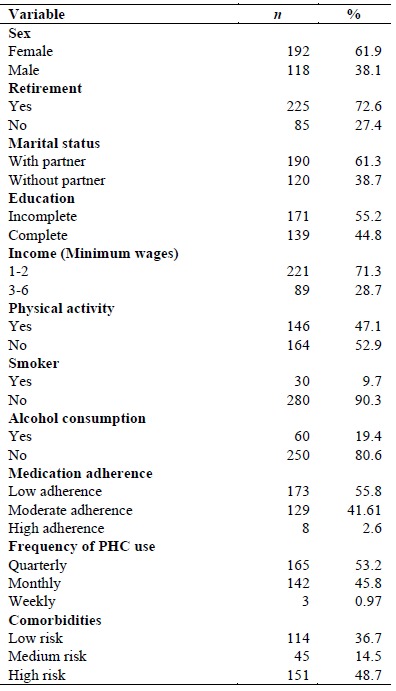
Among the 310 older adults who participated, low medication adherence (55.8 %) and high comorbidity risk (48.7 %) stood out. In addition, most had an income of one to two minimum wages (71.3 %) and incomplete secondary education (55.2 %). Regarding PHC use, 53.2 % accessed services quarterly and 45.8 % monthly, as described in Table 1.
Distribution of participants’ sociodemographic, lifestyle, clinical profile, and health service use data. Maringá, Paraná, 2024.
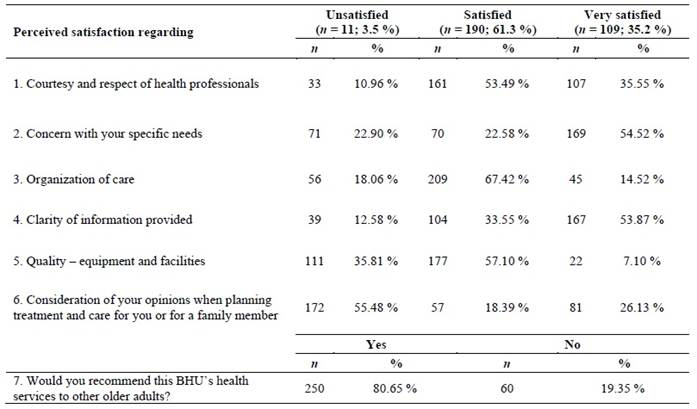
Regarding satisfaction, 190 (61.3 %) respondents reported being satisfied with the care, 109 (35.2 %) reported being very satisfied, and only 11 (3.5 %) were dissatisfied. These results suggest a predominantly positive evaluation of the services, with more than 96 % of older adults expressing some level of satisfaction (Table 2).
Table 2 shows that the greatest dissatisfaction concerned consideration of patients’ ideas and opinions during treatment and care planning (55.48 %), indicating a significant area for improvement. Conversely, concern for specific needs (54.52 %) and clarity of information provided (53.87 %) stood out with high “very satisfied” rates, indicating good practices in these aspects. Organization of care was also well rated, with 67.42 % of respondents satisfied. In contrast, the quality of equipment and facilities had the lowest percentage of “very satisfied” (7.10 %). This analysis suggests that improvements in infrastructure and in active listening to patients are needed, whereas practices related to communication and attention to specific needs already show notable progress. Regarding whether respondents would recommend the services to other older adults, most would recommend this BHU, with 250 older adults (80.65 %) answering “Yes,” whereas 60 (19.35 %) said they would not (Table 2).
Distribution of satisfaction with PHC care among interviewed older adults, by indicators/questions assessed. Maringá, Paraná, 2024.
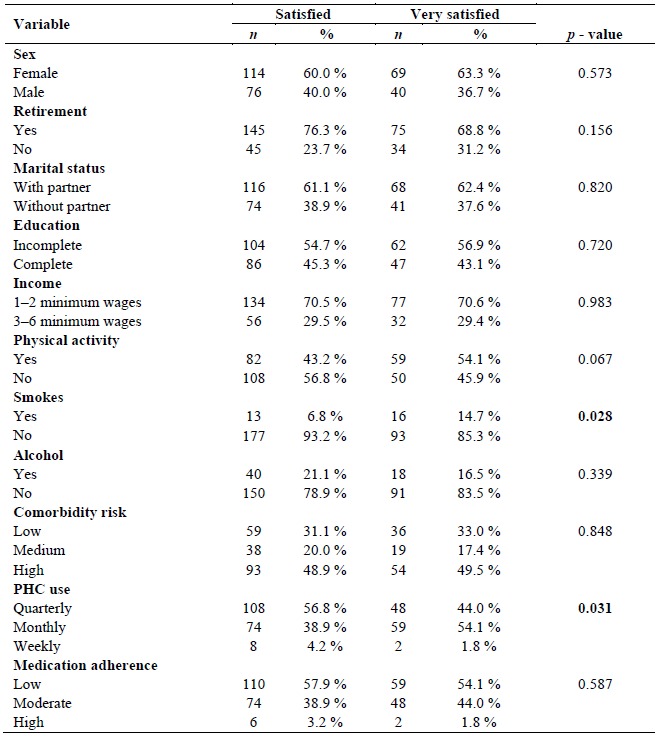
Table 3 presents the association analysis between various sociodemographic, behavioral, and health characteristics and participants’ satisfaction levels. The analysis showed statistically significant associations between satisfaction and two key variables: being a non-smoker (p = 0.028) and quarterly PHC use (p = 0.031), suggesting that regularity in using these services may influence user satisfaction, especially among those who use the services weekly, monthly, or quarterly.
Some variables-such as sex, education, marital status, physical activity, and medication adherence-did not show a significant association with satisfaction level. These results indicate that, within this dataset, these characteristics do not exert a relevant influence on participants’ satisfaction. Even though some variables were not statistically significant, trends can be observed, such as higher satisfaction among individuals with low medication adherence and among those with more severe comorbidities (Table 3).
Analysis of factors associated with satisfaction and high satisfaction among older adults regarding PHC care. Maringá, Paraná, 2024.
In the analysis of the word-cloud results, the main factors associated with user satisfaction with health services involved service availability and quality of care. Terms such as “professionals,” “availability,” “care,” and “time” emerged as central, indicating that positive perceptions are directly linked to the technical and interpersonal competence of professionals, as well as to the capacity to reduce waiting times and deliver effective care. The prominence of “organization” and “empathy” underscores the importance of a structured system capable of meeting older adults’ needs with appropriate sensitivity and attention (Figure 1).
Another salient aspect was the emphasis on specialized and diagnostic services, including “diagnostic tests,” “specialists,” and “appointments.” These terms suggest that accessibility to specific procedures and specialized physicians is necessary for older adults’ satisfaction. In addition, references to “dentistry” and “physical therapy” point to the importance of a multiprofessional approach that encompasses different health disciplines (Figure 1).

Word cloud of priority items for service improvement according to older adults assisted in Primary Health Care. Maringá, Paraná, 2024.
Discussion
The study revealed a predominance of female participants (61.9 %), corroborating findings from other research that indicate women’s greater demand for health services, attributed to heightened awareness of preventive care and stronger adherence to treatment regimens. (5, 17)
Regarding occupational status, 72.6 % of older adults were retired; however, many remained active in the labor market, motivated by the need to supplement income and to maintain social engagement, despite facing challenges such as age-related discrimination and technological barriers. (18, 19)
In addition, 55.2 % of participants had not completed formal education, and the predominant income range of one to two minimum wages underscores the need for social support. Limited education and low income often compel older adults to reenter the labor market even after retirement. 20 A considerable proportion of participants presented a high risk of morbidity and mortality, characterized by multiple chronic conditions and a greater likelihood of polypharmacy and complications, which reinforces the need for prioritization in care. 21
Regarding lifestyle habits, 19.4 % reported alcohol consumption and 9.7 % smoking, while 47.1 % engaged in physical activity, slightly fewer than those classified as sedentary (52.9 %). Although these results are consistent with findings from previous studies, 11 they differ from another investigation 21 that reported only 33 % sedentary behavior. This variation may be attributed to the lower educational level observed among the participants in the present study.
Most participants reported low medication adherence, and when those with medium and low adherence were combined, they accounted for 97 % of the sample. These findings are noteworthy, as non-adherence compromises therapeutic effectiveness, facilitates disease progression, increases the overuse of health services, and elevates the risks of hospitalization and mortality among older adults. Several factors are associated with poor adherence, including the complexity of treatment regimens, cognitive and economic difficulties, and adverse drug effects. 22
To address this issue, primary health care (PHC) can implement concrete measures such as pharmacotherapeutic follow-up programs to support adherence among older adults, the use of electronic reminders, and individualized support provided by health professionals. In addition, involving family members and caregivers in the therapeutic process may contribute to improved adherence rates. 23
It is crucial for health teams to adopt interdisciplinary approaches to identify individual barriers and implement strategies that promote adherence. These may include simplifying treatment regimens, providing education on the appropriate use of medications, and improving access to health services. Understanding and addressing the factors that influence adherence is essential to ensure better therapeutic outcomes and quality of life for this population. 24
Satisfaction with primary health care (PHC) may vary according to individual and sociodemographic factors, such as age and the presence of comorbidities, which requires a more attentive approach by health teams. This perspective reinforces the importance of continuous improvements in both infrastructure and quality of care to meet the specific needs of the older population. 8
Notably, although autonomy is often emphasized by health professionals as essential for older adults, in practice it is not consistently promoted. Dissatisfaction was most evident regarding the lack of consideration for patients’ opinions in care planning.
Autonomy, understood as the capacity to make decisions regarding one’s own actions, is fundamental for active aging and quality of life. 25 However, more authoritarian or even paternalistic practices still prevail, hindering the inclusion of older adults in the decision-making process, as highlighted in studies that emphasize the need to respect and promote autonomy even in the presence of limitations. (25, 26)
A feasible solution to this issue is the implementation of active listening protocols, in which professionals are trained to actively consider the preferences of older adults when planning therapeutic care. The creation of dialogue spaces and periodic meetings with users may also strengthen autonomy and ensure greater participation in decisions regarding their own health. 27
Accessibility, in turn, is a decisive factor in older adults’ satisfaction with primary health care (PHC). Common barriers include difficulties in scheduling appointments, long waiting times, and inadequate transportation to health facilities. Strategies such as extending service hours, implementing more efficient online or telephone scheduling systems, and strengthening home-based care can substantially help to mitigate these challenges. 28,29
Moreover, the lack of elder-centered strategies represents one of the main challenges in care management, underscoring the importance of integrated plans to address specific needs. To overcome this gap, it is essential to train professionals for a collaborative and inclusive approach, respecting individual choices and promoting elder-centered care. 29
On the other hand, the clarity of information provided was positively assessed, with most participants reporting being very satisfied. This dichotomy suggests that, although professionals are delivering adequate information, the interaction may be limited, offering few opportunities for older adults to express their needs and expectations. Strategies such as more participatory consultations, patient involvement in care planning, therapeutic groups, and other activities may strengthen trust and foster stronger connections with the service. 30
Continuity of care and professional-patient bonding were also identified as essential determinants of satisfaction, particularly for older adults requiring ongoing and comprehensive follow-up. Humanized approaches, welcoming attitudes, and respect for individuality were reported as critical elements, reinforcing the centrality of PHC as the preferred entry point into the health system. 27,30
Satisfaction with the quality of equipment and facilities was identified as one of the least favorable aspects, with few older adults reporting being very satisfied. This negative perception is consistent with other studies that highlight structural deficiencies as a recurrent barrier in Brazilian primary health care (PHC). (31,32 Inadequate infrastructure not only undermines the user experience but also restricts the ability of health professionals to provide high-quality care, ultimately compromising service efficiency. 33
Investments in the care environment, including the acquisition of modern equipment, improvements in physical infrastructure, and the creation of welcoming spaces, are fundamental steps to address this challenge, recognizing that inadequate structural conditions may discourage both professionals and users, thereby undermining trust and the establishment of a strong care relationship.
Investments in the care environment, including modern equipment, improvements in physical facilities, and the creation of welcoming spaces, are essential steps to overcome this challenge, recognizing that inadequate structural conditions may discourage both professionals and users, ultimately undermining trust in the service. The quality of primary health care (PHC) is strongly influenced by dimensions such as structure, process, and outcomes, which are mediated by the adequacy of staffing levels, service accessibility, and the strength of therapeutic relationships. 32 These factors are consistent with the emphasis revealed in the word cloud on “availability” and “care,” highlighting the need for well-prepared teams, clear protocols, and adequate resources to ensure comprehensive and humanized care. 33
The findings of this study reveal a predominantly positive evaluation, while also highlighting critical areas requiring attention, such as infrastructure and active listening in care planning. Facilitating access to consultations, developing more assertive approaches, attentive listening, and strengthening patient-provider relationships were identified as key elements to improve user adherence. Furthermore, primary health care (PHC) must be recognized as an effective entry point to the health system, ensuring that spontaneous demand is addressed in an effective, equitable, and resolutive manner. (27, 31)
Nonetheless, among the variables tested, only the frequency of PHC use was associated with satisfaction, with users attending on a quarterly basis reporting greater satisfaction. This underscores the importance of regular access in fostering continuous relationships between users and health professionals. Accessibility, however, remains a significant challenge within Brazilian PHC, as identified in other studies that point to difficulties in scheduling and long waiting times as frequent sources of dissatisfaction. 5,32
The word cloud analysis further reinforced that satisfaction is influenced by availability, quality of care, and organizational aspects. Terms such as “professionals,” “care,” “time,” and “availability” emphasized the relevance of efficient, patient-centered, and accessible care. Satisfaction was strongly linked to empathy and welcoming interactions,32 as well as continuity and comprehensiveness of care, recognized as key attributes of PHC. 30
In addition, terms such as “specialists,” “diagnostic tests,” and “dentistry” highlighted the importance of multiprofessional and integrated approaches. These findings reinforce that adequate facilities and the availability of specialized services are central determinants of positive evaluations. 5,33
Thus, both the word cloud analysis and the overall results of this study underscore the importance of an organized PHC system grounded in longitudinality and care coordination as essential strategies for enhancing satisfaction and service responsiveness.9,32 For older adults, both technical quality and the diversity of available services were decisive factors in the positive evaluation of health systems.
A limitation of this study lies in the inherent variability of user perceptions, which are influenced by expectations regarding care received and recent service experiences. Furthermore, as a cross-sectional design, the study does not capture changes in satisfaction over time. The presence of an interviewer may also have introduced bias in some responses.
Nevertheless, the findings are consistent with studies conducted in other contexts, reinforcing the importance of identifying determinants of satisfaction to further qualify PHC and align it more closely with user expectations. Future research adopting qualitative methodologies could deepen understanding of satisfaction-related factors, contributing to improved service organization and responsiveness to population demands.
Conclusion
As a conclusion to this study, satisfaction among older adults with Primary Health Care is associated with continuity of care, accessibility, and service organization. The high prevalence of satisfaction reflects the positive impact of humanized and welcoming approaches that value the therapeutic bond and attention to the specific needs of this population. The word-cloud analysis reinforced these findings, showing that suggested improvements converge on these aspects and highlighting dissatisfaction with active listening and precarious infrastructure as critical areas requiring urgent action to ensure older-adult-centered and resolutive care.
Despite study limitations, such as its cross-sectional design and reliance on users’ subjective perceptions, the results provide inputs for strategies to improve health-service quality. Strengthening PHC as an effective and humanized entry point is essential to promote active aging, support the sustainability of the health system, and enhance the quality of life of this population.
References
- 1. Alves Feijão LEA, Vasconcelos Santos BKV, Carvalho DR, Costa Paiva CLO, Costa Júnior FI, Cunha ES, Lopes Vieira CAL. Satisfação Do Paciente Na Atenção Primária: Revisão Integrativa. Revista Contemporânea (Internet). 2023;3(10):18794-18809. doi: 10.56083/RCV3N10-116
-
2. Diniz Oliveira AC, Giacomin KC, Dos Santos WJ, & Firmo JOA. A percepção do usuário idoso sobre o acesso e a qualidade da Atenção Primária à Saúde. Revista Brasileira de Medicina de Família e Comunidade (Internet). 2022;17(44):2363-2363. doi: 10.5712/rbmfc17(44)2363
» 10.5712/rbmfc17(44)2363 - 3. Santos AL, Marcon SS, Teston EF, Back IR, Lino IGT, Batista VC. Adesão ao tratamento de diabetes mellitus e relação com a assistência na atenção primária. REME-Revista Mineira de Enfermagem (Internet). 2020;24:e-1279. doi: 10.5935/1415-2762.20200008
-
4. De Andrade LAFD, Lopez Salazar PEL, Medeiros Leopoldino KDM, Barbosa Montenegro CB. Avaliação da qualidade da atenção primária à saúde segundo o nível de satisfação dos idosos. Rev Gaucha de Enfermagem (Internet). 2019;40:e20180389. doi: 10.1590/1983-1447.2019.20180389
» https://doi.org/10.1590/1983-1447.2019.20180389 -
5. Ribeiro Cantalino JL, Anjos Scherer MDD, Soratto J, Augusto Schäfer AA, Dos Anjos DSO. Satisfação dos usuários em relação aos serviços de Atenção Primária à Saúde no Brasil. Rev de Saúde Pública (Internet). 2021;55:22. doi: 10.11606/s1518-8787.2021055002533
» https://doi.org/10.11606/s1518-8787.2021055002533 -
6. Rodrigues Carvalho BLR, Avellar Boeck G, Back IR, Lima Santos A. Análise da assistência prestada na atenção primária e fatores associados na perspectiva de idosos diabéticos. Rev Baiana de Saúde Pública (Internet). 2023;47(2):163-182. doi: 10.22278/2318-2660.2023.v47.n2.a3882
» https://doi.org/10.22278/2318-2660.2023.v47.n2.a3882 -
7. Guerino Masochini R, De Farias SNP, Sousa AI. Avaliação dos atributos da Atenção Primária à Saúde na perspectiva dos idosos. Esc Anna Nery (Internet). 2021;26:e20200433. doi: 10.1590/2177-9465-EAN-2020-0433
» https://doi.org/10.1590/2177-9465-EAN-2020-0433 -
8. Alves Garcia LAA, Gaudenci Nardelli G, De Oliveira AFM, Casaburi LE, Camargo FC, Santos ADS. Satisfação de idosos octogenários com os serviços de Atenção Primária à Saúde. Revista Brasileira de Geriatria e Gerontologia (Internet). 2020;23:e190235. doi: 10.1590/1981-22562020023.190235
» https://doi.org/10.1590/1981-22562020023.190235 -
9. Da Silva JL, Fonseca Marins AM, Andrade Silva RMCRA, Pereira ER, De Oliveira FT. A Satisfação Da Assistência Prestada Ao Idoso Na Atenção Primária À Saúde: Considerações De Enfermagem. Epitaya E-books (Internet). 2020;1(11):9-18. Disponível em: https://portal.epitaya.com.br/index.php/ebooks/article/view/1/1
» https://portal.epitaya.com.br/index.php/ebooks/article/view/1/1 -
10. Da Silva DS, De Oliveira Costa LM, Souza Almeida L, De Almeida Rocha N, Da Silva Reis N, Damascena RS. Percepção dos idosos sobre os serviços de atenção primária e sua influência na qualidade de vida: revisão integrativa. Rev Fisioter Ter (Internet). 2024;28(139). doi: 10.69849/revistaft/th102410261955
» https://doi.org/10.69849/revistaft/th102410261955 -
11. Meira Silva VST, Pinto LF. Inquéritos domiciliares nacionais de base populacional em saúde: uma revisão narrativa. Ciência & Saúde Coletiva (Internet). 2021;26:4045-4058. doi: 10.1590/1413-81232021269.28792020
» https://doi.org/10.1590/1413-81232021269.28792020 -
12. Ben AJ, Neumann CR, Mengue SS. Teste de Morisky-Green e Brief Medication Questionnaire para avaliar adesão a medicamentos. Rev. Saúde Pública (Internet). 2012;46:279-289. doi: 10.1590/S0034-89102012005000013
» https://doi.org/10.1590/S0034-89102012005000013 -
13. Sharma N, Schwendimann R, Endrich O, Ausserhofer D, Simon M. Comparing Charlson and Elixhauser comorbidity indices with different weightings to predict in-hospital mortality: an analysis of national inpatient data. BMC Health Services research (Internet). 2021;21:1-10. doi: 10.1186/s12913-020-05999-5
» https://doi.org/10.1186/s12913-020-05999-5 -
14. Elixhauser A, Steiner C, Harris DR, Coffey RM. Comorbidity measures for use with administrative data. Medical Care (Internet). 1998;36(1):8-27. doi: 10.1097/00005650-199801000-00004
» https://doi.org/10.1097/00005650-199801000-00004 -
15. Vilela RB, Ribeiro A, Batista NA. (2020). Nuvem de palavras como ferramenta de análise de conteúdo. Millenium (Internet). 2020;11:29-36. doi: 10.29352/mill0211.03.00230
» https://doi.org/10.29352/mill0211.03.00230 -
16. Hosseini M, Resnik DB, Holmes K. The ethics of disclosing the use of artificial intelligence tools in writing scholarly manuscripts. Research Ethics (Internet). 2023;19(4):449-465. doi: 10.1177/17470161231180449
» 10.1177/17470161231180449 -
17. Pereira Pavan IP, Lopes Baptista ADS, Rosa CP, Silva Cabral D, Bittencourt Albino Silva SA. Satisfação do usuário com os serviços de saúde de atenção básica: percepção masculina. Cienc Cuid Saude (Internet). 2020;19:e46760. doi: 10.4025/ciencuidsaude.v19i0.46760
» https://doi.org/10.4025/ciencuidsaude.v19i0.46760 -
18. Remor Bastos E, Oderich CL. Estudo sobre a percepção de aposentados que trabalham. Revista Americana de Empreendedorismo e Inovação (Internet). 2023;5(2):22-33. doi: 10.33871/26747170.2023.5.2.8160
» https://doi.org/10.33871/26747170.2023.5.2.8160 -
19. Bastos Pazos PF, Bonfatti RJ. Velhice, trabalho e saúde do trabalhador no Brasil: uma revisão integrativa. Rev. Bras. Geriatr. Gerontol (Internet). 2020;23(6):e200198. doi: 10.1590/1981-22562020023.200198
» https://doi.org/10.1590/1981-22562020023.200198 -
20. Medina Vieiro M, Perseguino MG, Ferreira Rastelli VM, Vismari L. Análise do perfil sociodemográfico e de utilização de medicamentos de idosos atendidos em ambulatório universitário. Revista de Gestão em Sistemas de Saúde (Internet). 2020;9(3):479-498. doi: 10.5585/rgss.v9i3.14523
» https://doi.org/10.5585/rgss.v9i3.14523 -
21. Viana Peixoto S, Melo Mambrini JV, Araújo Firmo JO, Loyola Filho AID, Souza Junior PRB, De Andrade FB, Lima-Costa MF. Prática de atividade física entre adultos mais velhos: resultados do ELSI-Brasil. Revista de Saúde Pública (Internet). 2018;52(Sup2):5s. doi: 10.11606/S1518-8787.2018052000605
» https://doi.org/10.11606/S1518-8787.2018052000605 -
22. Silva Rodrigues ME, De Carvalho MAP. Fatores relacionados a polifarmácia e adesão medicamentosa em idosos: revisão integrativa da literatura. Educ. Ci. e Saúde (Internet). 2023;9(2):109-128. doi: 10.20438/ecs.v9i2.468
» https://doi.org/10.20438/ecs.v9i2.468 -
23. Da Trindade EO, Melo Souto RAD, Campos Alves GA, Magalhães HIF. Avaliação da adesão ao tratamento medicamentoso de pacientes idosos atendidos em um Ambulatório de Geriatria. VITTALLE-Revista de Ciências da Saúde (Internet). 2020;32(3):35-44. doi: 10.14295/vittalle.v32i3.11089
» https://doi.org/10.14295/vittalle.v32i3.11089 -
24. Oliveira GL, Lula-Barros DS, Silva DLM, Leite SN. Fatores relacionados à adesão ao tratamento sob a perspectiva da pessoa idosa. Revista Brasileira de Geriatria e Gerontologia (Internet). 2020;23(4):e200160. doi: 10.1590/1981-22562020023.200160
» https://doi.org/10.1590/1981-22562020023.200160 -
25. Silva Carneiro JL, Mesquita Ayres JRDC. Saúde do idoso e atenção primária: autonomia, vulnerabilidades e os desafios do cuidado. Revista de Saúde Pública (Internet). 2021;55:29. doi: 10.11606/s1518-8787.2021055002856
» https://doi.org/10.11606/s1518-8787.2021055002856 -
26. Marques RG, Simões PA, Santa Rosa B, Silvestre M. Idosos autónomos: uma reflexão ética. Revista Portuguesa de Medicina Geral e Familiar (Internet). 2021;37(5):482-488. doi: 10.32385/rpmgf.v37i5.13232
» https://doi.org/10.32385/rpmgf.v37i5.13232 -
27. Da Silva SD, Martão Flório F, Zanin L. (2023). Satisfação dos Usuários em Relação aos Serviços de Atenção Primária à Saúde. Revista FSA (Internet). 2023;20(10):217-233. doi: 10.12819/2023.20.10.11
» https://doi.org/10.12819/2023.20.10.11 -
28. Marques Mendonça M, Santos Aleluia IR, De Sousa MLT, Pereira M. Acessibilidade ao cuidado na Estratégia de Saúde da Família no Oeste Baiano. Ciência & Saúde Coletiva (Internet), 2021;26(5):1625-1636. doi: 10.1590/1413-81232021265.04722021
» https://doi.org/10.1590/1413-81232021265.04722021 -
29. Yagi EY, Batista MPP, Paschoal SMP, Almeida MHM. Desafios enfrentados e estratégias sugeridas para favorecer a gestão de planos de cuidados a pessoas idosas na Cidade Ademar-São Paulo, Brasil: percepções de profissionais da Saúde e da Assistência Social. Rev Ter Ocup Univ São Paulo (Internet). 2022;32(1-3):e203827-e203827. doi: 10.11606/issn.2238-6149.v32i1-3e203827
» https://doi.org/10.11606/issn.2238-6149.v32i1-3e203827 -
30. Vieira NFC, Machado MDFAS, Nogueira PSF, Lopes KDS, Vieira-Meyer APGF, Morais APP, et al. Factors influencing user satisfaction with Primary Health Care. Interface-Comunicação, Saúde, Educação (Internet). 2021;25:e200516. doi: 10.1590/interface.200516
» https://doi.org/10.1590/interface.200516 -
31. Ferreira J, Geremia DS, Geremia F, Celuppi IC, Thomas Tombini LH, Souza JBD. Avaliação da Estratégia Saúde da Família à luz da tríade de Donabed. Avances en Enfermería (Internet). 2021;39(1):63-73. doi: 10.15446/av.enferm.v39n1.85939
» https://doi.org/10.15446/av.enferm.v39n1.85939 -
32. Oliveira Gomes GLR, Castro Teixeira R, Gavenas L, Aires LSC. Avaliação da atenção primária à saúde na perspectiva dos usuários: uma revisão sistemática. Journal Archives of Health (Internet). 2024;5(3):e1886-e1886. doi: 10.46919/archv5n3espec-207
» https://doi.org/10.46919/archv5n3espec-207 -
33. Mattos Bretz YPM, De Paula JS, Gonçalo-Mialhe C, Mialhe FL. Satisfação dos usuários atendidos na Atenção Básica em Saúde ea oferta de Práticas Integrativas e Complementares em Saúde. Cadernos Saúde Coletiva (Internet). 2024;32(2):e32020018. doi: 10.1590/1414-462X202432020018
» https://doi.org/10.1590/1414-462X202432020018