The Ubiquitous Computing Agenda: Genealogy of Its Oblivion and Foundations for Its Foresight
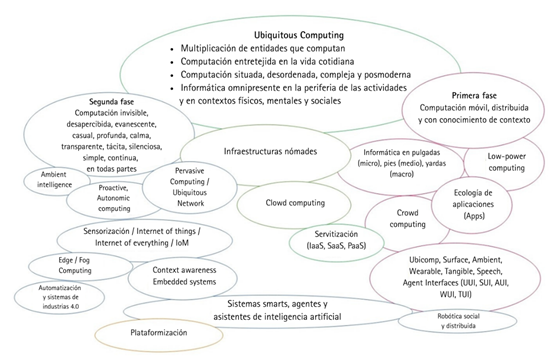
The diversity of artifacts often obscures the driving force behind technological change. This article aims to systematize the agenda of ubiquitous computing both as a vector of these transformations and as a key R&D program for understanding contemporary media technologies. The methodological approach is grounded in critical analysis from materialist perspectives within communication and media studies-specifically, archaeological and reconstructive methods. The article first examines two genealogical phases of the engineering and industrial agenda: mobile, distributed, and context-aware computing; and invisible, imperceptible, and shared computing. It then explores the theoretical and epistemological foundations of the agenda. Finally, it reviews research lines that have emerged from this agenda, particularly in the fields of intelligent systems and the Internet of Things. This article contributes to understanding the substrate of one of the most significant R&D programs of our time. It does so by recovering its historical sedimentation, unveiling its covert connections to contemporary media realities (IoT, Pervasive AI, etc.), and highlighting the areas in which the ubiquitous computing project remains indeterminate and unfinished. The conclusions reflect on the nature of the oblivion that has rendered ubiquitous computing the hidden substrate of present-day technological development and its foresight
Keywords:
computer science; information media; systems design; Internet; communication industry
 Thumbnail