Alliance Rupture: an unsuccessful case of psychoanalytic psychotherapy with a borderline patient
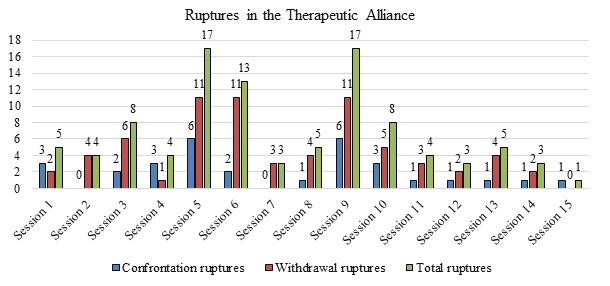
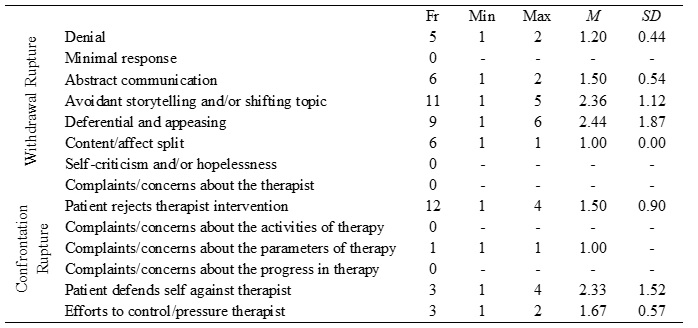
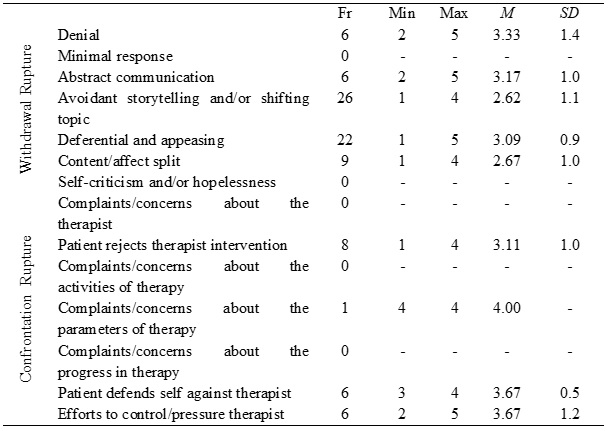
This paper aims to understand the processes of rupture of the Therapeutic Alliance (TA) of a case of interrupted psychoanalytic psychotherapy (PP) with a patient with Borderline Personality Disorder (BPD). This is a systematic case study that comprises 15 sessions of PP, one patient with complaints of impulsiveness and difficulties in interpersonal relationships, and his female therapist. The sessions were videotaped and transcribed. The identification of ruptures was made by the Rupture Resolution Rating System (3R's). There were 100 ruptures of AT, of these 69% were withdrawal ruptures and 31% of confrontation. We found 30 contributions from therapist to ruptures. The withdrawal ruptures are more subtle and difficult to identify, occurring more frequently than those of confrontation in the treatment. In the case of patients with BPD, therapists should develop skills to make interventions focused on TA. The need for other studies that seek to replicate the research in other cases of success and therapeutic failure is highlighted.
Keywords:
ruptures; therapeutic alliance; psychotherapy; process research; borderline personality disorder
 Thumbnail