Burnout syndrome and its relationships with social skills, coping, and socio-occupational variables in elementary school teachers
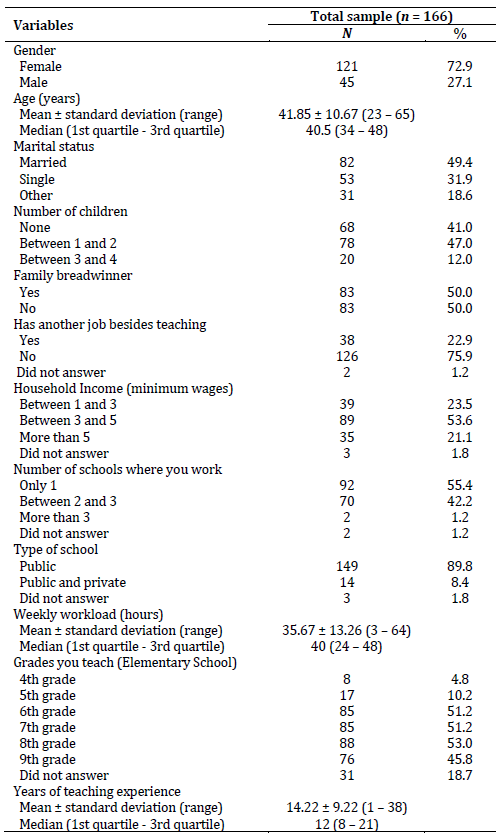
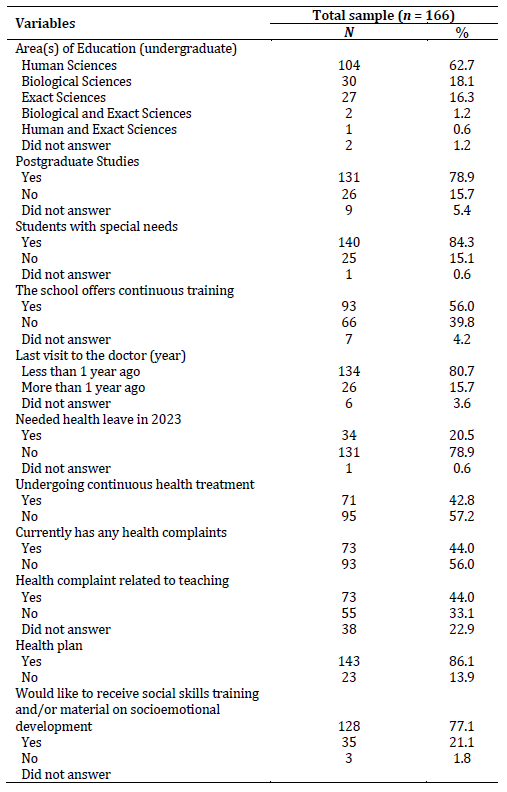
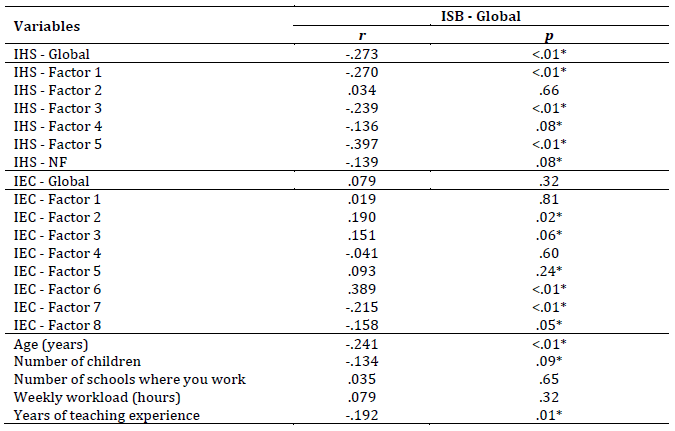
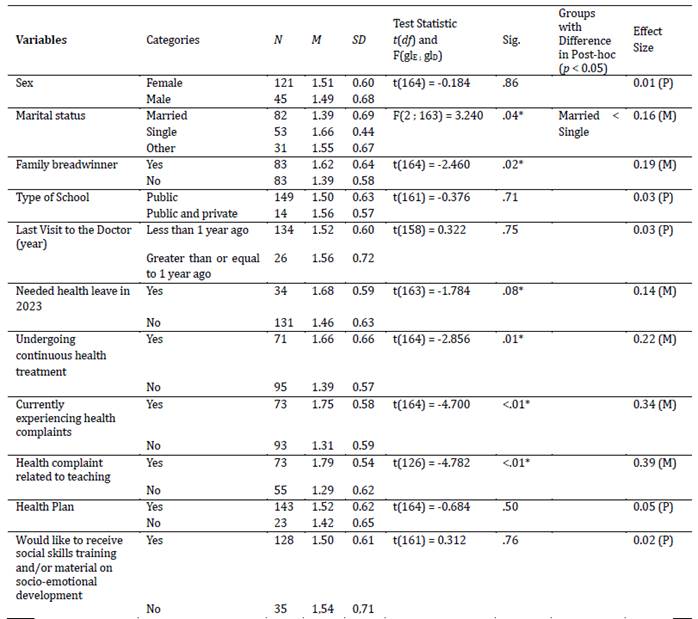
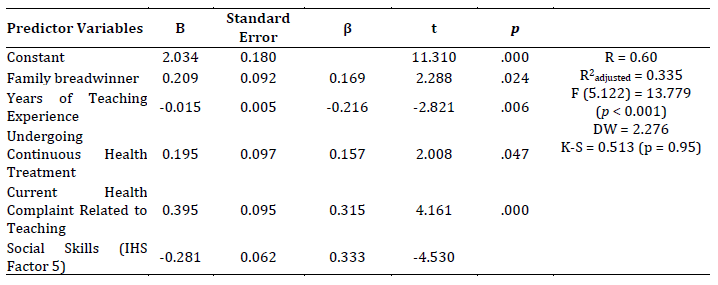
This study had the general objective of verifying the relationship between burnout syndrome, social skills, coping strategies, and socio-occupational variables in a sample of 166 elementary school teachers from 13 public schools of Minas Gerais, Brazil, aged between 23 and 65 years, 73 % of whom were female. The Burnout Syndrome Inventory (ISB), the Social Skills Inventory 2 (IHS-2), the Coping Strategies Inventory (IEC), and a socio-occupational questionnaire developed especially for this research were used. A negative correlation was obtained between burnout and repertoire of social skills (r = -.273 and p < .001). The coping strategies that positively correlated with social skills were seeking social support, problem solving, and positive reappraisal. Furthermore, there was a positive correlation between coping and professional fulfillment, indicating that teachers who adopted coping strategies were more likely to feel professionally satisfied. The burnout predictor variables were age, marital status, family provision, number of children, length of service, ongoing health care and social resourcefulness. The implications of these results were discussed concerning protective actions for the mental health of teachers and the importance of socio-emotional development in schools.
Keywords:
burnout; social skills; coping; teachers