The Influence of Social Anxiety and Depression Symptoms on the Consequences of Alcohol Consumption: The Mediating Role of Drinking Motives in University Students
Abstract:
Introduction: Alcohol use motives among university students are associated with mental health problems, including social anxiety, depression, and harmful drinking or alcohol dependence, warranting further investigation. Objective: To examine the influence of social anxiety and depressive symptoms on alcohol-related consequences (C), mediated by drinking motives. Method: Participants included 691 Peruvian university students who consumed alcohol (M = 20.5 years, SD = 4.5), recruited from private (84 %) and public (16 %) universities in Lima and Callao. A structural equation model tested the mediating role of four drinking motives (enhancement, social, coping, and conformity), with effect sizes interpreted. Results: Coping motives fully mediated the relationship between depressive symptoms and C. Depressive symptoms significantly influenced all drinking motives and C (except conformity). Social anxiety symptoms had direct effects on enhancement, conformity, and coping motives. All motives predicted C. Conclusion: Drinking motives are pivotal in explaining alcohol use and its association with depression and social anxiety symptoms.
Keywords:
social anxiety; depression; coping; alcohol; motives
Resumen:
Introducción: Los motivos de consumo de alcohol de los universitarios se asocian con diversos problemas de salud mental, como ansiedad social, depresión y consumo perjudicial o dependencia de alcohol, por lo que es relevante su análisis. Objetivo: Examinar la influencia de los síntomas de ansiedad social y depresión sobre las consecuencias de consumo de alcohol (CA), considerando el rol mediador de los motivos de consumo. Método: Participaron 691 universitarios peruanos consumidores de alcohol (M = 20.5 años, DE = 4.5), pertenecientes a universidades privadas (84 %) y públicas (16 %) de Lima y Callao. Se analizó un modelo de ecuaciones estructurales para evaluar el rol mediador de cuatro motivos de consumo (mejora, social, afrontamiento y conformidad), con interpretación de la magnitud de cada efecto. Resultados: se identificó un papel mediador completo del motivo de afrontamiento entre los síntomas depresivos y CA. Los síntomas depresivos influyeron significativamente en los motivos de consumo y CA, excepto en conformidad. Los síntomas de ansiedad social mostraron efectos directos significativos sobre los motivos de mejora, conformidad y afrontamiento. Todos los motivos influyeron en CA. Conclusiones: Los motivos de consumo son relevantes para explicar el consumo de alcohol y su asociación con los síntomas de depresión y ansiedad social.
Palabras clave:
ansiedad social; depresión; afrontamiento; alcohol; motivos
Resumo:
Introdução: Os motivos para o consumo de álcool em universitários associam-se a diversos problemas de saúde mental, como ansiedade social, depressão e uso nocivo ou dependência de álcool, o que torna relevante sua investigação. Objetivo: Examinar a influência dos sintomas de ansiedade social e depressão sobre as consequências do consumo de álcool (CA), considerando o papel mediador dos motivos para o consumo. Método: Participaram 691 universitários peruanos consumidores de álcool (M = 20,5 anos; DP = 4,5), vinculados a instituições privadas (84 %) e públicas (16 %) de Lima e Callao. Foi analisado um modelo de equações estruturais para avaliar o papel mediador de quatro motivos para o consumo (melhoria, social, enfrentamento e conformidade), interpretando-se a magnitude de cada efeito. Resultados: Identificou-se um papel mediador completo do motivo de enfrentamento na relação entre sintomas depressivos e CA. Os sintomas depressivos influenciaram significativamente os motivos para o consumo e as CA, exceto na conformidade. Os sintomas de ansiedade social apresentaram efeitos diretos significativos sobre os motivos de melhoria, conformidade e enfrentamento. Todos os motivos influenciaram as CA. Conclusões: Os motivos para o consumo de álcool são relevantes para explicar o consumo e sua associação com sintomas de depressão e ansiedade social.
Palavras-chave:
ansiedade social; depressão; enfrentamento; álcool; motivos
Alcohol is a psychoactive substance capable of producing dependence and adverse health consequences (World Health Organization (WHO), 2024a). Although not all individuals who consume alcohol develop dependence, its use exists along a continuum that includes heavy drinking, hazardous drinking, harmful use, abuse, and dependence (Reid et al., 1999). There are also gray areas associated with unsafe drinking practices, such as heavy, harmful, high-risk, and problematic use (Volpicelli & Menzies, 2022). When alcohol consumption exceeds moderate levels (i.e., more than one or two drinks per day), individuals may engage in risky use, whereas those who experience alcohol-related problems and meet at least one symptom of alcohol use disorder (AUD) can be classified as problem drinkers (Volpicelli & Menzies, 2022).
Alcohol consumption is widespread throughout the world. In Europe, the Western Pacific, and the Americas, more than 50 % of people consume alcohol. Its risky use causes more than 200 diseases, accounts for 5 % of morbidity, and causes harm at the personal, family, and social levels (National Institute on Alcohol Abuse and Alcoholism (NIAAA), 2025; WHO, 2024a), especially among young adults (Organization of American States, 2019). The Pan American Health Organization (PAHO, 2021) indicates that 85,000 people a year lose their lives due to alcohol use in the Americas, which affects various socioeconomic strata, including low- and middle-income countries. In addition, it causes mental health problems (PAHO, 2024) and places a burden on the public health sector (WHO, 2018).
Despite the problems caused by alcohol consumption, its use is alarming in Latin America. It is reported to reach 7.5 liters of alcohol per capita, above the global average of 5.5 (WHO, 2024b). Likewise, among the countries with the highest alcohol consumption are Argentina, Brazil, Peru, and Chile (WHO, 2024b). In Colombia, for example, 95 % of university students report having consumed at least one alcoholic beverage in their lifetime (Ministerio de Justicia y del Derecho de Colombia, 2024).
In Peru, the National Institute of Mental Health Honorio Delgado-Hideyo Noguchi (INSM HD-HN, 2023) has reported that approximately 35 % of the population engages in risky alcohol consumption. This pattern of use is particularly prevalent among university students (Aquino-Canchari et al., 2023; Cárdenas et al., 2020), for whom alcohol consumption is often linked to social and recreational contexts that facilitate interpersonal interaction or are associated with celebrations and parties. Additionally, alcohol use in this population is related to coping with academic stressors, among other factors. Furthermore, alcohol consumption among university students constitutes a risk factor for sexual aggression (Denhard et al., 2020; Mellins et al., 2017) and is associated with unprotected sexual behaviors (Goodhines et al., 2025).
Although social-recreational use is not necessarily associated with risky consumption, when this practice becomes habitual, it can lead to a pattern of alcohol abuse or dependence. These last two categories have been integrated into the Diagnostic and Statistical Manual of Mental Disorders (DSM-5-TR, American Psychiatric Association (APA), 2022) under the label of alcohol use disorder (AUD), which includes intense craving as a diagnostic criterion, among others. This disorder refers to the consequences experienced from alcohol consumption, which may be associated with other psychopathological conditions.
In the academic context, alcohol consumption among university students has been associated with academic burnout (Samek et al., 2024), poorer academic performance (López-Moreno et al., 2021), lower life satisfaction (Sæther et al., 2019), and reduced quality of life (López-Moreno et al., 2021). At the individual level, alcohol use is also considered a risk factor for obesity, smoking, and low levels of physical activity (Nazareno et al., 2020). Furthermore, alcohol consumption has been linked to an increased risk of experiencing physical (Rosero-Ordoñez et al., 2024) and sexual violence (Caamano-Isorna et al., 2021). Despite these adverse outcomes, risky alcohol use remains prevalent among Hispanic university students (Herrero-Montes et al., 2022; Ramón-Arbués et al., 2025), Latinos (Cisneros et al., 2022; Morales et al., 2021), and Peruvians (Cabanillas-Rojas et al., 2024) and is often associated with misconceptions about its effects (Sociedad Española de Medicina Interna (SEMI), 2020).
According to Cox and Klinger (1988), the decision to drink alcohol depends on expectations regarding changes in affective states produced by alcohol consumption compared to non-consumption. These expectations arise from historical and current factors, as well as past experiences (Cox & Klinger, 1988). Based on the source of the expected effects of alcohol use (internal or external) and the valence associated with expectations of either enhancing positive affect or reducing negative affect, four drinking motives have been identified: social (external) and enhancement (internal), both of positive valence; and coping (internal) and conformity (external), both of negative valence (Cooper, 1994; Cox & Klinger, 1988). Among these, enhancement is responsible for increasing the positive states of alcohol; coping seeks to counteract negative states such as depression and anxiety (Grant et al., 2007); social enhances performance in social interaction; and conformity is linked to the avoidance of social disapproval.
These motives suggest that alcohol use often occurs in the context of emotional states associated with negative or unpleasant affects, such as depression or social anxiety. Depression is defined as a state of negative affect characterized by depressed mood or loss of interest, accompanied by a range of somatic and cognitive symptoms (APA, 2022). Social anxiety disorder is characterized by intense fear or anxiety in social situations where individuals anticipate negative evaluation (APA, 2022). When anxiety is specifically related to social interaction, it refers to the fear of initiating or maintaining conversations with others (Brown et al., 1997; Mattick & Clarke, 1998).
Depression is among the most prevalent mental disorders worldwide (WHO, 2023a) and in Peru (INSM HD-HN, 2023), as is social anxiety (Stein et al., 2017). When a mental disorder such as those described co-occurs with a substance use disorder, this condition is referred to as a dual disorder or dual diagnosis (Wittchen, 1996).
In this regard, the association between depressive symptoms and alcohol consumption has been noted in various samples; for example, in American adults (Qi et al., 2024), pregnant women (Chapman et al., 2024), Spaniards (Villanueva-Blasco et al, 2024), and English patients (Adesanya et al., 2022). As evidence of dual disorders, it was also found that interventions to reduce alcohol consumption reduce symptoms of depression in young people (Fredman Stein et al., 2022). Similarly, social anxiety disorders are risk factors for alcohol use problems in Americans (Rosenström & Torvik, 2023), Honduran women (Espinoza-Turcios et al., 2024), and Brazilian university students (Correia & Marcassa, 2018).
Similarly, Cox and Klinger (1988) suggest that drinking motives play a mediating role between negative affect (anxiety, social anxiety, and depression) and the consequences of alcohol consumption. For example, Kim and Kwon (2020) found in South Korean university students that physiological symptoms and fear of negative evaluation of anxiety have a significant indirect effect on alcohol-related problems when coping and conformity motives are present. Terlecki and Buckner (2015), in English university students, found that conformity and coping motives play a mediating role in the relationship between social anxiety and drinking with negative emotions in intimate or personal situations or in negative emotional contexts.
In the United States, Keum and Cano (2023) identified that anxiety and depressive symptoms indirectly influence the severity of consumption mediated by coping motives in a group of Latinos and Asians. However, the indirect effect was not significant in the group of African Americans. Desalu et al. (2019) found that coping plays a partial mediating role in the relationship between depression and binge drinking and the negative consequences of alcohol in a sample of African American college students. Villarosa-Hurlocker et al. (2019), also in college students, reported that conformity motives mediate the association between anxiety and problems associated with alcohol use. Kenney et al. (2018) found that coping mediates the relationship between depression and alcohol-related problems in college students, although this mediating role was not maintained in the general population. Bravo et al. (2016) identified a mediating role of coping between depressive symptoms and problems associated with alcohol use in US students. It was also found that the coping motives related to social anxiety and coping with depression play a mediating role in the relationship between social avoidance and alcohol-related problems in Canadian university students (Collins et al., 2021). Bravo et al. (2018) found that coping motives among American, Argentine, and Spanish students mediate the relationship between depressive symptoms, rumination, and the consequences of alcohol. They noted that these associations are likely to be similar across different countries.
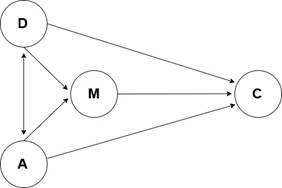
Given the various problems associated with alcohol use (WHO, 2023b, 2024b; PAHO, 2021, 2024) and its impact on health (WHO, 2018), it is pertinent to analyze the variables associated with alcohol consumption. In this regard, given that drinking motives often influence the consequences of alcohol use, even more so in a young sample of university students whose consumption tends to be reckless, the objective of the study was to examine the mediating role of drinking motives between social anxiety and depression and the consequences of alcohol consumption (Figure 1). In this regard, the research hypotheses of the present study were:
-
Depressive symptoms have a direct and positive effect on drinking motives.
-
Social anxiety symptoms have a direct and positive effect on the motives for alcohol consumption.
-
The motives for alcohol consumption have a direct and positive effect on the consequences of alcohol consumption.
-
Depressive symptoms have a direct, positive, and significant effect on the consequences of alcohol consumption.
-
Social anxiety symptoms have a direct, positive, and significant effect on the consequences of alcohol consumption.
-
Depressive symptoms have an indirect and positive effect on the consequences of alcohol consumption when mediated by the motives for alcohol consumption.
-
Social anxiety symptoms have an indirect and positive effect on the consequences of alcohol consumption when mediated by the motives for alcohol consumption.
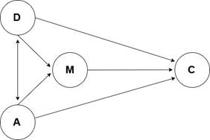
A,social anxiety symptoms; D, Depressive symptoms; M, a motive for drinking alcohol; C, consequences of drinking alcohol. Each model considers a different motive.
This study is critical because it allows us to understand the mediating mechanisms between symptoms of social anxiety and depression and their impact on the consequences of alcohol consumption in young people who frequently use this substance (Aquino-Canchari et al., 2023; Cárdenas et al., 2020). Thus, it highlights that understanding alcohol use among university students allows for effective interventions (Ghosh et al., 2024; Morris et al., 2022), even in the presence of social anxiety (Walukevich-Dienst et al., 2025) or depression (Mehus et al., 2023), preventing the onset of mental health problems.
Despite their relevance, few studies relate the variables mentioned in the Latin American context, and none exist in Peru. There are also no studies on this type of sample, which is why analysis is necessary. Additionally, despite their explanatory power, multivariate studies that consider mediators between variables linked to alcohol consumption are not common, which justifies their use in the present study because it will allow us to understand the interactions between the variables.
Method
Design
This was an explanatory study (Ato et al., 2013), in which structural equation modeling was used to examine the mediating role of drinking motives in the effect of social anxiety and depressive symptoms on the consequences of alcohol consumption.
Participants
A total of 691 participants were recruited, of whom 45.9 % were male and 54.1 % female, with a mean age of 20.5 years (SD = 4.5). A non-probability purposive sampling method was used, including university students who had consumed alcohol at least once in their lifetime and in recent months. Participants under the age of 18 and those currently receiving treatment for alcohol use problems were excluded from the study.
Furthermore, 84 % of them are university students from private universities and 16 % from public universities. In terms of origin, 87 % came from the Peruvian capital (Lima), 3 % from the Constitutional Province of Callao, and the rest from other regions of the country. Regarding lifetime, annual, semi-annual, quarterly, and monthly prevalence, 100 % reported having consumed alcohol once in their lifetime and during the last twelve months; 91.6 % had used alcohol in the previous six months, 82 % drank in the last quarter, and 64 % used the substance during the previous month.
Instruments
Modified Drinking Motives Questionnaire Revised (M-DMQ-R; Grant et al., 2007). It measures five motives for alcohol consumption: coping with depression, coping with anxiety, enhancement, conformity, and social. It has 28 items in a five-category Likert scale with response options ranging from never or almost never to always or almost always. In Peru, a four-factor structure has been identified (SRMR = .065, RMSEA = .085 (95 % CI .081, .088), CFI = .950, GFI =.994) showing acceptable reliability across its dimensions: coping (α =.96, ω =.96), social (α =.77, ω =.75), enhancement (α =.88, ω =.89), and conformity (α =.92, ω =.93) (Caycho-Caja et al., in press).
Social Interaction Anxiety Scale (SIAS-6; Peters et al., 2012). This is a shortened version of the original instrument by Mattick and Clarke (1998). It assesses symptoms of social interaction anxiety using six items rated on a five-point Likert scale ranging from not at all to extremely. In Peru, a unidimensional structure was identified in a sample of university students, showing adequate model fit (SRMR = .025, RMSEA = .082 (95% CI .061, .10), CFI = .993, GFI = .999) and internal consistency (α = .89, ω = .89) (Caycho-Caja, Orihuela-Manrique, Montes-Iturrizaga et al., 2025).
Patient Health Questionnaire-9 (PHQ-9; Spitzer et al., 1999). This instrument assesses depressive symptoms based on the diagnostic criteria of the DSM-IV. It consists of nine items rated on a four-point Likert scale (not at all (0 days), several days (1-6 days), more than half the days (7-11 days), and nearly every day (12-14 days)). Villarreal-Zegarra et al. (2019) provided evidence of validity in the Peruvian population of a unidimensional measure (RMSEA = .089, SRMR = .039, CFI = .936). In the present analysis, the scale showed acceptable psychometric properties (SRMR = .039, RMSEA = .094 (95 % CI .082, .107), CFI = .982, GFI = .997 / α = .91, ω = .92).
Brief Young Adult Alcohol Consequences Questionnaire (B-YAACQ; Kahler et al., 2004). This is a brief, unidimensional 24-item version of the YAACQ designed to assess the consequences of alcohol consumption based on the DSM-IV criteria for abuse and dependence. The B-YAACQ measures symptoms of abuse and dependence as well as the severity of alcohol-related problems over the past 12 months (Kahler et al., 2004).The single factor was also replicated in a Peruvian sample with favorable factor loadings (λ > .30), adequate fit indices (SRMR = .054, RMSEA = .060 (95 % CI .056, .064), CFI = .968, GFI =.995) and high reliability (α = .95, ω = .96). The instrument uses a five-point Likert-type response format ranging from never to always (Caycho-Caja, Orihuela-Manrique, Barrios-Sallo et al., 2025).
Procedure
After the study protocol was developed, an online survey (Google Forms) was created to collect responses to the instruments, as well as relevant sociodemographic data. The survey was distributed to participants, who were informed about the purpose and procedures of the study and provided informed consent, emphasizing the voluntary nature of their participation and the confidentiality of their data. The survey was disseminated through university students’ social networks and with the support of contacts who assisted in sharing the link. Data collection took place between November and December 2024, with an average completion time of approximately eight minutes. No monetary compensation was provided to participants.
Data Analysis
A univariate analysis of the study variables was conducted using the total scores of the following measures: alcohol-related consequences (B-YAACQ), social interaction anxiety symptoms (SIAS-6), depressive symptoms (PHQ-9), and the four drinking motives (coping, enhancement, conformity, and social; M-DMQ-R). Means, standard deviations, skewness, and kurtosis were calculated. For skewness and kurtosis, values within ± 1.5 were considered indicative of approximate normality (Pérez & Medrano, 2010). As a preliminary step, bivariate correlations were computed using Pearson’s r, and a minimum meaningful effect size of r> .20 was considered (Ferguson, 2009) to ensure sufficient associations among the variables prior to multivariate analysis. Subsequently, a measurement model was estimated using the Weighted Least Squares Means and Variance adjusted (WLSMV) estimator. An oblique model of first-order correlated factors was specified, including the four drinking motives, alcohol-related consequences, depressive symptoms, and social anxiety symptoms. Model fit was evaluated using the following indices: RMSEA ≤ .06, SRMR ≤ .08, CFI ≥ .95, TLI ≥ .95 (Hu & Bentler, 1998). Internal consistency was assessed using omega coefficients (ω > .70) (Campo-Arias & Oviedo, 2008).
Using the same WLSMV estimator, which performs well with ordinal variables and under conditions of non-normality (Hancock & Mueller, 2013), mediation models were estimated by specifying four independent models (see Figure 1). In the first model (M1), social anxiety symptoms (A) and depressive symptoms (D) were specified as exogenous variables predicting enhancement motives (mediator), which in turn has a direct effect on the consequences of alcohol consumption (C), the dependent variable. Then, a second (M2), third (M3), and fourth model (M4) were presented in which only the motive for consumption varied, alternating between conformity, coping, and social, respectively (Figure 1). In each model, the fit indices were evaluated (Hu & Bentler, 1998), and an interpretation of the magnitude of the direct effects (β > .20) was performed (Ferguson, 2009). In the case of mediation models, partial mediation is assumed if the direct effect of the independent variable on the dependent variable has a minimum effect size; otherwise, complete mediation is assumed. The magnitude of the indirect effect of each model was interpreted using the coefficient υ (Lachowicz et al., 2018), where a value greater than .04 indicates a small magnitude (Ferguson, 2009).
Ethical Considerations
The study adheres to the guidelines of the Code of Ethics of the Peruvian Association of Psychologists and the Declaration of Helsinki, ensuring the well-being of participants throughout the project. It was also approved by the Academic Vice-Rector's Office of the Universidad de San Martín de Porres. In addition, it was approved by the ethics committee of the Universidad Tecnológica del Perú with registration code 342-2024-CEI-UTP.
Results
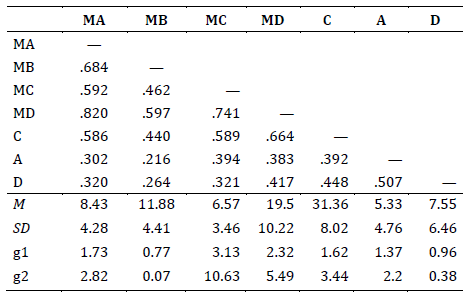
Descriptive statistics for the total scores of the four drinking motives (enhancement, social, conformity, and coping), social anxiety symptoms, depressive symptoms, and alcohol-related consequences are presented in Table 1. The variables showed non-normal distributions, with elevated skewness and kurtosis values. The upper section of Table 1 displays the correlation matrix, indicating that all variables were significantly associated, with effect sizes exceeding the minimum meaningful threshold (r > .20).
Subsequently, prior to the mediation model, a measurement model with oblique factors including depression, social anxiety, the consequences of consumption (unidimensional), and the four motives for consumption was proposed, and an adequate fit was found (SRMR = .055, RMSEA = .036 (95 % CI .034, .038), CFI = .963, GFI =.992) with interfactor correlations greater than .20 and high reliability in each of the dimensions (ω ≥ .80).
Then, a first mediation model (M1) was proposed with enhancement as a mediator between the consequences of consumption (endogenous) and depressive symptoms and anxiety symptoms (exogenous) (SRMR = .053, RMSEA = .038 (95 % CI .036, .041), CFI = .969, GFI = .993). Then, a second model (M2) was proposed with conformity as a mediator (SRMR = .055, RMSEA = .038 (95 % CI .036, .041), CFI = .970, GFI = .993), a third model (M3) with coping (SRMR = .050, RMSEA = .034 (95 % CI .032, .036), CFI = .976, GFI = .994), and a fourth model (M4) with social motives (SRMR = .050, RMSEA = .034 (95 % CI .032, .036), CFI = .976, GFI = .994).
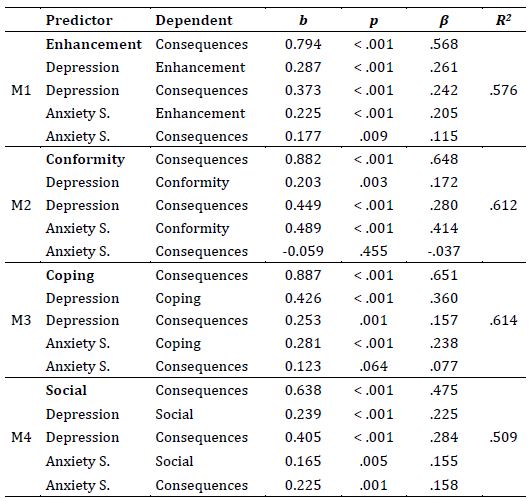
Regarding the first hypothesis, depression shows a significant direct effect of minimum necessary magnitude (β > .20) on the motives for alcohol consumption, except conformity (β < .20, p< .05) in the four models proposed (M1-M4). Regarding the second hypothesis, social anxiety symptoms showed a significant direct effect of minimum necessary magnitude (β > .20) on the motives for alcohol consumption, but concerning social motives, it showed an irrelevant magnitude (p < .05, β < .20). For the third hypothesis, the four motives for consumption showed a direct, significant effect of moderate magnitude (β > .50, p < .05) on the consequences of consumption (Table 2).
Regarding the fourth hypothesis, depressive symptoms showed a small but significant direct effect on the consequences of alcohol consumption in all models, except for model M3. Regarding the fifth hypothesis, social anxiety symptoms did not show a significant direct effect on alcohol-related consequences in any of the models (Table 2).
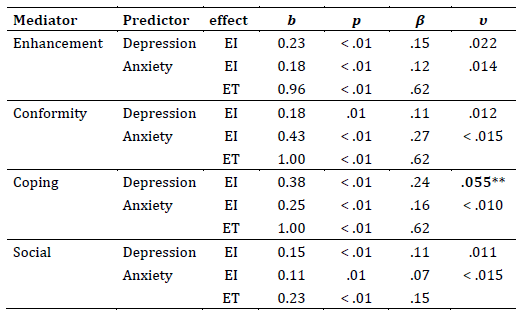
Regarding the sixth hypothesis, in the third model (M3), depressive symptoms explained the consequences of consumption in the presence of the coping motives mediator, showing a positive, significant, and minimally necessary indirect effect (υ = .055); in the other models, no relevant effect size was achieved (Table 3). When added to this, a non-significant direct effect of depressive symptoms on the consequences of consumption (β = .15) is considered a type of complete mediation.
Regarding the seventh hypothesis, social anxiety symptoms did not show a significant indirect effect on alcohol-related consequences through enhancement, social, and conformity motives in any of the proposed models. Although the indirect effects were positive and statistically significant, their magnitude did not reach the minimum meaningful threshold (Table 3).
Discussion
The findings are consistent with previous theoretical assumptions (Cooper, 1994; Cox and Klinger, 1988) and empirical evidence (Collins et al., 2021; Desalu et al., 2019; Kenney et al., 2018; Keum & Cano, 2023; Terlecki & Buckner, 2015; Villarosa-Hurlocker et al., 2019) that highlight the mediating role of alcohol consumption motives. These findings are relevant due to their implications for prevention and clinical intervention, as well as the limited number of studies examining the association between drinking motives and the variables under study in the Latin American context. Although these results were expected, their nuances are discussed in light of the proposed hypotheses.
Regarding the first hypothesis, depressive symptoms were found to significantly influence coping motives (M3). As Cooper (1994) points out, these negative states lead university students to seek coping strategies to avoid the discomfort associated with depression, especially in a context of academic demands. Depressive symptoms also showed a significant influence on social motives (M4) and enhancement (M1). This indicates that college students who consume alcohol not only seek to avoid unpleasant emotions but also actively seek sources of social reinforcement and positive emotions (Cooper, 1994; Cox & Klinger, 1988) that may be linked to risky behaviors (Cabanillas-Rojas et al., 2024; Cisneros et al., 2022; Morales et al., 2021) at a stage of development characterized by significant social interaction within peer groups. In other words, university students would not only participate in rewarding experiences linked to alcohol due to personal or academic setbacks. A lifestyle with significant social interaction actively directs them to various sources of gratification in which alcohol is present. These may be celebrations, social gatherings, or habits linked to the leisure and recreation style of their peer group. These results are consistent with previous studies conducted with college students (Bravo et al., 2016), young adults who are not in college (Kenney et al., 2018), African American college students (Desalu et al., 2019; Keum & Cano, 2023), Latino and Asian racial minorities (Keum & Cano, 2023), and in cross-cultural studies (Bravo et al., 2018) in which alcohol consumption is very frequent.
The second hypothesis supported the significant influence of social anxiety symptoms on enhancement (M1), conformity (M2), and coping (M3). According to the theoretical model of Cox and Klinger (1988), it is observed that university students who experience social anxiety symptoms seek mechanisms of harmful valence avoidance in alcohol, such as coping and conformity. This means that students with greater difficulty in social interaction would drink alcohol because they think it helps them cope with social interaction situations or to fit more easily into a social group, which would not allow them to develop the necessary social skills and would only rely on alcohol as a tool to function correctly on a social level. However, this may reflect misconceptions or unrealistic expectations related to alcohol consumption (SEMI, 2020) which could further worsen their prognosis. Other studies have also found that the motives of conformity and coping (anxiety and/or depression) are directly influenced by social anxiety symptoms (Villarosa-Hurlocker et al., 2019) or social avoidance (Collins et al., 2021). The absence of an association between social anxiety and social motives may be explained by the discrepancy between social motives, which are oriented toward the pursuit of positive reinforcement (Cooper, 1994), and social anxiety, which is characterized by negative affect in social interaction contexts (Mattick & Clarke, 1998). In the presence of social anxiety, individuals may engage in behavioral avoidance mechanisms to evade social situations, even when they have an interest in participating in them.
The third hypothesis showed that the four motives for consumption influence the consequences of alcohol consumption. Similarly, conformity also showed a significant influence (Kim & Kwon, 2020; Terlecki & Buckner, 2015). The findings support a possible conditional relationship between the four motives and the consequences of alcohol consumption, the cause of which can be explained by individual, family, and socio-cultural risk factors (Fernández-Castillo et al., 2021). For example, it has been found that stress, easy access, or third-party supply predisposes college students to alcohol consumption (Cabanillas-Rojas et al., 2024). Added to these are low self-esteem, economic and family problems, academic overload, and even dating (Valle-Solís et al., 2022). Other research with college students or young adults from different contexts also identified the influence of coping motives on alcohol use (Bravo et al., 2018; Terlecki & Buckner, 2015), the severity of their intake (Keum & Cano, 2023), associated problems or negative consequences (Bravo et al., 2016; Collins et al., 2021; Kenney et al., 2018; Kim & Kwon, 2020), and binge drinking (Desalu et al., 2019).
Regarding the fourth hypothesis, a direct and significant influence of depressive symptoms on the consequences of alcohol consumption was found, except for the model with coping as a mediator (M3). Although Bravo et al. (2018) found a similar effect, others found a trivial effect (Bravo et al., 2016; Kenney et al. 2018; Keum & Cano, 2023). These discrepancies can be explained by considering that depressive symptoms are one more variable in a complex system of protective and risk factors related to alcohol consumption (NIAAA, 2025), which is characterized as a multi-causal phenomenon. Additionally, not all college students with depressive symptoms experience direct consequences, as these are more frequent when there is harmful consumption or AUD. Regarding the fifth hypothesis, as in previous studies (Kim & Kwon, 2020; Villarosa-Hurlocker et al., 2019), social anxiety did not show a relevant influence in any of the models.
The sixth and seventh hypotheses refer to the indirect effect of depressive symptoms and anxiety symptoms, respectively, on the consequences of alcohol consumption in the presence of drinking motives, and only the mediating role of coping on depression and the consequences of alcohol consumption was significant. This result was similar to that of studies conducted on Latino and Asian adults (Keum and Cano, 2023) and university students (Bravo et al., 2016; Bravo et al., 2018; Desalu et al., 2019; Kenney et al., 2018). In the present study, a type of complete mediation was found, indicating the relevance of this cognitive component of the motives for consumption and the consequences of alcohol consumption. In this sense, coping motives are an avoidance mechanism for depression that would lead college students to use alcohol as an inappropriate resource. Rather than a weak effect of depressive symptoms on the consequences of consumption, a cognitive microsystem of prior coping motives is identified that could precipitate misconceptions linked to the effect of alcohol (SEMI, 2020) as mitigating factors for depression. Probably, in the act of alcohol consumption, the disinhibiting effects of alcohol would feed back into the experience of negative emotions and depressive symptoms. However, in the medium and long term, this association would be harmful.
Regarding the sixth hypothesis, although enhancement, conformity, and social motives are associated with alcohol consumption, they do not function as mediators between depressive symptoms and social anxiety symptoms. Enhancement and social motives involve a positive valence, suggesting links with variables related to positive affect. In this sense, alcohol consumption does not occur exclusively in negative emotional states, but may also be driven by contextual or environmental factors, such as celebrations related to personal or academic achievements, parties, or leisure activities. In the case of conformity motives, these may depend more on external evaluative pressures than on internal emotional states such as social anxiety. Additionally, avoidance mechanisms characteristic of social anxiety may limit the use of conformity motives.
These findings highlight the importance of the reasons for alcohol consumption and would encourage the development of specialized interventions focused on addressing this issue among university students, a group exposed to risky consumption (Aquino-Canchari et al., 2023; Cárdenas et al., 2020). Furthermore, to prevent the emergence of greater motives for alcohol consumption, it is necessary to prioritize psychological counseling and psychoeducation strategies in this vulnerable group. These should be healthy and, above all, attractive alternatives that meet the psychosocial needs that lead to alcohol consumption, but in an adaptive way. Likewise, given their association, the triad of negative emotion (social anxiety symptoms or depressive symptoms), motives for consumption, and associated consequences should be incorporated into interventions for more serious cases such as AUD. In addition, placing greater emphasis on prevention and, above all, on mental health promotion can have a favorable impact on reducing the impact of psychological disorders (AUD, depression, social anxiety) (Ghosh et al., 2024; Mehus et al., 2023; Morris et al., 2022; Walukevich-Dienst et al., 2025), especially in a context of healthcare system overload (WHO, 2018).
Among the study limitations, it should be noted that the sample consisted exclusively of university students from the Peruvian capital, which limits the generalizability of the findings to other contexts. An important limitation lies in the cross-sectional design of the study, which precludes establishing causal relationships between distal and mediating variables and alcohol-related consequences. This is compounded by the inherent limitations of self-report measures as the method of data collection. Additionally, the analyses were conducted using independent models for each drinking motive, which is consistent with the theoretical framework that conceptualizes these as distinct constructs. However, this approach restricts the possibility of examining their joint structure simultaneously due to its complexity.
This study concludes by highlighting the mediating role of coping motives between symptoms of depression on the consequences of alcohol consumption. Similarly, social anxiety and depressive symptoms are predictors of coping motives, while all motives for consumption have a direct effect on the consequences of alcohol consumption. The importance of multivariate studies similar to the present one is emphasized, as they allow for a greater explanatory range of complex variables related to alcohol consumption.
It is recommended that the study be replicated in groups with more severe alcohol consumption, such as poly-drug users, users diagnosed with AUD, and inmates in rehabilitation centers or prisons. Furthermore, given the scarcity of cross-cultural studies, similar replications in Latin American contexts are a priority. Finally, given the multi-causal complexity of the phenomenon studied, it is suggested that additional individual mediating variables be included alongside the reasons for alcohol consumption.
References:
-
Adesanya, E., Cook, S., Crellin, E., Langan, S., Mansfield, K., Smeeth, L., & Herrett, E. (2022). Alcohol use recording in adults with depression in English primary care: A cross-sectional study. BMJ Open, 12(1). https://doi.org/10.1136/bmjopen-2021-055975
» https://doi.org/10.1136/bmjopen-2021-055975 - American Psychiatric Association. (2022). The Diagnostic and Statistical Manual of Mental Disorders, Fifth Edition, Text Revision American Psychiatric Association.
- Aquino-Canchari, C. R., Tapia-Mayta, A. F., Yupari-Yauri, Y. N., Álvarez-Vilchez, M. L., & Cortez-Orellana, S. A. (2023). Trastornos mentales asociados al consumo de alcohol en estudiantes de medicina de una Universidad peruana. Revista Médica de Rosario, 89(3), 143-151.
-
Ato, M., López, J., & Benavente, A. (2013). Un sistema de clasificación de los diseños de investigación en psicología. Anales de Psicología, 29(3), 1038-1059. https://doi.org/10.6018/analesps.29.3.178511
» https://doi.org/10.6018/analesps.29.3.178511 -
Bravo, A. J., Pearson, M. R., Stevens, L. E., & Henson, J. M. (2016). Depressive symptoms and alcohol-related problems among college students: A moderated-mediated model of mindfulness and drinking to cope. Journal of Studies on Alcohol and Drugs, 77(4), 661-666. https://doi.org/10.15288/jsad.2016.77.661
» https://doi.org/10.15288/jsad.2016.77.661 -
Bravo, A. J., Pilatti, A., Pearson, M. R., Mezquita, L., Ibáñez, M. I., & Ortet, G. (2018). Depressive symptoms, ruminative thinking, drinking motives, and alcohol outcomes: A multiple mediation model among college students in three countries. Addictive Behaviors, 76, 319-327. https://doi.org/10.1016/j.addbeh.2017.08.028
» https://doi.org/10.1016/j.addbeh.2017.08.028 -
Brown, E. J., Turovsky, J., Heimberg, R. G., Juster, H. R., Brown, T. A., & Barlow, D. H. (1997). Validation of the Social Interaction Anxiety Scale and the Social Phobia Scale across the anxiety disorders. Psychological Assessment, 9(1), 21-27. https://doi.org/10.1037/1040-3590.9.1.21Bu
» https://doi.org/10.1037/1040-3590.9.1.21Bu -
Caamano-Isorna, F., Adkins, A., Moure-Rodríguez, L., Conley, A. H., & Dick, D. (2021). Alcohol use and sexual and physical assault victimization among university students: Three years of follow-up. Journal of Interpersonal Violence, 36(7-8), NP3574-NP3595. https://doi.org/10.1177/0886260518780413
» https://doi.org/10.1177/0886260518780413 -
Cabanillas-Rojas, W., Enríquez Canto, Y., Menacho Alvirio, L., Murillo Ponte, R., & Díaz Gervasi, G. (2024). Prevalencia, características y factores asociados con el consumo de alcohol en universitarios peruanos durante la primera etapa de la pandemia de la COVID-19. Horizonte Médico (Lima
),
24(4), e2503. https://doi.org/10.24265/horizmed.2024.v24n4.08
» https://doi.org/10.24265/horizmed.2024.v24n4.08 -
Campo-Arias, A., & Oviedo, H. C. (2008). Propiedades psicométricas de una escala: la consistencia interna. Revista de Salud Pública, 10(5), 831-839. https://doi.org/10.1590/s0124-00642008000500015
» https://doi.org/10.1590/s0124-00642008000500015 -
Cárdenas, M., Faux, S., & Jaen, O. (2020). Detección del nivel de riesgo de consumo de sustancias psicoactivas en estudiantes universitarios de Psicología-Perú. Summa Psicológica UST, 2020, 11-19. https://doi.org/10.18774/0719-448.x2020.17.454
» https://doi.org/10.18774/0719-448.x2020.17.454 -
Caycho-Caja, A., Orihuela-Manrique, E., Barrios-Sallo, Z., & Peña-Tomas, B. (2025). Análisis del B-YAACQ en consumidores de alcohol desde la teoría de respuesta al ítem. Liberabit, 31(1), e1048. https://doi.org/10.24265/liberabit.2025.v31n1.1048
» https://doi.org/10.24265/liberabit.2025.v31n1.1048 -
Caycho-Caja, A., Orihuela-Manrique, E., Montes-Iturrizaga, I., & Barrios-Sallo, Z. (2025). Estructura latente y funcionamiento diferencial del ítem de la Escala de Ansiedad de Interacción Social (SIAS-6) en universitarios consumidores de alcohol. Psiquemag
14(1), 43-54. https://doi.org/10.18050/psiquemag.v14i1.3232
» https://doi.org/10.18050/psiquemag.v14i1.3232 - Caycho-Caja, A., Orihuela-Manrique, E., Vallejos-Flores, M., & Barrios-Sallo, Z. (in press). Psychometric properties of three versions of the Modified Drinking Motives Questionnaire (M-DMQ-R) in Peruvian consumers. Interdisciplinaria
-
Chapman, M., Bandoli, G., & Goldenberg, S. M. (2024). The association between depression and alcohol use among pregnant adults in the USA. Archives of Women’s Mental Health, 27(3), 425-433. https://doi.org/10.1007/s00737-023-01417-x
» https://doi.org/10.1007/s00737-023-01417-x -
Cisneros, M. A. L., Aragón, L. T. U., Terrero, J. y. T., García, N. A. A., & Castillo, M. M. A. (2022). Consumo de alcohol Binge Drinking en estudiantes universitarios del área de Ciencias de la Salud. Revista-E Ibn Sina, 13(1), 1-12. https://doi.org/10.48777/ibnsina.v13i1.1261
» https://doi.org/10.48777/ibnsina.v13i1.1261 -
Collins, J. L., Sherry, S. B., McKee, K., Thompson, K., & Stewart, S. H. (2021). ¿Do drinking motives and drinking contexts mediate the relationship between social avoidance and alcohol problems? Evidence from two Studies of undergraduate drinkers. International Journal of Mental Health and Addiction, 19(2), 560-578. https://doi.org/10.1007/s11469-019-00092-3
» https://doi.org/10.1007/s11469-019-00092-3 -
Cooper, M. L. (1994). Motivations for alcohol use among adolescents: Development and validation of a four-factor model. Psychological Assessment, 6(2), 117-128. https://doi.org/10.1037/1040-3590.6.2.117
» https://doi.org/10.1037/1040-3590.6.2.117 -
Correia, E., & Marcassa, A. (2018). Correlation between anxiety and alcohol consumption among college students. Psicologia: teoria e prática, 20(2), 107-119. https://doi.org/10.5935/1980-6906/psicologia.v20n2p107-119
» https://doi.org/10.5935/1980-6906/psicologia.v20n2p107-119 -
Cox, W. M., & Klinger, E. (1988). A motivational model of alcohol use. Journal of Abnormal Psychology, 97(2), 168-180. https://doi.org/10.1037/0021-843X.97.2.168
» https://doi.org/10.1037/0021-843X.97.2.168 -
Denhard, L., Mahoney, P., Kim, E. & Gielen, A. (2020). Review of alcohol use interventions on college campuses and sexual assault outcomes. Current Epidemiology Reports, 7, 363-375. https://doi.org/10.1007/s40471-020-00253-2
» https://doi.org/10.1007/s40471-020-00253-2 -
Desalu, J. M., Kim, J., Zaso, M. J., Corriders, S. R., Loury, J. A., Minter, M. L., & Park, A. (2019). Racial discrimination, binge drinking, and negative drinking consequences among black college students: serial mediation by depressive symptoms and coping motives. Ethnicity and Health, 24(8), 874-888. https://doi.org/10.1080/13557858.2017.1380170
» https://doi.org/10.1080/13557858.2017.1380170 -
Espinoza-Turcios, E., Sosa-Mendoza, C. A., Zambrano, L. I., Castro-Ramos, H. N., Armada, J., & Mejía, C. R. (2024). Moderate or major anxiety and depression versus high alcohol consumption in women in Honduras. Electronic Journal of General Medicine, 21(2). https://doi.org/10.29333/ejgm/14382
» https://doi.org/10.29333/ejgm/14382 -
Ferguson, C. J. (2009). An effect size primer: A guide for clinicians and researchers. Professional Psychology: Research and Practice, 40(5), 532-538. https://doi.org/10.1037/a0015808
» https://doi.org/10.1037/a0015808 - Fernández-Castillo, E., Molerio-Pérez, O., García, P., & Rodríguez-Martínez, Y. (2021). Consumo de alcohol y factores relacionados en estudiantes universitarios cubanos. Revista Habanera de Ciencias Médicas, 20(2).
-
Fredman Stein, K., Allen, J. L., Robinson, R., Smith, C., Sawyer, K., & Taylor, G. (2022). ¿Do interventions principally targeting excessive alcohol use in young people improve depression symptoms?: a systematic review and meta-analysis. BMC Psychiatry, 22(1). https://doi.org/10.1186/s12888-022-04006-x
» https://doi.org/10.1186/s12888-022-04006-x -
Ghosh, A., Morgan, N., Calvey, T., Scheibein, F., Angelakis, I., Panagioti, M., Ferri, M., & Krupchanka, D. (2024). Effectiveness of psychosocial interventions for alcohol use disorder: a systematic review and meta-analysis update. The American Journal of Drug and Alcohol Abuse, 50(4), 442-454. https://doi.org/10.1080/00952990.2024.2350056
» https://doi.org/10.1080/00952990.2024.2350056 -
Goodhines, P. A., Rathod, K., Herakova, L. L., & Cingranelli, L. (2025). College drinking and sexual health behaviors at a rural northeastern institution: Implications for tailored multilevel intervention. Journal of American College Health, 73(5), 2129-2137. https://doi.org/10.1080/07448481.2025.2461607
» https://doi.org/10.1080/07448481.2025.2461607 -
Grant, V. V., Stewart, S. H., O´Connor, R. M., Blackwell, E., & Conrod, P. J. (2007). Psychometric evaluation of the five-factor Modified Drinking Motives Questionnaire - Revised in undergraduates. Addictive Behaviors, 32, 2611-2632. https://doi.org/10.1016/j.addbeh.2007.07.004
» https://doi.org/10.1016/j.addbeh.2007.07.004 -
Hancock, G. R., & Mueller, R. O. (2013). Structural equation modeling: A second course (2nd ed.) Information Age Publishing. http://www.infoagepuv.com/
» http://www.infoagepuv.com/ -
Herrero-Montes, M., Alonso-Blanco, C., Paz-Zulueta, M., Pellico-López, A., Ruiz-Azcona, L., Sarabia-Cobo, C., Boixadera-Planas, E., & Parás-Bravo, P. (2022). Excessive alcohol consumption and binge drinking in college students. PeerJ, 10, e13368. https://doi.org/10.7717/peerj.13368
» https://doi.org/10.7717/peerj.13368 -
Hu, L., & Bentler, P. M. (1998). Fit indices in covariance structure modeling: Sensitivity to underparameterized model misspecification. Psychological Methods, 3(4), 424-453. https://doi.org/10.1037/1082-989X.3.4.424
» https://doi.org/10.1037/1082-989X.3.4.424 -
Instituto Nacional de Salud Mental Honorio Delgado-Hideyo Noguchi. (2023). El 35% de la población peruana tendría problemas de consumo problemático de alcohol sin reconocerlo https://www.gob.pe/institucion/insm/noticias/875169-el-35-de-la-poblacion-peruana-tendria-problemas-de-consumo-problematico-de-alcohol-sin-reconocerlo
» https://www.gob.pe/institucion/insm/noticias/875169-el-35-de-la-poblacion-peruana-tendria-problemas-de-consumo-problematico-de-alcohol-sin-reconocerlo -
Kahler, C. W., Strong, D. R., Read, J. P., Palfai, T. P., & Wood, M. D. (2004). Mapping the Continuum of Alcohol Problems in College Students: A Rasch Model Analysis. Psychology of Addictive Behaviors , 18(4), 322-333. https://doi.org/10.1037/0893-164X.18.4.322
» https://doi.org/10.1037/0893-164X.18.4.322 -
Kenney, S. R., Anderson, B. J., & Stein, M. D. (2018). Drinking to cope mediates the relationship between depression and alcohol risk: Different pathways for college and non-college young adults. Addictive Behaviors, 80, 116-123. https://doi.org/10.1016/j.addbeh.2018.01.023
» https://doi.org/10.1016/j.addbeh.2018.01.023 -
Keum, B. T. H., & Cano, M. (2023). Online racism, depressive and anxiety symptoms, coping-related drinking motives, and alcohol use severity among Black, Latina/o/x, and Asian emerging adults. Addictive Behaviors, 136 https://doi.org/10.1016/j.addbeh.2022.107468
» https://doi.org/10.1016/j.addbeh.2022.107468 -
Kim, S., & Kwon, J. H. (2020). Moderation effect of emotion regulation on the relationship between social anxiety, drinking motives and alcohol related problems among university students. BMC Public Health, 20(1). https://doi.org/10.1186/s12889-020-08776-5
» https://doi.org/10.1186/s12889-020-08776-5 -
Lachowicz, M. J., Preacher, K. J., & Kelley, K. (2018). A novel measure of effect size for mediation analysis. Psychological methods, 23(2), 244-261. https://doi.org/10.1037/met0000165
» https://doi.org/10.1037/met0000165 -
López-Moreno, M., Garcés-Rimón, M., Miguel, M., & Iglesias-López, M. T. (2021). Influence of eating habits and alcohol consumption on the academic performance among a university population in the community of Madrid: A pilot study. Heliyon, 7(6), e07186. https://doi.org/10.1016/j.heliyon.2021.e07186
» https://doi.org/10.1016/j.heliyon.2021.e07186 -
Mattick, R. P., & Clarke, J. C. C. (1998). Development and validation of measures of social phobia scrutiny fear and social interaction anxiety. Behaviour Research and Therapy, 36(4), 455-470. https://doi.org/10.1016/S0005-7967(97)10031-6
» https://doi.org/10.1016/S0005-7967(97)10031-6 -
Mehus, C. J., Stevenson, B., Weiler, L., Gunlicks-Stoessel, M., Morrell, N., & Patrick, M. E. (2023). An example of implementing a safety protocol in remote intervention and survey research with college students. Clinical Trials (London, England
),
20(5), 571-575. https://doi.org/10.1177/17407745231176803
» https://doi.org/10.1177/17407745231176803 -
Mellins, C. A., Walsh, K., Sarvet, A. L., Wall, M., Gilbert, L., Santelli, J. S., Thompson, M., Wilson, P. A., Khan, S., Benson, S., Bah, K., Kaufman, K. A., Reardon, L., & Hirsch, J. S. (2017). Sexual assault incidents among college undergraduates: Prevalence and factors associated with risk. PLOS ONE, 12(11), e0186471. https://doi.org/10.1371/journal.pone.0186471
» https://doi.org/10.1371/journal.pone.0186471 -
Ministerio de Justicia y del Derecho de Colombia. (2024). Observatorio de Drogas de Colombia. http://www.odc.gov.co/
» http://www.odc.gov.co/ -
Morales, G., McIntosh White, J., German, L., Dozal, M., Bentley, J., & Weiss, D. (2021). Designing binge-drinking prevention campaigns that target Hispanic/Latino college students: Importance of individual attitudes and real-time peer support. Cogent Social Sciences, 7(1). https://doi.org/10.1080/23311886.2021.1929681
» https://doi.org/10.1080/23311886.2021.1929681 -
Morris, S. L., Langwerden, R. J., Wagner, E. F., & Hospital, M. M. (2022). Implementation of a brief motivational intervention for alcohol and other drug using Latinx college students. Journal of American College Health, 72(6), 1785-1795. https://doi.org/10.1080/07448481.2022.2090258
» https://doi.org/10.1080/07448481.2022.2090258 -
National Institute on alcohol abuse and Alcoholism. (2025). The Healthcare Professional's Core Resource on Alcohol Knowledge. Impacts. Strategies https://www.niaaa.nih.gov/health-professionals-communities/core-resource-on-alcohol/risk-factors-varied-vulnerability-alcohol-related-harm
» https://www.niaaa.nih.gov/health-professionals-communities/core-resource-on-alcohol/risk-factors-varied-vulnerability-alcohol-related-harm - Nazareno, N., Benavente, A., Alicto, M., Arceo, J., Charfauros, A., Dizon, C., Flores, E., Fontanilla, J., Holm, B., Johanes, C., Mercado, J., Perez, K., Perez, K., Tingson, J., & Paulino, Y. C. (2020). Smoking, nutrition, alcohol, physical activity, and obesity (SNAPO). Health Indicators Among College Students in Guam. Hawai'i Journal of Health & Social Welfare, 79(6 Suppl 2), 24-29.
-
Organization of American States. (2019). Informe sobre el Consumo de Drogas en las Américas 2019 Comisión Interamericana para el Control del Abuso de Drogas. https://www.oas.org/es/ssm/publications.asp?IE=0008B
» https://www.oas.org/es/ssm/publications.asp?IE=0008B -
Pan American Health Organization. (2021). Nuevo estudio de la OPS/OMS indica que 85 mil personas al año en las Américas pierden la vida exclusivamente por consumo de alcohol https://www.paho.org/es/noticias/12-4-2021-nuevo-estudio-opsoms-indica-que-85-mil-personas-al-ano-americas-pierden-vida#:~:text=El%20consumo%20de%20bebidas%20alcoh%C3%B3licas%20es%20un%20factor%20contribuyente%20en,atribuibles%20exclusivamente%20a%20ese%20consumo
» https://www.paho.org/es/noticias/12-4-2021-nuevo-estudio-opsoms-indica-que-85-mil-personas-al-ano-americas-pierden-vida#:~:text=El%20consumo%20de%20bebidas%20alcoh%C3%B3licas%20es%20un%20factor%20contribuyente%20en,atribuibles%20exclusivamente%20a%20ese%20consumo -
Pan American Health Organization. (2024). Alcohol https://www.paho.org/es/temas/alcohol
» https://www.paho.org/es/temas/alcohol -
Pérez, E., & Medrano, L. A. (2010). Análisis factorial exploratorio: bases conceptuales y metodológicas. Revista Argentina de Ciencias del Comportamiento, 2(1), 58-66. https://doi.org/10.32348/1852.4206.v2.n1.15924
» https://doi.org/10.32348/1852.4206.v2.n1.15924 -
Peters, L., Sunderland, M., Andrews, G., Rapee, R. M., & Mattick, R. P. (2012). Development of a short form Social Interaction Anxiety (SIAS) and Social Phobia Scale (SPS) using nonparametric item response theory: The SIAS-6 and the SPS-6. Psychological Assessment, 24(1), 66-76. https://doi.org/10.1037/a0024544
» https://doi.org/10.1037/a0024544 -
Qi, P., Huang, M., & Zhu, H. (2024). Association between alcohol drinking frequency and depression among adults in the United States: a cross-sectional study. BMC Psychiatry, 24(1). https://doi.org/10.1186/s12888-024-06296-9
» https://doi.org/10.1186/s12888-024-06296-9 -
Ramón-Arbués, E., Antón-Solanas, I., Blázquez-Ornat, I. R., Gómez-Torres, P., García-Moyano, L., & Benito-Ruiz, E. (2025). Factors related to risky alcohol consumption and binge drinking in Spanish college students: a cross-sectional study. BMJ Open, 15(2), e089825. https://doi.org/10.1136/bmjopen-2024-089825
» https://doi.org/10.1136/bmjopen-2024-089825 -
Reid, M. C., Fiellin, D. A., & O'Connor, P. G. (1999). Hazardous and harmful alcohol consumption in primary care. Archives of Internal Medicine, 159(15), 1681-1689. https://doi.org/10.1001/archinte.159.15.1681
» https://doi.org/10.1001/archinte.159.15.1681 -
Rosenström, T. H., & Torvik, F. A. (2023). Social anxiety disorder is a risk factor for alcohol use problems in the National Comorbidity Surveys. Drug and Alcohol Dependence, 249 https://doi.org/10.1016/j.drugalcdep.2023.109945
» https://doi.org/10.1016/j.drugalcdep.2023.109945 -
Rosero-Ordóñez, S. F., Flores-Brito, P. R., & Goyes-Guerra, M. B. (2024). Consumo de alcohol con la posibilidad de ser víctima de violencia física en estudiantes universitarios. Revista Arbitrada Interdisciplinaria de Ciencias de la Salud. Salud y Vida, 8(15), 40-50. https://doi.org/10.35381/s.v.v8i15.3196
» https://doi.org/10.35381/s.v.v8i15.3196 -
Sæther, S. M. M., Knapstad, M., Askeland, K. G., & Skogen, J. C. (2019). Alcohol consumption, life satisfaction and mental health among Norwegian college and university students. Addictive Behaviors Reports, 10, 100216. https://doi.org/10.1016/j.abrep.2019.100216
» https://doi.org/10.1016/j.abrep.2019.100216 -
Samek, D. R., Crumly, B., Akua, B. A., Dawson, M., & Duke-Marks, A. (2024). Microaggressions, perceptions of campus climate, mental health, and alcohol use among first-year college students of color. Journal of Research on Adolescence: The Official Journal of the Society for Research on Adolescence, 34(1), 96-113. https://doi.org/10.1111/jora.12897
» https://doi.org/10.1111/jora.12897 -
Sociedad Española de Medicina Interna. (2020). Mitos sobre el consumo de alcohol https://www.fesemi.org/publicaciones/grupos/alcohol/decalogo-mitos-y-leyendas-sobre-el-consumo-de-alcohol
» https://www.fesemi.org/publicaciones/grupos/alcohol/decalogo-mitos-y-leyendas-sobre-el-consumo-de-alcohol -
Spitzer, R. L., Kroenke, K., Williams, J. B., & the Patient Health Questionnaire Primary Care Study Group. (1999). Validation and utility of a self-report version of PRIME-MD: The PHQ primary care study. JAMA, 282(18), 1737-1744. https://doi.org/10.1001/jama.282.18.1737
» https://doi.org/10.1001/jama.282.18.1737 -
Stein, D. J., Lim, C. C. W., Roest, A. M., de Jonge, P., Aguilar-Gaxiola, S., Al-Hamzawi, A., Alonso, J., Benjet, C., Bromet, E. J., Bruffaerts, R., de Girolamo, G., Florescu, S., Gureje, O., Haro, J. M., Harris, M. G., He, Y., Hinkov, H., Horiguchi, I., Hu, C., … Williams, D. R. (2017). The cross-national epidemiology of social anxiety disorder: Data from the World Mental Health Survey Initiative. BMC Medicine, 15(1). https://doi.org/10.1186/s12916-017-0889-2
» https://doi.org/10.1186/s12916-017-0889-2 -
Terlecki, M. A., & Buckner, J. D. (2015). Social anxiety and heavy situational drinking: Coping and conformity motives as multiple mediators. Addictive Behaviors, 40, 77-83. https://doi.org/10.1016/j.addbeh.2014.09.008
» https://doi.org/10.1016/j.addbeh.2014.09.008 -
Valle-Solís, M., Sillas, D. E., López, A., Ruíz, S., Flores, A., Benitez, V., Valdivia, L. G., Sandoval, M. M., & Villegas, M. H. (2022). Factores asociados al consumo de alcohol en jóvenes universitarios. South Florida Journal of Development, 3(2), 1771-1780. https://doi.org/10.46932/sfjdv3n2-013
» https://doi.org/10.46932/sfjdv3n2-013 -
Villanueva-Blasco, V. J., Mateu-Mollá, J., Villanueva-Silvestre, V., & Vázquez-Martínez, A. (2024). Relationship between depression and risky alcohol consumption in women: the mediating role of coping styles and age. International Journal of Mental Health and Addiction, 22(3), 1376-1393. https://doi.org/10.1007/s11469-022-00931-w
» https://doi.org/10.1007/s11469-022-00931-w -
Villarosa-Hurlocker, M. C., Bravo, A. J., Pearson, M. R., Prince, M. A., Madson, M. B., Henson, J. M., Looby, A., Gonzalez, V. M., Henslee, A. M., Cuttler, C., Wong, M. M., & McChargue, D. E. (2019). The relationship between social anxiety and alcohol and marijuana use outcomes among concurrent users: A motivational model of substance use. Alcoholism: Clinical and Experimental Research, 43(4), 732-740. https://doi.org/10.1111/acer.13966
» https://doi.org/10.1111/acer.13966 -
Villarreal-Zegarra, D., Copez-Lonzoy, A., Bernabé-Ortiz, A., Melendez-Torres, G. J., & Bazo-Alvarez, J. C. (2019). Valid group comparisons can be made with the Patient Health Questionnaire (PHQ-9): A measurement invariance study across groups by demographic characteristics. PloS one, 14(9), e0221717. https://doi.org/10.1371/journal.pone.0221717
» https://doi.org/10.1371/journal.pone.0221717 -
Volpicelli, J. R., & Menzies, P. (2022). Rethinking unhealthy alcohol use in the United States: A structured review. Substance Abuse: Research and Treatment, 16, 11782218221111832. https://doi.org/10.1177/11782218221111832
» https://doi.org/10.1177/11782218221111832 -
Walukevich-Dienst, K., Graupensperger, S., Piccirillo, M. L., Smith-LeCavalier, K. N., Acolin, J., & Larimer, M. E. (2025). ¿Are online norms-based alcohol interventions efficacious for college students with higher social anxiety? Alcohol, Clinical & Experimental research Advance online publication. https://doi.org/10.1111/acer.70077
» https://doi.org/10.1111/acer.70077 -
Wittchen, H. U. (1996). Critical issues in the evaluation of comorbidity of psychiatric disorders. The British Journal of Psychiatry. Supplement, 30, 9-16. https://doi.org/10.1192/s000712500029836x
» https://doi.org/10.1192/s000712500029836x -
World Health Organization. (2018). El consumo nocivo de alcohol mata a más de 3 millones de personas al año, en su mayoría hombres https://www.who.int/es/news/item/21-09-2018-harmful-use-of-alcohol-kills-more-than-3-million-people-each-year--most-of-them-men
» https://www.who.int/es/news/item/21-09-2018-harmful-use-of-alcohol-kills-more-than-3-million-people-each-year--most-of-them-men -
World Health Organization. (2023a). Depression https://www.who.int/es/news-room/fact-sheets/detail/depression
» https://www.who.int/es/news-room/fact-sheets/detail/depression -
World Health Organization. (2023b). No level of alcohol consumption is safe for our health https://www.who.int/europe/news/item/04-01-2023-no-level-of-alcohol-consumption-is-safe-for-our-health
» https://www.who.int/europe/news/item/04-01-2023-no-level-of-alcohol-consumption-is-safe-for-our-health -
World Health Organization. (2024a). Alcohol . https://www.who.int/news-room/fact-sheets/detail/alcohol
» https://www.who.int/news-room/fact-sheets/detail/alcohol -
World Health Organization. (2024b). Global status report on alcohol and health and treatment of substance use disorders https://www.who.int/publications/i/item/9789240096745
» https://www.who.int/publications/i/item/9789240096745