Influence of depression symptoms on neuropsychological functions after stroke
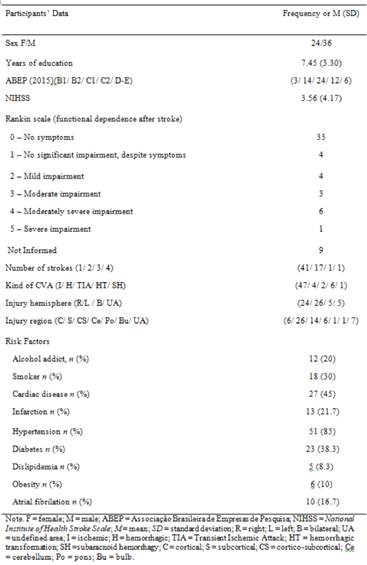
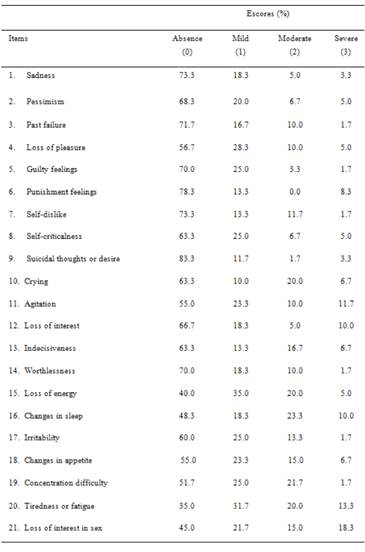
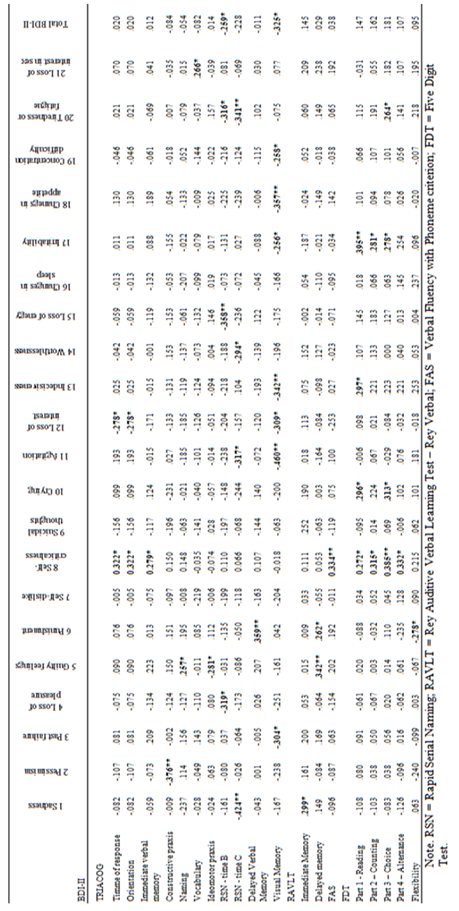
Abstract: The frequency of symptoms of depression and its influence on cognitive performance after stroke were analyzed. A total of 60 adults (M = 64.43, SD = 12.42 years) were evaluated from 102 to 283 days post-stroke (M = 140.65, SD = 28.01). Cognitive Screening to Stroke (Triagem Cognitiva nas Doenças Cerebrovasculares - TRIACOG), Rey-Osterrieth Complex Figure, Digits, Rey Verbal, FAS, Five Digit Test and Beck Depression Inventory II (BDI-II) were administered. Approximately 42% of the participants presented symptoms of post-stroke depression, with a higher frequency of Lack of energy, Change in sleeping pattern, Tiredness or fatigue, and Loss of interest in sex. There was a significative association among neuropsychological tasks and somatic items of BDI-II. Symptoms of depression and severity of the clinical neurological status explained between 22% and 33% of performance in memory, attention, and speed of processing. Symptoms of fatigue and post-stroke depression influenced negatively self-perception during the neuropsychological evaluation.
Key words:
stroke; neuropsychological assessment; depression; neuropsychiatry; mental health