Relationship between Cybervictimization and Victimization with Severe Self-Injury: Mediating Role of Mild Self-Injury
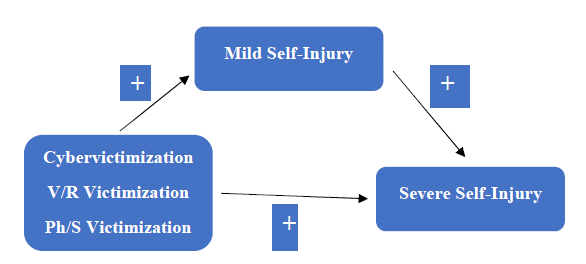
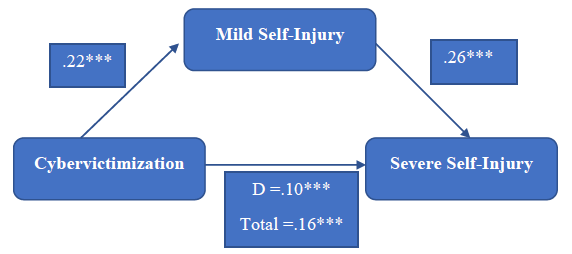
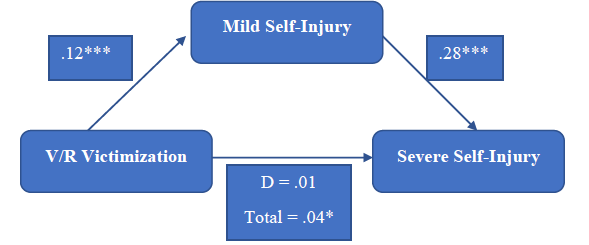
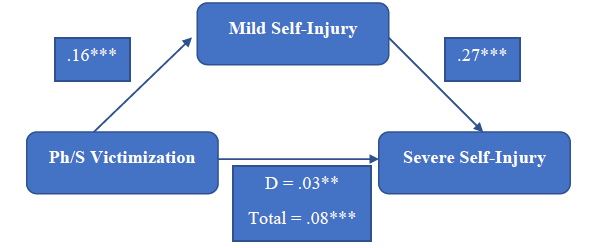
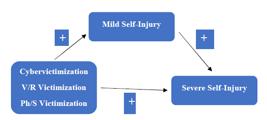
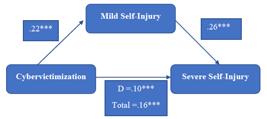
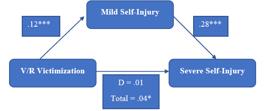
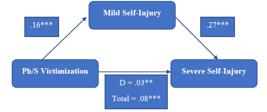
Non-suicidal self-injury, understood as the deliberate damage to one's own body tissue without suicidal intent, represents a growing problem among adolescents and has been linked to various forms of victimization, both in-person and digital. The present study aimed to examine the relationship between mild and severe self-injury and victimization and cybervictimization, positing that these forms of victimization condition severe self-injury when mediated by mild self-injury, with cybervictimization serving as a stronger explanatory predictor. Data were collected from 433 secondary school students who completed questionnaires measuring self-injury, in-person victimization, and cybervictimization. Descriptive analyses, correlations, and mediation models were conducted. The results revealed significant positive associations among all variables, highlighting that mild self-injury significantly mediated the relationship between in-person victimization and severe self-injury, while in the case of cybervictimization a robust direct relationship with severe self-injury was observed, evidencing a greater impact of digital aggression on the intensification of self-inflicted harm. These findings suggest that mild self-injury acts as a critical link in the progression toward more severe behaviors, underscoring the need for early and targeted interventions to prevent the escalation of harm and its pathological associations.
Keywords:
adolescence; non-suicidal self-injury; cybervictimization; mediation; school victimization
 Thumbnail
 Thumbnail
 Thumbnail
 Thumbnail