Parental Insecure Attachment Styles and Clinical Psychological Symptoms in Adolescent Children: The Mediating Role of Coparenting
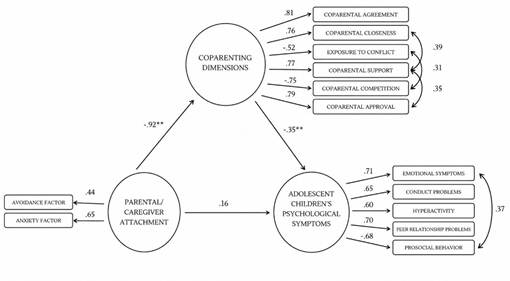
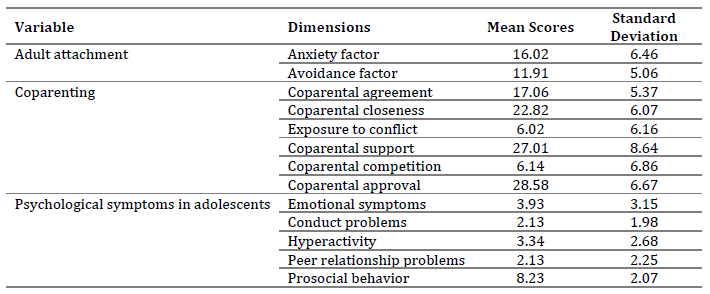
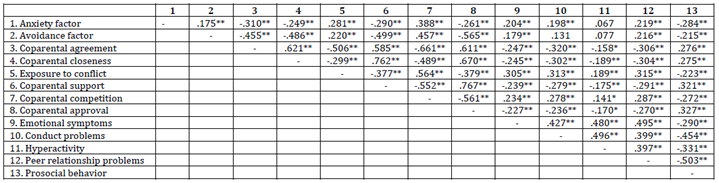
Building social relationships is a central task in adult development. According to Attachment Theory, this foundation is formed in early interactions with caregivers. Anxious and avoidant adult attachment styles can impair the quality of coparenting, generating conflict and negatively impacting the family environment. As these factors are associated with the development of emotional and behavioral symptoms in adolescents, this study investigated the relationship between parental attachment styles and adolescents’ clinical psychological symptoms, analyzing the mediating role of coparenting. This is a quantitative, explanatory, and cross-sectional study conducted with 217 caregivers of adolescents aged 12 to 16 years, selected by convenience. Participants completed validated instruments on attachment styles, coparenting, and children’s symptoms. Data were analyzed using structural equation modeling. Results indicated associations between adult attachment, coparenting, and adolescents’ psychological symptoms, with coparenting acting as a partial mediator in this relationship. The model showed good fit indices and revealed a strong impact of avoidant attachment and coparenting support. This study highlights the relevance of coparenting and underscores the need for preventive interventions focused on promoting emotional health in families.
Keywords:
attachment style; coparenting; psychological symptoms; adolescence; structural equation modeling
 Thumbnail