Predictive Model of Posttraumatic Growth in Parents of Pediatric Patients with Congenital Heart Disease
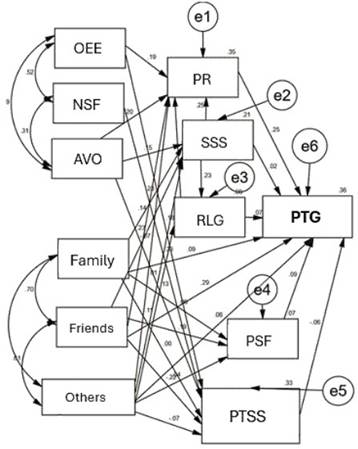
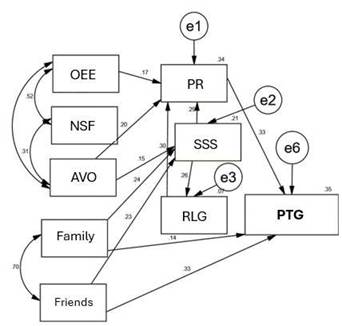
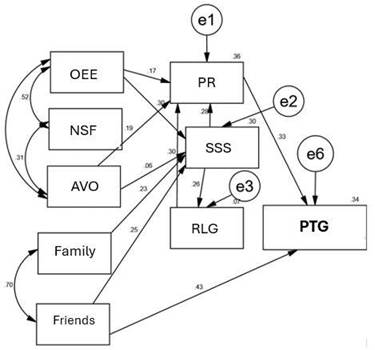
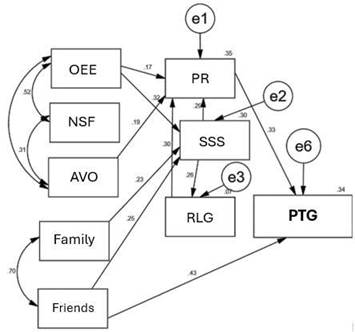
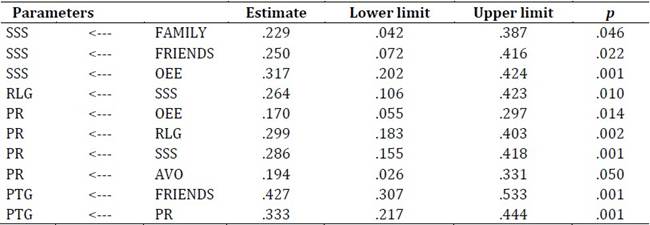
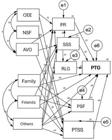
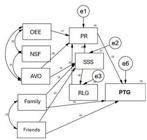
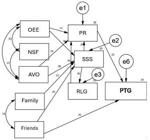
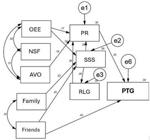
Diagnosis of congenital heart disease in childhood is often a complex situation for patients and their parents and can become a traumatic experience. The objective of this study was to identify predictors of post-traumatic growth through stress coping strategies, post-traumatic stress symptoms, and social support in parents of pediatric patients diagnosed with congenital heart disease. This was a cross-sectional study using non-probabilistic sampling, with a sample of 132 mothers and fathers from Mexico. The Post-Traumatic Growth Inventory, the Impact of Event Scale, the Multidimensional Scale of Perceived Social Support, and the Stress Coping Questionnaire were used for the evaluation. The results showed that parents exhibited high posttraumatic growth, which was explained in 33.6 % of cases by social support from friends, the indirect influence of open emotional expression, negative self-focus, avoidance, family support, religion, and the search for social support through positive reevaluation. In conclusion, adequate management of maladaptive coping strategies in parents of children with congenital heart disease, together with the presence of social support networks, is linked to greater development of post-traumatic growth.
Keywords:
post-traumatic growth; social support; coping; congenital heart disease; parents
 Thumbnail
 Thumbnail
 Thumbnail
 Thumbnail