Predictive Model of Posttraumatic Growth in Parents of Pediatric Patients with Congenital Heart Disease
Abstract:
Diagnosis of congenital heart disease in childhood is often a complex situation for patients and their parents and can become a traumatic experience. The objective of this study was to identify predictors of post-traumatic growth through stress coping strategies, post-traumatic stress symptoms, and social support in parents of pediatric patients diagnosed with congenital heart disease. This was a cross-sectional study using non-probabilistic sampling, with a sample of 132 mothers and fathers from Mexico. The Post-Traumatic Growth Inventory, the Impact of Event Scale, the Multidimensional Scale of Perceived Social Support, and the Stress Coping Questionnaire were used for the evaluation. The results showed that parents exhibited high posttraumatic growth, which was explained in 33.6 % of cases by social support from friends, the indirect influence of open emotional expression, negative self-focus, avoidance, family support, religion, and the search for social support through positive reevaluation. In conclusion, adequate management of maladaptive coping strategies in parents of children with congenital heart disease, together with the presence of social support networks, is linked to greater development of post-traumatic growth.
Keywords:
post-traumatic growth; social support; coping; congenital heart disease; parents
Resumen:
El diagnóstico de una cardiopatía congénita en la infancia suele ser una situación compleja para los pacientes y sus padres, que llega a convertirse en una experiencia traumática. El objetivo del presente trabajo fue identificar los predictores del crecimiento postraumático a través de las estrategias de afrontamiento al estrés, los síntomas de estrés postraumático y el apoyo social en padres de pacientes pediátricos con algún diagnóstico de cardiopatía congénita. Fue un estudio transversal, a través de un muestreo no probabilístico, se conformó una muestra de 132 madres y padres de México. Para la evaluación se utilizó el Inventario de Crecimiento Postraumático, la Escala del Impacto del Evento, Escala Multidimensional de Apoyo Social Percibido y el Cuestionario de Afrontamiento del Estrés. Los resultados mostraron que los padres presentan un crecimiento postraumático alto, el cual se explicó en un 33.6 % a través del apoyo social de los amigos, la influencia indirecta de la expresión emocional abierta, la autofocalización negativa, la evitación, el apoyo de la familia, la religión y la búsqueda de apoyo social a través de la reevaluación positiva. En conclusión, un manejo adecuado de las estrategias de afrontamiento desadaptativas en padres de niños con cardiopatías congénitas junto a la presencia de redes de apoyo social se vincula con mayor desarrollo de crecimiento postraumático.
Palabras clave:
crecimiento postraumático; apoyo social; afrontamiento; cardiopatías congénitas; padres
Resumo:
O diagnóstico de uma cardiopatia congênita na infância costuma ser uma situação complexa tanto para os pacientes quanto para seus pais, podendo se tornar uma experiência traumática. O objetivo deste estudo foi identificar os preditores do crescimento pós-traumático a partir das estratégias de enfrentamento do estresse, dos sintomas de estresse pós-traumático e do apoio social em pais de pacientes pediátricos com algum diagnóstico de cardiopatia congênita. Trata-se de um estudo transversal, com amostragem não probabilística, que contou com a participação de 132 mães e pais do México. Para a avaliação, foram utilizados o Inventário de Crescimento Pós-Traumático, a Escala de Impacto do Evento, a Escala Multidimensional de Apoio Social Percebido e o Questionário de Enfrentamento do Estresse. Os resultados mostraram que os pais apresentam um alto nível de crescimento pós-traumático, explicado em 33,6 % pelo apoio social de amigos, pela influência indireta da expressão emocional aberta, pela autofocalização negativa, pela evitação, pelo apoio familiar, pela religiosidade e pela busca de apoio social por meio da reavaliação positiva. Em conclusão, um manejo adequado das estratégias de enfrentamento desadaptativas em pais de crianças com cardiopatias congênitas, aliado à presença de redes de apoio social, está associado a um maior desenvolvimento do crescimento pós-traumático.
Palavras-chave:
crescimento pós-traumático; apoio social; enfrentamento; cardiopatias congênitas; pais
Congenital heart disease (CHD) is one of the leading causes of death in children (Zimmerman et al., 2020). Globally, its prevalence in newborns has been steadily increasing (Liu et al., 2019). In Mexico, the Ministry of Health (2022) reported that CHD is the most common congenital condition, affecting between 12,000 and 16,000 newborns each year.
Children diagnosed with CH have an 18 times higher risk of mortality than those without this condition, with the first four years of life being the most critical period (Mandalenakis et al., 2020). However, 75 % of adults with CHD who reach the age of 18 can live to be 60 years old (Dellborg et al., 2023). In addition, more than 97 % of children born with CHD are likely to reach adulthood, although they will require lifelong medical treatment, which makes their parents caregivers of a child with chronic illness (Mandalenakis et al., 2020).
Caring for a child with chronic illness has a significant impact on the mental health of their parents, compared to those who care for healthy children (Cohn et al., 2020). For parents of children with chronic conditions, managing their children's illness is a major source of stress, as they must cope with multiple medical interventions, frequent hospitalizations, and uncertain prognoses (Biber et al., 2019).
For the parents of these children, life is altered from the moment of diagnosis. This stage is often marked by fear, distress, helplessness, and uncertainty, and some may even experience an emotional crisis (Domínguez-Reyes & Torres-Rodríguez, 2021; Nayeri et al., 2021). In addition, they face high levels of parental stress and symptoms of post-traumatic stress, such as constant worry, alertness to any symptoms, lack of sleep, severe psychological maladjustment, and changes in family dynamics (Bishop et al., 2019; Domínguez-Reyes & Torres-Rodríguez, 2021).
Demianczyk et al. (2022) identified that parents use various coping strategies, some of them maladaptive, in response to the multiple stressors of CHD. According to Roberts (2021), parents who adopt acceptance-based coping strategies tend to experience lower levels of anxiety and stress. However, the same study found no significant relationship between avoidant coping and anxiety, depression, or stress. According to Casey et al. (2024), parents of children with CHD often use adaptive coping strategies, such as those focused on the problem. Considering adaptive coping focused on the problem, Eraslan and Tak (2021) point out that mothers of pediatric patients with CHD who tend to cope with their children's situation in this way have fewer depressive symptoms.
Positive coping, along with social status and social support, is considered a protective factor against post-traumatic stress symptoms (PTSS) or post-traumatic stress disorder (PTSD) (Carmassi et al., 2021). It has been found that being the parent of a child with a chronic illness significantly increases the risk of developing PTSD (Carmassi et al., 2019). In the case of CHD, McWhorter et al. (2022) reported that parents of children with this condition have clinically significant symptoms of PTSD, with mothers experiencing a greater number of symptoms. In addition, Yagiela et al. (2022) mention that PTSD symptoms in parents of children in intensive care are associated with greater depressive symptoms and greater post-traumatic growth (PTG).
Experiencing a crisis can also result in positive changes, known as PTG. Tedeschi and Calhoun's (2004) theory of PTG posits that, after a traumatic event, some people not only recover but experience a positive change in their lives. This change, called growth, manifests itself in five main areas: greater appreciation of life, deeper interpersonal relationships, increased personal strength, discovery of new possibilities, and a change in spirituality or personal philosophy. However, this process does not occur automatically, as it is influenced by the way the person copes with the trauma, so coping strategies play a key role in reconstructing meanings and integrating the experience, facilitating personal transformation.
The PTG model highlights the interaction between cognitive rumination and coping strategies. Initially, rumination is intrusive and disorganized, but over time it can become deliberate, allowing for a reinterpretation of the trauma. In this process, active coping (such as seeking social support, problem solving, among others) can enhance PTG. Studies have shown that strategies such as social support and problem solving are strongly related to PTG, as they help the person find meaning in adversity (Tedeschi et al., 2018).
Mediating factors that can promote PTG have been identified, including spirituality, social support, optimism, and a sense of belonging (Henson et al., 2021). In the case of parents of children with chronic illnesses, attempting to cope with the situation (whether through adaptive or maladaptive strategies) may be related to positive outcomes such as PTG (He et al., 2024). Social support has been identified as a relevant predictor of PTG (Ebrahim & Alothman, 2021).
Thus, social support promotes PTG particularly in the dimensions of interpersonal relationships, personal strength, and new possibilities (Nouzari et al., 2019). In parents of premature babies, it has been found that the greatest source of social support has been perceived to come from family and friends (Xingyanan et al., 2025). Similarly, it has been found in parents of patients with chronic diseases that the more satisfied they feel with the social support received, the more significant their PTG is (Negri-Schwartz et al., 2024).
Carmassi et al. (2021) point out that the effectiveness of caregivers can be affected by the presence of PTSS, which negatively impacts their well-being and that of their children, as overprotection is a common coping strategy among parents of children with CHD (Domínguez-Reyes & Torres-Rodríguez, 2021). Furthermore, while some studies highlight objective variables and their relationship with PTG and PTG, O'Toole et al. (2022) suggest that parents' subjective perception of the severity of their children's illness is a factor that has a more significant relationship with long-term PTG.
According to Biber et al. (2019), studies on the psychological impact of serious illnesses on parents tend to focus on childhood cancer, while research on pediatric heart disease and its impact on parents' mental health is scarce. Likewise, in Mexico, few studies have been conducted on the impact of CHD and PTG on parents of children with this condition.
Given that parents of children with CHD are highly vulnerable to psychological and social stress at different stages of the disease, from diagnosis to childhood, tension is generated in family dynamics (Lumsden et al., 2019). Therefore, Aftyka et al. (2020) emphasize the importance of identifying predictors of PTG in traumatic situations, such as events associated with illness and hospitalization of a child. This would allow for the development of psychological and psychotherapeutic support programs aimed at parents, focused on providing emotional support and promoting positive reinterpretation of adversity. The objective of the present study is to identify predictors of PTG, considering stress coping strategies, PTSS, and social support in parents of children with CHD as independent variables.
Method
Design
The design of this study is non-experimental and cross-sectional.
Participants
A non-probability convenience sample was taken, including mothers and fathers of pediatric patients diagnosed with a CHD at least one month prior to the study. To participate in the study, the inclusion criteria established that parents must be of legal age, reside in Mexico, have literacy skills, and have a mobile device with internet access.
Thus, the sample consisted of 132 participants, of whom 122 were mothers and 10 were fathers. Regarding their place of residence, 18 % lived in the State of Mexico, 14 % in Nuevo León, 13 % in Mexico City, 12 % in Tamaulipas, and 43 % in the rest of the states of the Mexican Republic. The total sample had a mean age of 34.37 years (SD = 7.74), with mothers having a mean age of 33.98 (SD = 7.68) and fathers (n = 10) having a mean age of 39.2 (SD = 7.19).
Regarding the characteristics of the patients, there were a total of 132 pediatric patients, who had a mean age of 5.52 years (SD = 5.47). Fifty percent of the total sample reported that their children had no other comorbidities, 42.4 % reported that they had another diagnosis in addition to CHD, and 6.8 % indicated that they did not know. In addition, 50 % of patients underwent catheterization, 76.5 % underwent surgery, and 78.8 % are undergoing treatment with medication. Regarding the perception of their children's health stability, 52.3 % indicated stable health, 42.2 % frequently stable, 3.8 % frequently unstable, and 1.5 % perceived their child's health as unstable.
Instruments
The following instruments were used for the study:
The Posttraumatic Growth Inventory (Tedeschi & Calhoun, 1996), in its version validated for the Mexican population (PTGI-MX) by Quezada-Berumen and González-Ramírez (2020a). The instrument consists of 14 items, with a unifactorial structure, unlike other versions. Responses are given on a 6-point Likert scale, where 0 corresponds to “I did not experience this change as a result of my crisis” and 5 to “I experienced this change to a very large degree as a result of my crisis.” Thus, a higher score indicates a greater perceived change. The instrument is corrected by adding up all the items. In the reliability analysis, using Cronbach's α, the scale obtained a coefficient of .94. Studies have shown positive correlations with resilience, positive affectivity, and gratitude (Quezada-Berumen & de la Garza-Samaniego, 2024; Quezada-Berumen & González, 2020b). The reliability of the instrument in the present study resulted in a McDonald's Omega of .94.
The Stress Coping Questionnaire (SCQ) by Sandín and Chorot (2003) consists of 42 statements in the past tense, using a Likert-type format (0 = Never and 4 = Almost always) for recording responses. The questionnaire is organized into seven subscales: (1) Social Support Seeking (SSS, items 6, 13, 20, 27, 34, 41), (2) Open emotional expression (OEE, items 4, 11, 18, 25, 32, 39), (3) Religion (RLG, items 7, 14, 21, 28, 35, 42), (4) Problem-solving focus (PSF, items 1, 8, 15, 22, 29, 36), (5) Avoidance (AVO, items 5, 12, 19, 26, 33, 40), (6) Negative self-focusing (NSF, items 2, 9, 16, 23, 30, 37) and (7) Positive reappraisal (PR, items 3, 10, 17, 24, 31, 38). The test is corrected by adding the values of each item, according to the subscales. In the work of Sandín and Chorot (2003), the following Cronbach's α coefficients were obtained: SSS .92, OEE .74, RLG .86, PSF .85, AVO .76, NSF .64, and PR .71. The McDonald's Omega coefficients with the present sample were: SSS .88, OEE .75, RLG .86, PSF .82, AVO .75, NSF .61, and PR .70.
The Revised Event Impact Scale (EIE-R) presented by Weiss and Marmar (1997) and validated by Báguena et al. (2001) in young Spanish adults, which is based on the Event Impact Scale (EIE) by Horowitz et al. (1979). The scale consists of 22 items, which measure Intrusion (items 1, 2, 3, 6, 9, 16, 20), Avoidance (items 5, 7, 8, 11, 12, 13, 17, 22), and Hyperarousal (items 4, 10, 14, 15, 18, 19, 21), with a Likert-type scale that assesses the intensity of symptoms from 0 (Not at all) to 4 (Extremely). Reliability was determined using internal consistency coefficients, with Cronbach’s alpha coefficient of .87 for the avoidance factor, .95 for the intrusion factor, the hyperarousal factor, and for the total scale. The EIE-R has shown convergent validity by associating with indicators of anxiety, depression, and negative affectivity. In the present study, McDonald's Omega coefficients were .96 for the total scale, .92 for intrusion, .88 for avoidance, and .91 for hyperarousal.
The Multidimensional Scale of Perceived Social Support (MSPSS) by Zimet et al. (1988), is a 12-item self-report instrument consisting of three subscales: Family (items 3, 4, 8, 11), Friends (items 1, 2, 5, 10), and Significant Others (items 6, 7, 9, 12). Responses are recorded on a Likert scale where 1 means strongly disagree and 7 strongly agree. The higher the sum of the scores, the greater the perceived social support. This study used the version adapted into Spanish by Landeta and Calvete (2002), which reported a Cronbach's α of .90 for Significant Others, .96 for Family, and .96 for Friends. In addition, Cronbach's alpha coefficient for the total scale was .89, indicating good internal consistency. The MSPSS has shown significant correlations with psychological well-being and self-esteem, as well as negative associations with depressive and anxiety symptoms, supporting its convergent validity in clinical and non-clinical contexts. In the present study, the McDonald's Omega coefficients found in this study were .95 for family, .94 for friends, .96 for significant others, and .96 for the total scale.
Procedure
This project was approved by the Research Department of the Faculty of Psychology at the Autonomous University of Nuevo León under code FP-UANL-23-009. Authorization was requested from the administrators of a Facebook group for parents of patients with CHD, reaching an agreement for the dissemination of the instrument, in accordance with Article 130 of the Code of Ethics of the Mexican Society of Psychology (SMP, 2007). Once permission was obtained, the application was carried out using Google forms, disseminating the link through the group where each person interested in participating was provided with an informed consent form, which clearly and precisely explained the nature of the study, data management, and confidentiality (Articles 61, 122, and 136, SMP, 2007).
Data collection took place from November 15, 2023, to February 15, 2024, obtaining a total of 157 participants, of which 25 were eliminated for not meeting the inclusion criteria, as well as for leaving the assessment instruments incomplete.
Data analysis
To evaluate the level of the study variables, this was determined based on the average profile (for guidance purposes), calculated using the arithmetic mean between the number of questions in each questionnaire. In this way, higher scores reflect a higher degree of PTG, coping strategies, PTS symptoms, and social support in relation to the response categories of each instrument.
The assumption of normality was verified using the Kolmogorov-Smirnov test. The result showed that none of the study variables obtained a normal distribution, so non-parametric techniques were used. Thus, to evaluate the relationship between the variables, Spearman's Rho was used, considering a p-value < .05 to be statistically significant. All descriptive and correlation analyses were performed in IBM SPSS Statistics 26.
Structural equation modeling was performed in SPSS Amos 24 using the maximum likelihood method, as it provides good results even under conditions of deviation from the assumption of multivariate normality. The present data show low kurtosis indices, so they can be complemented by bootstrap in the estimation of errors (Kline, 2023; Rodríguez-Ayán & Ruiz-Díaz, 2008). The fit of the models was evaluated using eight different indices: the relative chi-square (χ²/gl), the goodness-of-fit index (GFI), the adjusted goodness-of-fit index (AGFI), the normalized fit index (NFI), the comparative fit index (CFI), the relative fit index (RFI), the standardized mean residual (SRMR), and the root mean square error of approximation (RMSEA).
A good fit is considered when: χ²/df is less than or equal to 2, GFI, NFI, and CFI are greater than or equal to .95, AGFI is greater than or equal to .90, and SRMR and RMSEA are less than or equal to .05. An acceptable fit is given when: χ²/df is less than or equal to 3, GFI, NFI, CFI, and RFI are greater than or equal to .90, AGFI is greater than or equal to .85, and SRMR and RMSEA are less than or equal to .08 (Arbuckle, 2013; Byrne, 2016).
The parsimony of the model was calculated using the parsimony ratio (PR) and three parsimonious indices: the normalized parsimonious fit index (PNFI), the comparative parsimonious fit index (PCFI), and the parsimonious goodness-of-fit index (PGFI). A PR greater than .75 reflects high parsimony, greater than .50 indicates medium parsimony, greater than .25 indicates low parsimony, and less than .25 corresponds to very low parsimony. PNFI and PCFI values equal to or greater than .80 and PGFI equal to or greater than .70 indicate a good parsimony-fit relationship; PNFI and PCFI equal to or greater than .60 and PGFI equal to or greater than .50 indicate an acceptable relationship (Arbuckle, 2013; Mulaik et al., 1989).
To ensure parsimony and improve the fit of the predictive model, successive tests were performed based on statistical criteria. Initially, effects that did not reach statistical significance (p > .05) were eliminated. Subsequently, those pathways with p > .05 were discarded, leading to the exclusion of post-traumatic stress symptoms and a focus on problem solving by demonstrating independence from post-traumatic growth (PTG). Decisions in each iteration were based on model fit indices (χ², RMSEA, CFI, TLI, SRMR) and improvements in parsimony (PNFI and PCFI). This refinement allowed us to develop a final exploratory model with good fit, all significant covariances and variances (p < .05), and a PTG explained variance of 33.6 %.
Results
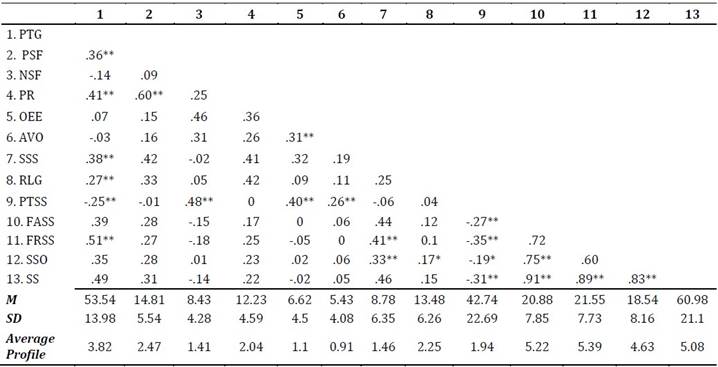
The results indicated a high level of PTG and a moderate level of PTSS. The PSF, PR, and RLG strategies were used with moderate frequency, while the NSF, OEE, AVO, and SSS strategies were used infrequently. Similarly, participants presented a moderately high AS (Table 1).
To determine the variables to be included in the explanatory model of PTG in parents of pediatric patients with a diagnosis of CHD, it was necessary to evaluate the relationship between the study variables. Based on the correlation matrix, it was found that the PTG- t was positively related to PSF, PR, SSS, RLG, and AS. However, it had a negative correlation with PTSS (Table 1).
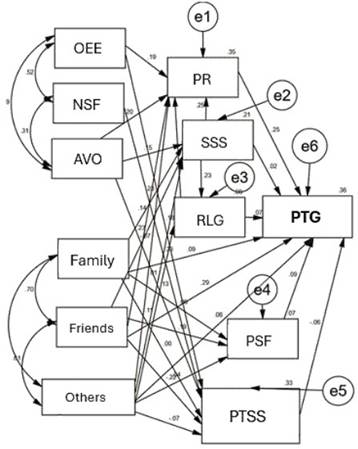
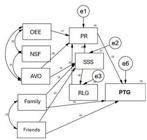
Based on the correlations in Table 1 and the findings of Stephenson and DeLongis (2020), who propose that coping is not a static process, since a stressful situation can lead people to use different coping strategies at different times, even simultaneously, and it is possible that one strategy may facilitate or hinder the effectiveness of other strategies, the hypothetical model in Figure 1 was designed.
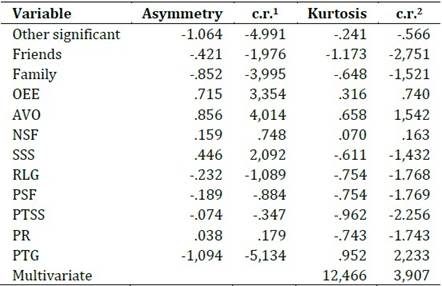
This model proposes as independent variables the social support of family, friends, and other significant people, as well as the coping strategies of OEE, NSF, and AVO, which have a direct effect on post-traumatic stress symptoms. Similarly, PR, SSS, RLG, PSF strategies, and post-traumatic stress symptoms are proposed as mediating variables for PTG. Considering the variables in the hypothetical model, the normality of the data was analyzed, revealing a lack of normality (Table 2), for which reason the calculation was performed using the Bootstrap method.
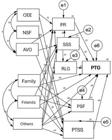
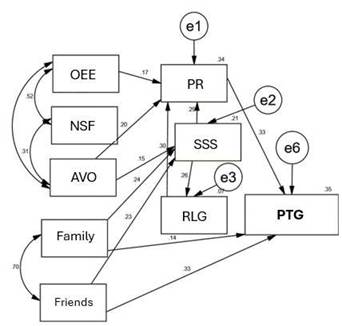
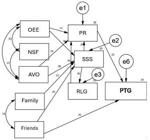
Although it had significant covariances and explained 35.7 % of the variance of the PTG variable, the hypothetical model showed poor fit and parsimony (Table 3), as well as several non-significant paths, so non-significant effects (p > .05) were eliminated, leading to a new re-estimation and thus model 2. Model 2 (Figure 2), with an explained variance of PTG of 34.7 % and with all its covariances and variances significant (p < .05), also showed poor fit and low parsimony (Table 3) as well as non-significant pathways (p > .1). After eliminating those pathways with p > .05, the PTS symptoms and the FSP were found to be independent of the PTG. As they were endogenous variables, they were eliminated from the model, leading to a new re-estimation.
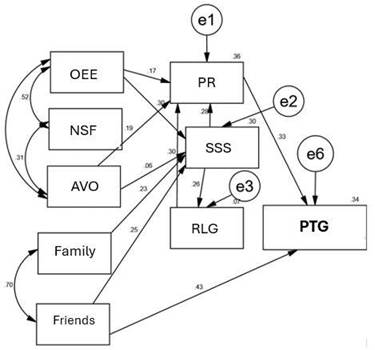
After eliminating endogenous variables and the effect of family support on PTG, Model 3 was obtained (Figure 3), where the fit and parsimony indices were adequate (Table 3). All covariances and variances were significant (p < .05), and the model explained 33.6 % of the variance in PTG. However, a non-significant path from AVO to SSS was found, as was the incorporation of a path suggested by the modification indices, connecting OEE with SSS.
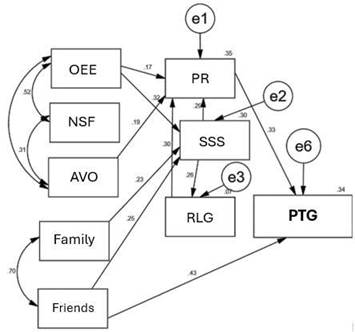
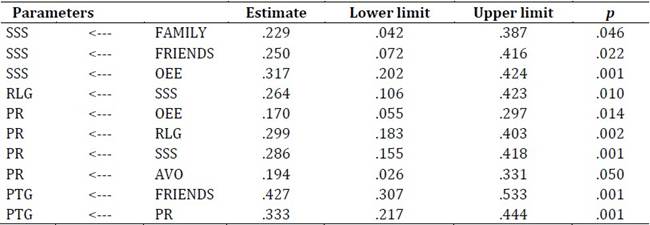
After the new re-estimation, Model 4 was obtained (Figure 4), which showed an excellent fit (Table 5) and presented significant indicators (p < .05), as well as significant covariances and variances (Tables 3 and 4). Given that Model 4 achieved excellent fit and a high parsimony indicator, it was considered the final model to explain PTG in parents of children with CHD. It is important to note that decisions based on p-values transform this analysis into a purely exploratory one.
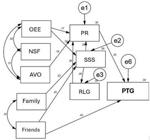
Model 4 (Figure 4) explained 33.6 % of the variance, where the main predictors of PTG were social support from friends, the indirect effect of OEE, NFS, and AVT, family support, RLG, and SSS toward PR. Thus, PTG can be explained in three ways. The first and strongest through the support of friends; the second through the indirect effect of family and friend support through SSS, RLG, and PR; and the third through the coping strategies of OEE, AVO, and NSF through PR.
Regarding the indirect effects of family support (β = .028; p = .020), friend support (β = .030; p= .033), OEE (β = .095; p = .001), AVO (β = .065; p = .032), SSS (β = .122; p = .001), and RLG (β = .100; p = .001) on PTG, these effects were significant but low (p < .05).
Discussion
CHD is considered one of the leading causes of infant mortality worldwide, which is why parents of pediatric patients with CHD often exhibit various adaptive and maladaptive responses to the complications that may arise at different stages of their children's lives. In this regard, the results of the present study indicate that parents of pediatric patients with CHD exhibit high levels of PTG and moderate symptoms of PTSS.
Similarly, a study conducted on parents of infants diagnosed with CHD found that, as a result of parental stress, parents developed high levels of PTG (Casey et al., 2024). In relation to PTSD, different levels have been identified in parents of patients with CHD or other critical illnesses. For example, the study by Davey et al. (2023) mentions that mothers of babies with CHD may experience high PTSD symptoms, highlighting that those who fail to adapt to the diagnosis tend to have the highest levels of PTSD. However, Yagiela et al. (2022) found that parents of patients with critical illnesses mostly had moderate to high PTG and moderate PTSS.
When evaluating coping strategies, parents tend to use adaptive strategies more frequently, such as problem-focused coping and emotion-focused coping (Casey et al., 2024). Similarly, the strategies most used by parents in the present sample were PR, PSF, and RLG; on the contrary, they rarely resorted to NSF, AVO, and SSS.
Although the parents in this study used positive coping strategies (Eraslan & Tak, 2021), it was found that they rarely resorted to SSS. Although the parents in this study did not actively resort to SSS, Oden and Cam (2021) mention that they may perceive a great deal of support from both family and friends. These results coincide with our findings, as parents reported perceiving high levels of social support, especially from family and friends.
When evaluating the relationship between the variables in this study, it was observed that higher levels of PTG in parents are associated with an increase in the use of strategies such as PSF, PR, and SSS, as well as greater use of RLG. They also perceive greater social support from their family, friends, and other significant people.
The use of more adaptive and active coping strategies is often positively associated with higher levels of PTG in parents of pediatric patients with CHD (Casey et al., 2024; Peters et al., 2021). In this sense, the use of positive coping strategies, such as PR, helps people interpret stressful events in a more favorable way, guiding them toward generating positive changes (Henson et al., 2021).
Regarding the relationship between PTSS and PTG, it has been found that various cultural characteristics of the sample, as well as the severity and type of event, can influence the existence or absence of an association between the two variables (Peters et al., 2021). In parents of children who were in intensive care, a positive relationship between PTG and PTS is generally observed (O'Toole et al., 2022). However, the findings of this study revealed a negative correlation between the two variables in parents of patients with CHD. This could be explained, as Fletcher et al. (2023) point out, by a correlational pattern in which a low level of PTSS and a high level of PTG are related to greater social support.
In identifying the predictors of PTG, the resulting model presented three main pathways: (1) through the support of friends, (2) through the indirect effect of family and friend support via SSS, RLG, and PR, and (3) through the coping strategies of OEE, AVO, and NSF via PR.
According to Henson et al. (2021), PTG is promoted by various factors, such as sharing negative emotions with others, using positive coping strategies, and, as a mediating factor, social support. OEE, according to the CAE, considers only negative emotions such as anger, hostility, irritability, aggression, and insults to others. From the above, it follows that expressing negative emotions promotes high levels of PTG, as it facilitates cognitive processing (such as deliberate rumination), helping to normalize both the individual situation and feelings about the experience, resulting in PR (Dirik & Göcek-Yorulmaz, 2018; Saltzman et al., 2018).
According to some authors, AVO, as a coping strategy, tends to reduce distress and avoid overwhelming thoughts, since, together with those related to approach, it can predict PTG. Thus, the flexible use of coping strategies allows people to process trauma and promote PTG (Henson et al., 2021). In parents of children who have been in the intensive care unit, AVO has favored PTG, as avoiding distressing thoughts, such as those related to death, contributes to more effective coping (Lynkins et al., 2007, in O'Toole et al., 2022). However, in the results of this study, the indirect effect of AVO on PTG should be viewed with caution given the low coefficients.
When facing difficult situations, people may experience emotional distress, which could lead them to develop a negative coping attitude (NCA). This approach drives them to seek disconnection from distress through avoidance strategies (AVO) (Zacher & Rudolph, 2021). Likewise, NCA, such as shame, induces people to express their negative approach in maladaptive ways, such as aggressive emotional expression (AEE), which interferes with adequate interpersonal emotional regulation (Swerdlow et al., 2023).
PR as a mediating variable in this study is a coping strategy considered adaptive that contributes to the development of PTG. Seeking to gain something positive from stressful experiences can promote PTG directly or because of deliberate rumination (Cárdenas et al., 2019). PR involves attempting to interpret negative events in a more positive light, which in turn can lead to favorable changes (Henson et al., 2021).
Likewise, a sense of belonging to a group has been identified as a factor that promotes the search for social support, which contributes to the development of high levels of PTG (Armstrong et al., 2014). Similarly, the fact that people seek support in religious groups and feel part of them allows them to better adapt to adversity, reevaluating the situation to give it a positive meaning (Toledo et al., 2021). García et al. (2022) highlight that in Latin American countries where spirituality and religion are an important part of the community, closeness to these elements is one of the most important predictors of PTG, acting as a mediating variable.
Perceived social support, especially from friends, contributes significantly to the development of PTG in individuals, as it provides an environment of trust and comfort that facilitates emotional expression and cognitive processing of traumatic experiences. This support is particularly valuable in distressing situations, where the family may also be affected, allowing individuals to normalize their feelings and cope with trauma more effectively (Döveling, 2014; Hakulinen et al., 2016; Hasson-Ohayon et al., 2016; Palmer et al., 2017).
Currently, many cognitive and psychological intervention programs to promote PTG are not based on theoretical models related to this construct. Bae et al. (2023) recommend examining the pathways that facilitate PTG to design effective programs based on specific theories. In this study, a theory of PTG was used as a basis, which allowed for the development of a model that explains growth through three main pathways: the first and most significant pathway is based on the support provided by friends. The second occurs through the indirect impact of family and friend support, mediated by SSS, RLG, and PR. The third is developed through coping strategies such as OEE, AVO, and NSF, with PR as the central mechanism.
Recent interventions, based on similar findings, have developed programs focused on facilitating deliberate rumination and promoting PTG, as in the case of women with breast cancer. These programs seek to encourage self-disclosure and social support, while regulating maladaptive coping strategies, such as avoidance, open emotional expression, and negative self-focus, with the purpose of facilitating a positive reevaluation of the situation.
Finally, the results of this study indicate that parents of children with CHD experience a moderate level of PTG, driven mainly by perceived social support from friends, SSS and RLG coping strategies, as well as support from family and friends through PR. Likewise, OEE, NSF, and AVO coping strategies interact with each other, facilitating a positive reevaluation of events related to their children's CHD. In addition, support from friends plays a fundamental role, as it not only contributes directly to PTG but also influences PR of the disease.
This study has several limitations that suggest recommendations for future research. One of the main limitations was the use of convenience sampling, which reduces the representativeness of the results. This limits diversity and reduces the representativeness of the sample in relation to the population universe, resulting in explanatory relationships of the model that are not very generalizable or distorted; therefore, it is recommended to use random sampling in subsequent studies. Additionally, it generates bias, as there is a greater possibility of representing people with higher levels of education, income, technological familiarity, and urban residence. This excludes groups with lower connectivity, such as older people or those from rural communities, affecting the diversity of the sample and thus limiting its validity. Therefore, these results should take these aspects into account.
Besides, the sample size represented another important limitation for the type of analysis presented, so increasing the number of participants would allow for more robust analyses. The sample was composed mainly of women, which limits the generalization of the findings to all parents. It is suggested that a balanced sample of men and women be sought, given that fathers and mothers of children with CHD tend to use different coping strategies, which could influence PTG.
Furthermore, it was not possible to access the children's medical records, including relevant information such as the type of CHD and the number of medical procedures, factors that could affect parental stress and PTG. It is also recommended to assess parents' subjective perception of the severity of their children's illness, as this has been identified as a predictor of PTG mediated by social support.
Another limitation was not considering the time elapsed since diagnosis as a variable, even though stressful events, such as a child's illness, can influence people differently over time. Including this variable in future studies could be relevant, given that it has been associated with PTG.
Additionally, although PTS has shown a negative correlation with PTG and has been identified as a mediator in other models, it was not a significant predictor in this study. Therefore, it is suggested that the relationship between PTG and PTS in parents of children with CHD be explored further, considering additional variables such as resilience, to determine whether PTS could be part of a predictive model of PTG in this context.
Thus, family support, when mediated by strategies such as SSS and PR, acquires significant relevance in both scientific and clinical settings. These strategies allow us to understand how social support is transformed into psychological resources that strengthen PTG and could reduce the use of avoidant strategies such as OEE, AVO, and NSF. Although the observed effects are low, PR stands out as a central mechanism that modulates the impact of the support received, which adds depth to the model. Proper management of maladaptive coping strategies in parents of children with CHD, combined with social support, could promote greater PTG development.
References
-
Aftyka, A., Rozalska, I., & Milanowska, J. (2020). Is post-traumatic growth possible in the parents of former patients of neonatal intensive care units? Annals of Agricultural and Environmental Medicine, 27(1), 106-112. https://doi.org/10.26444/aaem/105800
» https://doi.org/10.26444/aaem/105800 - Arbuckle, J. L. (2013). IBM SPSS Amos 22: User's guide. Amos Development Corporation.
-
Armstrong, D., Shakespeare‐finch, J., & Shochet, I. (2014). Predicting post‐traumatic growth and post‐traumatic stress in firefighters. Australian Journal of Psychology, 66(1), 38-46. https://doi.org/10.1111/ajpy.12032
» https://doi.org/10.1111/ajpy.12032 -
Bae, K. R., So, W. Y., & Jang, S. (2023). Effects of a post-traumatic growth program on young Korean breast cancer survivors. Healthcare, 11(1), 140. https://doi.org/10.3390/healthcare11010140
» https://doi.org/10.3390/healthcare11010140 - Báguena, M. J., Villarroya, E., Beleña, A., Díaz, A., Roldán, C., & Reig, R. (2001). Propiedades psicométricas de la versión española de la Escala Revisada de Impacto del Estresor (EIE-R).Análisis y Modificación de Conducta, 27(114), 581-604.
-
Biber, S., Andonian, C., Beckmann, J., Ewert, P., Freilinger, S., Nagdyman, N., Kaemmerer, H., Oberhoffer, R., Pieper, L., & Neidenbach, R. C. (2019). Current research status on the psychological situation of parents of children with congenital heart disease. Cardiovascular Diagnosis and Therapy, 9(2), 369-376. https://doi.org/10.21037/cdt.2019.07.07
» https://doi.org/10.21037/cdt.2019.07.07 -
Bishop, M. N., Gise, J. E., Donati, M. R., Shneider, C. E., Aylward, B. S., & Cohen, L. L. (2019). Parenting stress, sleep, and psychological adjustment in parents of infants and toddlers with congenital heart disease. Journal of Pediatric Psychology, 44(8), 980-987. https://doi.org/10.1093/jpepsy/jsz026
» https://doi.org/10.1093/jpepsy/jsz026 - Byrne, B. M. (2016). Structural equation modeling with AMOS: Basic concepts, applications, and programming (3a ed.). Routledge.
-
Cárdenas Castro, M., Arnoso Martínez, M., & Faúndez Abarca, X. (2019). Deliberate rumination and positive reappraisal as serial mediators between life impact and posttraumatic growth in victims of state terrorism in Chile (1973-1990). Journal of Interpersonal Violence, 34(3), 545-561. https://doi.org/10.1177/0886260516642294
» https://doi.org/10.1177/0886260516642294 -
Carmassi, C., Corsi, M., Bertelloni, C. A., Pedrinelli, V., Massimetti, G., Peroni, D. G., Bonuccelli, A., Orsini, A., & Dell'Osso, L. (2019). Post-traumatic stress and major depressive disorders in parent caregivers of children with a chronic disorder. Psychiatry Research, 279, 195-200. https://doi.org/10.1016/j.psychres.2019.02.062
» https://doi.org/10.1016/j.psychres.2019.02.062 -
Carmassi, C., Dell’Oste, V., Foghi, C., Bertelloni, C. A., Conti, E., Calderoni, S., Battini, R., & Dell’Osso, L. (2021). Post-traumatic stress reactions in caregivers of children and adolescents/young adults with severe diseases: A systematic review of risk and protective factors. International Journal of Environmental Research and Public Health, 18(1), e189. https://doi.org/10.3390/ijerph18010189
» https://doi.org/10.3390/ijerph18010189 -
Casey, T., Matthews, C., Lavelle, M., Kenny, D., & Hevey, D. (2024). Exploring relationships between parental stress, coping, and psychological outcomes for parents of infants with CHD. Cardiology in the Young, 34(10), 2189-2200. https://doi.org/10.1017/S104795112402568X
» https://doi.org/10.1017/S104795112402568X -
Cohn, L. N., Pechlivanoglou, P., Lee, Y., Mahant, S., Orkin, J., Marson, A., & Cohen, E. (2020). Health outcomes of parents of children with chronic illness: a systematic review and meta-analysis. The Journal of Pediatrics, 218, 166-177. https://doi.org/10.1016/j.jpeds.2019.10.068
» https://doi.org/10.1016/j.jpeds.2019.10.068 -
Davey, B. T., Lee, J. H., Manchester, A., Gunnlaugsson, S., Ohannessian, C. M., Rodrigues, R., & Popp, J. (2023). Maternal reaction and psychological coping after diagnosis of congenital heart disease. Maternal and Child Health Journal, 27(4), 671-679. https://doi.org/10.1007/s10995-023-03599-3
» https://doi.org/10.1007/s10995-023-03599-3 -
Dellborg, M., Giang, K. W., Eriksson, P., Liden, H., Fedchenko, M., Ahnfelt, A., Rosengren, A., & Mandalenakis, Z. (2023). Adults with congenital heart disease: Trends in event-free survival past middle age. Circulation, 147(12), 930-938. https://doi.org/10.1161/CIRCULATIONAHA.122.060834
» https://doi.org/10.1161/CIRCULATIONAHA.122.060834 -
Demianczyk, A. C., Driscoll, C. F., Karpyn, A., Shillingford, A., Kazak, A. E., & Sood, E. (2022). Coping strategies used by mothers and fathers following diagnosis of congenital heart disease. Child: Care, Health and Development, 48(1), 129-138. https://doi.org/10.1111/cch.12913
» https://doi.org/10.1111/cch.12913 -
Dirik, G., & Göcek-Yorulmaz, E. (2018). Positive sides of the disease: Posttraumatic growth in adults with type 2 diabetes. Behavioral Medicine, 44(1), 1-10. https://doi.org/10.1080/08964289.2016.1173635
» https://doi.org/10.1080/08964289.2016.1173635 - Domínguez-Reyes, M. Y., & Torres-Rodríguez, I. L. (2021). Experiencias materno-paternas en el afrontamiento a la cardiopatía congénita infantil. Gaceta Médica Espirituana, 23(3), 50-61.
-
Döveling, K. (2014). Emotion regulation in bereavement: Searching for and finding emotional support in social network sites. New Review of Hypermedia and Multimedia, 21(1-2), 106-122. https://doi.org/10.1080/13614568.2014.983558
» https://doi.org/10.1080/13614568.2014.983558 -
Ebrahim, M. T., & Alothman, A. A. (2021). Resilience and social support as predictors of post-traumatic growth in mothers of children with autism spectrum disorder in Saudi Arabia. Research in Developmental Disabilities,113, e103943. https://doi.org/10.1016/j.ridd.2021.103943
» https://doi.org/10.1016/j.ridd.2021.103943 -
Eraslan, P., & Tak, S. (2021). Coping strategies and relation with depression levels of mothers of children with congenital heart diseases. Turkish Journal of Clinics and Laboratory, 12(4), 391-397. https://doi.org/10.18663/tjcl.973367
» https://doi.org/10.18663/tjcl.973367 -
Fletcher, S., Mitchell, S., Curran, D., Armour, C., & Hanna, D. (2023). Empirically derived patterns of posttraumatic stress and growth: A systematic review. Trauma, Violence, & Abuse, 24(5), 3132-3150. https://doi.org/10.1177/15248380221129580
» https://doi.org/10.1177/15248380221129580 - García, F. E., Rivera, C., & Garabito, S. R. (2022). Posttraumatic growth in Latin America: What is it, what is known and what is its usefulness? En C. H. García-Cadena (Ed.), Research on Hispanic Psychology (Vol. 2, pp. 11-16). Nova.
-
Hakulinen, C., Pulkki-Råback, L., Jokela, M., Ferrie, J.E. Aalto, A. Kivimäki, M., Vahtera, J., & Elovainio, M. (2016). Structural and functional aspects of social support as predictors of mental and physical health trajectories: Whitehall II cohort study. Journal of Epidemiology and Community Health, 70(7), 710-715. https://doi.org/10.1136/jech-2015-206165
» https://doi.org/10.1136/jech-2015-206165 -
Hasson-Ohayon, I., Tuval-Mashiach, R., Goldzweig, G., Levi, R., Pizem, N., & Kaufman, B. (2016). The need for friendships and information: Dimensions of social support and posttraumatic growth among women with breast cancer. Palliative and Supportive Care, 14(4), 387-392. https://doi.org/10.1017/S1478951515001042
» https://doi.org/10.1017/S1478951515001042 -
Henson, C., Truchot, D., & Canevello, A. (2021). What promotes post traumatic growth? A systematic review. European Journal of Trauma & Dissociation, 5(4), e100195. https://doi.org/10.1016/j.ejtd.2020.100195
» https://doi.org/10.1016/j.ejtd.2020.100195 -
Horowitz, M., Wilner, N., & Alvarez, W. (1979). Impact of Event Scale: A measure of subjective stress. Biopsychosocial Science and Medicine, 41(3), 209-218. https://doi.org/10.1097/00006842-197905000-00004
» https://doi.org/10.1097/00006842-197905000-00004 - Kline, R. B. (2023). Principles and practice of structural equation modeling Guilford Publications.
- Landeta, O., & Calvete, E. (2002). Adaptación y validación de la escala multidimensional de apoyo social percibido. Ansiedad y Estrés, 8(2-3), 173-182.
-
Liu, Y., Chen, S., Zühlke, L., Black, G. C., Choy, M. K., Li, N., & Keavney, B. D. (2019). Global birth prevalence of congenital heart defects 1970-2017: Updated systematic review and meta-analysis of 260 studies. International Journal of Epidemiology, 48(2), 455-463. https://doi.org/10.1093/ije/dyz009
» https://doi.org/10.1093/ije/dyz009 -
Lumsden, M. R., Smith, D. M., & Wittkowski, A. (2019). Coping in parents of children with congenital heart disease: A systematic review and meta-synthesis. Journal of Child and Family Studies, 28, 1736-1753. https://doi.org/10.1007/s10826-019-01406-8
» https://doi.org/10.1007/s10826-019-01406-8 -
Mandalenakis, Z., Giang, K. W., Eriksson, P., Liden, H., Synnergren, M., Wåhlander, H., Fedchenko, M., Rosengren, A., & Dellborg, M. (2020). Survival in children with congenital heart disease: have we reached a peak at 97%? Journal of the American Heart Association, 9(22), e017704. https://doi.org/10.1161/JAHA.120.017704
» https://doi.org/10.1161/JAHA.120.017704 -
McWhorter, L. G., Christofferson, J., Neely, T., Hildenbrand, A. K., Alderfer, M. A., Randall, A., Kazak, A. E., & Sood, E. (2022). Parental post-traumatic stress, overprotective parenting, and emotional and behavioral problems for children with critical congenital heart disease. Cardiology in the Young, 32(5), 738-745. https://doi.org/10.1017/S1047951121002912
» https://doi.org/10.1017/S1047951121002912 -
Mulaik, S. A., James, L. R., Van Alstine, J., Bennett, N., Lind, S., & Stilwell, C. D. (1989). Evaluation of goodness-of-fit indices for structural equation models. Psychological Bulletin, 105, 430-445. https://doi.org/10.1037/0033-2909.105.3.43
» https://doi.org/10.1037/0033-2909.105.3.43 -
Nayeri, N. D., Roddehghan, Z., Mahmoodi, F., & Mahmoodi, P. (2021). Being parent of a child with congenital heart disease, what does it mean? A qualitative research. BMC Psychology, 9, 1-8. https://doi.org/10.1186/s40359-021-00539-0
» https://doi.org/10.1186/s40359-021-00539-0 -
Negri-Schwartz, O., Lavidor, M., Shilton, T., Gothelf, D., & Hasson-Ohayon, I. (2024). Post-traumatic growth correlates among parents of children with chronic illnesses: A systematic review and meta-analysis. Clinical Psychology Review, 109, 102409. https://doi.org/10.1016/j.cpr.2024.102409
» https://doi.org/10.1016/j.cpr.2024.102409 -
Nouzari, R., Najafi, S. S., & Momennasab, M. (2019). Post-traumatic growth among family caregivers of cancer patients and its association with social support and hope. International Journal of Community Based Nursing and Midwifery, 7(4), 319-328. https://doi.org/10.30476/IJCBNM.2019.73959.0
» https://doi.org/10.30476/IJCBNM.2019.73959.0 -
O’Toole, S., Suarez, C., Adair, P., McAleese, A., Willis, S., & McCormack, D. (2022). A systematic review of the factors associated with post-traumatic growth in parents following admission of their child to the intensive care unit. Journal of Clinical Psychology in Medical Settings, 29(3), 509-537. https://doi.org/10.1007/s10880-022-09880-x
» https://doi.org/10.1007/s10880-022-09880-x -
Oden, T. N., & Cam, R. (2021). The relationship between hopelessness and perceived social support levels of parents with children with congenital heart disease. Medical Science and Discovery, 8(11), 655-661. https://doi.org/10.36472/msd.v8i11.625
» https://doi.org/10.36472/msd.v8i11.625 -
Palmer, E., Murphy, D., & Spencer-Harper, L. (2017). Experience of post-traumatic growth in UK veterans with PTSD: A qualitative study. BMJ Military Health, 163(3), 171-176. https://doi.org/10.1136/jramc-2015-000607
» https://doi.org/10.1136/jramc-2015-000607 -
Peters, J., Bellet, B. W., Jones, P. J., Wu, G. W., Wang, L., & McNally, R. J. (2021). Posttraumatic stress or posttraumatic growth? Using network analysis to explore the relationships between coping styles and trauma outcomes. Journal of Anxiety Disorders, 78, 102359. https://doi.org/10.1016/j.janxdis.2021.102359
» https://doi.org/10.1016/j.janxdis.2021.102359 -
Quezada-Berumen, L., & de la Garza-Samaniego, A. (2024). Rumiación, gratitud y afecto positivo y negativo como predictores del crecimiento postraumático en deudos por COVID-19. Ansiedad y Estrés, 30(1), 49-55. https://doi.org/10.5093/anyes2024a7
» https://doi.org/10.5093/anyes2024a7 -
Quezada-Berumen, L., & González-Ramírez, M. T. (2020a). Propiedades psicométricas del inventario de crecimiento postraumático en población mexicana. Acción Psicológica, 17(1), 13-28. https://doi.org/10.5944/17.1.25736
» https://doi.org/10.5944/17.1.25736 -
Quezada-Berumen, L., & González-Ramírez, M. T. (2020b). Predictores del crecimiento postraumático en hombres y mujeres. Ansiedad y Estrés, 26(2-3), 98-106. https://doi.org/10.1016/j.anyes.2020.05.002
» https://doi.org/10.1016/j.anyes.2020.05.002 -
Roberts, S. D., Kazazian, V., Ford, M. K., Marini, D., Miller, S. P., Chau, V., Seed, M., Ly, L.G., Williams, T. S., & Sananes, R. (2021). The association between parent stress, coping and mental health, and neurodevelopmental outcomes of infants with congenital heart disease. The Clinical Neuropsychologist, 35(5), 948-972. https://doi.org/10.1080/13854046.2021.1896037
» https://doi.org/10.1080/13854046.2021.1896037 - Rodríguez-Ayán, N. M., & Ruiz-Díaz, M. Á. (2008). Atenuación de la asimetría y de la curtosis de las puntuaciones observadas mediante transformaciones de variables: Incidencia sobre la estructura factorial. Psicológica, 29(2), 205-277.
-
Saltzman, L. Y., Pat-Horenczyk, R., Lombe, M., Weltman, A., Ziv, Y., McNamara, T., Takeuchi, D., & Brom, D. (2018). Post-combat adaptation: Improving social support and reaching constructive growth. Anxiety, Stress, & Coping, 31(4), 418-430. https://doi.org/10.1080/10615806.2018.1454740
» https://doi.org/10.1080/10615806.2018.1454740 -
Sandín, B., & Chorot, P. (2003). Cuestionario de Afrontamiento del Estrés (CAE): Desarrollo y validación preliminar. Revista de Psicopatología y Psicología Clínica, 8(1), 39-53. https://doi.org/10.5944/rppc.vol.8.num.1.2003.3941
» https://doi.org/10.5944/rppc.vol.8.num.1.2003.3941 -
Secretaría de Salud. (2022, 14 de febrero). Al año nacen en México entre 12 mil y 16 mil infantes con afecciones cardiacas Gobierno de México. https://acortar.link/l7r2de
» https://acortar.link/l7r2de - Sociedad Mexicana de Psicología. (2007). Código ético del Psicólogo Trillas.
-
Stephenson, E., & DeLongis, A. (2020). Coping strategies. En K. Sweeny, M. L. Robbins & L. M. Cohen (Eds.), The Wiley Encyclopedia of Health Psychology, (pp. 55-60). https://doi.org/10.1002/9781119057840.ch50
» https://doi.org/10.1002/9781119057840.ch50 -
Swerdlow, B. A., Sandel, D. B., & Johnson, S. L. (2023). Shame on me for needing you: A multistudy examination of links between receiving interpersonal emotion regulation and experiencing shame. Emotion, 23(3), 737-752. https://doi.org/10.1037/emo0001109
» https://doi.org/10.1037/emo0001109 -
Tedeschi, R. G., & Calhoun, L. G. (1996). The Posttraumatic Growth Inventory: Measuring the positive legacy of trauma. Journal of Traumatic Stress, 9, 455-471. https://doi.org/10.1007/BF02103658
» https://doi.org/10.1007/BF02103658 -
Tedeschi, R. G., & Calhoun, L. G. (2004). Posttraumatic growth: Conceptual foundations and empirical evidence. Psychological Inquiry, 15(1), 1-18. https://doi.org/10.1207/s15327965pli1501_01
» https://doi.org/10.1207/s15327965pli1501_01 -
Tedeschi, R. G., Shakespeare-Finch, J., Taku, K., & Calhoun, L. G. (2018). Posttraumatic Growth: Theory, Research, and Applications Routledge. https://doi.org/10.4324/9781315527451
» https://doi.org/10.4324/9781315527451 -
Toledo, G., Ochoa, C. Y., & Farias, A. J. (2021). Religion and spirituality: Their role in the psychosocial adjustment to breast cancer and subsequent symptom management of adjuvant endocrine therapy. Support Care in Cancer, 29, 3017-3024. https://doi.org/10.1007/s00520-020-05722-4
» https://doi.org/10.1007/s00520-020-05722-4 - Weiss, D. S., & Marmar, C. R. (1997). The Impact of Event Scale-Revised. En J. P. Wilson & T. M. Keane (Eds.), Assessing Psychological Trauma and PTSD (pp. 399-411). The Guilford Press.
-
Xingyanan, W., Yuanhong, L., Yang, L., & Zhitian, X. (2025). A cross-sectional study on posttraumatic growth and influencing factors among parents of premature infants. BMC Pregnancy and Childbirth, 25(1), 26. https://doi.org/10.1186/s12884-025-07137-7
» https://doi.org/10.1186/s12884-025-07137-7 -
Yagiela, L. M., Edgar, C. M., Harper, F. W., & Meert, K. L. (2022). Parent posttraumatic growth after a child's critical illness. Frontiers in Pediatrics, 10, e989053. https://doi.org/10.3389/fped.2022.989053
» https://doi.org/10.3389/fped.2022.989053 -
Zacher, H. & Rudolph, C. W. (2021). Individual differences and changes in subjective wellbeing during the early stages of the COVID-19 pandemic. American Psychologist, 76(1). https://doi.org/10.1037/amp0000702
» https://doi.org/10.1037/amp0000702 -
Zimet, G. D., Dahlem, N. W., Zimet, S. G., & Farley, G. K. (1988). The Multidimensional Scale of Perceived Social Support. Journal of Personality Assessment, 52(1), 30-41. https://doi.org/10.1207/s15327752jpa5201_2
» https://doi.org/10.1207/s15327752jpa5201_2 -
Zimmerman, M. S., Smith, A. G. C., Sable, C. A., Echko, M. M., Wilner, L. B., Olsen, H. E., Atalay, H. T., Awasthi, A., Bhutta, Z. A., Boucher, J. L., Castro, F., Cortesi, P. A., Dubey, M., Fischer, F., Hamidi, S., Hay, S. I., Hoang, C. L., Hugo-Hamman, C. T., Jenkins, K. J., ... & Kassebaum, N. J. (2020). Global, regional, and national burden of congenital heart disease, 1990-2017: A systematic analysis for the Global Burden of Disease Study 2017. The Lancet Child & Adolescent Health, 4(3), 185-200. https://doi.org/10.1016/S2352-4642(19)30402-X
» https://doi.org/10.1016/S2352-4642(19)30402-X