Anti-bullying interventions with adolescents: a mapping review
Abstract:
Bullying and cyberbullying are problematic group phenomena that affect adolescents' health and development. This study aimed to systematically identify and describe the content of anti-bullying interventions conducted with adolescents. To achieve this objective, a mapping review was conducted following PRISMA guidelines and searching the SCOPUS, PsycINFO, PubMed, and Web of Science databases. A standardized data extraction form was developed, and all results identified in the consulted sources were exported to the Rayyan platform. All titles and abstracts were reviewed in the first screening stage, followed by full-text retrieval for corpus formation. Data were analyzed descriptively and analytically. Eleven studies were included in the review, reporting ten interventions. A diversity of components and theoretical foundations was evident across the reviewed interventions. All documented initiatives were effective, to some extent, in addressing bullying and/or cyberbullying. Student participation in leading peer-based intervention activities was highlighted in some cases. Culturally relevant interventions were documented, and participatory approaches integrated into the school environment were highly valued, serving as inspiration for future initiatives.
Keywords:
school psychology; school violence; adolescence; intervention
Resumo:
O bullying e o cyberbullying são fenômenos problemáticos de grupo que afetam a saúde e o desenvolvimento dos adolescentes. Esse estudo objetivou identificar e descrever sistematicamente o conteúdo de intervenções antibullying realizadas com adolescentes. Para atender a esse objetivo foi desenvolvido uma mapping review, seguindo as recomendações PRISMA e pesquisando nas bases de dados SCOPUS, PsycINFO, PubMed e Web of Science. Um formulário de extração padronizado foi desenvolvido, sendo que todos os resultados identificados nas fontes consultadas foram exportadas para a plataforma Rayyan. Todos os títulos e resumos foram revisados na primeira etapa de triagem e, em seguida, foram recuperados os materiais na integra para constituição do corpus. Os dados foram analisados de forma descritiva e analítica. Onze estudos foram incluídos na revisão, e estes relataram 10 intervenções. Evidenciou-se uma diversidade de componentes e fundamentos teóricos presentes nas intervenções revisadas. Todas as iniciativas documentadas foram eficazes, em alguma medida, para combater o bullying e/ou cyberbullying. A participação dos próprios estudantes na condução das ações interventivas junto aos colegas foi destaque em algumas intervenções. Intervenções culturalmente relevantes foram documentadas e a abordagem participativa e integradas ao ambiente escolar foram muito valorizadas, sendo inspiração para outras intervenções.
Palavras-chave:
psicologia escolar; violência escolar; adolescência; intervenção
Resumen:
Bullying y ciberbullying son fenómenos grupales problemáticos que afectan la salud y el desarrollo de los adolescentes. Este estudio tuvo como objetivo identificar y describir sistemáticamente el contenido de intervenciones antibullying realizadas con adolescentes. Para alcanzar este objetivo se llevó a cabo una revisión de mapeo, siguiendo las recomendaciones PRISMA y realizando búsquedas en las bases de datos SCOPUS, PsycINFO, PubMed y Web of Science. Se desarrolló un formulario estandarizado de extracción de datos y todos los resultados identificados en las fuentes consultadas fueron exportados a la plataforma Rayyan. Todos los títulos y resúmenes fueron revisados en la primera etapa de selección, y luego se recuperaron los textos completos para la conformación del corpus. Los datos fueron analizados de manera descriptiva y analítica. Se incluyeron once estudios en la revisión, que reportaron diez intervenciones. Se evidenció una diversidad de componentes y fundamentos teóricos en las intervenciones. Todas las iniciativas documentadas fueron eficaces, en alguna medida, para combatir el bullying o ciberbullying. La participación de los propios estudiantes en la conducción de las acciones con sus compañeros fue destacada en algunas intervenciones. Se documentaron intervenciones relevantes, y los enfoques participativos e integrados fueron muy valorados, por lo que sirven de inspiración para futuras intervenciones.
Palabras clave:
psicología escolar; violencia escolar; adolescencia; intervención
Bullying is a type of school violence characterized by a real or perceived power imbalance between peers, in which deliberate and recurring aggressive behaviors are directed directly or indirectly at the victims (Olweus, 2013). Traditionally, this phenomenon has occurred only in physical spaces, such as schools. However, with the advent of the internet and the social media, this violence has also overflowed online, causing the so-called cyberbullying. This virtual form of the phenomenon has the same characteristics as the traditional model, but it has specific properties that need to be understood to better address it (Ferreira & Deslandes, 2018).
Regarding prevalence, a study of 421,437 students from 71 countries found an overall rate of 30.4 % of frequent victims in school settings (Hosozawa et al., 2021). In Italy, a study by Costantino et al. (2019) indicated that 2 in 10 adolescents between the ages of 11 and 17 reported being victimized by peers two or more times in a 30-day period. Regarding cyberbullying, a literature review conducted by Zhu et al. (2021) found variations in the overall rate between 14 % and 57 %. In Uruguay, a study found that direct symbolic violence, especially in the form of verbal insults, was the most prevalent in a sample of 643 students, occasionally affecting approximately 43 % to 46 % and persistently affecting between 5 % and 9.5 % (Aristimuño & Noya, 2015).
In Brazil, the 2019 Pesquisa Nacional de Saúde do Escolar (PeNSE, National School Health Survey) indicated that in a sample of 159,245 students between the ages of 13 and 17, 13.2 % reported being victims of cyberbullying (Instituto Brasileiro de Geografia e Estatística, 2021). In this same study, 23 % of adolescents reported being victims and 12 % identified themselves as aggressors in traditional bullying dynamics, with 14.6 % of boys reporting this practice compared to 9.5 % of girls (Malta et al., 2022). Specialized scientific literature on the subject indicates that boys, across a wide range of sociocultural contexts, tend to bully twice as much as girls. Furthermore, the methods they engage in are different, with boys engaging in direct bullying more often (such as kicking, punching, name-calling, etc.) and girls engaging in indirect bullying more often (social exclusion, spreading rumors, etc.) (Bosa et al., 2018; Garcés-Prettel et al., 2020).
This phenomenon impacts the educational community as a whole, generating short- and long-term consequences for the children and adolescents involved. Regarding the victims, the scientific literature has indicated increased rates of anxiety, depressive symptoms, suicidal ideation, insecurity, and loneliness; while aggressors have been reported to experience excessive alcohol use, poor academic performance, and a greater risk of juvenile delinquency and crime (Loch et al., 2020; Silva et al., 2016). Given the high prevalence rates and the physical and psychological consequences that cyberbullying causes to those involved, the issue is classified as a public health problem that requires the implementation of specific and intersectoral intervention/prevention programs (Hultin et al., 2021). Cyberbullying noxious consequences appear to be even more damaging during adolescence, a unique period of development that can increase vulnerability to risky behaviors. This observation concerns not only the many biological and psychosocial changes adolescents experience but also the central role played by peer groups at this stage of development (Best & Ban, 2021).
It is noteworthy that, although previous reviews have contributed significantly to this field by reviewing the overall effectiveness of antibullying interventions (e.g., Ng et al., 2022; Resett & Mesurado, 2021), there are still significant gaps in understanding the specific content of these interventions, especially regarding how they address the group dynamics that characterize bullying and cyberbullying. The review by Ng et al. (2022), specifically, focused on evaluating the effectiveness of educational interventions, but with a limited description of the theoretical, thematic, and contextual elements that comprised the reviewed strategies. Similarly, Resett and Mesurado (2021) reviewed the interventions aimed at reducing aggressive behavior, without, however, delving deeper into the concepts underlying the programs or how the interventions articulate with this phenomenon group dimension. Given this scenario, and considering that bullying and cyberbullying are interactive processes mediated by relations of power and belonging to collective contexts, this study aimed to systematically identify and describe the content of antibullying interventions carried out with adolescents.
Method
Type of study
A mapping review was conducted, a type of literature review that does not aim to evaluate the methodological quality of the analytical corpus, but allows the researcher to outline the nature and scope of the scientific production related to the topic investigated (Khalil & Tricco, 2022). The Preferred Reporting Items for Systematic Reviews and Meta-Analyses (PRISMA) recommendations were used in the structure and development of this review (Galvão et al., 2022).
Search strategy and guiding question
The PCC strategy (Population - adolescents, Concept - antibullying interventions, and Context - school) was used to develop the following guiding question (Pollock et al., 2023): What interventions are used with adolescents in schools and address the dynamics of bullying and/or cyberbullying?
Based on the guiding question, searches using the terms "bullying" "cyberbullying" "adolescents" and "intervention" were conducted in the following databases: SCOPUS, PsycINFO, PubMed, and Web of Science. The searches were operationalized as follows: bullying OR cyberbullying AND adolescents AND intervention. The results obtained were exported to the Rayyan platform, which assisted in identifying duplicates and organizing the screening process of the studies selected to compose the analytical corpus (Ouzzani et al., 2016).
Inclusion and exclusion criteria
Empirical studies (quantitative or qualitative) published between 2015 and 2025 that described in detail specific interventions for preventing or addressing bullying and/or cyberbullying, applied to adolescents (10 to 19 years old), were included. The time frame aims to encompass conceptual, technological, and social advances that have occurred in the last decade, a period marked by the increased use of digital networks, the expansion of the debate on school violence, and the renewal of strategies to address bullying and cyberbullying in educational contexts. Scientific articles and book chapters written in English, Portuguese, or Spanish, available in full text, were considered. Studies should also present implementation and/or impact evaluation data for the interventions. The following were excluded: theoretical studies, literature reviews, editorials, or commentaries; research focused exclusively on children (<10 years old) or adults (>19 years old); studies that addressed school violence without defining bullying or cyberbullying as their central focus; generic health or well-being promotion interventions without a specific component targeting bullying. It should be noted that despite the trilingual search and consideration of different types of publications (articles and chapters), the rigorous application of the inclusion criteria resulted in the final selection of few studies. Many Latin American publications, including Brazilian ones, initially identified were excluded for not presenting detailed descriptions of the interventions, for not focusing exclusively on bullying/cyberbullying, or for not meeting the required methodological standards.
Study selection and data extraction
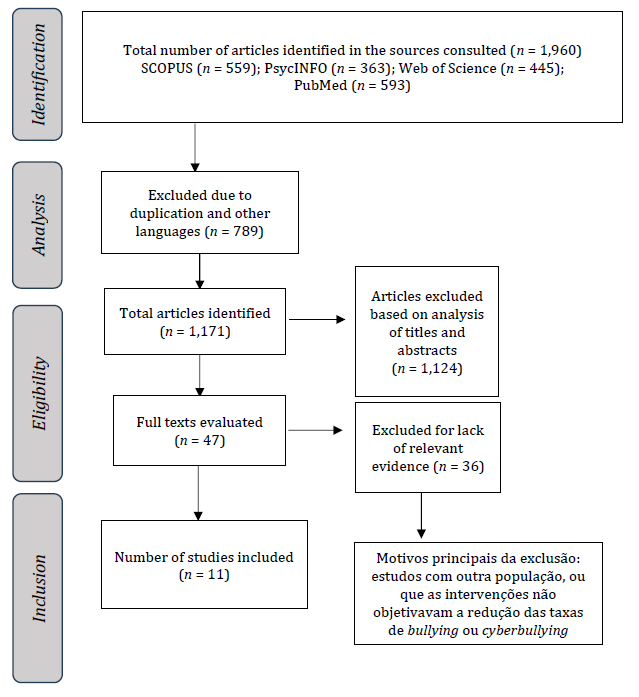
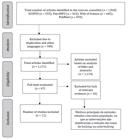
After searching the databases, the results were organized using the Rayyan platform (Ouzzani et al., 2016) to identify duplicates and perform an initial screening, which consisted of reading the titles and abstracts of the identified studies. Based on the established inclusion and exclusion criteria, 47 scientific articles were selected for full reading and analysis. After detailed reading and indexing of these articles, a second selection stage was carried out, culminating in the inclusion of eleven studies in the analytical corpus. A flowchart was created to detail the selection process and results, following PRISMA guidelines.
Data analysis
The data were analyzed descriptively, following the recommendations of a mapping review (Khalil & Tricco, 2022). Relevant information, such as the characteristics of the interventions, methodological and bibliographical data, and the main results obtained in the studies, were extracted from a standardized form and summarized in tables. Themes and patterns across the studies were identified to provide insight into the various antibullying interventions targeted at adolescents reported in the scientific literature.
Results
The searches conducted in the four databases consulted (SCOPUS, PsycINFO, WOS, and PubMed) resulted in the identification of 1,171 articles, which were subjected to title and abstract analysis. The selection process is detailed in the PRISMA flowchart available in Figure 1.
After the analysis and selection process was completed, 11 studies were included to compose the analytical corpus. The analysis of this material was divided into three main categories: (1) metatheoretical analysis, (2) metamethod analysis, and (3) metasynthesis. The metatheoretical analysis covers the bibliometric data, the description of the interventions, and the theories or concepts underlying the selected studies. The metamethod analysis considers the methodological designs adopted and the data collection strategies used in each study. Finally, the metasynthesis integrates and interprets the main findings of the studies, synthesizing the results that meet the objectives of this review.
Category 1: Metatheoretical analysis
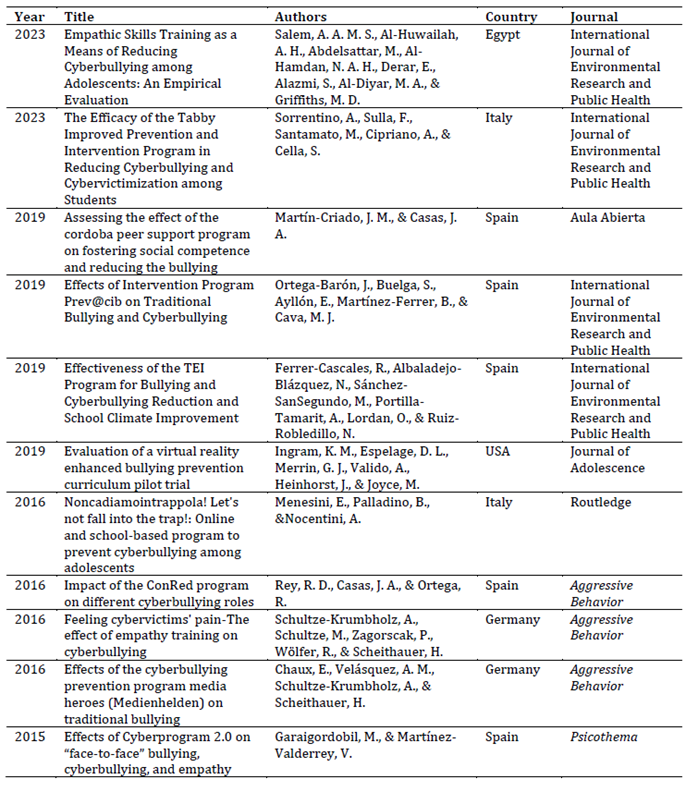
The bibliometric data of the studies included in the analytical corpus, such as the country in which the research was conducted, the journal in which it was published, the authorship, the title and the year of publication, are presented in Table 1. From the analysis of this content, it is highlighted that Spain was the setting for the majority of the studies included (n= 5); and the years 2019 and 2016 obtained the highest publication rate each (n= 4).
Regarding the authors of the studies, it is clear that the researchers were diverse and had training in health, education, or social sciences, and most held doctorates or postdoctoral degrees. In total, five journals were used to publish the ten scientific articles included, with the International Journal of Environmental Research and Public Health (n= 4), and Aggressive Behavior (n= 3) being the most frequently used. It is noteworthy that only the study by Menesini et al. (2016) was published as a book chapter by Routledge.
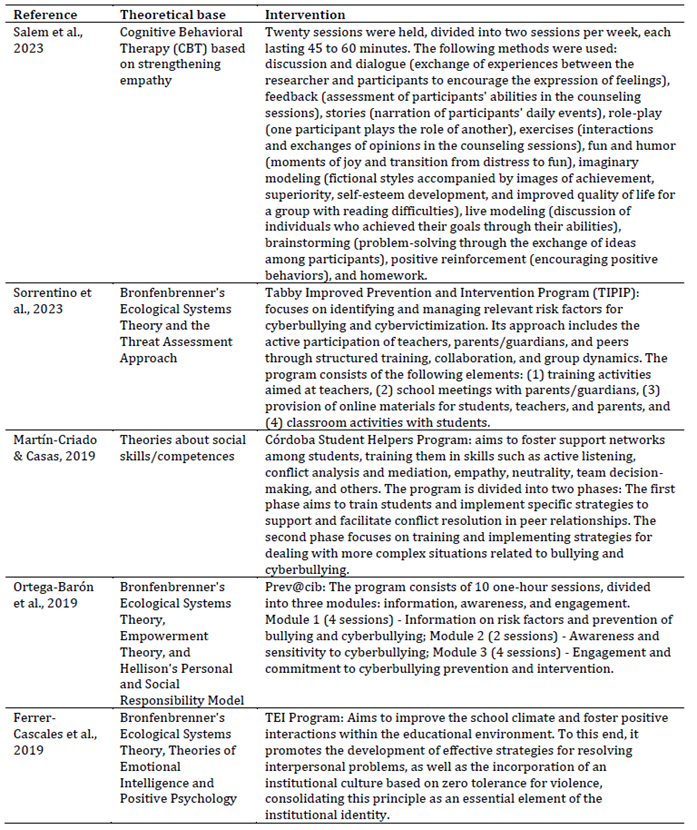
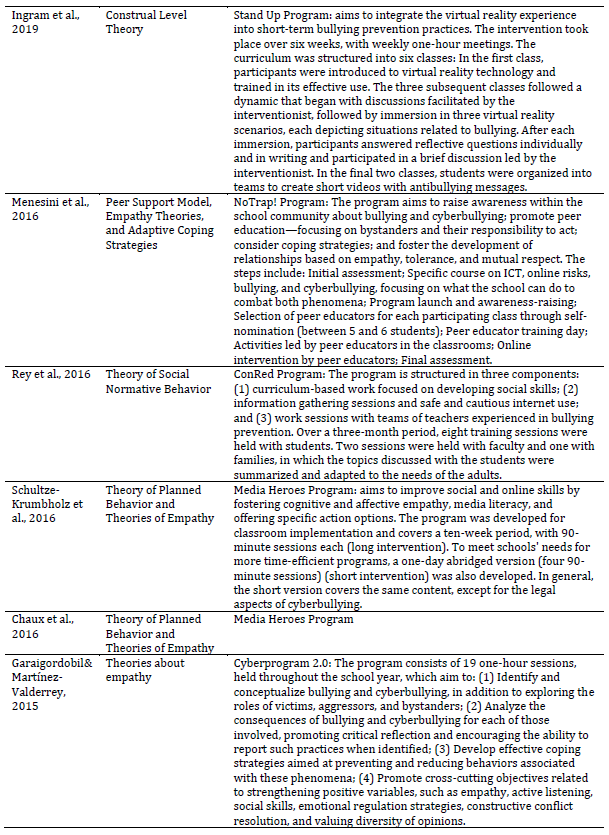
Table 2. describes the intervention programs reported in each product included in the review, as well as their respective theoretical foundations.
It is evident that, despite the variety of techniques and theories used by the authors, empathy is mentioned in several interventions (n= 5), as well as the strengthening of the socio-emotional aspects of those involved in the dynamics of bullying and/or cyberbullying (n= 5). Furthermore, in general, the researchers based themselves on the classic definitions of these phenomena, which characterize them as situations of power imbalance between peers, in which intentional and repeated aggressions are directed, directly or indirectly, at the victims (Olweus, 2013). It is noteworthy that ten distinct interventions were identified, considering that the “Media Heroes” program was analyzed in two of the eleven materials included.
Among the ten interventions described, six focused their actions exclusively on students -CBT, Córdoba Student Helpers Program, Prev@cib, Media Heroes, Cyberprogram 2.0, and Stand Up Program-, while four involved other agents of the school community, such as parents, administrators, and/or teachers -ConRed, TEI, NoTrap!, and TIPIP Program-. The NoTrap! intervention proposes a new role for students, called “peer educators” - these are students who voluntarily participated more assiduously in the program (approximately five to six per class) and who were responsible for transmitting the acquired skills and concepts to the other students in their class (Menesini et al., 2016).
Similarly, in the Córdoba Student Helpers Program, student helpers organized themselves into support networks to provide mutual assistance and support. Unlike the NoTrap! program, student selection was based on two distinct criteria: one group was nominated by their peers, based on their perceived social competence, while the other group was selected by program leaders, comprising students who exhibited hostile and unruly behavior, for example. This strategy aimed to foster the exchange of experiences among diverse profiles, fostering the development of social and interpersonal skills (Martín-Criado& Casas, 2019).
The TEI program introduced the roles of tutor and tutee. The tutor was a student up to two years older than the tutee and who demonstrated good interpersonal skills. Their role was to support the more vulnerable student in strengthening self-esteem, developing social skills, and promoting a more positive integration into the school environment (Ferrer-Cascales et al., 2019).
Category 2: Metamethod analysis
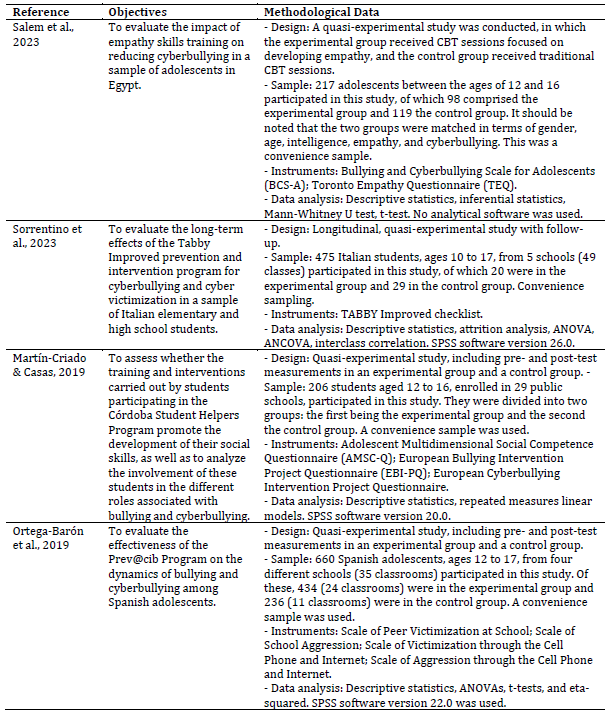
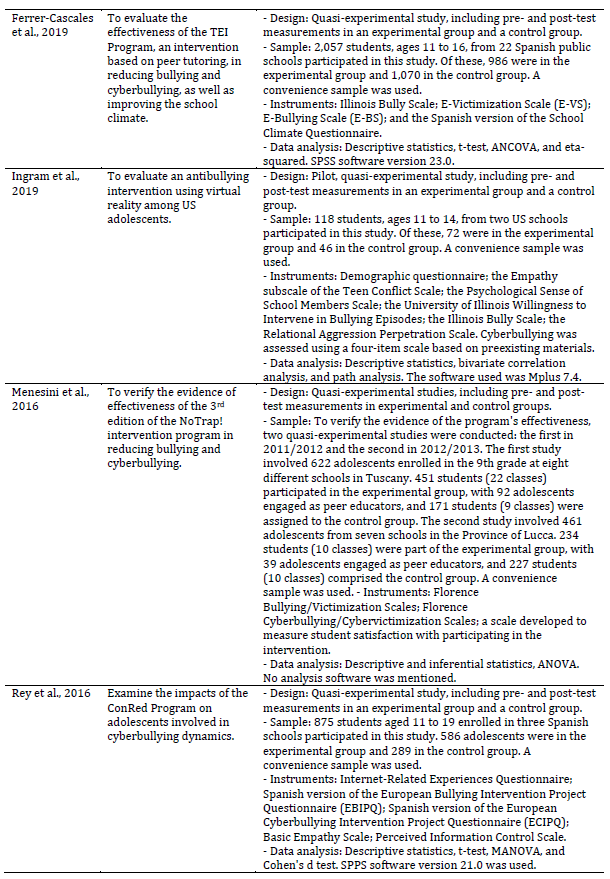
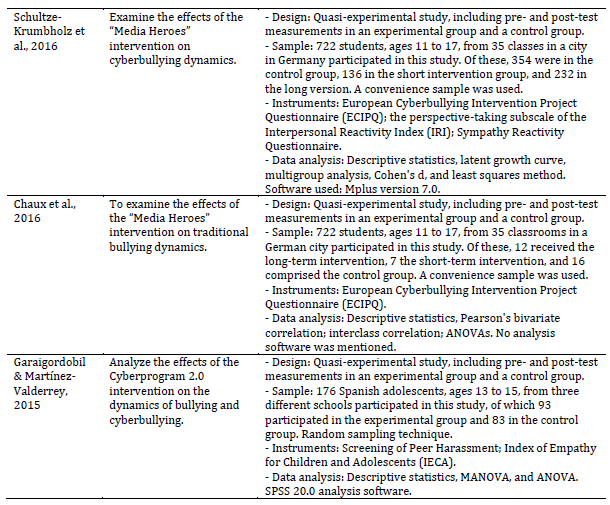
For a more in-depth analysis of the methodological aspects of the studies that comprise the analytical corpus, Table 3 . . was prepared, which presents the objectives, design, sample characteristics, instruments used, and data analysis procedures adopted in each study. From the analysis of this table, it can be observed that all studies employed a quasi-experimental design, using scales or questionnaires as data collection instruments.
Regarding the selection of participants, it was found that 10 of the 11 studies used convenience sampling, while only the study by Garaigordobile Martínez-Valderrey (2015) adopted a random sampling technique. It is worth noting that, in order to verify the evidence of the effectiveness of the NoTrap! program, two interventions were conducted in different years and with different samples, while maintaining the same content and properties (Menesini et al., 2016).
Regarding data analysis, it was found that all authors adopted a quantitative design, using descriptive and inferential statistics, as well as regression, correlation and variance analyses.
Category 3: Metasynthesis
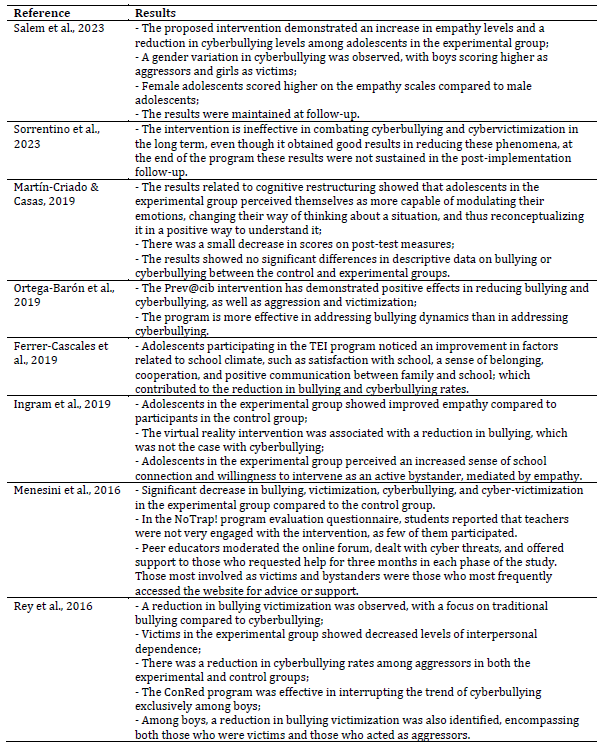
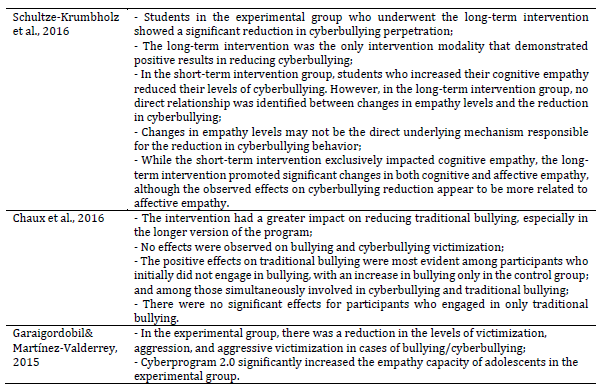
Table 4. presents the main results obtained in each reviewed study.
Effective interventions in reducing traditional bullying were found to include Media Heroes (focused on developing empathy), Cyberprogram 2.0 (focused on developing empathy and social skills), ConRed (focused on social skills), Stand Up (focused on social-emotional skills), TEI (focused on emotional skills), NoTrap! (peer support model, theories on empathy and adaptive coping strategies), and Prev@cib (focused on social skills) (Chaux et al., 2016; Ferrer-Cascales et al., 2019; Garaigordobil & Martínez-Valderrey, 2015; Ingram et al., 2019; Menesini et al., 2016; Ortega-Barón et al., 2019; Rey et al., 2016).
In the dynamics involving cyberbullying, the intervention programs that demonstrated effectiveness were Cyberprogram 2.0, Media Heroes, ConRed, TEI, NoTrap!, Prev@cib and Cognitive-Behavioral Therapy (CBT) aimed at strengthening empathy (Ferrer-Cascales et al., 2019; Garaigordobil & Martínez-Valderrey, 2015; Menesini et al., 2016; Ortega-Barón et al., 2019; Rey et al., 2016; Salem et al., 2023; Schultze-Krumbholz et al., 2016). It is noteworthy that, with the exception of the Stand Up program, effective interventions in confronting bullying also demonstrate efficiency in the context of cyberbullying. However, programs that addressed both phenomena tended to be more effective in reducing traditional bullying, with the exception of the NoTrap! program, which presented similar results in both dynamics (Ingram et al., 2019; Menesini et al., 2016; Ortega-Barón et al., 2019; Rey et al., 2016).
On the other hand, some interventions did not achieve the expected objectives, such as the TIPIP Program, based on Bronfenbrenner's bioecological theory, and the Córdoba Student Helpers Program, which prioritized the development of social and cognitive skills (Martín-Criado & Casas, 2019; Sorrentino et al., 2023). However, even without obtaining evidence of effectiveness in reducing the phenomena of interest, the Córdoba Student Helpers Program promoted some qualitative changes in the participants, such as improved ability to modulate emotions, for example (Martín-Criado& Casas, 2019).
Programs that used empathy as a theoretical basis -Cyberprogram 2.0, Media Heroes, NoTrap!, Stand Up, and CBT- have demonstrated effectiveness in reducing bullying and cyberbullying dynamics, in addition to promoting advances in this construct (Chaux et al., 2016; Garaigordobil & Martínez-Valderrey, 2015; Ingram et al., 2019; Menesini et al., 2016; Salem et al., 2023; Schultze-Krumbholz et al., 2016). However, it is not guaranteed that empathy was the determining factor for these results, nor is it possible to specify which of its dimensions (affective or cognitive) was associated with the observed effect (Schultze-Krumbholz et al., 2016).
Interventions that addressed social and cognitive skills, however, presented mixed results. The Córdoba Student Helpers Program failed to significantly reduce rates of bullying and cyberbullying (Martín-Criado & Casas, 2019). In contrast, the Stand Up and TEI programs achieved their proposed objectives (Ferrer-Cascales et al., 2019; Ingram et al., 2019).
Based on the reviewed results, the Italian intervention NoTrap! can be considered the most effective among the ten programs analyzed. This conclusion is based on statistical evidence of its effectiveness, proven by two separate studies, as well as the greater engagement of the school community -including parents, students, and teachers- in the proposed activities. Furthermore, the program adopts a hybrid intervention model, combining in-person classroom activities with interactions mediated by an online platform. This modality, supervised by adults, is structured around the logic of peer-to-peer interaction, which favors more active student involvement in all stages of the program (Menesini et al., 2016).
Discussion
The main objective of this study was to map antibullying interventions targeted at adolescents available in the scientific literature, with an emphasis on the systematic description of their content, strategies, and theoretical foundations. Unlike previous reviews that focused predominantly on measuring the overall effectiveness of programs (Ng et al., 2022; Resett & Mesurado, 2021), this study adopted the mapping review model to broaden the descriptive and analytical scope, offering a panoramic view of the current landscape of intervention practices. This approach is justified for two main reasons. First, because it allowed us to identify trends, gaps, and heterogeneities in the program content and underlying concepts of the programs, going beyond the question "what works?" to also address "how these interventions are designed and implemented." Second, because bullying and cyberbullying were recognized as group, relational, and contextually mediated phenomena, requiring more complex strategies than those evaluated solely in terms of symptom reduction or aggressive behavior (effectiveness).
The analysis of the 10 intervention programs identified revealed a diversity of components, methods, and theoretical frameworks present in these approaches. It was observed that all documented initiatives were effective, to some extent, in combating bullying and/or cyberbullying. However, the approaches adopted, the levels of action (individual, group, school-based), and the core elements of each intervention varied substantially, which reinforces the importance of an analytical mapping that allows us to understand what is being done and how these practices align (or not) with scientific and ethical assumptions.
Given the plurality of variables involved in an intervention, the Society for Prevention Research established six fundamental criteria for identifying efficacy, effectiveness, and dissemination (Flay et al., 2005). These are: (1) having been evaluated in at least two rigorous trials; (2) involving well-defined samples from specific populations; (3) employing psychometrically valid measures and appropriate data collection procedures; (4) using robust statistical methods in data analysis; (5) presenting consistent positive effects; and (6) reporting at least one long-term follow-up with statistically significant results (Flay et al., 2005).
These criteria were applied to the interventions reported in the reviewed studies. Thus, based on the reviewed results, only two of the 10 interventions described -the TIPIP Program and the Córdoba Student Helpers Program- did not achieve the expected results, that is, a significant reduction in the rates of school bullying and cyberbullying. Although the other eight presented the desired effects, only the NoTrap! intervention met all six criteria mentioned above, as it was the only program that was evaluated in two rigorous trials, that is, the only one that met the first expected requirement (Flay et al., 2005; Menesini et al., 2016).
Another finding indicated that intervention programs that simultaneously address traditional bullying and cyberbullying tended to be more effective in reducing the former, with the exception of the NoTrap! program, which demonstrated similar effects in both dynamics. This finding may be explained by the transposition of strategies originally developed to address traditional bullying to cyberbullying, without due consideration of the specificities of the virtual environment, among which the anonymity of the aggressors stands out (Li et al., 2024; Wingate et al., 2013).
Based on this, the need to develop specific content that addresses the use of Information and Communication Technologies (ICTs) in interventions that address both phenomena is highlighted (Wingate et al., 2013). In this sense, a systematic review carried out by Ansary (2020) proposed some criteria for the development of effective interventions against cyberbullying, which include: (1) incorporation of a theoretical framework that supports all adopted strategies; (2) emphasis on risk and protective factors identified in the scientific literature; (3) consideration of the entire school community - family, peers, teachers, administration - in the design of actions; and (4) carrying out rigorous empirical evaluations to measure the results achieved.
Regarding the target audience of intervention programs, a meta-analysis conducted by Gaffney et al. (2021) indicated that interventions that encompass actions across the entire school community are more effective. Considering that bullying is a multi-determined phenomenon, it is essential that prevention and coping strategies consider the diversity of contexts, agents, and circumstances that contribute to its occurrence (Tristão et al., 2022). This action strategy was used, for example, by the ConRed, TEI, NoTrap!, and TIPIP programs.
Furthermore, some of the interventions described used the peer education methodology, in which specific group members are recruited and trained to conduct activities with their peers (Sun et al., 2018; Zambuto et al., 2020). However, the effectiveness of programs that adopt this strategy can vary depending on several factors, such as: the content and duration of the training offered, the attitude of the trainers, the materials and/or activities used to develop the peer educators' skills, the roles assigned to these students, the degree of autonomy granted in carrying out their tasks, and, especially, the recruitment strategy adopted (Sun et al., 2018).
The scientific literature also indicates that the voluntary recruitment strategy tends to yield better results in antibullying intervention programs (Zambuto et al., 2019). A study conducted by Zambuto et al. (2020) demonstrated that, although peer educators nominated by classmates are, in general, more popular and charismatic, this characteristic did not translate into a significant reduction in rates of bullying, victimization, cyberbullying and cybervictimization.
This condition can be seen in the present study, since the NoTrap! Program, in which peer educators were recruited voluntarily, recorded a significant reduction in bullying and victimization incidents (Menesini et al., 2016). In contrast, the Córdoba Student Helpers Program, which used a nomination strategy led by peers and intervention leaders, did not achieve the expected results (Martín-Criado & Casas, 2019). These findings reinforce the importance of carefully considering the method of recruiting peer educators as a moderating variable for the effectiveness of bullying prevention programs that use this strategy.
Regarding empathy, all interventions that incorporated this construct as a basis for formulating their actions -Cyberprogram 2.0, Media Heroes, NoTrap!, Stand Up, and CBT- showed a reduction in the rates of aggression and victimization associated with bullying and/or cyberbullying. However, it is not possible to state with precision whether these results are directly attributable to the work with empathy (Schultze-Krumbholz et al., 2016).
Similarly, a literature review conducted by Lembo et al. (2023) indicated that individuals with aggressive behavior tend to present empathy deficits and difficulties in adopting the perspective of others. However, scientific studies have pointed out discrepancies regarding the nature of this deficit, that is, whether it manifests predominantly in the cognitive or affective dimension of empathy. Therefore, the relevance of developing interventions that address empathy as a central component can be determined, but further studies still need to be conducted.
Finally, based on the results analyzed, the NoTrap! Program was considered the most effective among the ten antibullying interventions included in this review. This evaluation is justified by the fact that the program was the only one to meet the criteria established by the Society for Prevention Research, in addition to involving the entire school community in its actions -as recommended by the specialized literature- and including, in a structured manner, the development of empathy (listening and empathic feedback, for example) in its methodology (Flay et al., 2005; Gaffney et al., 2021; Lembo et al., 2023).
Conclusion
Given the high prevalence rates and the psychosocial consequences they generate for the entire school community, bullying and cyberbullying are considered serious public health problems, requiring urgent and effective interventions. Therefore, this study aimed to map intervention programs in the scientific literature aimed at preventing and addressing these phenomena among adolescents.
In total, 10 interventions were identified, eight of which demonstrated effectiveness in reducing bullying and/or cyberbullying rates. The analysis of these intervention programs revealed a diversity of components and theoretical foundations underlying the approaches adopted. Based on the evaluation of the results and content present in each intervention, the NoTrap! program stood out as the most effective. It was also observed that certain characteristics significantly contribute to the effectiveness of the interventions, such as the involvement of the entire school community in the proposed actions. In the specific case of combating cyberbullying, the importance of including specific content about the phenomenon was noted, such as the anonymity of aggressors and the use of Information and Communication Technologies (ICTs).
It is important to emphasize that the results of this review should be interpreted in light of its main limitations. As this research is a mapping review, the objects of study are other scientific articles or book chapters, which have their own biases and limitations. Another important point to consider is the impossibility of consulting all the scientific literature on this topic, either due to the preference for specific databases or the descriptors used in searches. It is also recognized that geopolitical contexts marked by structural inequalities in the field of scientific research may be underrepresented, as nine of the 11 studies included in this review originate from European contexts, which confers a cultural bias on the analyzed evidence. The exclusion or failure to identify studies from Latin America and Africa should not be interpreted as evidence of the lack of antibullying intervention programs in these contexts. On the contrary, such an absence may reflect structural and epistemological limitations of scientific production in these regions.
Furthermore, three main hypotheses can be considered for this scenario. The first concerns the possible existence of local initiatives, often developed by civil society organizations, schools, or public agencies, that are not systematically evaluated and, therefore, do not result in academic publications eligible for indexing. The second hypothesis refers to the variability of the terms and descriptors used to name and categorize such interventions, which can hinder their retrieval in international databases. Finally, it is possible that some studies were excluded because they did not meet the methodological criteria required for inclusion in this review, even though they address relevant experiences.
This finding reinforces the need to foster not only new intervention programs, but also strategies that promote the evaluation, systematization, and scientific dissemination of ongoing experiences. Such an effort is essential to broaden the scope of available knowledge and to promote a truly global agenda in combating bullying.
References
-
Ansary, N. S. (2020). Cyberbullying: Concepts, theories, and correlates informing evidence-based best practices for prevention. Aggression and Violent Behavior, 101343. https://doi.org/10.1016/j.avb.2019.101343
» https://doi.org/10.1016/j.avb.2019.101343 -
Aristimuño, A., & Noya, J. C. (2015). La convivencia escolar y el fenómeno del bullying en la enseñanza secundaria de Uruguay: un estudio de caso. Páginas de Educación, 8(2), 36-65. https://doi.org/10.22235/pe.v8i2.691
» https://doi.org/10.22235/pe.v8i2.691 -
Best, O., & Ban, S. (2021). Adolescence: physical changes and neurological development. British Journal of Nursing, 30(5), 272-275. https://doi.org/10.12968/bjon.2021.30.5.272
» https://doi.org/10.12968/bjon.2021.30.5.272 -
Bosa, M. R., Bohórquez, M. C. C., Olarte, C. F. P., & Malaver, J. K. S. (2018). Diferencias por sexo en la intimidación escolar y la resiliência en adolescentes. Psicologia Escolar e Educacional, 22(3), 519-526. https://doi.org/10.1590/2175-35392018039914
» https://doi.org/10.1590/2175-35392018039914 -
Chaux, E., Velásquez, A. M., Schultze-Krumbholz, A., & Scheithauer, H. (2016). Effects of the cyberbullying prevention program media heroes (Medienhelden) on traditional bullying. Aggressive Behavior, 42(2), 157-165. https://doi.org/10.1002/ab.21637
» https://doi.org/10.1002/ab.21637 -
Costantino, C., Casuccio, A., Marotta, C., Bono, S. E., Ventura, G., Mazzucco, W., Vitale, F., Restivo, V., & the BIAS Study Working Group (2019). Effects of an intervention to prevent the bullying in first-grade secondary schools of Palermo, Italy: the BIAS study. Italian Journal of Pediatrics, 45(65). https://doi.org/10.1186/s13052-019-0649-3
» https://doi.org/10.1186/s13052-019-0649-3 -
Ferreira, T. R. S. C., & Deslandes, S. F. (2018). Cyberbullying: conceituações, dinâmicas, personagens e implicações à saúde. Ciência & Saúde Coletiva, 23(10), 3369-3379. https://doi.org/10.1590/1413-812320182310.13482018
» https://doi.org/10.1590/1413-812320182310.13482018 -
Ferrer-Cascales, R., Albaladejo-Blázquez, N., Sánchez-SanSegundo, M., Portilla-Tamarit, A., Lordan, O., & Ruiz-Robledillo, N. (2019). Effectiveness of the TEI program for bullying and cyberbullying reduction and school climate improvement. International Journal of Environmental Research and Public Health, 16(4). https://doi.org/10.3390/ijerph16040580
» https://doi.org/10.3390/ijerph16040580 -
Flay, B. R., Biglan, A., Boruch, R. F., Castro, F. G., Gottfredson, D., Kellam, S., Mościcki, E. K., Schinke, S., Valentine, J. C., & Ji, P. (2005). Standards of evidence: criteria for efficacy, effectiveness and dissemination. Prevention Science: the Official Journal of the Society for Prevention Research, 6(3), 151-175. https://doi.org/10.1007/s11121-005-5553-y
» https://doi.org/10.1007/s11121-005-5553-y -
Gaffney, H., Ttofi, M. M., & Farrington, D. P. (2021). What works in anti-bullying programs? Analysis of effective intervention components. Journal of School Psychology, 85, 37-56. https://doi.org/10.1016/j.jsp.2020.12.002
» https://doi.org/10.1016/j.jsp.2020.12.002 -
Galvão, T. F., Tiguman, G. M. B., & Sarkis-Onofre, R. (2022). A declaração PRISMA 2020 em português: recomendações atualizadas para o relato de revisões sistemáticas. Epidemiologia e Serviços de Saúde, 31(2), e2022364. https://doi.org/10.1590/SS2237-9622202200011
» https://doi.org/10.1590/SS2237-9622202200011 -
Garaigordobil, M., & Martínez-Valderrey, V. (2015). Effects of Cyberprogram 2.0 on “face-to-face” bullying, cyberbullying, and empathy. Psicothema, 27(1), 45-51. https://doi.org/10.7334/psicothema2014.78
» https://doi.org/10.7334/psicothema2014.78 -
Garcés-Prettel, M., Santoya-Montes, Y., & Jiménez-Osorio, J. (2020). Influencia de la comunicación familiar y pedagógica en la violencia escolar. Comunicar, 28(63), 77-86. https://doi.org/10.3916/C63-2020-07
» https://doi.org/10.3916/C63-2020-07 -
Hosozawa, M., Bann, D., Fink, E., Elsden, E., Baba, S., Iso, H., & Patalay, P. (2021). Bullying victimisation in adolescence: prevalence and inequalities by gender, socioeconomic status and academic performance across 71 countries. EClinicalMedicine, 41, 101142. https://doi.org/10.1016/j.eclinm.2021.101142
» https://doi.org/10.1016/j.eclinm.2021.101142 -
Hultin, H., Ferrer-Wreder, L., Engström, K., Andersson, F., & Galanti, M. R. (2021). The importance of pedagogical and social school climate to bullying: A cross-sectional multilevel study of 94 Swedish schools. The Journal of School Health, 91(2), 111-124. https://doi.org/10.1111/josh.12980
» https://doi.org/10.1111/josh.12980 -
Ingram, K. M., Espelage, D. L., Merrin, G. J., Valido, A., Heinhorst, J., & Joyce, M. (2019). Evaluation of a virtual reality enhanced bullying prevention curriculum pilot trial. Journal of Adolescence, 71 https://doi.org/10.1016/j.adolescence.2018.12.006
» https://doi.org/10.1016/j.adolescence.2018.12.006 - Instituto Brasileiro de Geografia e Estatística. (2021). Pesquisa nacional de saúde do escolar: 2019
-
Khalil, H., & Tricco, A. C. (2022). Differentiating between mapping review and scoping reviews in the evidence synthesis ecosystem. Journal of Clinical Epidemiology, 149, 175-182. https://doi.org/10.1016/j.jclinepi.2022.05.012
» https://doi.org/10.1016/j.jclinepi.2022.05.012 - Lembo, V. M. R., Santos, M. A., Silva, M. A. I., Sampaio, J. M. C., & Oliveira, W. A. (2023). Imaginação e sentimentos de estudantes que praticam bullying na escola. Em Santos-Vitti Nakano, T. C., Chnaider, J., & De Abreu I. C. C. (Orgs.), Psicologia Positiva e Desenvolvimento Humano (pp. 179-196). Vetor.
-
Li, C., Wang, P., Martin-Moratinos, M., Bella-Fernández, M., & Blasco-Fontecilla, H. (2024). Traditional bullying and cyberbullying in the digital age and its associated mental health problems in children and adolescents: a meta-analysis. European Child & Adolescent Psychiatry, 33(9), 2895-2909. https://doi.org/10.1007/s00787-022-02128-x
» https://doi.org/10.1007/s00787-022-02128-x -
Loch, A. P., Astolfi, R. C., Leite, M. A., Papa, C. H. G., Ryngelblum, M., Eisner, M., & Peres, M. F. T. (2020). Victims, bullies and bully-victims: prevalence and association with negative health outcomes from a cross-sectional study in São Paulo, Brazil. International Journal of Public Health, 65(8), 1485-1495. https://doi.org/10.1007/s00038-020-01481-5
» https://doi.org/10.1007/s00038-020-01481-5 -
Malta, D. C., Oliveira, W. A., Prates, E., Mello, F., Moutinho, C., & Silva, M. (2022). Bullying among Brazilian adolescents: evidence from the National Survey of School Health, Brazil, 2015 and 2019. Revista Latino-Americana de Enfermagem, 30(spe), e3679. https://doi.org/10.1590/1518-8345.6278.3679
» https://doi.org/10.1590/1518-8345.6278.3679 -
Martín-Criado, J. M., & Casas, J. A. (2019). Assessing the effect of the cordoba peer support program on fostering social competence and reducing the bullying. Aula Abierta, 48(2), 221-228. https://doi.org/10.17811/rifie.48.2.2019.221-228
» https://doi.org/10.17811/rifie.48.2.2019.221-228 - Menesini, E., Palladino, B. E., & Nocentini, A. (2016). Noncadiamointrappola! (Let's not fall into the trap!): Online and school-based program to prevent cyberbullying among adolescents. Em T. Völlink, F. Dehue, & C. McGuckin (Eds.), Cyberbullying: From theory to intervention (pp. 156-175). Routledge/Taylor & Francis Group.
-
Ng, E. D., Chua, J. Y. X., & Shorey, S. (2022). The effectiveness of educational interventions on traditional bullying and cyberbullying among adolescents: a systematic review and meta-analysis. Trauma, Violence & Abuse, 23(1), 132-151. https://doi.org/10.1177/1524838020933867
» https://doi.org/10.1177/1524838020933867 -
Olweus, D. (2013). School bullying: development and some important challenges. Annual Review of Clinical Psychology, 9(1), 751-780. https://doi.org/10.1146/annurev-clinpsy-050212-185516
» https://doi.org/10.1146/annurev-clinpsy-050212-185516 -
Ortega-Barón, J., Buelga, S., Ayllón, E., Martínez-Ferrer, B., & Cava, M. J. (2019). Effects of intervention program Prev@cib on traditional bullying and cyberbullying. International Journal of Environmental Research and Public Health, 16(4). https://doi.org/10.3390/ijerph16040527
» https://doi.org/10.3390/ijerph16040527 -
Ouzzani, M., Hammady, H., Fedorowicz, Z., & Elmagarmid, A. (2016). Rayyan-a web and mobile app for systematic reviews. Systematic Reviews, 5(1), 210. https://doi.org/10.1186/s13643-016-0384-4
» https://doi.org/10.1186/s13643-016-0384-4 -
Pollock, D., Peters, M. D. J., Khalil, H., McInerney, P., Alexander, L., Tricco, A. C., Evans, C., de Moraes, É. B., Godfrey, C. M., Pieper, D., Saran, A., Stern, C., & Munn, Z. (2023). Recommendations for the extraction, analysis, and presentation of results in scoping reviews. JBI Evidence Synthesis, 21(3), 520-532. https://doi.org/10.11124/JBIES-22-00123
» https://doi.org/10.11124/JBIES-22-00123 -
Resett, S., & Mesurado, B. (2021). Bullying and cyberbullying in adolescents: A meta-analysis on the effectiveness of interventions. Em P. Á. Gargiulo & H. L. Mesones Arroyo (Eds.), Psychiatry and neuroscience update: From epistemology to clinical psychiatry (pp. 445-458). Springer Nature Switzerland AG. https://doi.org/10.1007/978-3-030-61721-9_32
» https://doi.org/10.1007/978-3-030-61721-9_32 -
Rey, R. D., Casas, J. A., & Ortega, R. (2016). Impact of the ConRed program on different cyberbulling roles. Aggressive Behavior, 42(2), 123-135. https://doi.org/10.1002/ab.21608
» https://doi.org/10.1002/ab.21608 -
Salem, A. A. M. S., Al-Huwailah, A. H., Abdelsattar, M., Al-Hamdan, N. A. H., Derar, E., Alazmi, S., Al-Diyar, M. A., & Griffiths, M. D. (2023). Empathic Skills Training as a Means of Reducing Cyberbullying among Adolescents: An Empirical Evaluation. International Journal of Environmental Research and Public Health, 20 https://doi.org/10.3390/ijerph20031846
» https://doi.org/10.3390/ijerph20031846 -
Schultze-Krumbholz, A., Schultze, M., Zagorscak, P., Wölfer, R., & Scheithauer, H. (2016). Feeling cybervictims' pain-The effect of empathy training on cyberbullying. Aggressive Behavior, 42(2), 147-156. https://doi.org/10.1002/ab.21613
» https://doi.org/10.1002/ab.21613 -
Silva, J. L., Oliveira, W. A., Bono, E. L., Dib, M. A., Bazon, M. R., & Silva, M. A. I. (2016). Associações entre bullying e conduta infracional: revisão sistemática de estudos longitudinais. Psicologia: Teoria e Pesquisa, 32, 81-90. https://doi.org/10.1590/0102-37722016012241081090
» https://doi.org/10.1590/0102-37722016012241081090 -
Sorrentino, A., Sulla, F., Santamato, M., Cipriano, A., & Cella, S. (2023). The efficacy of the Tabby Improved Prevention and Intervention Program in reducing cyberbullying and cybervictimization among students. International Journal of Environmental Research and Public Health, 20 https://doi.org/10.3390/ijerph20085436
» https://doi.org/10.3390/ijerph20085436 -
Sun, W. H., Miu, H. Y. H., Wong, C. K. H., Tucker, J. D., & Wong, W. C. W. (2018). Assessing participation and effectiveness of the peer-led approach in youth sexual health education: Systematic review and meta-analysis in more developed countries. Journal of Sex Research, 55(1), 31-44. https://doi.org/10.1080/00224499.2016.1247779
» https://doi.org/10.1080/00224499.2016.1247779 -
Tristão, L. A., Silva, M. A. I., de Oliveira, W. A., dos Santos, D., & da Silva, J. L. (2022). Bullying e cyberbullying: Intervenções realizadas no contexto escolar. Revista de Psicología, 40(2), 1047-1073. https://doi.org/10.18800/psico.202202.015
» https://doi.org/10.18800/psico.202202.015 -
Wingate, V. S., Minney, J. A., & Guadagno, R. E. (2013). Sticks and stones may break your bones, but words will always hurt you: A review of cyberbullying. Social Influence, 8(2-3), 87-106. https://doi.org/10.1080/15534510.2012.730491
» https://doi.org/10.1080/15534510.2012.730491 -
Zambuto, V., Palladino, B. E., Nocentini, A., & Menesini, E. (2019). Why do some students want to be actively involved as peer educators, while others do not? Findings from NoTrap! Anti-bullying and anti-cyberbullying program. European Journal of Developmental Psychology, 16(4), 373-386. https://doi.org/10.1080/17405629.2017.1419954
» https://doi.org/10.1080/17405629.2017.1419954 -
Zambuto, V., Palladino, B. E., Nocentini, A., & Menesini, E. (2020). Voluntary vs nominated peer educators: A randomized trial within the NoTrap! Anti-Bullying Program. Prevention Science: the Official Journal of the Society for Prevention Research, 21(5), 639-649. https://doi.org/10.1007/s11121-020-01108-4
» https://doi.org/10.1007/s11121-020-01108-4 -
Zhu, C., Huang, S., Evans, R., & Zhang, W. (2021). Cyberbullying among adolescents and children: a comprehensive review of the global situation, risk factors, and preventive measures. Frontiers in Public Health, 9, 634909. https://doi.org/10.3389/fpubh.2021.634909
» https://doi.org/10.3389/fpubh.2021.634909