Executive functions: updating, set-shifting, and inhibition in non-Mapuche urban children, Mapuche urban children, and rural Mapuche children in La Araucanía, Chile
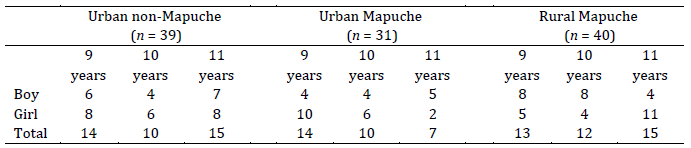
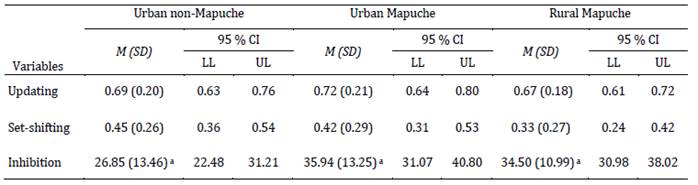
Children's cognitive abilities differ according to the cultural development settings in which they are raised. Assuming cultural variability, this study compared the executive functions in 110 children, aged 9 to 11 years, belonging to three groups: urban non-Mapuche, urban Mapuche, and rural Mapuche, from communes in the Araucanía region, Chile. A descriptive and correlational design was used to contrast children's performance on the variables of interest. The battery of instruments comprised three tests that assessed updating, set-shifting, and inhibition, respectively. The results indicate no statistically significant differences in updating and set-shifting, but there was a statistical significance for differences in inhibition, with non-Mapuche children having greater inhibition than the other two groups. The findings are discussed according to the hypothesis that skill development is related to the daily practices, demands, and sociodemographic characteristics of the settings in which children are raised.
Keywords:
cultural contexts; cultural differences; executive functions; Mapuche children; culture; Chile