Cognitive rigidity and theatrical improvisation practice time as predictors of empathy dimensions
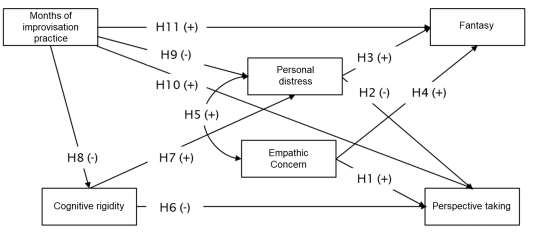
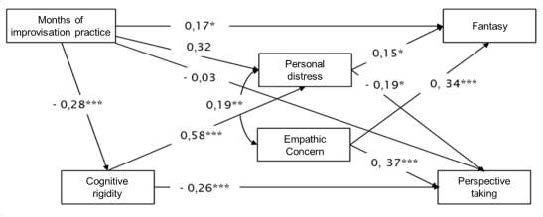
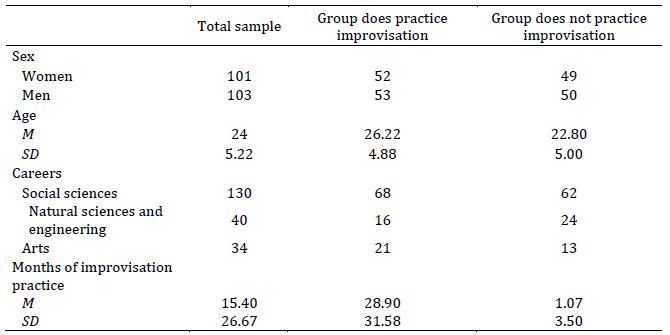
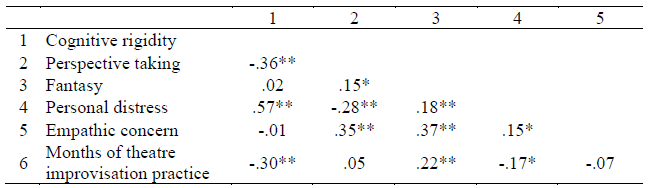
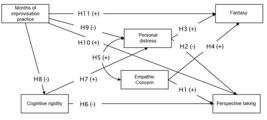
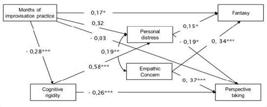
A possible relationship between theatrical improvisation practice and empathy has been suggested from some qualitative studies. The aim of this study was to analyze the statistical contribution of theatrical improvisation practice time and cognitive rigidity on empathy using the Affect-Cognition model within a statistical framework. The participants were 204 young and adult residents of Lima, of which 51 % practiced theatrical improvisation and 49 % were women. Non-probabilistic sampling and path analysis were used. The results indicate that the variables investigated can be integrated in a statistical model with a good fit, where the practice of improvisation contributes directly to Fantasy and indirectly to Perspective Taking, mediated by Rigidity. The results provide evidence in favor of the application of the Affect-Cognition model in the Latin American context and are compared with qualitative studies of improvisation and empathy. Practical implications on the role of theatrical improvisation and theoretical implications on the prediction of empathy are analyzed.
Keywords:
theatrical improvisation; cognitive rigidity; empathy; affect-cognition model
 Thumbnail
 Thumbnail