Cognitive Flexibility and Stress at Work in Brazilian Higher Education Professors
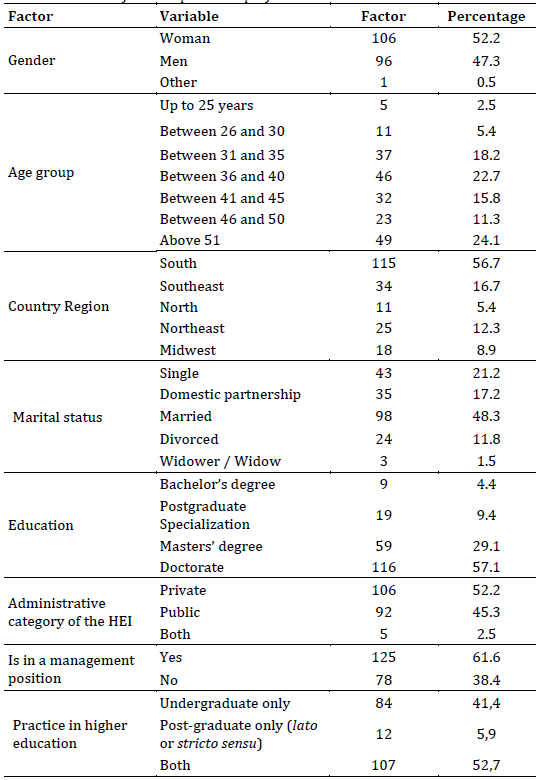
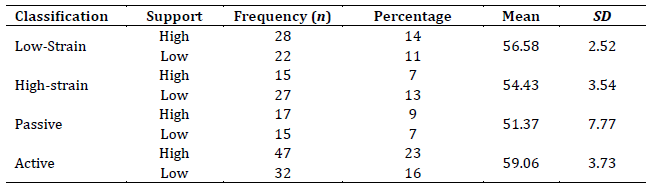
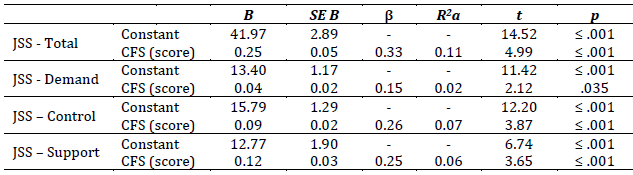
This study investigated the predictive role of Cognitive Flexibility (CF) in Job Stress (JS) in a sample of 203 Brazilian higher education faculty members. A socio-professional questionnaire, the Cognitive Flexibility Scale-Brazil (CFS-B), and the Job Stress Scale (JSS) were applied. Data collection was conducted individually and online, aiming for sample heterogeneity, composed of 52.2 % women, 56.7 % residents of the southern region of the country, 61.6 % in management positions, and 52.2 % working in private institutions. Descriptive, correlation, and regression analyses were conducted. Most participants reported high demand (59.6 %), high control/autonomy (63.5 %), and high support (52.7 %) at work, and indicated a high level of CF (52 %). Weak and positive correlations were found between CF and the evaluated dimensions of JS. The greater the autonomy and social support, and the lower the work demands, the lower the levels of stress experienced. CF presented a small predictive value for JS; nevertheless, it may be protective in the dimensions of social support and control, although it was also related to higher levels of assumed work demands. Organizational Psychology interventions that develop CF may mitigate risk factors associated with the development of work-related illnesses.
Keywords:
cognitive flexibility; occupational stress; work psychology; higher education; teachers