Systematic Review of Psychometric Instruments for Assessing Positive Parenting
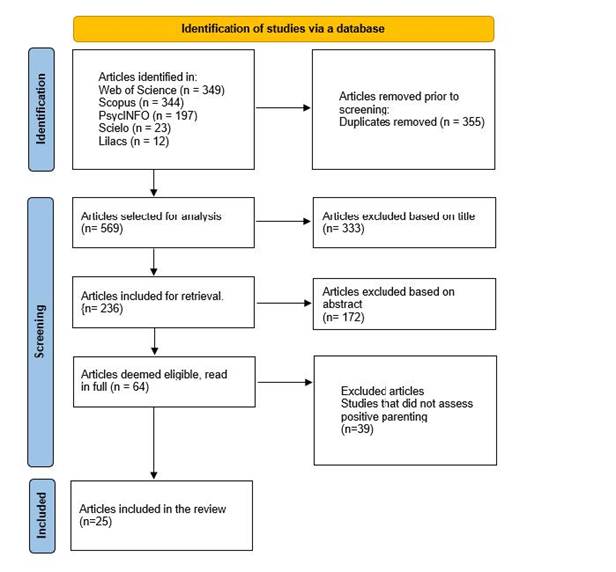
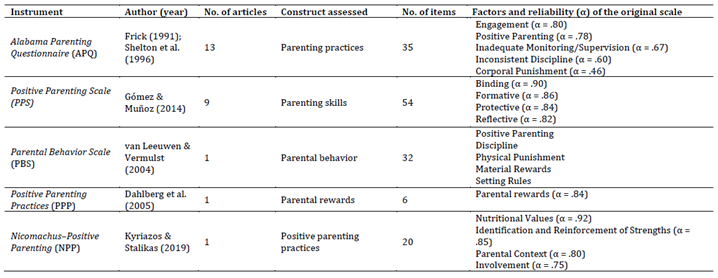
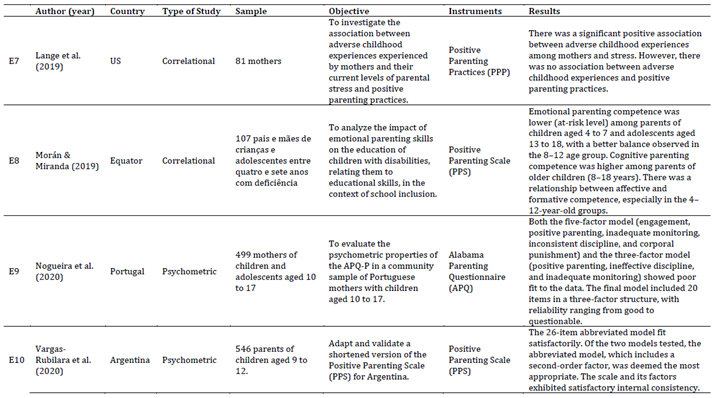
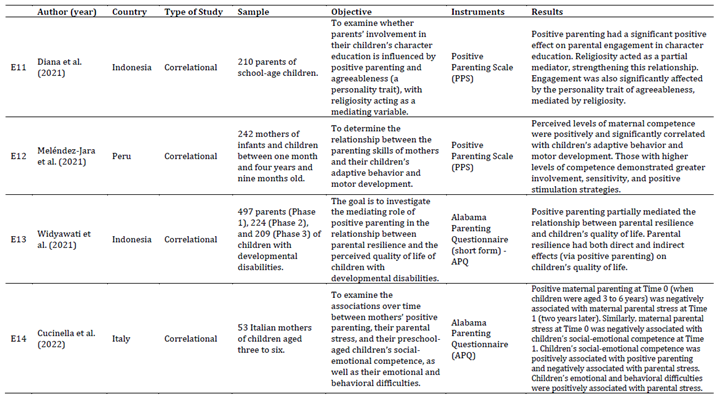
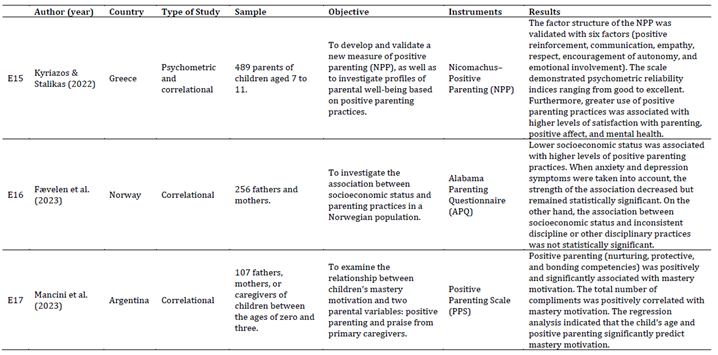
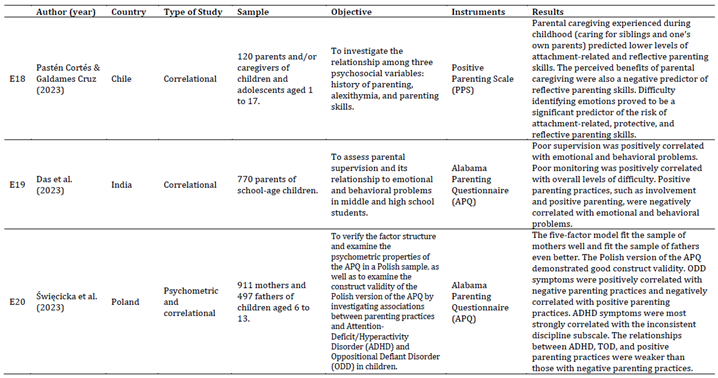
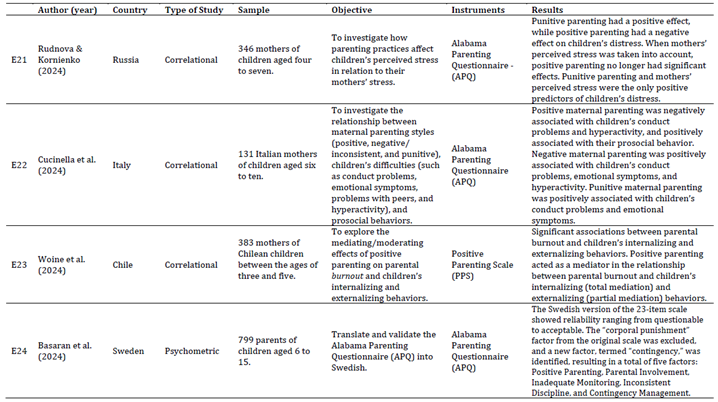
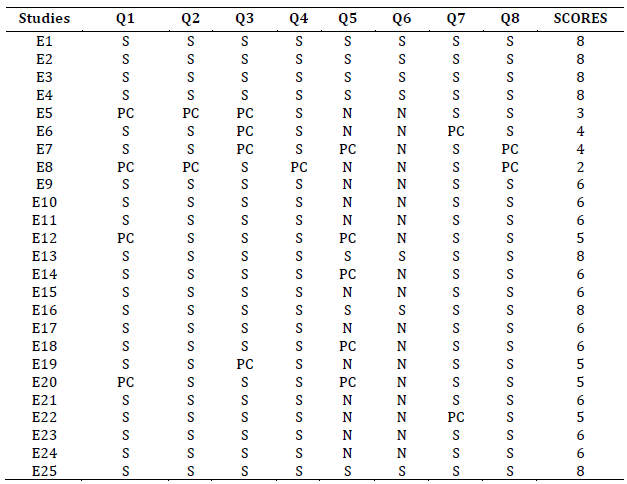
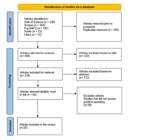
Positive parenting refers to parents raising children by considering them as subjects of rights and developing a relationship based on respect, acceptance, and the absence of violence. This article aimed to identify instruments for assessing positive parenting and to analyze their psychometric properties. A systematic literature review was conducted in the Web of Science, Lilacs, PsycInfo, Scielo, and Scopus databases from 2014 to 2024. Of the 925 files found, 25 studies were eligible, in which five distinct instruments for assessing positive parenting were identified: Alabama Parenting Questionnaire (APQ), Escala de Parentalidad Positiva (E2P), Parental Behavior Scale (PBS), Positive Parenting Practices (PPP), and Nicomachus-Positive Parenting (NPP). It was found that three instruments were developed specifically to assess the construct of positive parenting, and two addressed it as a parenting factor. Regarding psychometric properties, these were evaluated through factor analyses (exploratory and confirmatory) and internal consistency (Cronbach's Alpha). The methodological quality assessment indicated 21 studies with high scores, robust evidence, and low risk of bias. A lack of available psychometric instruments in the Brazilian context was noted. It is expected that the findings will support future studies aimed at validating instruments for other contexts, offering reliable and accurate tools for professionals to investigate positive parenting.
Keywords:
positive parenting; instruments; psychometric evidence; parents
 Thumbnail