Systematic Review of Psychometric Instruments for Assessing Positive Parenting
Abstract:
Positive parenting refers to parents raising children by considering them as subjects of rights and developing a relationship based on respect, acceptance, and the absence of violence. This article aimed to identify instruments for assessing positive parenting and to analyze their psychometric properties. A systematic literature review was conducted in the Web of Science, Lilacs, PsycInfo, Scielo, and Scopus databases from 2014 to 2024. Of the 925 files found, 25 studies were eligible, in which five distinct instruments for assessing positive parenting were identified: Alabama Parenting Questionnaire (APQ), Escala de Parentalidad Positiva (E2P), Parental Behavior Scale (PBS), Positive Parenting Practices (PPP), and Nicomachus-Positive Parenting (NPP). It was found that three instruments were developed specifically to assess the construct of positive parenting, and two addressed it as a parenting factor. Regarding psychometric properties, these were evaluated through factor analyses (exploratory and confirmatory) and internal consistency (Cronbach's Alpha). The methodological quality assessment indicated 21 studies with high scores, robust evidence, and low risk of bias. A lack of available psychometric instruments in the Brazilian context was noted. It is expected that the findings will support future studies aimed at validating instruments for other contexts, offering reliable and accurate tools for professionals to investigate positive parenting.
Keywords:
positive parenting; instruments; psychometric evidence; parents
Resumo:
A parentalidade positiva refere-se à educação das crianças pelos pais, considerando-as sujeitos de direitos e desenvolvendo um relacionamento pautado no respeito, no acolhimento e na ausência de violência. Este artigo teve como objetivo identificar os instrumentos que avaliam a parentalidade positiva e analisar suas propriedades psicométricas. Realizou-se uma revisão sistemática da literatura nas bases de dados Web of Science, Lilacs, PsycInfo, Scielo e Scopus, de 2014 a 2024. Dos 925 arquivos encontrados, 25 estudos foram elegíveis, nos quais foram identificados cinco instrumentos distintos para avaliação da parentalidade positiva: Alabama Parenting Questionnaire (APQ), Escala de Parentalidad Positiva (E2P), Parental Behavior Scale (PBS), Positive Parenting Practices (PPP) e Nicomachus-Positive Parenting (NPP). Verificou-se que três instrumentos foram desenvolvidos especificamente para avaliar o construto da parentalidade positiva e dois o abordavam como um fator da parentalidade. Quanto às propriedades psicométricas, avaliaram-se por meio de análises fatoriais (exploratórias e confirmatórias) e de consistência interna (alfa de Cronbach). A avaliação da qualidade metodológica indicou 21 estudos com pontuações altas, evidências robustas e baixo risco de viés. Constatou-se a ausência de instrumentos psicométricos disponíveis no contexto brasileiro. Espera-se que os achados subsidiem estudos futuros voltados à validação dos instrumentos em outros contextos, oferecendo ferramentas confiáveis e precisas para que os profissionais possam investigar a parentalidade positiva.
Palavras-chave:
parentalidade positiva; instrumentos; evidências psicométricas; pais
Resumen:
La crianza positiva se refiere a la crianza de los hijos considerándolos sujetos de derecho y desarrollando una relación basada en el respeto, la aceptación y la ausencia de violencia. Este artículo tuvo como objetivo identificar instrumentos para evaluar la crianza positiva y analizar sus propiedades psicométricas. Se realizó una revisión sistemática de la literatura en las bases de datos Web of Science, Lilacs, PsycInfo, Scielo y Scopus desde 2014 hasta 2024. De los 925 archivos encontrados, 25 estudios fueron elegibles, en los que se identificaron 5 instrumentos distintos para evaluar la crianza positiva: Alabama Parenting Questionnaire (APQ), Escala de Parentalidad Positiva (E2P), Parental Behavior Scale (PBS), Positive Parenting Practices (PPP) y Nicomachus-Positive Parenting (NPP). Se encontró que tres instrumentos fueron desarrollados específicamente para evaluar el constructo de crianza positiva y dos lo abordaron como un factor de la crianza. En cuanto a las propiedades psicométricas, se evaluaron mediante análisis factorial (exploratorio y confirmatorio) y de consistencia interna (alfa de Cronbach). La evaluación de la calidad metodológica indicó 21 estudios con puntuaciones altas, evidencia sólida y bajo riesgo de sesgo. Se observó una falta de instrumentos psicométricos disponibles en el contexto brasileño. Se espera que los hallazgos respalden estudios futuros orientados a validar instrumentos en otros contextos al ofrecer herramientas confiables y precisas para que los profesionales investiguen la crianza positiva.
Palabras clave:
parentalidad positiva; instrumentos; evidencia psicométrica; padres.
Early family experiences are crucial for healthy child development and directly impact well-being. According to Article 27 of the United Nations Convention on the Rights of the Child (UNICEF, 1990), parents are responsible for providing the conditions necessary for their children’s physical, psychological, and social development. Parents must develop their parenting skills to provide for their children's survival, care, and development in a safe environment that promotes socialization and autonomy (Pluciennik et al., 2015).
UNICEF emphasizes the importance of positive parenting, which is defined as an integrated system of caregivers' beliefs, emotions, attitudes, behaviors, and knowledge regarding child care (Altafim et al., 2023). Positive parenting is effective when grounded in acceptance, respect, stimulation, the absence of violence, and the establishment of appropriate boundaries, all of which are necessary for a child’s holistic development (Basaran et al., 2024).
In recognition of the importance of this issue in promoting children’s rights, Brazil enacted Law No. 14,826 in 2024. This law establishes positive parenting and the right to play as strategies for preventing violence against children. The law defines positive parenting as an educational process within families that recognizes children as rights-holders. Therefore, parents must promote welcoming practices that respect children without the use of violence. The legislation identifies six fundamental dimensions of positive parenting: (1) life preservation, which includes protective measures to ensure the child’s survival and health; (2) emotional support, which involves attending to and welcoming the child’s emotions; (3) structure, which involves promoting cultural practices related to leisure and sports; (4) stimulation, which involves activities that stimulate the child’s neurological capacities; (5) supervision, which involves fostering autonomy; and (6) non-violent and playful education, which involves teaching through play and without violence (Brazil, 2024).
Positive parenting is influenced by positive discipline and the Positive Parenting Program (Triple P), which emerged in the 1970s. The Positive Discipline Program was created to teach strategies that promote positive relationships between parents and children and move away from authoritarian practices such as physical punishment (Nelsen, 2006). Similarly, Triple P (Sanders, 2008) was developed to teach parents practical strategies to establish healthy bonds with their children, prevent behavioral issues, and address parental satisfaction and affection.
This program, which focuses on reducing violence and abuse during childhood and adolescence (Pickering & Sanders, 2016), continues to be used in various contexts to this day, including Chile, Iran, Australia, and Canada (Boyle et al., 2023; Bruna et al., 2021; Gagné et al., 2023; Norouzi-Panahi et al., 2024).
Research shows that positive parenting is significantly linked to children’s cognitive and socio-emotional development. This is reflected in better academic and behavioral outcomes (Basaran et al., 2024). It is also correlated with improved executive functions (Bernal-Ruiz et al., 2018) and the development of social skills such as self-control and assertiveness (Hosokawa & Katsura, 2017). Conversely, parents with lower-quality bonds with their children are more vulnerable to parental stress, and their children exhibit more executive functioning problems (Cock et al., 2017).
It is also evident that positive parenting serves as an early protective factor against developmental delays, fostering healthy cognitive, emotional, and social growth. According to Cprek et al. (2015), positive parenting practices such as shared reading, engaging with stories and music, and having family meals reduce the likelihood of developmental delays. Frequent and combined implementation of these practices plays a significant role in child development (Bai et al., 2021).
Despite increased scientific output and conceptual advances in the field, challenges remain in standardizing operational definitions and selecting valid instruments to measure positive parenting. Available literature reviews thus focus on evaluating instruments for assessing positive and negative parenting practices developed in the Brazilian context (Gomide & Traple, 2022) and instruments developed internationally that are used in Brazil (Gomide & Silva, 2024). Several instruments assess general aspects of parenting, but few were originally developed to capture the specifics of positive parenting (Dias-Viana & Noronha, 2025).
Therefore, the lack of studies that systematically evaluate positive parenting instruments used with parents is a significant gap in the literature. Given the importance of positive parenting for children and adolescents, it is crucial to identify valid and reliable psychometric measures for assessing this construct to select appropriate instruments for future research and interventions.
With this in mind, the present study conducted a systematic review of national and international literature to identify instruments that assess positive parenting and understand their psychometric properties.
Specifically, the objectives are: (1) examining how psychometric instruments have been used to measure positive parenting, (2) analyzing the psychometric parameters of existing instruments, (3) identifying variables correlated with positive parenting, and (4) assessing the methodological quality of studies on positive parenting.
To this end, a preliminary search was conducted in the International Prospective Register of Systematic Reviews (PROSPERO) database to identify protocols and reviews related specifically to positive parenting. The absence of any prior records directly addressing this topic underscores the need for systematic reviews to identify psychometric instruments for assessing positive parenting from parents’ perspectives.
Method
Study Design
This exploratory and descriptive study consists of a systematic review of Brazilian and international scientific publications on positive parenting as assessed in parents. The PRISMA (Preferred Reporting Items for Systematic Reviews and Meta-Analyses) recommendations were followed to standardize the systematic review process. To ensure transparency and methodological rigor, a protocol for this review was registered in PROSPERO under registration number CRD42025642587.
Research Question
To guide this review and characterize the sources examined, the following guiding question was formulated: What instruments are available in the literature for assessing positive parenting? Given the relevance of the topic and the importance of having adequate psychometric instruments for developing effective psychosocial interventions and expanding knowledge about positive parenting, a complementary question was formulated to analyze the identified instruments further: Do the instruments available for assessing positive parenting possess adequate psychometric properties?
Search Strategy and Selection Criteria
The search strategy covered the period from 2014 to 2024, and the searches were conducted from January to May of 2025. Studies were identified in the Web of Science, Lilacs, PsycInfo, Scielo, and Scopus databases and were selected for their scientific relevance. Initially, we consulted the DeCS and MeSH descriptors; however, we did not find a specific match encompassing the construct of positive parenting, as these vocabularies contain only more general terms, such as "parents" and "parental relationship." Therefore, we opted to use uncontrolled descriptors, i.e., free-text terms and their synonyms, that were most frequently identified in researchers' literature searches to capture the phenomenon more accurately. Based on this search strategy, the keywords consisted of a combination of the following descriptors: ("positive parenting") AND (scale OR questionnaire).
Eligibility Criteria
The inclusion criteria for the studies selected for this article were as follows: (1) quantitative empirical articles, (2) psychometric instruments (i.e., scales or questionnaires) assessing positive parenting, (3) publication between 2014 and 2024, (4) samples composed exclusively of parents (i.e., fathers and/or mothers), (5) open access availability, (6) writing in Portuguese, English, or Spanish, and (7) research conducted in any country.
Studies were excluded if they met at least one of the following criteria: (1) insufficient information about the instrument used (e.g., lack of description, psychometric indicators, or method of administration), (2) did not assess positive parenting using a psychometric instrument (e.g., use of a single item or an intervention program), (3) used the instrument only as a secondary measure without describing its psychometric properties, (4) were publications in the form of reviews, theoretical studies, qualitative studies, intervention research, theses, dissertations, or book chapters, and (5) the full text was not available.
Assessment of Methodological Quality and Risk of Bias in Studies
We assessed the methodological quality of the studies using the JBI Critical Appraisal Checklist for Analytical Cross-Sectional Studies. This tool was developed to evaluate the consistency and reliability of cross-sectional studies (Munn et al., 2020). The eight-item checklist assesses the following: (1) the clarity of the definition of participant inclusion criteria, (2) the clarity of the characterization of participants and the setting, (3) the validity and reliability of the measurement of the variable, (4) the reliability of the measurement instruments, (5) the identification of confounding factors, (6) the description of strategies used to address confounding factors, (7) the reliable reporting of results, and (8) the appropriateness of statistical analyses (Peters et al., 2015). Each item was rated according to the option that best described the study: "yes," "no," "unclear," or "not applicable." To obtain the final score for each study, only the "yes" responses were summed. Scores of five or higher indicate high methodological quality; scores between four and three reflect moderate quality; and scores of two or lower indicate low quality (Peters et al., 2015). The closer the total score is to eight, the higher the methodological reliability and the lower the risk of bias in the evaluated studies. Three independent reviewers analyzed methodological quality and risk of bias to ensure objectivity and consistency in the assessment.
Data Extraction
The studies identified were imported into the Rayyan software, developed by the Qatar Computing Research Institute, which comprises five analytical dimensions: abstract, keywords, authors’ names, journal names, and publication type. Two independent reviewers (D.G.N.D. and A.F.G.P.) were responsible for selecting and evaluating the studies.
Using the defined eligibility and exclusion criteria, the titles and abstracts of non-duplicate articles were analyzed. In cases of ambiguity, the reviewers conducted a detailed evaluation of the full text. In cases of disagreement, a third researcher (A.D.G.T) was consulted to ensure the validity and impartiality of the process. Finally, a full-text analysis was conducted on the studies deemed relevant.
Results
Results of the Article Selection Process
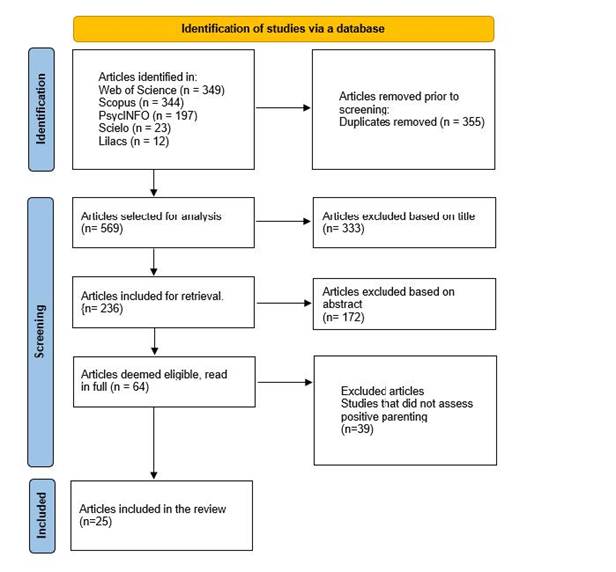
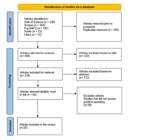
An initial search of the Web of Science, Scopus, PsycInfo, Scielo, and Lilacs databases yielded 924 records, as shown in Figure 1: Web of Science (349), Scopus (344), PsycInfo (197), Scielo (23), and Lilacs (12). All records were imported into Rayyan, which was used for systematic screening. In the first stage, 355 duplicates were identified and removed, leaving 569 unique records. These were initially screened by title, resulting in the exclusion of 333 studies. The remaining 236 studies underwent abstract review, resulting in the exclusion of 172 studies that did not meet the previously established eligibility criteria. In the next stage, the remaining 64 articles were read and evaluated in full. Of these, 39 were excluded because they lacked psychometric instruments to assess positive parenting, such as a single-item assessment, or because they lacked sufficient information about the measure, such as a description of the instrument and its psychometric indicators. Ultimately, 25 studies that met all the defined criteria were included in this review. Five instruments for assessing positive parenting were identified among these studies.
Results of the Positive Parenting Assessment Tools
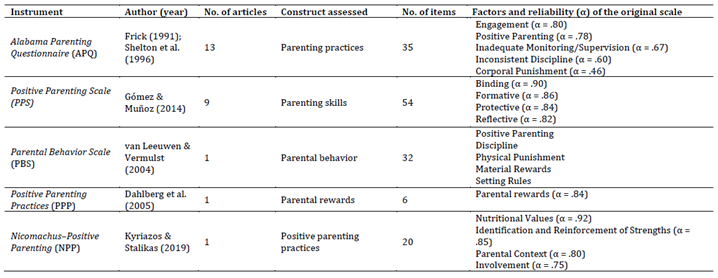
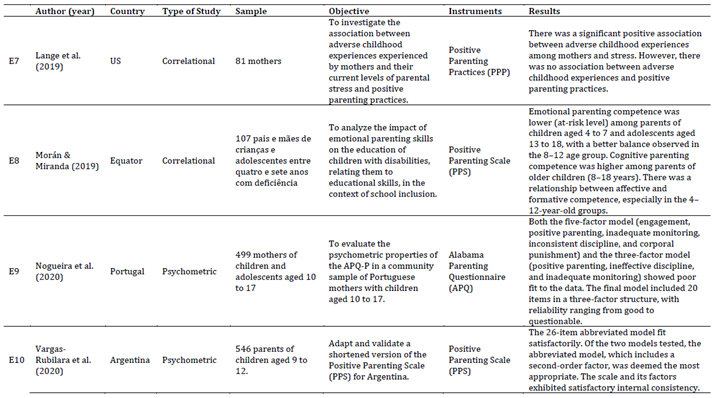
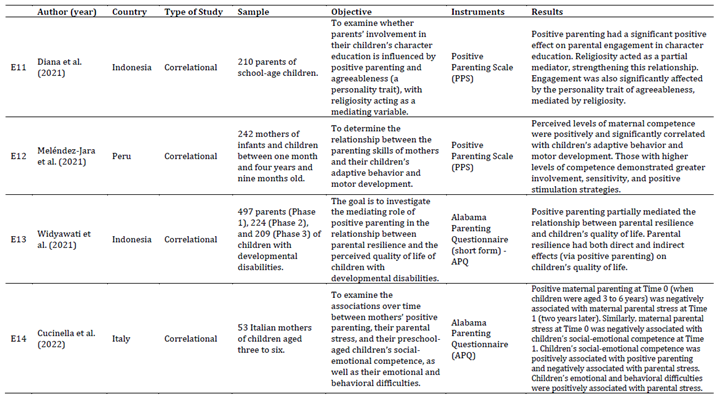
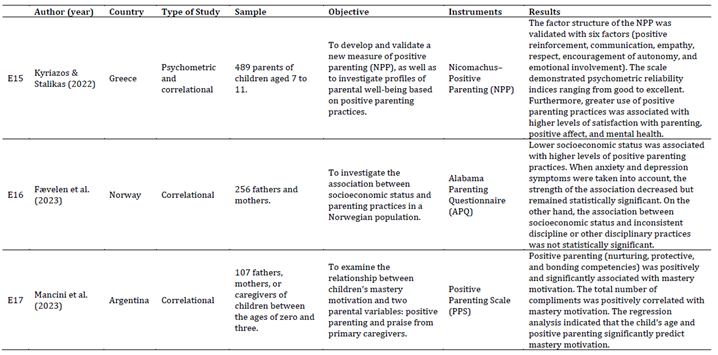
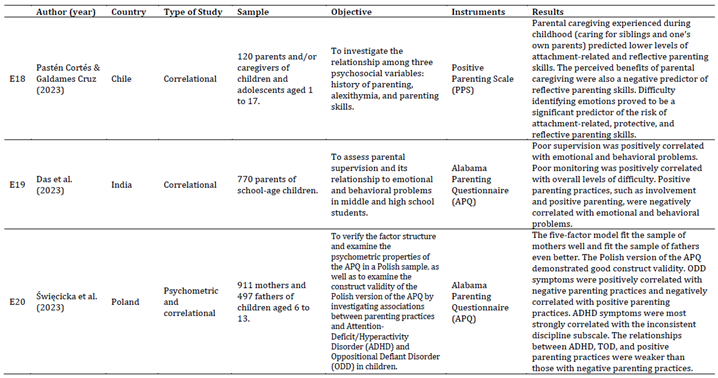
The search yielded 25 studies in which five distinct instruments for assessing positive parenting from the parents’ perspective were identified, either as the main construct or as a subscale. The identified instruments were: (1) the Alabama Parenting Questionnaire (APQ); (2) the Positive Parenting Scale (E2P); (3) the Parental Behavior Scale (PBS); (4) the Positive Parenting Practices (PPP); and (5) the Nicomachus-Positive Parenting (NPP) (see Table 1). The analysis revealed that the APQ and the E2P were the two measures with the highest frequency of use, appearing in 13 (52 %) and nine (36 %) studies, respectively, including three and one validation studies, respectively. The remaining instruments were used in only one study. Only two instruments were developed within the last 11 years: the NPP in 2019 and the E2P in 2014.
The APQ (Frick, 1991; Shelton et al., 1996) assesses five domains of parenting practices. The scale consists of 35 items divided into five factors: Involvement (10 items; α = .80), Positive Parenting (six items; α = .78), Inadequate Monitoring/Supervision (10 items; α = .67), Inconsistent Discipline (six items; α = .60), and Corporal Punishment (three items; α = .46). The scale includes seven additional items that measure other disciplinary practices, for a total of 42 items. Items are rated on a five-point Likert scale ranging from 1 (never) to 5 (always).
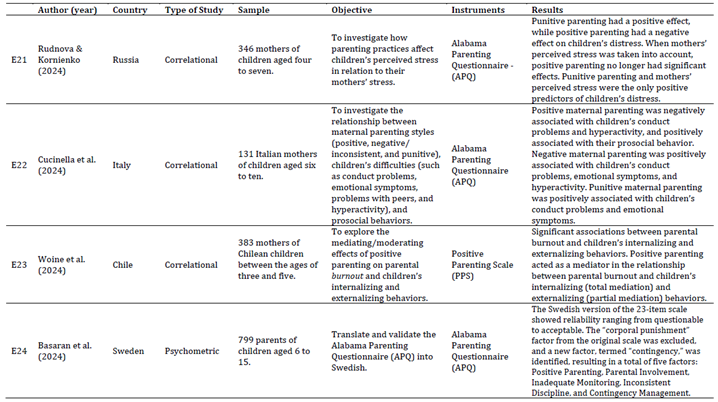
Most of the studies in this review (n = 10) used the APQ in correlational studies investigating the relationships between positive parenting, social support, meaning in life (Kelada & Zamir, 2024), parental stress (Burlaka et al., 2017; Cucinella et al., 2022; Rudnova & Kornienko, 2024), parental resilience (Widyawati et al., 2021), children’s emotional and behavioral problems (Cucinella et al., 2024; Das et al., 2023), marital satisfaction (Hershkowitz et al., 2017), marital conflict (Hosokawa & Katsura, 2017), intimate partner violence (Burlaka et al., 2017), and socioeconomic status (Fævelen et al., 2023). Disorders such as ADHD, OCD (Święcicka et al., 2023), and PTSD (Hershkowitz et al., 2017) are included. Three studies have validated the APQ scale: the Swedish version (Basaran et al., 2024), the Portuguese version (Nogueira et al., 2020), and the Polish version (Święcicka et al., 2023).
Basaran et al. (2024) conducted a validation study using the 42-item version of the APQ. The results of the exploratory factor analysis demonstrated that a 23-item version had adequate psychometric properties in the Swedish context. This reduced version identified four factors that resemble the domains of the original APQ: positive parenting (four items; α = .69), parental involvement (five items; α = .70), deficient monitoring (six items; α = .66), and inconsistent discipline (six items; α = .62). Additionally, a new factor, Contingency Management, emerged, consisting of two items for which internal consistency could not be calculated. The Corporal Punishment factor was excluded due to poor internal consistency (α = .12). Nogueira et al. (2020) validated the 35-item version of the APQ. The results of confirmatory factor analysis demonstrated adequate psychometric properties for a 20-item Portuguese scale. The reduced scale yielded a three-factor model: Positive Parenting (11 items; α = .84), Ineffective Discipline (4 items; α = .63), and Deficient Monitoring (5 items; α = .85). Finally, Święcicka et al. (2023) validated the 35-item version of the APQ for Polish maternal and paternal roles. The results of the confirmatory factor analysis supported the scale’s five-factor structure: Involvement (maternal: α = .82; paternal: α = .79), positive parenting (maternal: α = .81; paternal: α = .74), deficient monitoring (maternal: α = .86; paternal: α = .70), inconsistent discipline (maternal: α = .66; paternal: α = .53), and corporal punishment (maternal: α = .75; paternal: α = .67).
The Positive Parenting Scale (E2P; Gómez & Muñoz, 2014) assesses positive parenting in terms of parenting competencies. The scale consists of 54 items divided into four domains: Attachment (14 items; α = .90), Formative (12 items; α = .86), Protective (17 items; α = .84), and Reflective (11 items; α = .82). Respondents are asked to indicate how often they engage in each behavior on a four-point Likert scale ranging from 1 (almost never) to 4 (always).
In the present review, Vargas-Rubilara et al. (2020) adapted and validated a brief version of the E2P for the Argentine context, presenting a 26-item model. The reduced scale has four factors similar to those of the original scale: Attachment (six items; α = .76), Formative (six items; α = .85), Protective (six items; α = .81), and Reflective (six items; α = .77). Other studies using the E2P have investigated relationships between parenting competencies and parentalization and alexithymia (Pastén Cortés & Galdames Cruz, 2023); parental burnout and children’s internalizing and externalizing behaviors (Woine et al., 2024); executive functions and academic performance (Bernal-Ruiz et al., 2018); personality and religiosity (Diana et al., 2021); children’s motivation (Mancini et al., 2023); and motor development (Meléndez-Jara et al., 2021).
The Parental Behavior Scale (PBS; van Leeuwen & Vermulst, 2004) measures dimensions of parental behavior. It consists of 32 items, divided into five factors: Positive Parenting (11 items), Discipline (6 items), Physical Punishment (5 items), Material Rewards (4 items), and Rule-Setting (6 items). It does not report internal consistency. A five-point Likert scale ranging from 1 (rarely) to 5 (almost always) is used. Maljaars et al. (2014) examined the correlation between children’s behavioral problems and maternal parenting behavior.
The Positive Parenting Practices (PPP; Dahlberg et al., 2005) scale measures the frequency with which parents reward good behavior with things like verbal praise, hugs, and gifts. The scale consists of six items grouped into a single factor (α = .84) and is rated on a five-point Likert scale ranging from 1 (rarely) to 5 (almost always). Lange et al. (2019) investigated the relationship among positive parenting practices, mothers' adverse childhood experiences, and parental stress.
The Nicomachus-Positive Parenting (NPP; Kyriazos & Stalikas, 2019) scale measures positive parenting practices toward children. It consists of 20 items (α = .93) with four factors: Nurturing Values (nine items; α = .92), Identification and Reinforcement of Strengths (five items; α = .85), Parental Context (three items; α = .80), and Involvement (three items; α = .75). A five-point Likert scale is used, ranging from 1 (absolutely false) to 5 (absolutely true). The study by Kyriazos and Stalikas (2022) sought to replicate the reliability of the four-factor structure of the NPP, and the results showed good psychometric indicators. The four-factor structure was confirmed with adequate internal consistency for the overall scale (α = .96) and for each factor: Nurturing Values (α = .94), Identification and Reinforcement of Strengths (α = .89), Parental Context (α = .86), and Involvement (α = .81).
Results of the Article Analysis
Of the 25 articles included in this review, five were published in both 2023 and 2024 (20 % each year). Three articles were published in 2017 and 2021 (12 % each year), two articles were published in 2018, 2019, 2020, and 2022 (8 % each year), and one article was published in 2014 (4 %). No articles meeting the criteria of this review were found in 2015 or 2016.
Regarding geographic origin, the studies were conducted on the following continents: Europe (n= 9), South America (n = 8), Asia (n = 7), and North America (n = 1). Specifically, in Europe, two studies were conducted in Italy, and one each in Sweden, Greece, Belgium, Ukraine, Portugal, Norway, and Poland. In South America, four studies were conducted in Chile, two in Argentina, and one each in Peru and Ecuador. In Asia, two studies were conducted in Indonesia and Israel, and one study was conducted in Japan, India, and Russia. Finally, one study was conducted in the United States. Of the publications, 19 were in English (76 %), six were in Spanish (24 %), and none were in Portuguese.
All studies were quantitative. In terms of study type, psychometric, correlational, and mixed-methods studies were included. Most of the selected articles were correlational studies (n= 20), accounting for 80 % of the total. Additionally, three articles were psychometric studies (Basaran et al., 2024; Nogueira et al., 2020; Vargas-Rubilara et al., 2020), and two were mixed methods studies (Kyriazos & Stalikas, 2022; Święcicka et al., 2023).
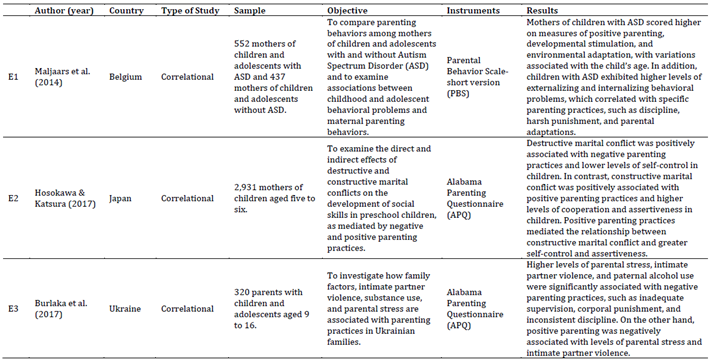
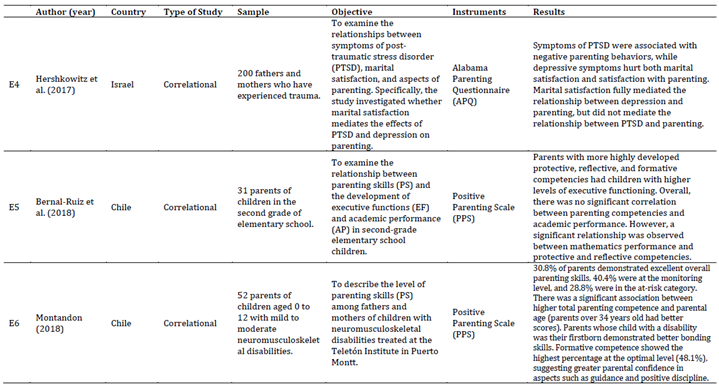
In terms of data collection methods, 23 articles presented cross-sectional studies (92 %), while only two were longitudinal (Cucinella et al., 2022; Widyawati et al., 2021). Regarding the sample, the studies included mixed samples comprising both fathers and mothers (n= 15) and samples comprising only mothers (n= 10). Thus, no study was conducted with fathers alone. Additionally, three studies focused on parents of children with developmental disabilities (Montandon, 2018; Morán & Miranda, 2019; Widyawati et al., 2021). The results can be viewed in Table 2 . . . . . . .
Results of the Methodological Quality Assessment
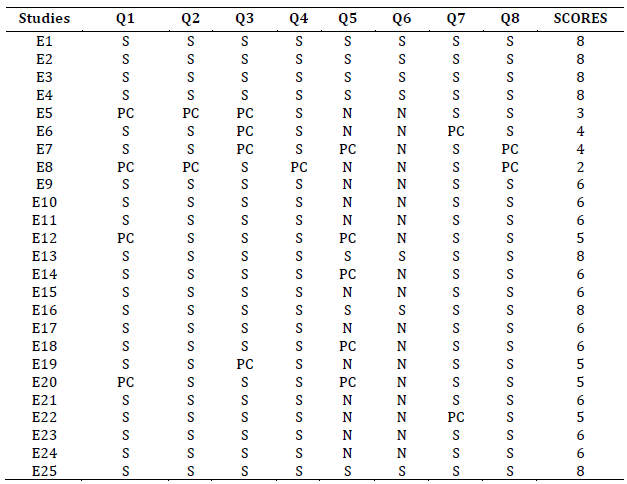
The average score for the 25 studies analyzed in this review was 5.96, ranging from 2 to 8. Thus, 21 studies achieved high scores (≥ 5), indicating a high level of quality and a low risk of bias, as they approached or reached the maximum score of 8 points. Despite the positive scores, three studies received moderate scores (E5, E7, and E6, respectively, from Bernal-Ruiz et al., 2018; Lange et al., 2019; Montandon, 2018) and one study received a low score (E8 from Morán & Miranda, 2019). This demonstrates that selection bias is more evident in these studies. The results can be viewed in Table 3.
Overall, the studies exhibited greater bias, particularly in the identification of confounding factors (Question 5), strategies for addressing confounding factors (Question 6), clarity of inclusion criteria (Question 1), and the validity and reliability of variable measurement (Question 3). Notably, the study by Morán and Miranda (2019) was the only one to present a risk of bias in Question 4 regarding objectivity and measurement standards. The two studies that presented a risk of bias in question 2, which concerns providing a detailed description of the study and setting, received moderate and low quality scores (Bernal-Ruiz et al., 2018; Morán & Miranda, 2019). Similarly, the two studies that responded "unclear" to Question 8, concerning the use of appropriate statistical analysis, were of moderate and low quality (Lange et al., 2019; Morán & Miranda, 2019).
Discussion
This systematic review aimed to identify instruments for assessing positive parenting and to examine their psychometric properties. Due to the lack of a consensus-based definition of positive parenting, a multidimensional phenomenon, these instruments use various terms to evaluate it, including parenting competencies, parental rewards, and positive parenting practices. The included instruments were divided into two categories: those that assess positive parenting as a standalone construct (E2P, NPP, and PPP) and those that assess it as one of the factors of parenting (APQ and PBS). The highest number of publications on the topic occurred in 2023 and 2024, reflecting its recent rise in popularity. This increased visibility is evident through notable milestones, such as the 2023 publication of the UNICEF booklet "Comprehensive Care and Positive Parenting in Early Childhood" (Altafim et al., 2023) and the enactment of Brazil's Positive Parenting Law (Law No. 14,826/24, 2024).
Regarding the study samples, none were conducted exclusively with fathers. Thus, even in mixed samples, that is, with both fathers and mothers, there was a predominance of maternal respondents. This demonstrates the invisibility of fathers in research processes and in the parental role (Benczik, 2011). Additionally, publications were distributed across different continents, primarily originating from Europe. This finding aligns with the literature because the European context is one of the primary settings for developing initiatives that promote parenting and address physical violence against children and adolescents (Cravo et al., 2025).
Based on the above, this review included broader parenting scales, such as the APQ (Frick, 1991; Shelton et al., 1996) and the PBS (van Leeuwen & Vermulst, 2004), both of which include the "positive parenting" factor. Furthermore, instruments that specifically assess positive parenting exhibit conceptual diversity and use different terminology. Examples include parenting competencies in the E2P (Gómez & Muñoz, 2014); parental rewards in the PPP (Dahlberg et al., 2005); and positive parenting practices in the NPP (Kyriazos & Stalikas, 2019).
Although the PBS and PPP are instruments for assessing positive parenting, they have been used relatively less frequently than more established scales, such as the E2P and APQ. This lower frequency of use may be associated with the fact that these instruments have predominantly been applied in correlational studies. This demonstrates a scarcity of psychometric evidence on the accuracy, reliability, and validity of these instruments across population groups and cultural contexts, making cross-cultural adaptation difficult.
Specifically, the PBS assesses parenting behaviors but does not specifically assess positive parenting. This may discourage its use when the objective is to assess positive parenting in isolation. In contrast, the PPP focuses on positive parenting practices, specifically addressing parental rewards for children’s good behavior. This represents a narrower construct than the broader, multifaceted concept of positive parenting. Nevertheless, further validation evidence and psychometric studies are needed to consolidate the applicability of these instruments in different contexts.
Furthermore, the APQ is a well-established, widely used scale that has been validated across various contexts. However, it has limitations, such as variations in its factor structure and frequent changes in the number of factors. These variations point to the need for rigorous, context-specific psychometric analyses, as well as methodological and cultural adjustments, to ensure the validity, reliability, and accuracy of parenting assessments across different populations.
Additionally, the APQ exhibits low internal consistency in the "corporal punishment" factor, reflecting sociocultural shifts regarding the use of violence.
For instance, Brazil's Spanking Law (Law No. 13,010/2014) prohibits the use of physical punishment and cruel treatment in the education and care of children and adolescents (Brazil, 2014). Concurrently, the APQ was developed to assess a broader approach to parenting, which may lead to the underrepresentation of positive parenting dimensions, as only six items address this topic.
The NPP and E2P instruments stand out because they are designed to assess positive parenting and are grounded in a theoretical model. Specifically, the NPP is based on positive psychology and the theoretical model proposed by Seligman (2002). It has undergone psychometric validation in two studies with Greek samples (Kyriazos & Stalikas, 2019, 2022), confirming its stable structure. However, psychometric evidence for the instrument remains limited because the results focus exclusively on the Greek population, and the authors have not tested it in other contexts. Thus, more articles that use the scale are needed to gather psychometric evidence on its validity and reliability.
On the other hand, the E2P was developed based on three theoretical frameworks: the Ecological Theory of Human Development (Bronfenbrenner, 1987), Attachment Theory (Bowlby, 1969), and the Theory of Human Resilience (Gómez & Kotliarenco, 2010). Together, these frameworks underpin positive parenting as assessed by parenting competencies. The development of the E2P followed a rigorous protocol involving a systematic review of existing instruments, an operational definition of the construct, item development based on the theoretical frameworks, expert rater evaluation, a pilot study with the target population, and a detailed analysis of each item's means, standard deviations, skewness, kurtosis, and correlations with the total scale. Finally, the scale was administered in its final version.
In light of this, one limitation of the E2P is that the original study did not perform a factor analysis to validate its internal structure (Gómez & Muñoz, 2014). Subsequent validation studies addressed this gap through exploratory and confirmatory factor analyses, which corroborated the four-factor structure presented in the original study. Thus, the scale's factor structure has proven stable and consistent across contexts. It demonstrates high levels of internal consistency and external validity with other variables, such as parental stress and psychomotor development (Muzzio et al., 2022; Vargas-Rubilara et al., 2020).
Among the instruments evaluated in this review, the E2P stands out for its conceptual consistency and methodological rigor. Designed specifically to measure positive parenting, the E2P encompasses key dimensions of the construct by integrating aspects of the child’s physical, cognitive, and social development, as well as parents’ perceptions of their parenting practices. This specificity gives the scale an in-depth approach to positive parenting, distinguishing it from broader instruments. Furthermore, the E2P has been validated across various contexts and demonstrates a stable factor structure and high internal consistency across all studies, reinforcing its validity and reliability.
An analysis of correlational studies reveals that positive parenting can be examined through various correlates, which can be understood in terms of Belsky’s theoretical model of determinants (Belsky, 1984; Belsky & Jaffee, 2015). According to this model, parenting is influenced by three factors: (1) individual parent factors (e.g., personality, psychopathology), (2) child characteristics (e.g., temperament, behaviors), and (3) social context factors (e.g., marital relationship, support network). The first determinant, individual parental factors, was addressed in studies investigating parental stress (Burlaka et al., 2017; Lange et al., 2019; Rudnova & Kornienko, 2024), parental engagement and personality (Diana et al., 2021), parental well-being (Kyriazos & Stalikas, 2022), emotional distress (e.g., depression; Hershkowitz et al., 2017) and anxiety (e.g., Fævelen et al., 2023), parental resilience (e.g., Widyawati et al., 2021), alexithymia (e.g., Pastén Cortés & Galdames Cruz, 2023), parental burnout (e.g., Woine et al., 2024), emotional regulation, and the meaning of life (e.g., Kelada & Zamir, 2024).
Studies have assessed various aspects of the second determinant of Belsky’s model, which pertains to the child’s characteristics. These aspects include internalizing and externalizing behavioral problems (Cucinella et al., 2022; Das et al., 2023; Maljaars et al., 2014; Woine et al., 2024), social skills (Hosokawa & Katsura, 2017), academic performance and executive functions (Bernal-Ruiz et al., 2018), childhood stress (Rudnova & Kornienko, 2024), prosocial behaviors (Cucinella et al., 2024), adaptive behavior and motor development (Meléndez-Jara et al., 2021), and diagnoses such as ADHD and TOD (Święcicka et al., 2023). Finally, the articles investigated the third determinant of the model, social context factors, which include marital conflict (Hosokawa & Katsura, 2017), marital satisfaction (Hershkowitz et al., 2017), relationship violence (Burlaka et al., 2017), adverse experiences (Lange et al., 2019), socioeconomic status (Fævelen et al., 2023), parentalization (Pastén Cortés & Galdames Cruz, 2023), and social support (Kelada & Zamir, 2024).
The analysis of the methodological quality of the included studies revealed that most exhibit high rigor, indicating robust evidence and a low risk of bias. This supports the reliability of the results and the validity of the review. However, three studies (Bernal-Ruiz et al., 2018; Lange et al., 2019; Montandon, 2018) exhibited moderate methodological quality. An additional study (Morán & Miranda, 2019) was assessed as having low methodological quality. These studies were included in the present review because of the specificity of the population (i.e., children with disabilities), the relationships found between positive parenting and other variables (e.g., executive functions, academic performance, adverse childhood experiences, and stress), and the use of a specific instrument to assess positive parenting (e.g., the E2P). This decision also helps ensure transparency and enables the identification of limitations that can guide future research, thereby improving the quality of subsequent studies.
Conclusions
Positive parenting was established by Law No. 14,826 (Brazil, 2024) as an essential protective strategy against violence and for child development. This highlights the importance of positive parenting in promoting a healthy childhood. To expand research on this topic, reliable and valid instruments are necessary for measuring positive parenting. With this in mind, this systematic review provides an overview of the available instruments and evaluates their psychometric properties. It also addresses the variables correlated with this construct. This is a significant contribution because it is the first review to address the psychometric qualities and limitations of instruments in national and international literature.
Despite the favorable findings, it is important to note some limitations: First, the search strategy, centered on the term "positive parenting," may have limited the identification of widely used instruments in parenting practices. Second, the exclusion of studies on intervention programs may have limited the identification of useful instruments for assessing positive parenting.
These limitations do not diminish the validity of the findings presented here. This systematic review synthesizes the instruments used to assess positive parenting and provides a broad overview of the current scientific landscape. The review contributes to the literature on the topic and serves as a useful resource for future studies dedicated to measuring this construct. Furthermore, it provides theoretical and methodological support for professionals in psychology, education, social work, and related fields, facilitating the assessment of positive parenting through appropriate instruments across diverse contexts.
In light of the findings, the following recommendations are made: expand investigations to periods beyond 10 years; include publications in other languages; use additional databases; and examine this construct across different samples. Specific reviews should also be conducted on positive parenting intervention programs and studies investigating the availability and quality of qualitative instruments. This will expand the multidimensional understanding of this construct. Finally, future research should focus on adapting a scale that assesses positive parenting to the Brazilian context and gathering evidence of its validity and reliability to develop more valid and reliable instruments.
References
- Altafim, E. R. P., Souza, M., Teixeira, L., Brum, D., & Velho, C. (2023). O Cuidado Integral e a Parentalidade Positiva na Primeira Infância UNICEF.
-
Bai, Y., Liu, B., Wang, L., Li, M., Zhang, S., Dang, R., Zheng, L., Yang, N., & Song, C. (2021). Parenting practices and cognitive development of preschool-aged children: Evidence from rural China. Journal of Child and Family Studies, 30(12), 2980-2991. https://doi.org/10.1007/s10826-021-02134-8
» https://doi.org/10.1007/s10826-021-02134-8 -
Basaran, S., Jernkrok, S. Q., van den Berg, R., & Högström, J. (2024). The Swedish version of the Alabama parenting questionnaire: Psychometric evaluation and norm data. Scandinavian Journal of Psychology, 65(4), 628-638. https://doi.org/10.1111/sjop.13006
» https://doi.org/10.1111/sjop.13006 -
Belsky, J. (1984). The determinants of parenting: A process model. Child Development, 83-96. https://doi.org/10.2307/1129836
» https://doi.org/10.2307/1129836 -
Belsky, J., & Jaffee, S. R. (2015). The multiple determinants of parenting. Developmental Psychopathology, 38-85. https://doi.org/10.1002/9780470939406.ch2
» https://doi.org/10.1002/9780470939406.ch2 - Benczik, E. B. P. (2011). A importância da figura paterna no desenvolvimento infantil. Revista Psicopedagogia, 28(85), 67-75.
-
Bernal-Ruiz, F., Rodríguez-Vera, M., González-Campos, J., & Torres-Álvarez, A. (2018). Competencias parentales que favorecen el desarrollo de las funciones ejecutivas en escolares. Revista Latinoamericana de Ciencias Sociales, Niñez y Juventud, 16(1), 1. https://doi.org/10.11600/1692715x.16109
» https://doi.org/10.11600/1692715x.16109 - Bowlby, J. (1969). Attachment and loss, Vol. 1: Attachment Basic Books
-
Boyle, C., Sanders, M. R., Ma, T., Hodges, J., Allen, K.-A., Cobham, V. E., Darmawan, I., Dittman, C. K., Healy, K. L., Hepburn, S.-J., MacLeod, L. M., Teng, J., & Trompf, M. (2023). The thriving kids and parents schools project: protocol for an incomplete stepped-wedge cluster randomized trial evaluating the effectiveness of a Triple P seminar series. BMC Public Health, 23(1). https://doi.org/10.1186/s12889-023-16962-4
» https://doi.org/10.1186/s12889-023-16962-4 - Brasil. (2014). Lei n.o 13.010: Lei da Palmada. Subchefia para Assuntos Jurídicos.
- Brasil. (2024). Lei n.o 14.826: Lei da Parentalidade Positiva. Secretaria Especial para Assuntos Jurídicos.
- Bronfenbrenner, U. (1987). La Ecología del Desarrollo Humano Paidós.
-
Bruna, B., Mazey, V., Victoria Rodríguez, M., & Calventus Salvador, J. (2021). Intervenciones en competencias parentales: Evaluación de eficacia del modelo PPF y Triple P. Summa Psicológica UST, 18(1). https://doi.org/10.4321/repisalud.5272
» https://doi.org/10.4321/repisalud.5272 -
Burlaka, V., Graham-Bermann, S. A., & Delva, J. (2017). Family factors and parenting in Ukraine. Child Abuse & Neglect, 72, 154-162. https://doi.org/10.1016/j.chiabu.2017.08.007
» https://doi.org/10.1016/j.chiabu.2017.08.007 -
Cock, E. S., Henrichs, J., Klimstra, T. A., Janneke BM Maas, A., Vreeswijk, C. M., Meeus, W. H., & van Bakel, H. J. (2017). Longitudinal associations between parental bonding, parenting stress, and executive functioning in toddlerhood. Journal of Child and Family Studies, 26(6), 1723-1733. https://doi.org/10.1007/s10826-017-0679-7
» https://doi.org/10.1007/s10826-017-0679-7 -
Cprek, S. E., Williams, C. M., Asaolu, I., Alexander, L. A., & Vanderpool, R. C. (2015). Three positive parenting practices and their correlation with risk of childhood developmental, social, or behavioral delays: An analysis of the National Survey of Children’s Health. Maternal and Child Health Journal, 19(11), 2403-2411. https://doi.org/10.1007/s10995-015-1759-1
» https://doi.org/10.1007/s10995-015-1759-1 -
Cravo, S. C., Fiorotti, K. F., de Souza Almeida, M. V., & Laignier, M. R. (2025). Parentalidade positiva como estratégia de educação não violenta: uma revisão de literatura. Revista Brasileira de Pesquisa em Saúde, 27, 155-163. https://doi.org/10.47456/rbps.v27isupl_1.48253
» https://doi.org/10.47456/rbps.v27isupl_1.48253 -
Cucinella, N., Canale, R., Albiero, P., Baviera, C., Buscemi, A., Cavarretta, M. V., Gallo, M., Granata, M. P., Volpes, A., Inguglia, C., Ingoglia, S., & Iannello, N. M. (2024). Maternal parenting practices and psychosocial adjustment of primary school children. Genealogy, 8(1), 1. https://doi.org/10.3390/genealogy8010010
» https://doi.org/10.3390/genealogy8010010 -
Cucinella, N., Canale, R., Cavarretta, M. V., Ingoglia, S., Iannello, N. M., & Inguglia, C. (2022). Maternal Parenting and Preschoolers’ Psychosocial Adjustment: A Longitudinal Study. International Journal of Environmental Research and Public Health, 19(21), 13750. https://doi.org/10.3390/ijerph192113750
» https://doi.org/10.3390/ijerph192113750 - Dahlberg, L. L., Toal, S. B., Swahn, M. H., & Behrens, C. B. (2005). Measuring violence-related attitudes, behaviors, and influences among youths: A compendium of assessment tools Centers for Disease Control and Prevention.
-
Das, N., Dihingia, S., Bhuyan, D., & Bora, K. (2023). Parental supervision and its relation with emotional and behavioral problems in secondary school children. Cureus, 15(2), e35291. https://doi.org/10.7759/cureus.35291
» https://doi.org/10.7759/cureus.35291 -
Diana, R., Chirzin, M., Bashori, K., Suud, F., & Khairunnisa, N. (2021). Parental engagement on children character education: The influences of positive parenting and agreeableness mediated by religiosity. Cakrawala Jurnal Pendidikan, 40, 2021. https://doi.org/10.21831/cp.v40i2.39477
» https://doi.org/10.21831/cp.v40i2.39477 -
Dias-Viana, J. L., & Noronha, A. P. P. (2025). Avaliação da parentalidade: Características das pesquisas e dos testes disponíveis no Brasil. Psico-USF, 30 https://doi.org/10.1590/14138271202530e275045
» https://doi.org/10.1590/14138271202530e275045 -
Fævelen, M., Fauske, H., Kojan, B. H., & Kaasbøll, J. (2023). Family involvement in child welfare services: The association between socio-economic status and self-reported parenting practices. Child & Family Social Work, 28(2), 346-359. https://doi.org/10.1111/cfs.12966
» https://doi.org/10.1111/cfs.12966 -
Frick, P. J. (1991). Alabama Parenting Questionnaire. Journal of Clinical Child Psychology https://doi.org/10.1037/t58031-000
» https://doi.org/10.1037/t58031-000 - Fundo das Nações Unidas para a Infância. (1990). Convenção sobre os Direitos da Criança UNICEF.
-
Gagné, M. H., Clément, M. È., Milot, T., Paradis, H., & Voyer-Perron, P. (2023). Comparative efficacy of the Triple P program on parenting practices and family violence against children. Child Abuse & Neglect, 141 https://doi.org/10.1016/j.chiabu.2023.106204
» https://doi.org/10.1016/j.chiabu.2023.106204 -
Gómez, E., & Kotliarenco, M. A. (2010). Resiliencia familiar: un enfoque de investigación e intervención con familias multiproblemáticas. Revista de Psicología, 19(2), 103-131. https://doi.org/10.5354/0719-0581.2010.17112
» https://doi.org/10.5354/0719-0581.2010.17112 - Gómez, E., & Muñoz, M. (2014). Escala de parentalidad positiva Fundación Ideas para la Infancia.
- Gomide, P. I. C., & Silva, F. O. D. (2024). Instrumentos internacionais de práticas parentais utilizados no Brasil: Uma revisão de literatura. Interaçao Psicologia, 311-321.
-
Gomide, P. I. C., & Traple, R. X. S. (2022). Instrumentos nacionais de avaliação de práticas parentais: uma revisão da literatura. Psicologia Argumento, 40(109), 1776-1796. https://doi.org/10.7213/psicolargum40.109.AO06
» https://doi.org/10.7213/psicolargum40.109.AO06 -
Hershkowitz, M., Dekel, R., Fridkin, S., & Freedman, S. (2017). Posttraumatic stress disorder, parenting, and marital adjustment among a civilian population. Frontiers in Psychology, 8. https://doi.org/10.3389/fpsyg.2017.01655
» https://doi.org/10.3389/fpsyg.2017.01655 -
Hosokawa, R., & Katsura, T. (2017). Marital relationship, parenting practices, and social skills development in preschool children. Child and Adolescent Psychiatry and Mental Health, 11(1), 2. https://doi.org/10.1186/s13034-016-0139-y
» https://doi.org/10.1186/s13034-016-0139-y -
Kelada, L., & Zamir, O. (2024). What promotes positive parenting during breast cancer? A cross-sectional analysis of social support, emotion regulation, and meaning in life. International Journal of Behavioral Medicine, 31(4), 595-604. https://doi.org/10.1007/s12529-023-10196-9
» https://doi.org/10.1007/s12529-023-10196-9 -
Kyriazos, T. A., & Stalikas, A. (2019). Nicomachus-Positive Parenting (NPP): Development and initial validation of a parenting questionnaire within the positive psychology framework. Psychology, 10, 2115-2165. https://doi.org/10.4236/psych.2019.1015136
» https://doi.org/10.4236/psych.2019.1015136 -
Kyriazos, T., & Stalikas, A. (2022). Profiling parents’ wellbeing with a newly developed positive parenting measure. Psychology: The Journal of the Hellenic Psychological Society, 27(2), 40-58. https://doi.org/10.12681/psy_hps.31757
» https://doi.org/10.12681/psy_hps.31757 -
Lange, B. C. L., Callinan, L. S., & Smith, M. V. (2019). Adverse childhood experiences and their relation to parenting stress and parenting practices. Community Mental Health Journal, 55(4), 651-662. https://doi.org/10.1007/s10597-018-0331-z
» https://doi.org/10.1007/s10597-018-0331-z -
Maljaars, J., Boonen, H., Lambrechts, G., Van Leeuwen, K., & Noens, I. (2014). Maternal parenting behavior and child behavior problems in families of children and adolescents with autism spectrum disorder. Journal of Autism and Developmental Disorders, 44(3), 501-512. https://doi.org/10.1007/s10803-013-1894-8
» https://doi.org/10.1007/s10803-013-1894-8 -
Mancini, N. A., Simaes, A. C., Gago Galvagno, L. G., Elgier, A. M., Mancini, N. A., Simaes, A. C., Gago Galvagno, L. G., & Elgier, A. M. (2023). La motivación de dominio infantil y su relación con la parentalidad positiva y los elogios en una muestra argentina. Ciencias Psicológicas, 17(1). https://doi.org/10.22235/cp.v17i1.2863
» https://doi.org/10.22235/cp.v17i1.2863 - Montandon, M. (2018). Competencias parentales en padres de niños con discapacidad neuromusculoesquelética leve a moderada. Rehabilitación Integral, 13(2).
- Morán, J. F. A., & Miranda, L. Y. V. (2019). Impacto de la competencia parental afectiva en la educación de niños con discapacidad. Conrado, 15(67), 269-273.
- Munn, Z., Moola, S., Lisy, K., Riitano, D., & Tufanaru, C. (2020). Systematic reviews of prevalence and incidence. Em E. Aromataris & Z. Munn (Eds.), JBI Manual for Evidence Synthesis (pp. 18-40). The Joanna Briggs Institute.
-
Muzzio, E. G., Yévenes, L. C., & Sandoval, J. P. (2022). Positive Parenting Scale (E2P): Evidence of validity and reliability in a Chilean sample. Journal of Child and Family Studies, 31(12), 3372-3384. https://doi.org/10.1007/s10826-022-02410-1
» https://doi.org/10.1007/s10826-022-02410-1 - Nelsen, J. (2006). Positive Discipline Random House.
-
Nogueira, S., Santos, M., Canário, C., Ferreira, T., Abreu-Lima, I., Cardoso, C., & Cruz, O. (2020). Psychometric properties of the Portuguese version of the Alabama Parenting Questionnaire parent form. European Journal of Developmental Psychology, 17(3), 465-479. https://doi.org/10.1080/17405629.2019.1686972
» https://doi.org/10.1080/17405629.2019.1686972 -
Norouzi Panahi, L., Modarres, M., & Mirmolaei, S. T. (2024). The efficacy of the triple P: Positive parenting program for parents of teenagers in Iran. Journal of Psychiatric Nursing, 15(4), 427-437. https://doi.org/10.14744/phd.2024.54715
» https://doi.org/10.14744/phd.2024.54715 -
Pastén Cortés, A. L., & Galdames Cruz, S. A. (2023). Relación entre parentalización, alexitimia y competencias parentales de figuras parentales atendidas en un centro de ´prevención focalizada del norte de Chile. Revista de Psicología (Santiago), 32(2), 1-13. https://doi.org/10.5354/0719-0581.2023.66416
» https://doi.org/10.5354/0719-0581.2023.66416 - Peters, M. D. J., Godfrey, C. M., McInerney, P., Soares, C. B., Khalil, H., & Parker, D. (2015). The Joanna Briggs Institute reviewer’s manual: methodology for JBI scoping reviews The Joanna Briggs Institute.
-
Pickering, J. A., & Sanders, M. R. (2016). Reducing child maltreatment by making parenting programs available to all parents: A case example using the Triple P- Positive Parenting Program. Trauma, Violence, & Abuse, 17, 398-407. https://doi.org/10.1177/1524838016658876
» https://doi.org/10.1177/1524838016658876 - Pluciennik, G. A., Lazzari, M. C., & Chicaro, M. F. (2015). Fundamentos da família como promotora do desenvolvimento infantil: parentalidade em foco Fundação Maria Cecília Souto Vidigal.
-
Rudnova, N. A., & Kornienko, D. S. (2024). Mothers’ stress as a predictor of preschoolers’ stress in the context of parental practices. Children, 11(11), 11. https://doi.org/10.3390/children11111274
» https://doi.org/10.3390/children11111274 -
Sanders, M. R. (2008). Triple P-Positive Parenting Program as a public health approach to strengthening parenting. Journal of Family Psychology, 22, 506-517. https://doi.org/10.1037/0893-3200.22.3.506
» https://doi.org/10.1037/0893-3200.22.3.506 - Seligman, M. E. P. (2002). Authentic happiness: Using the new positive psychology to realize your potential for lasting fulfillment Free Press.
-
Shelton, K. K., Frick, P. J., & Wootton, J. (1996). Assessment of parenting practices in families of elementary school-age children. Journal of Clinical Child Psychology, 25, 317-329. https://doi.org/10.1207/s15374424jccp2503_8
» https://doi.org/10.1207/s15374424jccp2503_8 -
Święcicka, M., Woźniak-Prus, M., Gambin, M., & Stolarski, M. (2023). Confirmação da estrutura de cinco fatores da versão Parent Global Report do Alabama Parenting Questionnaire em uma amostra da comunidade polonesa. Psicologia Atual, 42(19), 15945-15957. https://doi.org/10.1007/s12144-019-00340-8
» https://doi.org/10.1007/s12144-019-00340-8 -
van Leeuwen, K. G., & Vermulst, A. A. (2004). Some psychometric properties of the Ghent Parental Behaviour Scale. European Journal of Psychological Assessment, 20(4), 283-298. https://doi.org/10.1027/1015-5759.20.4.283
» https://doi.org/10.1027/1015-5759.20.4.283 -
Vargas-Rubilara, J., Lemos, V. N., & Richaud, M. C. (2020). Adaptación y validación argentina de una versión breve de la Escala de Parentalidad Positiva (E2p). Liberabit, 26(2), 1-17. https://doi.org/10.24265/liberabit.2020.v26n2.08
» https://doi.org/10.24265/liberabit.2020.v26n2.08 -
Widyawati, Y., Scholte, R. H. J., Kleemans, T., & Otten, R. (2021). Positive parenting and its mediating role in the relationship between parental resilience and quality of life in children with developmental disabilities in Java Island, Indonesia. Research in Developmental Disabilities, 112, 103911. https://doi.org/10.1016/j.ridd.2021.103911
» https://doi.org/10.1016/j.ridd.2021.103911 -
Woine, A., Escobar, M. J., Panesso, C., Szczygieł, D., Mikolajczak, M., & Roskam, I. (2024). Parental burnout and child behavior: A preliminary analysis of mediating and moderating effects of positive parenting. Children (Basel, Switzerland), 11(3), 353. https://doi.org/10.3390/children1103035
» https://doi.org/10.3390/children1103035