Evaluating Brazilian Parenting: Evidence of Validity and Invariance for Fathers and Mothers
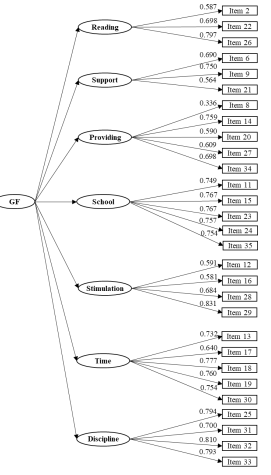
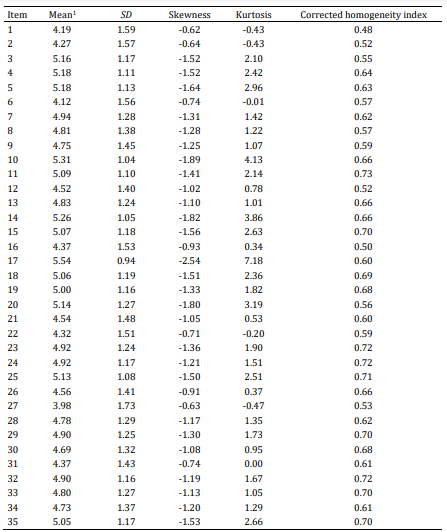
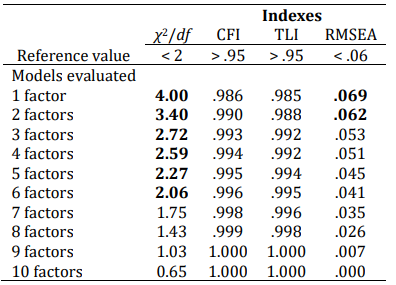
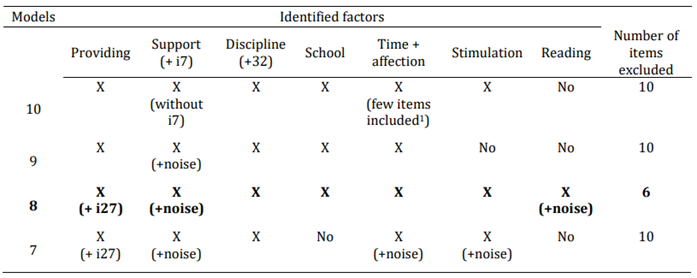
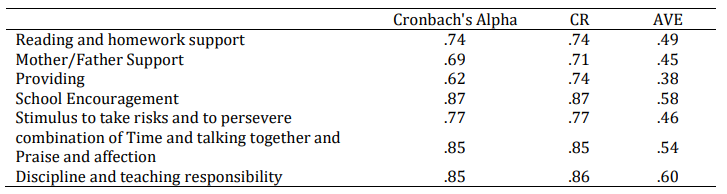
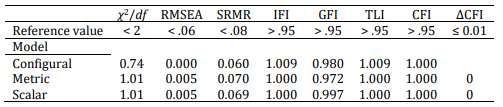
Historically, studies on parenting were mostly based on maternal reports, generating uncertainties about its conclusions. Inverting this logic, in Brazil, the Inventory of Father Involvement (originally developed in the USA to assess men) was improved and adapted for mothers, generating the Inventory of Father and Mother Involvement (IFMI). The IFMI’s content validity was verified, but its internal structure was still unknown. This study aimed to verify evidence of validity based on its internal structure, reliability estimates and the invariance of this structure for fathers and mothers. For this purpose, 1244 fathers and mothers from 22 Brazilian states (with children aged 2 to 10) answered the Sociodemographic Questionnaire and the IFMI. Exploratory (EFA; n= 621), confirmatory (CFA; n= 623) and multigroup confirmatory factor analysis (MGCFA) were performed, and reliability estimates were verified. EFA and CFA results indicated the existence of seven factors in a second-order hierarchical structure. Reliability estimates ranged from .635 ≤ ω ≥ .875. MGCFA results indicated the invariance of this structure for fathers and mothers. In addition to the evidence of validity, these results contribute to broadening theoretical understandings about Brazilian parenting, enabling future comparative studies. It is important to further verify additional validity evidence.
Keywords:
fatherhood; motherhood; parenting; gender roles; psychological assessment; psychometric instruments
 Thumbnail