Parental Stress and Personal Network of Mothers of Children with Cerebral Palsy
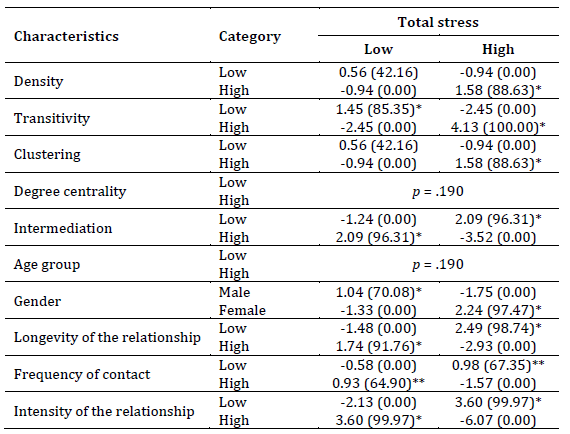
Introduction/Objective: This research aimed to investigate the level of parental stress experienced by mothers of children with cerebral palsy and to analyze the particularities of the personal networks of the high and low stress groups. Method: Fifty mothers selected by convenience participated in this study. The instruments used were the Biosociodemographic Inventory, the Parenting Stress Index and the Social Network Questionnaire. Results: The main results showed that most mothers experience a high level of total parental stress. The high stress group presented cohesive personal networks, with low centrality indices, low durability, frequency of contact and intensity of relationships. The low stress group presented less cohesion, a higher centrality index, with greater durability, frequency of contact and intensity of relationships. Conclusions: The results indicate the need for family-centered interventions, with the strengthening and diversification of personal networks and the systematic provision of psychosocial support from the time of diagnosis, promoting greater access to resources, better maternal adjustment, and reduced parental stress.
Keywords:
psychological stress; cerebral palsy; social network analysis; interpersonal relations; social support