Theory of mind skills and understanding of mentalistic verbs in typically developing children
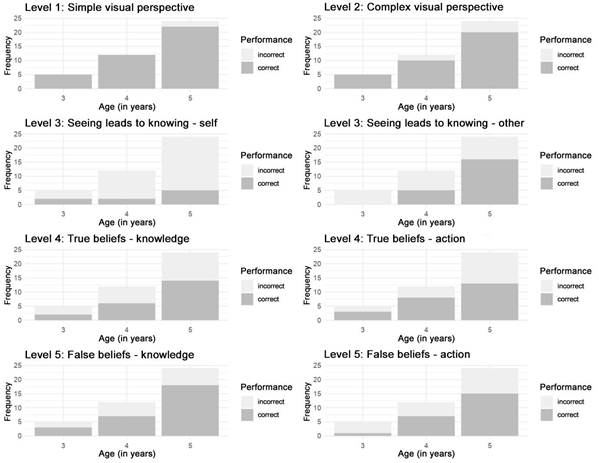
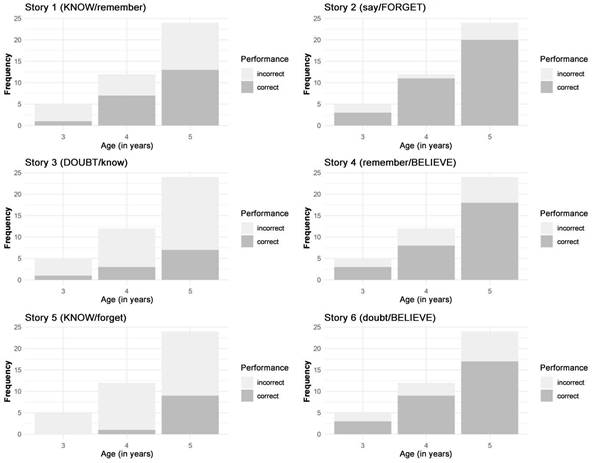
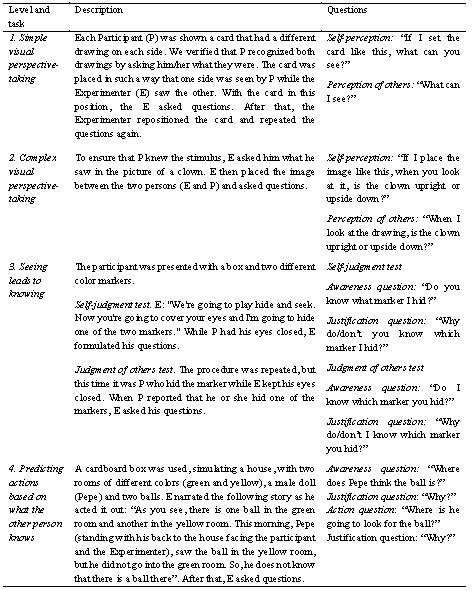
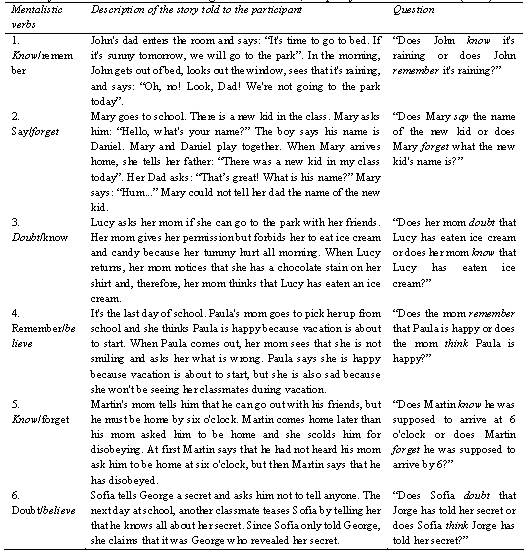
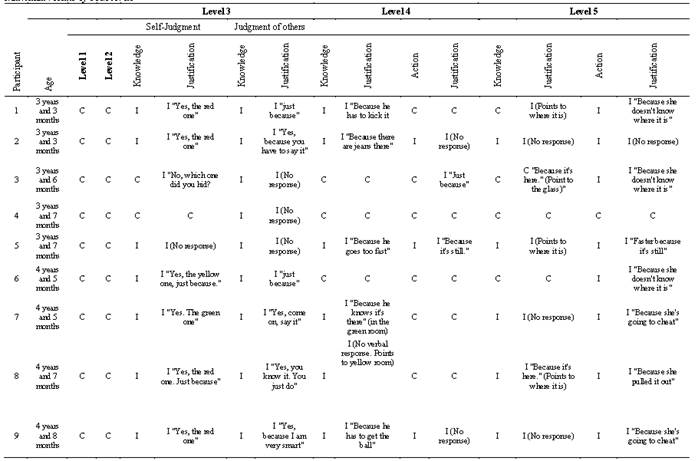
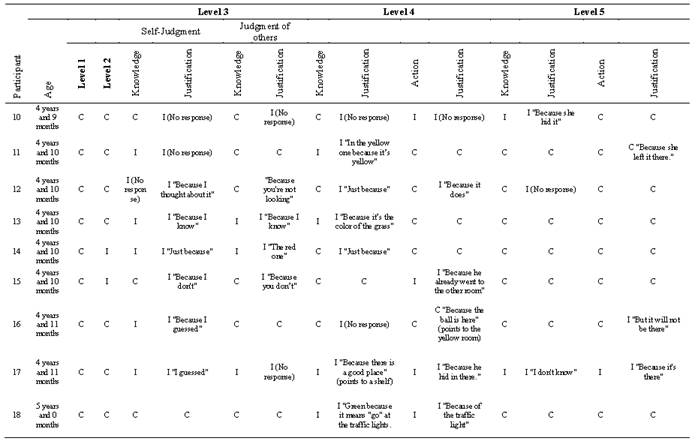
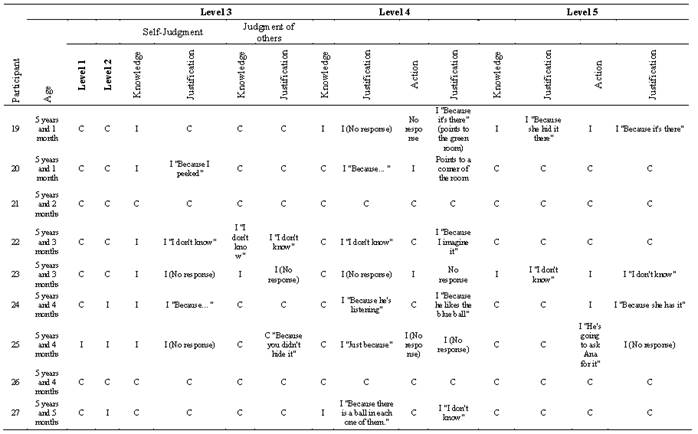
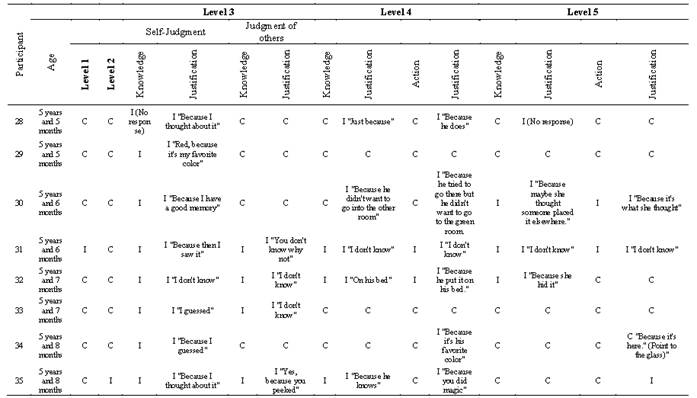
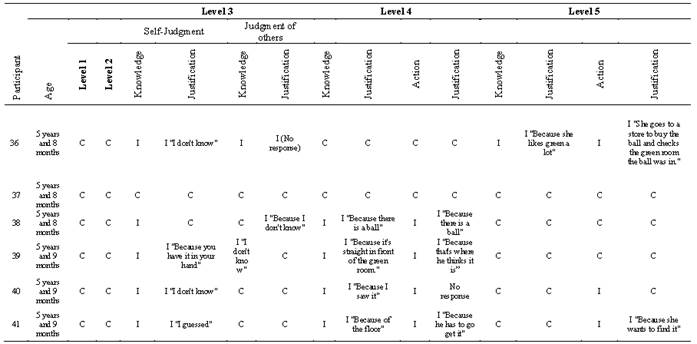
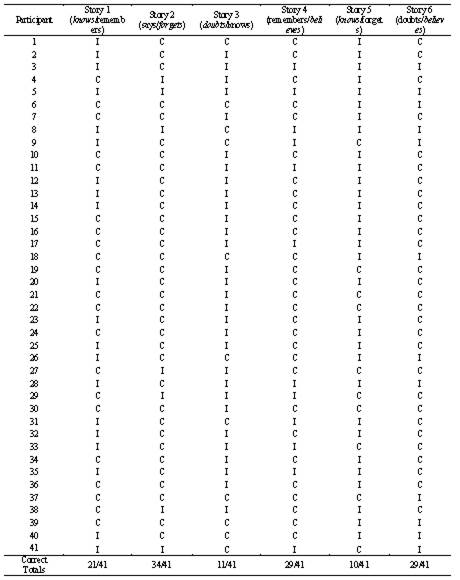
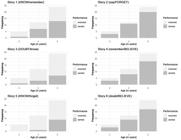
The learning of theory of mind (ToM) skills is considered essential to guarantee good adaptive performance in the social context since it allows people to attribute mental states to themselves and others, and thus be able to predict the behavior of others. The aim of the present study was to analyze the performance of ToM tasks and the understanding of mental verbs contextualized in stories with typically developing children. A sample of 41 children aged between 3 and 5 years was used with a descriptive methodology. Results show that ToM level 3 was the one with the lowest levels of achievement. In relation to the test that evaluated the understanding of mental verbs, the lowest results were obtained in the one that referred to the verb to know. Results found suggest that mental verbs referring to desires first learned before beliefs, as well as that the levels of information defended by the ToM model of Howlin et al. (1999) are not sequenced in levels of complexity.
Keywords:
theory of mind; mental verbs; typical development; early childhood
 Thumbnail
 Thumbnail