Text comprehension from a multicomponential perspective: The “Leer para Comprender” Test
Abstract
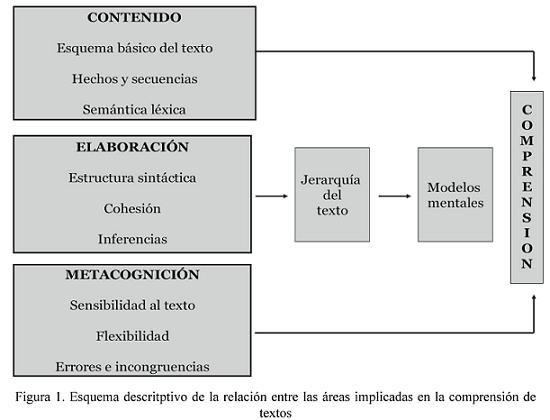
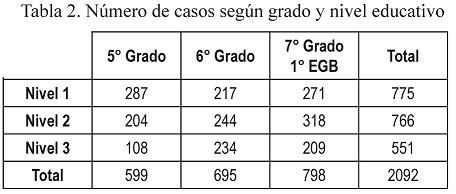
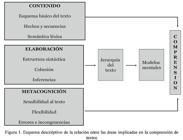
Text comprehension is a complex task that requires and involves multiple cognitive abilities. Deficits in one or several abilities can cause difficulties in understanding the textual level. Evaluating these impairments therefore requires a multicomponential perspective. The incipient development of the textual dimension of the learning difficulties in education as well as in clinic, elicits the need for an instrument of this nature for Spanish-speaking populations. With this objective, a Spanish version of a test (/Nuova guida alla comprensione del testo/, De Beni et al., 2003) was designed for evaluating text comprehension. Normative data for children of 9 to 12 years of age were obtained. The Leer para Comprender Test (Abusamra et al., in press) is based on a global model composed by eleven factors: basic text scheme, facts and sequences, lexical semantics, syntactic structure, textual cohesion, inferences, text sensibility, text hierarchy, mental models, flexibility, and errors and inconsistencies. This instrument is sensitive to the specificity of the processes implied in text comprehension. An approach from a multicomponential perspective not only allows operating specifically with the different aspects of comprehension, but it is also advantageous to intervene in a focused manner in the implied processes and abilities
reading comprehension; evaluation; multicomponential mode
 Thumbnail
 Thumbnail
 Thumbnail