Parent Training Programs Based on Applied Behavior Analysis for Food Selectivity in Children with Autism Spectrum Disorder: A Scoping Review
Abstract:
Autism Spectrum Disorder (ASD) has gained significant attention in neuropsychiatric discussions. Deficits include social communication, repetitive behavior patterns, and a strong association with food selectivity. Due to high prevalence and intervention costs, parent training for managing food selectivity in children with ASD has become a viable alternative. This scoping review followed the PRISMA-ScR protocol and aimed to identify intervention programs based on Applied Behavior Analysis (ABA) for parent training addressing food selectivity in children with ASD. Publications from 2018 to 2023 were considered. A total of 361 studies were found, with 12 included. Studies using regression analysis showed reductions in disruptive behaviors, though few reported increased food acceptance. Significant gaps in the literature highlight the need for more robust randomized trials.
Keywords:
parenting; food selectivity; autism spectrum disorder; applied behavior analysis
Resumo:
O transtorno do espectro autista (TEA) ganhou grande espaço nas discussões neuropsiquiátricas. Os déficits englobam a comunicação social, os padrões repetitivos de comportamentos e uma grande chance de interação entre TEA e seletividade alimentar. Devido à alta incidência e ao elevado custo das intervenções, o treinamento parental para manejo da seletividade alimentar em crianças com TEA tornou-se uma alternativa viável. Este estudo é uma revisão de escopo no protocolo PRISMA-ScR. A pesquisa objetivou identificar estudos de programas de intervenção baseados em Análise do Comportamento Aplicada (ABA, na sigla em inglês) para o treino parental em relação a seletividade alimentar de crianças com TEA. Foram selecionadas publicações entre 2018 e 2023. Foram encontradas 361 publicações e ao final 12 foram incluídas. Os estudos que realizaram análise de regressão apresentaram melhora nos comportamentos disruptivos, porém poucos demonstraram aumento na aceitabilidade de alimentos. Evidenciam-se lacunas importantes na literatura, que apontam para a necessidade de ensaios randomizados mais robustos.
Palavras-chave:
parentalidade; seletividade alimentar; transtorno do espectro autista; análise do comportamento aplicada
Resumen:
El trastorno del espectro autista (TEA) ha ganado relevancia en las discusiones neuropsiquiátricas. Los déficits incluyen la comunicación social, patrones repetitivos de conducta y una fuerte asociación con la selectividad alimentaria. Debido a la alta prevalencia y al costo elevado de las intervenciones, el entrenamiento parental para el manejo de la selectividad alimentaria en niños con TEA se presenta como una alternativa viable. Este estudio es una revisión de alcance basada en el protocolo PRISMA-ScR, cuyo objetivo fue identificar programas de intervención basados en el análisis aplicado del comportamiento (ABA, por sus siglas en inglés) dirigidos al entrenamiento parental en casos de selectividad alimentaria. Se consideraron publicaciones entre 2018 y 2023. Se identificaron 361 estudios, de los cuales 12 fueron incluidos. Los estudios con análisis de regresión mostraron reducción de conductas disruptivas, aunque pocos evidenciaron mayor aceptación de alimentos. Se observan lagunas importantes que indican la necesidad de ensayos aleatorizados más sólidos.
Palabras clave:
parentalidad; selectividad alimentaria; trastorno del espectro autista; análisis de conducta aplicada
Autism Spectrum Disorder (ASD) has gained considerable attention in neuropsychiatric discussions. The clinical limitations found in individuals with autism comprise two main aspects: social communication and repetitive patterns of behavior/stereotypies. With regard to social communication, the following possible impairments are found: impaired symbolic behavior, attention deficits, low eye contact, misunderstanding of nonverbal communication (facial expressions, for example), isolation, disinterest in individuals, and challenges in forming friendships and emotional bonds. In terms of repetitive and restricted patterns, learning barriers stand out, such as vocal or motor stereotypies (echolalia, noises, flapping, head and body rocking), inflexibility and a tendency to establish rigid patterns, hyper- or hypo-sensory responsiveness, and restricted interests (American Psychiatric Association, 2023).
One of the most widely used parameters on the epidemiology of ASD is data from the Centers for Disease Control and Prevention, which points to an incidence of 1 in 31 children (Shaw et al., 2025). Monitoring is carried out by the Autism and Developmental Disabilities Monitoring (ADDM), which has been monitoring the prevalence of the disorder in the United States since 2000 (Shaw et al., 2025). Analytical-behavioral procedures have been widely used for ASD due to their evidence of effectiveness, given the theoretical robustness and empirical support of Applied Behavior Analysis (ABA) in this field (Bordini et al., 2024; Hume et al., 2023; Yu et al., 2020).
Despite the beneficial results, one of the crucial factors for the effectiveness of the intervention is the therapeutic intensity, often expressed by the weekly workload, depending on factors such as the scope and need for support in individual follow-up (Council of Autism Service Providers, 2024). Focused interventions may require between 10 and 25 hours per week, while more comprehensive interventions may reach 40 hours per week. However, despite the positive results observed, low-income families face significant barriers to accessing these interventions (Karp et al., 2018; Lee & Meadan, 2020).
According to Karp et al. (2018), in addition to financial barriers, these families face challenges related to the availability of services. The study reviews the difficulties faced by low-income families, such as the high costs of therapy and the lack of qualified professionals in less urbanized areas. These barriers can reduce access to interventions and impact the effectiveness of therapies. The study suggests the need for strategies such as expanding specialized services, using teletherapy, and providing additional financial support to overcome these difficulties and improve access to quality care.
In order to enable access to ABA intervention for a greater number of children, research suggests parental training as an alternative (Dawson-Squibb et al., 2020; Ijaz et al., 2021). Among the main advantages, parent training for children with ASD can promote communicative language and socialization (Nevill et al., 2018), as well as increased shared attention, nonverbal communication, and expressive language (Althoff et al., 2019), including the possibility of a significant increase in nonverbal skills (Bordini et al., 2020). It can also increase food consumption in interventions targeting food selectivity (Clark et al., 2020), making it a widely used strategy (Nevill et al., 2018).
By intervening in the home environment, the child's natural context, the possibilities expand to include demands faced in everyday life. The difficulties reported by family members refer not only to social impairments but also to challenges during meals, such as strict food refusal. Eating behaviors that include food refusal, limited food repertoire, and/or single food intake have been defined in the literature as selective eating (Leader et al., 2020). These symptoms affect not only the child but also the family, who experiences intense stress and concerns related to child nutrition (Leader et al., 2020).
The literature points to an interaction between ASD symptoms and food selectivity (Paula et al., 2020). It is estimated that 46 % to 86 % of children with ASD suffer from eating disorders that can range from sensory issues to disruptive behaviors (Bandini et al., 2017; Suarez & Crinion, 2015). Due to the high incidence of cases and the high financial resources required for ABA intervention, parental training aimed at managing food selectivity in children with ASD has emerged as a low-cost alternative to enable access for low-income populations (Bloomfield et al., 2021; Roglic et al., 2021; Taylor et al., 2021; Thorsteinsdottir et al., 2021).
Although empirical studies on parental training for food selectivity in autism are still scarce, some authors have dedicated themselves to verifying the strategies used and the evidence of the programs' validity. Cassiano and Neto (2023) conducted a review study characterizing analytical-behavioral research that investigated food selectivity. The inclusion comprised articles, official publications, and dissertations indexed in the Scielo and Google Scholar databases, published in Portuguese and English between 2010 and 2022. Of the 13 articles found, nine studies focused on the direct interaction between the researcher and the child. Only four studies conducted parental training; of these, two reported positive results with the training, one reported no significant changes, and one did not describe the results, since the focus of the training was to continue the intervention that the researcher himself carried out with the child.
Ferreira et al. (2022), in turn, coordinated a systematic review to verify food selectivity in ASD from the perspective of behavior analysis, limiting themselves to the Journal of Applied Behavior Analysis (JABA). Although they analyzed the period from 2000 to 2020, the researchers found only four studies, published between 2003 and 2012. Among them, only one study focused on parental training, which showed positive results and an increase in food acceptance.
Although parental training has consolidated evidence, there is a lack of research focused on its application in food selectivity for children with ASD (Althoff et al., 2019; Clark et al., 2020; Fisher et al., 2020; Nevill et al., 2018). Although some researchers have published reviews in this area, there is a need to expand the databases consulted. In addition, the authors addressed food selectivity in general, without specifying parental training. Another important factor to highlight is the year of publication: although the reviews were conducted in 2022 and 2023, the empirical research included dates back to 2015 and earlier, highlighting the need for a new review with more recent studies (Cassiano & Neto, 2023; Ferreira et al., 2022).
For the purposes of this review, we consider ABA-based intervention programs to be those that, although aimed at family members or caregivers, systematically and structurally employ analytical-behavioral principles such as positive reinforcement, differential reinforcement, modeling, video modeling, and functional analysis. These programs differ from educational interventions, which are aimed directly at children in school or clinical settings, and from indirect parenting strategies, which consist of guidance without a formal application structure. The focus of this review is on structured parent training, characterized by a defined number of sessions, clear objectives, specific procedures, and continuous monitoring of application by caregivers. This definition is in line with recent systematic reviews of the literature discussing the effectiveness of ABA-based interventions in the context of parental training (Hume et al., 2023; Wong et al., 2015).
Therefore, the purpose of this study is to conduct a scoping review to survey the scientific literature on ABA-based intervention programs for parental training in relation to food selectivity in children with ASD, both in Brazil and internationally.
Method
This study is a scope review aimed at identifying scientific production on ABA-based intervention programs for parental training in relation to food selectivity in children with ASD. According to Munn et al. (2018), a scope review should be chosen as a method when there is a need for further exploration of studies, enabling the mapping of the current state of research and the identification of gaps in knowledge. Given the growing interest in food selectivity in children with ASD, especially regarding family members' participation in the intervention process, this method is appropriate for reviewing the available evidence and guiding future research.
Criteria for inclusion of material in the review
The research was conducted in the Virtual Health Library (BVS) and PubMed databases, as well as the Scientific Electronic Library Online (SciELO) and the Journal Portal of the Coordination for the Improvement of Higher Education Personnel (CAPES) portals, with the aim of identifying empirical articles. Data collection took place between the beginning of August and October 18, 2023. Filters were applied to select publications between 2018 and 2023.
The following terms in Portuguese and their equivalents in English were crossed, accompanied by the Boolean operators AND and OR: ((autism) AND (food selectivity)) AND (parental), ((autism) AND (eating behavior)) AND (parental), ((autism) AND (food selectivity)) AND (parental training), ((autism) AND (eating behavior)) AND (parental training), ((eating behavior) OR (food selectivity) AND (parental training) AND (autism) AND (Applied Behavior Analysis) OR (evidence based practice)).
The studies identified in the databases were extracted to the RAYYAN® software, used to organize the reading and selection of articles. The reviewers followed inclusion and exclusion criteria during the analyses, eliminating duplicate samples and performing blind reviews independently in RAYYAN®. The inclusion criteria were: a) empirical studies (experimental, quasi-experimental, and single-subject studies) that addressed ABA-based parental training intervention programs for selective eating in children with ASD; and b) studies published in the last five years (2018 to 2023).
The inclusion of only experimental and quasi-experimental studies is justified since these designs provide more robust evidence, as indicated in the scientific evidence pyramid (Evans, 2003). The inclusion of single-subject studies is not present in the evidence pyramid, but it is widely used in ABA studies focused on ASD, provided they have rigorous designs that allow control and replication, as pointed out by task forces found in the literature (Hume et al., 2023; Wong et al., 2015). The review covers the last five years due to the scarcity of recent clinical studies focused on parental training, as discussed by Cassiano and Neto (2023) and Ferreira et al. (2022). These authors highlighted that, although some studies on food selectivity have been published, most have focused on the interaction between the researcher and the child, with little emphasis on parental management of eating behavior. In addition, previous reviews considered studies up to 2015, reinforcing the need to update and expand the databases consulted.
The exclusion criteria adopted were: a) articles whose methodological design was exploratory and/or qualitative; b) studies in which the participants were not parents; c) articles that did not focus on food selectivity; and d) literature reviews.
In this scoping review, we used PRISMA-ScR (Preferred Reporting Items for Systematic Reviews and Meta-Analyses extension for Scoping Reviews), a tool developed to guide the conduct of scoping reviews, with specific recommendations for comprehensively mapping the literature (Page et al., 2021). The PRISMA-ScR methodology was followed in four phases: identification, screening, eligibility, and inclusion. The use of PRISMA-ScR was chosen because it allows the mapping of evidence without the need for detailed quantitative synthesis, making it more suitable for the objectives of this review. The flowchart used to describe the selection process was adapted from the PRISMA-ScR model (Page et al., 2021), providing a clear visualization of each phase of the study selection process.
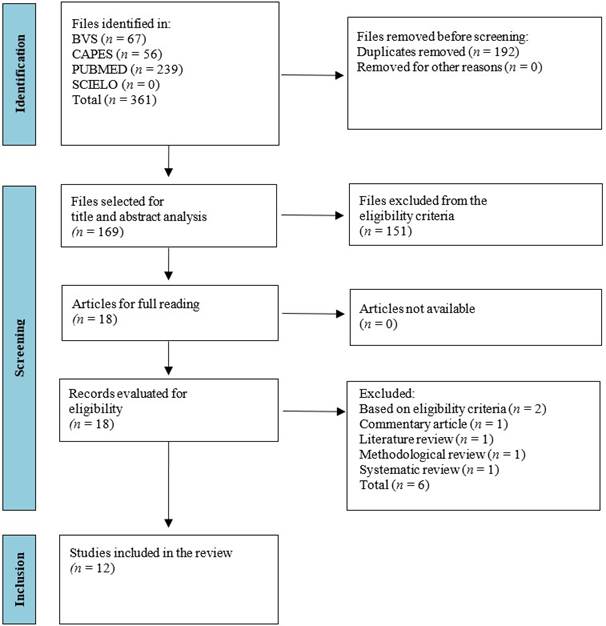
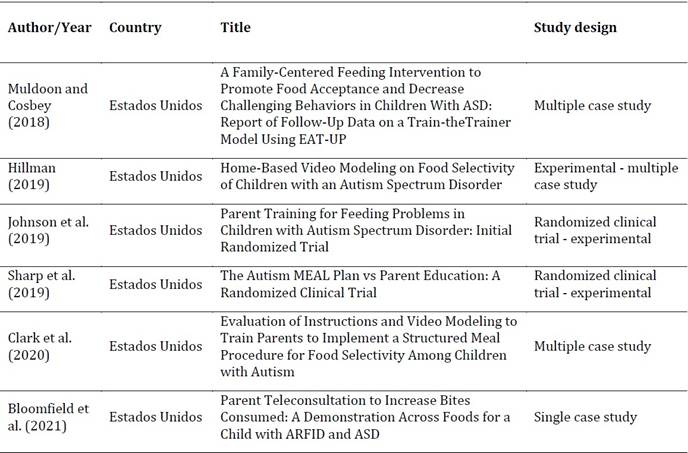
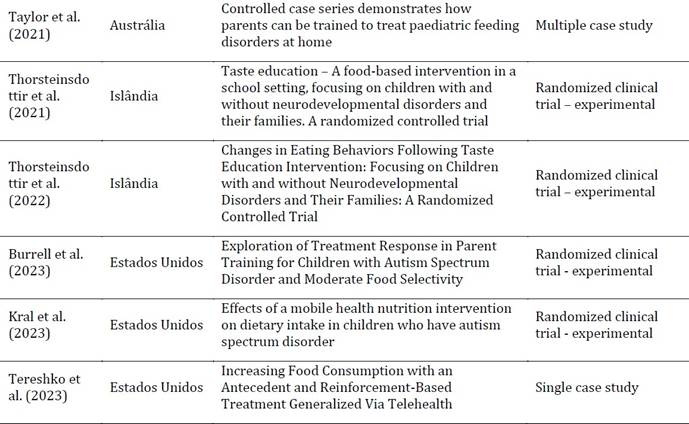
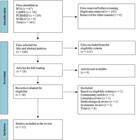
Figure 1 presents the flowchart of the methodology used. In the identification phase, articles were selected from the chosen databases. For the selection, the keywords identified in the Descriptor Database were used. The articles were refined by year of publication, opting for the years 2018 to 2023. In the screening phase, the articles were reviewed considering their titles and abstracts. In the eligibility phase, the articles were read in full, and those that addressed the proposed theme were chosen and included in the analysis of this study. During the advanced search in the three databases, the most relevant items were in the title, abstract, and keywords of the article. Using the selection method employed in this study, 361 articles were found, which were subjected to the following filtering and elimination procedures: duplicate works; works whose title, abstract, or keywords were not aligned with the research topic; works presented at conferences; and book chapters. At the end of this process, a total of 36 articles were obtained, which were read in their entirety. Of these articles, 12 were included in this review because they were within the scope of the research. Table 1 presents the selected articles, considering the authors, article title, year of publication, and main results.
Study data analysis procedures
During the identification stage, a total of 361 articles were found, of which 192 duplicate records were removed. Throughout the selection process, 151 articles were excluded in the evaluation of titles and abstracts because they involved phenomena and variables that were not consistent with the objective of this study, such as the presence of only one of the constructs and the presentation of variables without relating them to each other.
During the blind evaluation by two evaluators, of the 151 remaining articles, there was disagreement in five articles. When there was disagreement, a third evaluator was consulted; therefore, the agreement rate between evaluators is approximately 97.04 %. The agreement rate between researchers was calculated using the formula ΣA/Σ(A+D), where ΣA represents the sum of concordant cases and Σ(A+D) represents the sum of evaluated cases (concordant and discordant).
Of the remaining 18 articles, 6 were excluded because the method and participants did not meet the criteria of this study, resulting in a total of 12 complete articles included for analysis. The article search and selection processes are better understood from the flowchart.
Data analysis was performed in accordance with the objectives listed in the research. Thus, the 12 selected articles were read in full, and the in us information found in the studies was grouped into categories: General Information; Specific Information (subdivided into Design, Instruments, Participants, and Data Analysis); ABA Procedures for Parent Training; and Main Outcomes.
Results and discussion
De From 2018 to 2023, 12 empirical studies published in journals on parental training for children with autism and selective eating were found. All 12 articles were published in foreign journals, with a growing increase in the number of publications since 2019, as illustrated in Table 1 . The journal Behavior Analysis in Practice showed the highest frequency of publications, totaling two articles (Bloomfield et al., 2021; Clark et al., 2020). The journal Appetite also had two articles published (Thorsteinsdottir et al., 2021; 2022), as did the Journal of Pediatric Psychology (Johnson et al., 2019; Sharp et al., 2019). The other journals published one article each, namely: Clinical Case Studies (Tereshko et al., 2023), Acta Paediatrica (Taylor et al., 2021), Journal of Autism and Developmental Disorders (Burrell et al., 2023), Physical Occupational Therapy in Pediatrics (Hillman, 2019) and Frontiers in Pediatrics (Kral et al., 2023), in addition to the American Journal of Speech-Language Pathology (Muldoon & Cosbey, 2018).
Regarding the annual distribution of publications, it was observed that in 2018, there was only one publication (Muldoon & Cosbey, 2018) and three articles published on the topic in 2019 (Hillman, 2019; Johnson et al., 2019; Sharp et al., 2019). In 2020 and 2022, one publication was identified in each year (Clark et al., 2020; Thorsteinsdottir et al., 2022). The year 2021 saw three publications (Bloomfield et al., 2021; Taylor et al., 2021; Thorsteinsdottir et al., 2021). Finally, in 2023, three studies were also published (Burrell et al., 2023; Kral et al., 2023; Tereshko et al., 2023). In this sense, this scope review was more comprehensive than the one published in 2022, which only covered the JABA Journal (Ferreira et al., 2022).
Design and methodological considerations
A prevalence of experimental studies was observed in the review, with six randomized clinical trials (Burrell et al., 2023; Johnson et al., 2019; Kral et al., 2023; Sharp et al., 2019; Thorsteinsdottir et al., 2021; 2022) and six single-subject studies (Bloomfield et al., 2021; Clark et al., 2020; Hillman, 2019; Muldoon & Cosbey, 2018; Taylor et al., 2021; Tereshko et al., 2023). These findings highlight the prevalence of experimental designs, emphasizing the validity of the results obtained. These findings are aligned with the scientific evidence pyramid, which recognizes these research designs as high-quality scientific evidence. The evidence pyramid places experimental studies, especially randomized clinical trials and controlled studies, at the top due to their ability to establish causal relationships and reduce biases (Evans, 2003). When observing the methodological care in the reviewed studies, attention to the analysis of the impact of interventions over time is noticeable, with an emphasis on behavioral analytical procedures. Seven of the articles analyzed used a baseline; this methodological care allows for a comparison between data before and after interventions, providing evidence on the effectiveness of interventions (Burrell et al., 2023; Hillman, 2019; Muldoon & Cosbey, 2018; Sharp et al., 2019; Taylor et al., 2021; Tereshko et al., 2023; Thorsteinsdottir et al., 2022). However, the lack of follow-up in some cases may limit understanding of results over time (Bloomfield et al., 2021; Clark et al., 2020; Johnson et al., 2019; Kral et al., 2023; Thorsteinsdottir et al., 2021). Interestingly, our scope review shows changes in study design, as the review by Cassiano and Neto (2023), which covered studies published up to 2020, pointed to single-subject design and direct observation as the most common.
Social validity
Only three of the 12 articles mention social validity. Social validity ensures that the interventions or measures used are considered relevant and acceptable by participants, such as parents or caregivers (Clark et al., 2020; Taylor et al., 2021; Tereshko et al., 2023). The absence of social validity in nine articles indicates a possible gap in the assessment of how interventions or measures are perceived by family members. This may limit the acceptability of interventions (Bloomfield et al., 2021; Burrell et al., 2023; Hillman, 2019; Johnson et al., 2019; Kral et al., 2023; Muldoon & Cosbey, 2018; Sharp et al., 2019; Thorsteinsdottir et al., 2021; 2022).
Participants
Among the studies analyzed, it is possible to observe the profile of the participants, highlighting the different age groups and their implications for the intervention. In the single case studies, a 7-year-old child (Tereshko et al., 2023) and a 5-year-old child with their parents and therapist (Bloomfield et al., 2021), both with ASD, were included. These ages correspond to early childhood and early school age, crucial stages for intensive interventions due to brain plasticity, as well as the impact of social and communication skills in the school context. The multiple case studies addressed varied samples: 25 children aged 2 to 13 (Taylor et al., 2021), 3 children aged 3 to 6 and their parents (Clark et al., 2020; Muldoon & Cosbey, 2018), and 3 children with ASD aged 3 to 4 years with their parents (Hillman, 2019). Randomized and experimental clinical studies involved larger samples, with 38 children aged 3 to 8 years (Sharp et al., 2019), 38 groups of parents and children with ASD aged 6 to 10 years (Kral et al., 2023), and 81 groups of parents and children aged 8 to 12 years (Thorsteinsdottir et al., 2021; 2022). Burrell et al. (2023) had 19 children between 3 and 8 years of age with ASD as participants. Based on the data analyzed, it is noteworthy that the research participants include both early childhood and school-age children, with the majority aged between 3 and 10 years, as already pointed out by previous reviews. (Cassiano & Neto, 2023; Ferreira et al., 2022). Intervention in early childhood (3 to 6 years) can maximize the effectiveness of therapies due to the stage of child development, while intervention at school age (7 to 12 years) is essential to consolidate skills already acquired and promote inclusion.
Instruments
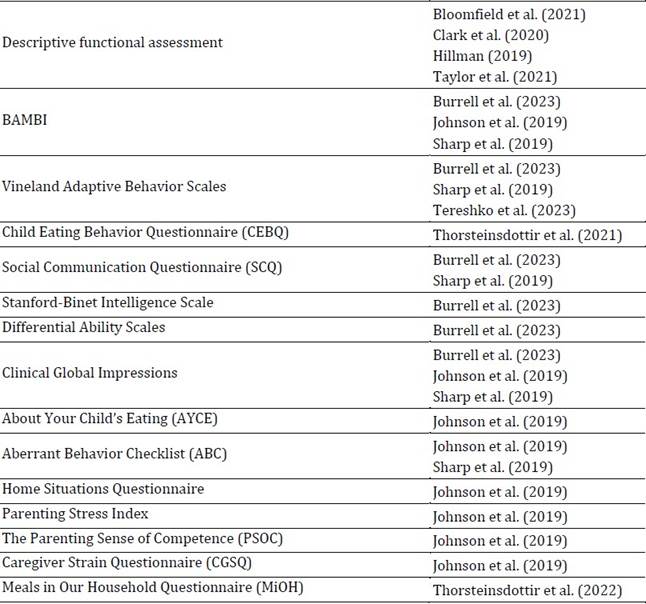
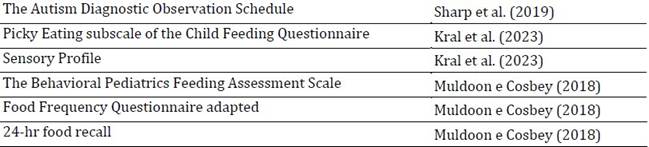
Throughout the analysis, it was possible to observe the use of scales for evaluation in the studies. Three distinct categories of instruments were used: (1) instruments that assess eating behavior and selectivity, (2) instruments that assess aspects of behavior and development, and (3) instruments that assess parental perception (Table 2) .
Eating behavior
For the assessment of eating behavior, it was observed that descriptive functional assessment was the most widely used, being mentioned four times in the reviewed articles. This indicates a significant emphasis on understanding the factors that underlie or maintain selective eating behaviors in children with ASD (Bloomfield et al., 2021; Hillman, 2019; Taylor et al., 2021; Tereshko et al., 2023). Descriptive functional assessment is a method used to identify the function of behaviors; it is a systematic approach that involves direct observation, detailed data collection, and analysis of the antecedents, behaviors, and consequences associated with a specific behavior. This method aims to identify behavioral patterns and determine which environmental factors may be influencing the behavior, as in the case of food selectivity (Bloomfield et al., 2021; Tereshko et al., 2023).
Among the most frequently mentioned instruments is BAMBI (Behavioral Assessment of Mealtime Behavior and Interaction), a tool highlighted with four mentions in recent studies (Burrell et al., 2023; Johnson et al., 2019; Muldoon & Cosbey, 2018; Sharp et al., 2019). The Clinical Global Impression (CGI-I) instrument/protocol was also identified with high frequency, being mentioned three times throughout the analyses (Burrell et al., 2023; Johnson et al., 2019; Sharp et al., 2019). BAMBI is an instrument designed to assess challenging behaviors during meals in children with ASD in order to identify patterns of food selectivity and food refusal behaviors. The original validation study of the instrument involved the analysis of internal consistency and test-retest reliability, showing high levels of reliability and validity. Subsequent studies, such as that conducted by Meral and Fidan (2014), also confirmed the psychometric quality of BAMBI, including internal consistency (Cronbach's alpha) and test-retest reliability. More recently, a validation study of the Italian version of BAMBI showed similar results, reinforcing its clinical and research applicability in different populations and cultural contexts (Berardi et al., 2023).
The CGI-I is a global assessment scale used to measure symptom improvement over time. The scale assesses overall clinical change from the start of treatment, providing a measure of therapeutic efficacy. The CGI scale is part of the ECDEU Assessment Manual for Psychopharmacology and has been a key tool in many clinical studies due to its simplicity and effectiveness (Guy, 1976). Busner and Targum (2007) discussed the practical application of the CGI-I in clinical settings, highlighting its usefulness and validity when combined with other outcome measures. The importance of verifying the validity and reliability of the CGI-I in different clinical contexts as a good global assessment instrument is emphasized. In addition to these instruments, others were used, reflecting the diversity of approaches in the assessment of eating behavior, as can be seen in Table 2. This variety of tools demonstrates the complexity and importance of understanding the phenomenon for planning interventions. Our study presents unprecedented contributions to this field, since previous reviews (Cassiano & Neto, 2023; Ferreira et al., 2022) did not conduct a specific survey of the most commonly used tools in research on food selectivity.
Development and behavior
Among the tools used to assess behavioral aspects and child development, the Vineland Adaptive Behavior Scales and the Aberrant Behavior Checklist stand out, each mentioned in two different studies. The Vineland Adaptive Behavior Scales were used in studies conducted by Sharp et al. (2019) and Tereshko et al. (2023), while the Aberrant Behavior Checklist was mentioned in studies by Johnson et al. (2019) and Sharp et al. (2019). These scales are recognized for their ability to measure adaptive skills and interfering behaviors, providing a detailed view of adaptive functioning and areas of challenge in children with developmental disorders. In addition to these scales, other tools were used, such as the Social Communication Questionnaire (SCQ), which was employed by Burrell et al. (2023) and Sharp et al. (2019) to assess social communication skills. The Autism Diagnostic Observation Schedule (ADOS) was applied by Sharp et al. (2019) for the diagnosis of autism. The Stanford-Binet Intelligence Scale and the Differential Ability Scales were also mentioned by Burrell et al. (2023), as well as the Vineland-3: Extensive Parent/Caregiver Form, which complements the assessment and is completed by family members.
Family
The use of instruments that assess aspects related to family dynamics and interaction was found to be part of the research instruments; however, their use is less frequent. Several instruments were used in the same study to assess different aspects of parental stress and family adaptation. Johnson et al. (2019) used the Parenting Stress Index (PSI) Short Form, the Parenting Sense of Competence (PSOC), the Caregiver Strain Questionnaire (CGSQ), the Parent Satisfaction Questionnaire, and the Home Situations Questionnaire (HSQ). The research by Muldoon and Cosbey (2018) used the Family Quality of Life Survey questionnaire. These instruments identify the experiences of family members and caregivers, addressing everything from parenting stress to perceptions of parental competence, caregiver strain, and satisfaction with programs or interventions received (Johnson et al., 2019; Muldoon & Cosbey, 2018).
Data analysis
All articles included in this review are quantitative in nature, and most combined different techniques for data analysis (Burrell et al., 2023; Johnson et al., 2019; Kral et al., 2023; Sharp et al., 2019; Taylor et al., 2021; Thorsteinsdottir et al., 2021; 2022). The experimental studies used Regression Analysis (N = 5) (Johnson et al., 2019; Kral et al., 2023; Sharp et al., 2019; Thorsteinsdottir et al., 2021; 2022) and Mixed Linear Model (N = 5) (Johnson et al., 2019; Kral et al., 2023; Sharp et al., 2019; Thorsteinsdottir et al., 2021; 2022), combined with Chi-Square (N = 3) (Burrell et al., 2023; Kral et al., 2023; Sharp et al., 2019), in addition to the use of Cohen's Effect Size d (N = 2) (Burrell et al., 2023; Johnson et al., 2019), the T-test (N = 2) (Burrell et al., 2023; Kral et al., 2023) and Analysis of Variance (ANOVA) (N = 2) (Thorsteinsdottir et al., 2021; 2022). On the other hand, multiple case studies and single case studies mainly used Visual Data Analysis (N = 4) (Bloomfield et al., 2021; Clark et al., 2020; Hillman, 2019; Muldoon & Cosbey, 2018), Brinley Scatter Plots (N = 1) (Taylor et al., 2021), Cohen's Effect Size (N = 1) (Taylor et al., 2021), and Z-score (Muldoon & Cosbey, 2018).
Although these procedures provide a consistent statistical and graphical view, the approach remains predominantly descriptive, as noted by Cassiano and Neto (2023) in their review, which pointed out that few studies advance to inferential analyses that relate behavioral changes to contextual or sensory variables of ASD. Ferreira et al. (2022) also highlighted the scarcity of studies that isolate the effects of a behavioral procedure, such as the DRA, for example, which is fundamental for validating which behavioral procedures produce consistent and replicable effects in different contexts.
ABA procedures for parental training
Given the procedures used in the research, there is a predominance of widely used analytical-behavioral methods. For example, seven articles indicate the use of reinforcement, which can be differential, positive, or negative (Bloomfield et al., 2021; Clark et al., 2020; Hillman, 2019; Johnson et al., 2019; Kral et al., 2023; Taylor et al., 2021; Tereshko et al., 2023). Differential reinforcement refers to the systematic application of reinforcement to a specific behavior, while other behaviors are extinguished, with the aim of increasing the response rate of the desired behavior and decreasing competing behaviors (Cooper et al., 2020). Positive reinforcement is defined as the addition of a reinforcing stimulus after a response is emitted, resulting in an increase in the future frequency of that response under similar conditions; negative reinforcement, in turn, is the removal of an aversive stimulus that increases the frequency of a response (Skinner, 1953). In this sense, Muldoon and Cosbey (2018) emphasize the importance of using positive reinforcement through tokens, tangible objects, and preferred foods to increase the likelihood of future interaction with less preferred foods, seeking to expand the food repertoire. In addition to reinforcers, the use of escape extinction was also mentioned (Johnson et al., 2019), in which the interruption of an escape response occurs by removing the reinforcer, thus reducing the frequency of unwanted behaviors over time (Cooper et al., 2020).
Other procedures, such as antecedent interventions, were used to modify environmental variables before the target behavior occurred, altering its probability of manifestation. This manipulation of discriminative stimuli was effective in managing food selectivity (Johnson et al., 2019; Taylor et al., 2021; Tereshko et al., 2023). Within this approach, Muldoon and Cosbey (2018) introduce the concept of behavioral timing, which consists of performing a simpler task before increasing its complexity, such as using an empty spoon before introducing food, favoring the transition to more complex behaviors and ensuring greater adherence by the child. In parallel with these techniques, the hierarchy of demands (Bloomfield et al., 2021) was another strategy employed to introduce tasks gradually, maintaining the child's motivation and reducing resistance. This approach is similar to the visual cue strategy, in which visual stimuli aid in the execution of desired behaviors (Tereshko et al., 2023). Complementing this line of thinking, Muldoon and Cosbey (2018) highlight the use of a visual hierarchy for desensitization and tolerance. This method creates predictability for family members and children about the expectations of each stage and when to back off, such as moving from taking a bite to just touching the food. Images are used as support to clearly communicate expectations and progress in the intervention. Another method discussed in the research is Behavioral Skills Training (BST), a systematic approach that teaches specific skills through instruction, modeling, rehearsal, and feedback (Sharp et al., 2019). Similarly, video modeling has also been used to teach behaviors and skills through video demonstrations (Clark et al., 2020; Hillman, 2019). Successive approximation, or shaping, was another effective procedure highlighted, in which the desired behavior is achieved progressively, in small steps (Bloomfield et al., 2021). The strategy of breaking down eating into small steps until the final behavior is achieved was a central focus in several studies. Task analysis, which involves breaking down a complex activity into smaller, more manageable steps, was widely used in the context of food selectivity (Clark et al., 2020). The steps included behaviors such as touching, holding, kissing, licking, biting, and finally consuming the food. Muldoon and Cosbey (2018) complement this strategy with the use of fading, gradually removing the adult's presence to assess the child's ability to complete the task independently. In line with this, the use of prompting, or aids, either complete or partial physical assistance, is also employed in the interventions. Complete physical prompting, described by Muldoon and Cosbey (2018), involves "hand-over-hand" assistance to guide the child in eating, while partial prompting offers lighter support, such as on the arm or shoulder, with the aim of promoting independence.
Finally, behavioral redirection was another procedure mentioned by Muldoon and Cosbey (2018), who discuss the use of redirection/repositioning, which involves guiding the child toward more appropriate behaviors through stimuli or positive reinforcement, promoting greater adherence to the desired behavior. Analysis of the interventions reveals that most studies used a combination of procedures, demonstrating the effectiveness of multiple strategies in guiding family members in the management of food selectivity (Bloomfield et al., 2021; Clark et al., 2020; Hillman, 2019; Johnson et al., 2019; Kral et al., 2023; Muldoon & Cosbey, 2018; Taylor et al., 2021; Tereshko et al., 2023; Thorsteinsdottir et al., 2021). Strategies such as positive reinforcement, escape extinction, antecedent interventions, and BST are widely validated in the scientific literature and considered evidence-based practices (EBPs) in behavior analysis (Cooper et al., 2020; Skinner, 1953). Our findings show an advance over a previous review that indicated studies seeking to improve more generic behaviors, namely: food selectivity, specific preferences or limited diet, and food resistance or refusals (Cassiano & Neto, 2023).
Parental education
Our research also indicates the use of the term "Parental Education" to describe the procedures adopted during parental training applied to food selectivity (Burrell et al., 2023; Clark et al., 2020; Kral et al., 2023; Muldoon & Cosbey, 2018; Sharp et al., 2019; Thorsteinsdottir et al., 2021; 2022). Parental education can be defined as a set of practices and strategies aimed at family members or caregivers of children, with the purpose of assisting in their children's development. These practices vary widely, from promoting socially productive behaviors to developing social and emotional skills (Burrell et al., 2023; Thorsteinsdottir et al., 2021). It is important to differentiate between parenting and parent training: parenting generally refers to the provision of advice, information, and general guidelines to family members, while parent training involves more structured and practical methods, such as the application of specific behavioral techniques to modify selective eating behaviors. Other parenting education strategies may be aimed at strengthening the bond between parents and children, resulting in benefits for child development (Clark et al., 2020). Unlike the reviews by Ferreira et al. (2022) and Cassiano and Neto (2023), which addressed general aspects of interventions, our study deepens the analysis of the parental education component, bringing advances in this regard.
Types of parental interventions
The analysis of the studies reveals a diversity in the formats, durations, and modalities of parental interventions, which reflects the flexibility of the approaches but also poses methodological challenges for comparing their effects. In general, most of the interventions analyzed took place in person, either in groups (Burrell et al., 2023; Sharp et al., 2019; Thorsteinsdottir et al., 2021, 2022) or individually (Clark et al., 2020; Hillman, 2019; Johnson et al., 2019; Muldoon & Cosbey, 2018; Taylor et al., 2021). Only three studies adopted a hybrid format, combining face-to-face and remote sessions (Bloomfield et al., 2021; Kral et al., 2023; Tereshko et al., 2023), which may represent an attempt to increase flexibility and, consequently, caregiver adherence. In addition, even the two hybrid studies had a mediator who used technology as a tool to apply the procedures, as in the research by Bloomfield et al. (2021) and Tereshko et al. (2023), both of which were individualized, further targeting the intervention.
Regarding the total duration of the interventions, there is a variation ranging from approximately two months to eight months. However, the studies do not make it clear whether this period corresponds to the time originally planned by the researchers or the time actually needed for parents to complete the intervention. This distinction is relevant because it can directly impact caregiver engagement, especially in contexts of busy family routines, where time management becomes a critical factor for program adherence and continuity (Burrell et al., 2023; Clark et al., 2020; Johnson et al., 2019; Kral et al., 2023; Sharp et al., 2019).
Main outcomes
To specify the main outcomes, we analyzed the five studies that used regression analysis (Johnson et al., 2019; Kral et al., 2023; Sharp et al., 2019; Thorsteinsdottir et al., 2021; 2022) due to their greater methodological rigor (Dancey & Reidy, 2020). Johnson et al. (2019) conducted a randomized clinical trial that showed a decrease in disruptive behaviors in the intervention group compared to the control group, but the effect size was small.
Kral et al. (2023) conducted a randomized clinical trial to compare the effectiveness of parent training using technology, used by the intervention group, with nutrition education without training, delivered to the control group. However, no differences in food intake were found between the two groups, as both groups had a statistically significant effect (p = 0.04) on increasing healthy food consumption compared to baseline. Sharp et al. (2019) also conducted a randomized clinical trial, with significantly lower BAMBI scores in the intervention group (p = 0.01) compared to the control group, with an adjusted mean difference. At follow-up, 12 participants maintained their results and two continued to show gains. Thorsteinsdottir et al. (2021) conducted a randomized clinical trial with significant differences (p < 0.001) in CEBQ scores between the intervention group and the control group, as well as significant differences in food acceptability in the intervention group post-treatment compared to the control group baseline. The clinical trial by Thorsteinsdottir et al. (2022) has the same sample as the study published in 2021, with changes in the measurement instrument and journal. The results showed differences in four of the six MiOH domains, where the intervention group was superior to the control group's baseline data. The outcomes found by this review demonstrate the fragility of data from empirical research on parental training for food selectivity in children with ASD. The study by Johnson et al. (2019) had good results in terms of feasibility, but there was no mention of improvement in food selectivity. Kral et al. (2023) also found no significant effects on expected food intake.
The trial by Thorsteinsdottir et al. (2021, 2022) had a final sample of 81 participants, but was composed mostly of parents with higher education, which may make replication difficult in more vulnerable contexts. Finally, the study by Sharp et al. (2019) obtained beneficial results, although they did not verify whether there were changes in the severity of food selectivity at the end of the study. However, the small sample size makes it impossible to generalize the effectiveness of the intervention. Thus, it is not feasible to point to the best available evidence for parental training in the management of food selectivity in ASD. Most studies reported improvements in disruptive behavior, but not in food acceptability. This inconsistency can be explained by the complexity of food selectivity, which is influenced by sensory issues that can hinder positive outcomes in behavioral interventions (Nimbley et al., 2022).
Final considerations
The main objective of this scoping review was to survey the scientific literature on ABA-based intervention programs for parental training in relation to food selectivity in children with ASD. We found that most studies were international, conducted mainly in the United States. This is because most studies generally take place in developed countries, which may limit their generalizability to other cultures. There was also a predominance of experimental studies of the randomized clinical trial and single-subject study types. Differential and positive reinforcement procedures were used, in addition to escape extinction, antecedent interventions, demand hierarchy, visual cues, Behavioral Skills Training (BST), and task analysis. Most studies that performed regression analysis showed improvement in disruptive behaviors, but few demonstrated an increase in food acceptability, with a possible explanation being the sensory issues present in food selectivity, which can hinder positive outcomes in behavioral interventions.
As for the limitations of this review, no rigorous analyses of the quality of the evidence were conducted, which makes it necessary to conduct new reviews to overcome this gap. In addition, although the present study sought a comprehensive analysis of recent scientific production on ABA-based interventions aimed at parental training in the management of food selectivity, we recognize as a limitation the fact that fundamental aspects such as social validity, follow-up assessments, and the potential for replicability of the procedures were not systematized as explicit categories of analysis. These dimensions are crucial for estimating the ecological impact, sustainability, and real applicability of interventions, especially in diverse clinical and family contexts. New reviews can advance this field by adopting these criteria in a structured manner, contributing to a more robust understanding of the effectiveness and feasibility of the programs analyzed. Finally, future studies should seek support to be conducted in diverse cultural and socioeconomic contexts in order to generalize the findings. The scarcity of studies in this area may have contributed to the variation in the results observed.
References
-
American Psychiatric Association. (2023). Diagnostic and statistical manual of mental disorders (5th ed.). https://doi.org/10.1176/appi.books.9780890425787
» https://doi.org/10.1176/appi.books.9780890425787 -
Althoff, C. E., Dammann, C. P., Hope, S. J., & Ausderau, K. K. (2019). Parent-mediated interventions for children with autism spectrum disorder: A systematic review. American Journal of Occupational Therapy, 73(3), 7303205010p1-7303205010p13. https://doi.org/10.5014/ajot.2019.030015
» https://doi.org/10.5014/ajot.2019.030015 -
Bandini, L. G., Curtin, C., Phillips, S., Anderson, S. E., Maslin, M., & Must, A. (2017). Changes in food selectivity in children with autism spectrum disorder. Journal of Autism and Developmental Disorders, 47(2), 439-446. https://doi.org/10.1007/s10803-016-2963-6
» https://doi.org/10.1007/s10803-016-2963-6 -
Berardi, C., Blom, R. M., Mazzoni, G., Esposito, C. M., Bentenuto, A., Giannotti, M., Venuti, P., & Pisula, E. (2023). Psychometric properties of the Italian version of the Brief Autism Mealtime Behavior Inventory (BAMBI). Journal of Autism and Developmental Disorders, 53(1), 362-373. https://doi.org/10.1007/s10803-022-05433-1
» https://doi.org/10.1007/s10803-022-05433-1 -
Bloomfield, B. S., Fischer, A. J., Dove, M., Clark, R. R., & Fife, M. (2021). Parent teleconsultation to increase bites consumed: A demonstration across foods for a child with ARFID and ASD. Behavior Analysis in Practice, 14(4), 913-926. https://doi.org/10.1007/s40617-021-00586-4
» https://doi.org/10.1007/s40617-021-00586-4 -
Bordini, D., Moya, A. C., Asevedo, G. R. C., Bertola, D. R., Jackowski, A. P., Oliveira, B. A., Silvestre, C., Paula, C. S., Brunoni, D., Brentani, H., & Passos-Bueno, M. R. (2024). Exploring the acquisition of social communication skills in children with autism: Preliminary findings from applied behavior analysis (ABA), parent training, and video modeling. Brain Sciences, 14(2), 172. https://doi.org/10.3390/brainsci14020172
» https://doi.org/10.3390/brainsci14020172 -
Bordini, D., Paula, C. S., Cunha, G. R., Caetano, S. C., Bagaiolo, L. F., Ribeiro, T. C., Martone, M. C. C., Portolese, J., Moya, A. C., Brunoni, D., Bosa, C., Brentani, H., Cogo-Moreira, H., & Mari, J. J. (2020). A randomised clinical pilot trial to test the effectiveness of parent training with video modelling to improve functioning and symptoms in children with autism spectrum disorders and intellectual disability. Journal of Intellectual Disability Research, 64(8), 629-643. https://doi.org/10.1111/jir.12759
» https://doi.org/10.1111/jir.12759 -
Burrell, T. L., Scahill, L., Nuhu, N., Raulston, T., Boles, R. E., & Sharp, W. G. (2023). Exploration of treatment response in parent training for children with autism spectrum disorder and moderate food selectivity. Journal of Autism and Developmental Disorders, 53, 229-235. https://doi.org/10.1007/s10803-021-05406-w
» https://doi.org/10.1007/s10803-021-05406-w -
Busner, J., & Targum, S. D. (2007). The clinical global impressions scale: Applying a research tool in clinical practice. Psychiatry (Edgmont), 4(7), 28-37. https://pubmed.ncbi.nlm.nih.gov/20526405/
» https://pubmed.ncbi.nlm.nih.gov/20526405/ -
Cassiano, N. F., & Neto, J. M. R. (2023). Caracterização das pesquisas na seletividade alimentar do TEA. Perspectivas em Análise do Comportamento, 14(1), 068-083. https://doi.org/10.18761/pac18d4
» https://doi.org/10.18761/pac18d4 -
Clark, R. J., Wilder, D. A., Kelley, M. E., & Ryan, V. (2020). Evaluation of instructions and video modeling to train parents to implement a structured meal procedure for food selectivity among children with autism. Behavior Analysis in Practice , 13(3), 674-678. https://doi.org/10.1007/s40617-020-00419-w
» https://doi.org/10.1007/s40617-020-00419-w - Cooper, J. O., Heron, T. E., & Heward, W. L. (2020). Applied behavior analysis (3rd ed.). Pearson.
-
Council of Autism Service Providers. (2024). Applied behavior analysis
practice guidelines for the treatment of autism spectrum disorder: Guidance for healthcare funders, regulatory bodies, service providers, and consumers (3rd ed.). CASP. https://www.casproviders.org/asd-guidelines
» https://www.casproviders.org/asd-guidelines - Dancey, C. P., & Reidy, J. (2020). Statistics without maths for psychology (8th ed.). Pearson.
-
Dawson-Squibb, J. J., Davids, E. L., Harrison, A. J., Molony, M. A., & de Vries, P. J. (2020). Parent education and training for autism spectrum disorders: Scoping the evidence. Autism, 24(1), 7-25. https://doi.org/10.1177/1362361319841739
» https://doi.org/10.1177/1362361319841739 -
Evans, D. (2003). Hierarchy of evidence: A framework for ranking evidence evaluating healthcare interventions. Journal of Clinical Nursing, 12(1), 77-84. https://doi.org/10.1046/j.1365-2702.2003.00662.x
» https://doi.org/10.1046/j.1365-2702.2003.00662.x -
Ferreira, E. S., de Carvalho, L. A. L., Costa, C. B., & Zotesso, M. C. (2022). Seletividade alimentar e autismo sob a ótica comportamental: Revisão sistemática no JABA. Espectro: Revista Brasileira de Análise do Comportamento Aplicada ao Autismo, 1(1), 4-15. https://doi.org/10.14244/espectro.v1i1.1
» https://doi.org/10.14244/espectro.v1i1.1 -
Fisher, W. W., Luczynski, K. C., Blowers, A. P., Vosters, M. E., Pisman, M. D., Craig, A. R., Hood, S. A., Machado, M. A., Lesser, A. D., & Piazza, C. C. (2020). A randomized clinical trial of a virtual-training program for teaching applied-behavior-analysis skills to parents of children with autism spectrum disorder. Journal of Applied Behavior Analysis, 53(4), 1856-1875. https://doi.org/10.1002/jaba.778
» https://doi.org/10.1002/jaba.778 - Guy, W. (1976). ECDEU assessment manual for psychopharmacology National Institute of Mental Health.
-
Hillman, H. (2019). Home-based video modeling on food selectivity of children with an autism spectrum disorder. Physical & Occupational Therapy in Pediatrics, 39(6), 629-641. https://doi.org/10.1080/01942638.2019.1610139
» https://doi.org/10.1080/01942638.2019.1610139 -
Hume, K., Steinbrenner, J. R., Odom, S. L., Morin, K. L., Nowell, S. W., Tomaszewski, B., Szendrey, S., McIntyre, N. S., Yücesoy-Özkan, S., & Savage, M. N. (2023). Evidence-based practices for children, youth, and young adults with autism: Third generation review. Journal of Autism and Developmental Disorders, 53(1), 514-550. https://doi.org/10.1007/s10803-022-05438-w
» https://doi.org/10.1007/s10803-022-05438-w -
Ijaz, S., Rafaq, F., & Haider, S. I. (2021). Parent training for Autism Spectrum Disorder. Journal of the Pakistan Medical Association, 71(1A), 31-36. https://doi.org/10.47391/JPMA.127
» https://doi.org/10.47391/JPMA.127 -
Johnson, C. R., Brown, K., Hyman, S. L., Brooks, M. M., Aponte, C., Levato, L., Schmidt, B., Evans, V., Huo, Z., Bendixen, R., Eng, H., Sax, T., & Smith, T. (2019). Parent training for feeding problems in children with autism spectrum disorder: Initial randomized trial. Journal of Pediatric Psychology, 44(2), 164-175. https://doi.org/10.1093/jpepsy/jsy063
» https://doi.org/10.1093/jpepsy/jsy063 -
Karp, E. A., Dudovitz, R., Nelson, B. B., Shih, W., Gulsrud, A., Orlich, F., Colombi, C., & Kuo, A. A. (2018). Family characteristics and children’s receipt of autism services in low-resourced families. Pediatrics, 141(Suppl 4), S280-S286. https://doi.org/10.1542/peds.2016-4300D
» https://doi.org/10.1542/peds.2016-4300D -
Kral, T. V. E., O’Malley, L., Johnson, K., Benvenuti, T., Chittams, J., Quinn, R. J., Thomas, J. G., Pinto-Martin, J. A., Levy, S. E., & Kuschner, E. S. (2023). Effects of a mobile health nutrition intervention on dietary intake in children who have autism spectrum disorder. Frontiers in Pediatrics , 11, 1100436. https://doi.org/10.3389/fped.2023.1100436
» https://doi.org/10.3389/fped.2023.1100436 -
Leader, G., Tuohy, E., Chen, J. L., Mannion, A., & Gilroy, S. P. (2020). Feeding problems, gastrointestinal symptoms, challenging behavior, and sensory issues in children and adolescents with autism spectrum disorder. Journal of Autism and Developmental Disorders, 50(4), 1401-1410. https://doi.org/10.1007/s10803-019-04357-7
» https://doi.org/10.1007/s10803-019-04357-7 -
Lee, J. D., & Meadan, H. (2020). Parent-mediated interventions for children with ASD in low-resource settings: A scoping review. Review Journal of Autism and Developmental Disorders, 8(3), 285-298. https://doi.org/10.1007/s40489-020-00218-7
» https://doi.org/10.1007/s40489-020-00218-7 -
Meral, B. F., & Fidan, A. (2015). Measuring the impact of feeding covariates on health-related quality of life in children with autism spectrum disorder. Research in Autism Spectrum Disorders, 10, 124-130. https://doi.org/10.1016/j.rasd.2014.11.009
» https://doi.org/10.1016/j.rasd.2014.11.009 -
Muldoon, D., & Cosbey, J. (2018). A family-centered feeding intervention to promote food acceptance and decrease challenging behaviors in children with ASD: Report of follow-up data on a train-the-trainer model using EAT-UP. American Journal of Speech-Language Pathology, 27(1), 278-287. https://doi.org/10.1044/2017_AJSLP-17-0105
» https://doi.org/10.1044/2017_AJSLP-17-0105 -
Munn, Z., Peters, M. D. J., Stern, C., Tufanaru, C., McArthur, A., & Aromataris, E. (2018). Systematic review or scoping review? Guidance for authors when choosing between a systematic or scoping review approach. BMC Medical Research Methodology, 18(1), 143. https://doi.org/10.1186/s12874-018-0611-x
» https://doi.org/10.1186/s12874-018-0611-x -
Nevill, R. E., Lecavalier, L., & Stratis, E. A. (2018). Meta-analysis of parent-mediated interventions for young children with autism spectrum disorder. Autism, 22(2), 84-98. https://doi.org/10.1177/1362361316677838
» https://doi.org/10.1177/1362361316677838 -
Nimbley, E., Golds, L., Sharpe, H., Gillespie-Smith, K., & Duffy, F. (2022). Sensory processing and eating behaviours in autism: A systematic review. European Eating Disorders Review, 30(5), 538-559. https://doi.org/10.1002/erv.2920
» https://doi.org/10.1002/erv.2920 -
Page, M. J., McKenzie, J. E., Bossuyt, P. M., Boutron, I., Hoffmann, T. C., Mulrow, C. D., Shamseer, L., Tetzlaff, J. M., Akl, E. A., Brennan, S. E., Chou, R., Glanville, J., Grimshaw, J. M., Hróbjartsson, A., Lalu, M. M., Li, T., Loder, E. W., Mayo-Wilson, E., McDonald, S., ... Moher, D. (2021). The PRISMA 2020 statement: An updated guideline for reporting systematic reviews. BMJ, 372(71). https://doi.org/10.1136/bmj.n71
» https://doi.org/10.1136/bmj.n71 -
Paula, C. S., Cunha, G. R., Silva, L. C., Cukier, S., Teixeira, M. C. T. V., Osório, A. A. C., Rossi, T. B., Barros, L. A., Belisário Filho, J. F., Mercadante, M. T., & Ribeiro, S. H. B. (2020). Autism spectrum disorders in South America: A systematic review of prevalence and comorbidity. Autism Research, 13(8), 1295-1308. https://doi.org/10.1002/aur.2321
» https://doi.org/10.1002/aur.2321 -
Roglic, G., Norris, S. L., & Glenton, C. (2021). Conceptualising nutrition interventions: Developing a framework for complex interventions to improve diet and reduce risk of non-communicable diseases. BMJ Global Health, 6(2), e004195. https://doi.org/10.1136/bmjgh-2020-004195
» https://doi.org/10.1136/bmjgh-2020-004195 -
Sharp, W. G., Burrell, T. L., Berry, R. C., Stubbs, K. H., McCracken, C. E., Gillespie, S. E., & Scahill, L. (2019). The autism managing eating aversions and limited variety plan vs parent education: A randomized clinical trial. Journal of Pediatrics, 211, 185-192.e1. https://doi.org/10.1016/j.jpeds.2019.03.046
» https://doi.org/10.1016/j.jpeds.2019.03.046 -
Shaw, K. A., Williams, S., Patrick, M. E., Valencia-Prado, M., Durkin, M. S., Howerton, E. M., Ladd-Acosta, C. M., Pas, E. T., Bakian, A. V., Bartholomew, P., Nieves-Muñoz, N., Sidwell, K., Alford, A., Bilder, D. A., DiRienzo, M., Fitzgerald, R. T., Furnier, S. M., Hudson, A. E., Pokoski, O. M., & Maenner, M. J. (2025). Prevalence and early identification of autism spectrum disorder among children aged 4 and 8 years - Autism and Developmental Disabilities Monitoring Network, 16 sites, United States, 2022. MMWR Surveillance Summaries, 74(2), 1-22. https://doi.org/10.15585/mmwr.ss7402a1
» https://doi.org/10.15585/mmwr.ss7402a1 - Skinner, B. F. (1953). Science and human behavior Free Press.
-
Suarez, M. A., & Crinion, K. M. (2015). Food choices of children with autism spectrum disorders. International Journal of School Health, 2(3), 1-5. https://doi.org/10.17795/intjsh-27502
» https://doi.org/10.17795/intjsh-27502 -
Taylor, T., Blampied, N., & Roglić, N. (2021). Controlled case series demonstrates how parents can be trained to treat paediatric feeding disorders at home. Acta Paediatrica, 110(1), 149-157. https://doi.org/10.1111/apa.15372
» https://doi.org/10.1111/apa.15372 -
Tereshko, L., Weiss, M. J., & Granfield, A. (2023). Increasing food consumption with an antecedent and reinforcement-based treatment generalized via telehealth. Clinical Case Studies, 22(4), 403-419. https://doi.org/10.1177/15346501221149974
» https://doi.org/10.1177/15346501221149974 -
Thorsteinsdottir, D., Arnarsson, E., & Jónsdóttir, T. (2021). Taste education - A food-based intervention in a school setting, focusing on children with and without neurodevelopmental disorders and their families: A randomized controlled trial. Appetite, 159, 105070. https://doi.org/10.1016/j.appet.2021.105070
» https://doi.org/10.1016/j.appet.2021.105070 -
Thorsteinsdottir, D., Arnarsson, E., & Jónsdóttir, T. (2022). Changes in eating behaviors following taste education intervention: Focusing on children with and without neurodevelopmental disorders and their families: A randomized controlled trial. Appetite, 167, 105733. https://doi.org/10.1016/j.appet.2021.105733
» https://doi.org/10.1016/j.appet.2021.105733 -
Wong, C., Odom, S. L., Hume, K. A., Cox, A. W., Fettig, A., Kucharczyk, S., Brock, M. E., Plavnick, J. B., Fleury, V. P., & Schultz, T. R. (2015). Evidence-based practices for children, youth, and young adults with autism spectrum disorder: A comprehensive review. Journal of Autism and Developmental Disorders, 45(7), 1951-1966. https://doi.org/10.1007/s10803-014-2351-z
» https://doi.org/10.1007/s10803-014-2351-z -
Yu, Q., Li, E., Li, L., & Liang, W. (2020). Efficacy of interventions based on Applied behavior analysis for autism spectrum disorder: A meta-analysis. Psychiatry Investigation, 17(5), 432-443. https://doi.org/10.30773/pi.2019.022904
» https://doi.org/10.30773/pi.2019.022904