Adaptation and Validation of the Self-Efficacy for Managing Chronic Diseases Scale and its Association with Anxiety and Depression in the Brazilian Population
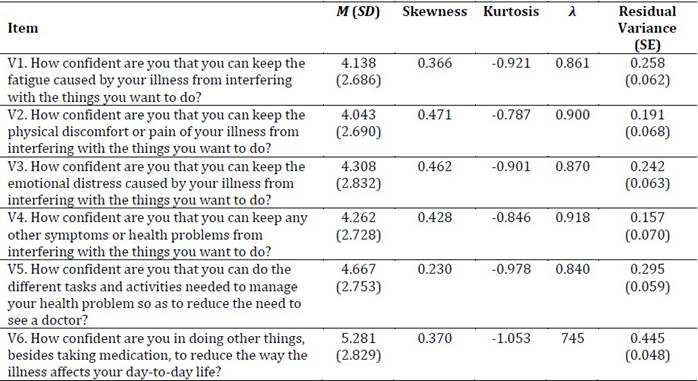
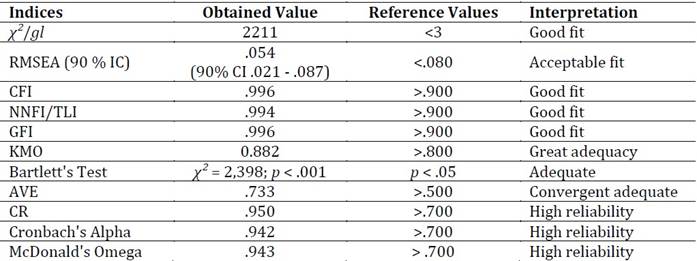
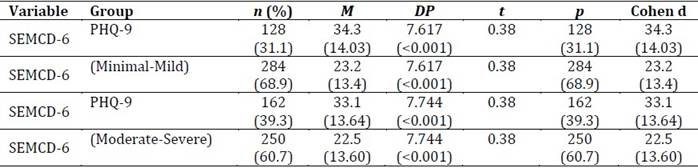
This study validated the Self-Efficacy for Managing Chronic Diseases Scale (SEMCD-6) in the Brazilian context and investigated its association with anxiety and depression. The sample included 412 adults with chronic diseases (mean age = 48.1 years; 92 % women; 65 % with multimorbidity). A confirmatory factor analysis supported the unidimensional structure, with excellent fit indices (χ²/df = 2.211; CFI = .996; RMSEA = .054), factor loadings between .752 and .925, and satisfactory internal consistency (α = .942; ω = .943). Convergent validity was also confirmed (AVE = .733; CR = .950). Self-efficacy was negatively correlated with depressive (r = -.346) and anxious symptoms (r = -.362). Participants with moderate to severe depressive and anxious symptomatology showed significantly lower self-efficacy scores. The SEMCD-6 demonstrated adequate psychometric properties in a sample of Brazilian patients, serving as a valuable tool for identifying patients with low self-efficacy in managing chronic diseases, thereby enabling preventive interventions and better allocation of mental health resources. Future studies should verify this structure in more representative samples of the Brazilian population.
Keywords:
self-efficacy; chronic disease; anxiety; depression; confirmatory factor analysis