Adaptation and Validation of the Self-Efficacy for Managing Chronic Diseases Scale and its Association with Anxiety and Depression in the Brazilian Population
Abstract:
This study validated the Self-Efficacy for Managing Chronic Diseases Scale (SEMCD-6) in the Brazilian context and investigated its association with anxiety and depression. The sample included 412 adults with chronic diseases (mean age = 48.1 years; 92 % women; 65 % with multimorbidity). A confirmatory factor analysis supported the unidimensional structure, with excellent fit indices (χ²/df = 2.211; CFI = .996; RMSEA = .054), factor loadings between .752 and .925, and satisfactory internal consistency (α = .942; ω = .943). Convergent validity was also confirmed (AVE = .733; CR = .950). Self-efficacy was negatively correlated with depressive (r = -.346) and anxious symptoms (r = -.362). Participants with moderate to severe depressive and anxious symptomatology showed significantly lower self-efficacy scores. The SEMCD-6 demonstrated adequate psychometric properties in a sample of Brazilian patients, serving as a valuable tool for identifying patients with low self-efficacy in managing chronic diseases, thereby enabling preventive interventions and better allocation of mental health resources. Future studies should verify this structure in more representative samples of the Brazilian population.
Keywords:
self-efficacy; chronic disease; anxiety; depression; confirmatory factor analysis
Resumo:
Este estudo objetivou validar a Escala de Autoeficácia para o Manejo de Doenças Crônicas (SEMCD-6) no contexto brasileiro e investigar suas associações com ansiedade e depressão. Participaram 412 adultos com diagnostico de pelo menos uma doença crônica (M = 48,1 anos; 92 % mulheres; 65 % com multimorbidade). A Análise Fatorial Confirmatória confirmou a estrutura unidimensional com excelentes índices de ajustamento (χ²/gl = 2,211; CFI = 0,996; RMSEA = 0,054), cargas fatoriais entre 0,752-0,925 e consistência interna satisfatória (α = 0,942; ω = 0,943). A validade convergente foi confirmada (AVE = 0,733; CR = 0,950). Foram encontradas correlações negativas significativas entre autoeficácia e sintomas depressivos (r = -0,346) e ansiosos (r = -0,362). Participantes com sintomatologia depressiva e ansiosa moderada/grave apresentaram escores significativamente menores de autoeficácia. A SEMCD-6 demonstrou propriedades psicométricas adequadas em uma amostra de pacientes brasileiros, oferecendo uma ferramenta valiosa para identificação de pacientes com baixa autoeficácia no manejo de doenças crônicas, possibilitando intervenções preventivas e melhor alocação de recursos em saúde mental. Estudos futuros são necessários para verificar essa estrutura em amostras mais representativas da população brasileira.
Palavras-chave:
autoeficácia; doença crônica; ansiedade; depressão; análise fatorial confirmatória
Resumen:
Este estudio tuvo como objetivo validar la Escala de Autoeficacia para el Manejo de Enfermedades Crónicas (SEMCD-6) en el contexto brasileño e investigar sus asociaciones con ansiedad y depresión. Participaron 412 adultos con enfermedades crónicas (M = 48.1 años; 92 % mujeres; 65 % con multimorbilidad). El Análisis Factorial Confirmatorio confirmó la estructura unidimensional con excelentes índices de ajuste (χ²/gl = 2.211; CFI = .996; RMSEA = .054), cargas factoriales entre .752 - .925 y consistencia interna satisfactoria (α = .942; ω = .943). La validez convergente fue confirmada (AVE = .733; CR = .950). Se encontraron correlaciones negativas significativas entre autoeficacia y síntomas depresivos (r = -.346) y ansiosos (r = -.362). Los participantes con sintomatología depresiva y ansiosa moderada/grave presentaron puntuaciones significativamente menores de autoeficacia. La SEMCD-6 demostró propiedades psicométricas adecuadas para su uso en una muestra de pacientes brasileños, ofreciendo una herramienta valiosa para identificar pacientes con baja autoeficacia en el manejo de enfermedades crónicas, posibilitando intervenciones preventivas y mejor asignación de recursos de salud mental. Se necesitan estudios futuros para verificar esta estructura en muestras más representativas de la población brasileña.
Palabras clave:
autoeficacia; enfermedad crónica; ansiedad; depresión; análisis factorial confirmatorio
Noncommunicable diseases are the leading causes of morbidity and mortality worldwide, accounting for approximately 71 % of all global deaths, or 41 million deaths annually (World Health Organization (WHO), 2018). In Brazil, these conditions represent the leading cause of death, claiming more than 700,000 lives per year and posing a serious public health challenge due to their high social and economic costs (Ministério da Saúde, 2023). Given this scenario, strengthening patient self-efficacy in managing chronic conditions is essential as a coping strategy, particularly considering the limitations of healthcare access within the country.
The Self-Efficacy for Managing Chronic Disease 6-Item Scale (SEMCD-6), developed by Lorig et al. (2001), is a globally used instrument for measuring self-efficacy in patients with chronic conditions (Choi et al., 2024; Cudris-Torres et al., 2023; Dunke et al., 2018; Freund et al., 2013; Hazumi et al., 2024; McAuley et al., 2025; Melin et al., 2023; Ritter & Lorig, 2014). The instrument comprises six items that assess an individual's confidence in managing different aspects of a chronic condition using a 10-point Likert scale ranging from 1 (not confident) to 10 (totally confident). It covers the domains of (1) symptom control, (2) emotional function, (3) communication with professionals, and (4) management of daily activities (Lorig et al., 2001). The SEMCD-6 serves as a brief and efficient alternative to more extensive versions for measuring self-efficacy in healthcare contexts. Evidence in the literature indicates an association between self-efficacy, anxiety, and depression in patients with chronic conditions (Cao et al., 2022; Wang et al., 2022; Wu et al., 2013). According to Social Cognitive Theory, self-efficacy directly influences affective states. Individuals with low confidence in their management abilities tend to exhibit greater vulnerability to depressive and anxious symptomatology when confronted with the challenges of chronic diseases (Bandura, 1997, 2004). Significant negative correlations have been reported between self-efficacy scores and standardized measures of depression and anxiety, suggesting that interventions aimed at strengthening self-efficacy may yield concurrent benefits for these mental health dimensions (Cao et al., 2022; Wang et al., 2022).
In Brazil, where common mental disorders are highly prevalent among patients with multimorbidity (Malta et al., 2017; Silveira et al., 2023; Theme Filha et al., 2015), understanding these relationships is essential for developing effective care approaches. Considering that scales such as the Patient Health Questionnaire-9 (PHQ-9) and the Generalized Anxiety Disorder-7 (GAD-7) are frequently used in primary care (Müller et al., 2024; Newman, 2022), it is clinically relevant to examine their associations with the SEMCD-6 in the Brazilian context of chronic disease management. A major challenge in implementing self-efficacy-based interventions is the scarcity of validated, easily applicable instruments for primary care in Brazil. Consequently, valid and reliable tools are needed to help health professionals identify patients with low self-efficacy and guide appropriate interventions (Bandura, 2004; Lorig et al., 2014). The SEMCD-6 is well-suited for large-scale use because it is brief, easy to administer, and accessible to professionals who are not specialized in mental health.
The SEMCD-6 scale has been adapted for various languages and countries, including Germany (Freund et al., 2013), Chile (Campos-Romero et al., 2023), Colombia (Cudris-Torres et al., 2023), Japan (Hazumi et al., 2024), Nigeria (Ezenwaka et al., 2024), Portugal (Marconcin et al., 2021), Sweden (Melin et al., 2023), and Turkey (Incirkuş & Nahcivan, 2020). Its factor structure has been examined through exploratory factor analysis (Campos-Romero et al., 2023; Incirkuş & Nahcivan, 2020) and confirmatory factor analysis (CFA) in different populations (Campos-Romero et al., 2023; Choi et al., 2024; Hazumi et al., 2024). However, no studies have examined the evidence of validity in the Brazilian context, particularly evidence based on factor structure. CFA is crucial for assessing the psychometric characteristics of a measurement instrument, particularly when used in international settings, as social and cultural factors affect how a scale behaves when applied to a new population (Brown, 2015). Thus, validating the SEMCD-6 in a Brazilian sample represents a significant contribution to the field of self-efficacy studies in Brazil and to chronic disease management.
As a secondary objective, this study examined the relationship between self-efficacy in chronic disease management and mental health indicators, specifically depressive and anxious symptomatology. This analysis aimed to provide additional evidence of the SEMCD-6’s concurrent validity and to investigate, within the Brazilian context, the expected associations between self-efficacy, anxiety, and depression in patients with chronic conditions. Together, these procedures sought to establish evidence of the SEMCD-6’s psychometric properties and clinical relevance, contributing to its application in research and health psychology interventions in Brazil.
Method
Participants
This cross-sectional study included 412 Brazilian adults. The mean age was 48.1 years (SD = 10.95; range = 20-84), and most were female (n = 381, 92 %). Regarding education, 66 % had completed higher education or postgraduate studies. A substantial portion reported more than one chronic disease (n = 270, 65 %) and had lived with their condition for more than 10 years (51 %).
Sample selection was purposive and nonprobabilistic. Inclusion criteria were (1) being 18 years of age or older, (2) residing in Brazil, and (3) a self-reported medical diagnosis of at least one chronic disease. Exclusion criteria for the final analysis were (1) cognitive or reading difficulties that impeded item comprehension and (2) incomplete forms preventing data analysis. The final sample (N = 412) was adequate, exceeding literature recommendations for CFA, which recommend at least 200 participants or a minimum of 10 per scale item (6 items) to ensure the stability of the factor model.
Instruments
Patient Health Questionnaire-9 (PHQ-9; Kroenke et al., 2001). Translated and adapted into Brazilian Portuguese by De Lima Osório et al. (2009), this instrument assesses the nine major depressive symptoms described in the Diagnostic and Statistical Manual of Mental Disorders, Fourth Edition (American Psychiatric Association, 1994). It consists of nine items evaluating symptoms over the last two weeks on a four-point Likert scale (0 = never to 3 = nearly every day). The total score is obtained by summing the items and ranges from 0 to 27, with scores ≥ 10 indicating depressive symptomatology. Severity levels are classified as mild (10-14), moderate (15-19), and severe (≥ 20). In this study, the measure showed adequate reliability (ω = .891).
Generalized Anxiety Disorder-7 (GAD-7; Spitzer et al., 2006). This brief instrument assesses anxiety symptoms over the last two weeks, with response options ranging from 0 = not at all to 3 = nearly every day). The total score ranges from 0 to 21 points, with scores of 10 points or higher considered a positive indicator of anxiety symptoms (Kroenke et al., 2007). Studies on the validity of this scale have shown satisfactory reliability in Brazilian samples (Leite & Faro, 2022; Moreno et al., 2016). In the present investigation, the measure showed adequate reliability (ω = .892).
Escala de Autoeficácia para o Manejo de Doenças Crônicas (SEMCD-6; Lorig et al., 2001). Translated and adapted into Portuguese, this brief instrument comprises six items that assess an individual's confidence in managing different aspects of chronic conditions. In the present study, the translation and cross-cultural adaptation of the SEMCD-6 into Brazilian Portuguese followed guidelines established in the literature for instrument adaptation (Borsa et al., 2012; Pasquali, 2010). The original English instrument was translated into Portuguese by two bilingual translators, and a synthetic version was developed from these two translations. This version was compared with the original by an expert committee, which confirmed its semantic and conceptual equivalence. Finally, a pretest with ten patients with chronic diseases assessed the clarity and comprehension of the items, resulting in minor language adjustments to ensure cultural appropriateness.
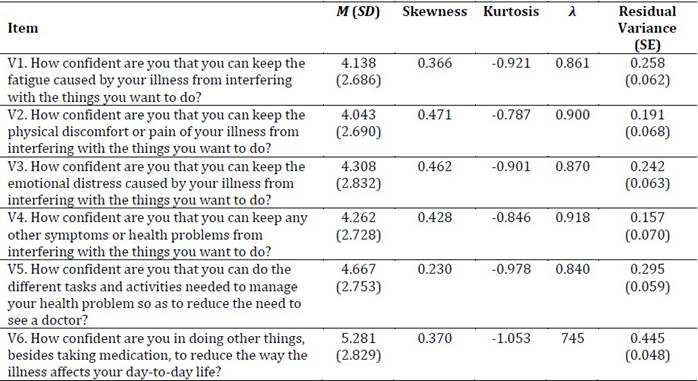
Responses were arranged on a 10-point Likert scale (1: not at all confident to 10: totally confident). This measure covers four main domains: (1) symptom control, (2) emotional function, (3) communication with health professionals, and (4) management of daily activities. The Brazilian version used in this study comprises the following six items: (1) How confident are you that you can keep the fatigue caused by your disease from interfering with the things you want to do? (2) How confident are you that you can keep the physical discomfort or pain caused by your disease from interfering with the things you want to do? (3) How confident are you that you can keep the emotional distress caused by your disease from interfering with the things you want to do? (4) How confident are you that you can prevent any other symptoms or health problems from interfering with the things you want to do? (5) How confident are you that you can perform the different tasks and activities needed to manage your health and reduce your need to see a doctor? (6) How confident are you that you can do other things besides taking medication to reduce the way the illness affects your day-to-day life?
Procedures
This study is part of the umbrella project titled “O sexto eixo da PNAISH: an inclusão da saúde mental como parte fundamental da política de saúde do homem” (“The sixth axis of the PNAISH: the inclusion of mental health as a fundamental part of the men’s health policy”), approved by the Research Ethics Committee Involving Human Beings of the Universidade Federal de Sergipe (CEP, registration number: 45521021.3.0000.5546). Data were collected online. Participants were recruited through nonprobabilistic convenience sampling using the snowball sampling technique. Digital invitations containing links to the online form were disseminated by the researchers via Instagram. The Informed Consent Form, containing information about the research and ethical aspects, was included on the first page of the form, and participants could only access the questionnaire items after confirming consent.
Data Analysis
Confirmatory Factor Analysis
Data analysis was performed using JASP (version 0.19.3). A CFA (Brown, 2015) was conducted to test the unidimensional structure of the SEMCD-6, initially estimating free factor loadings and subsequently imposing moderate constraints, as recommended in the specialized literature. For the CFA, the Diagonally Weighted Least Squares (DWLS) estimation method was applied to a matrix of polychoric correlations, a procedure considered robust and appropriate for ordinal data such as SEMCD-6 scores. The adequacy of the correlation matrix was verified using Bartlett's test of sphericity and the Kaiser-Meyer-Olkin (KMO) index. Model fit was assessed using the root mean square error of approximation (RMSEA), comparative fit index (CFI), non-normed fit index (NNFI), and goodness-of-fit index (GFI). Additionally, standardized factor loadings were examined, with values above 0.70 expected to indicate adequate factor representation; communalities were inspected, and potential residual correlations between items were investigated. Convergent validity, defined as the extent to which items converge to explain the latent factor (self-efficacy), was examined using the average variance extracted (AVE), and reliability was estimated using composite reliability (CR).
Relationship Among Self-Efficacy, Anxiety, and Depression
Descriptive statistics were computed for self-efficacy, anxiety, and depression scores measured using the SEMCD-6, PHQ-9, and GAD-7 scales. The clinically established cutoff points for the presence of moderate to severe symptoms of anxiety (GAD-7 ≥ 10) and depression (PHQ-9 ≥ 10) were applied (Kroenke et al., 2001; Spitzer et al., 2006). Next, distribution normality was assessed using the Shapiro-Wilk test; results supported the use of nonparametric correlations. Spearman’s correlation coefficients were calculated to evaluate associations between self-efficacy scores (SEMCD-6) and mental health variables (PHQ-9 and GAD-7). To examine the convergent validity of the SEMCD-6, groups defined by the cutoff points of the mental health scales (PHQ-9 and GAD-7) were compared. Differences in mean SEMCD-6 scores between participants with minimal to mild symptoms and those with moderate to severe symptoms were evaluated with independent-samples t tests, with effect sizes calculated as Cohen's d. Thresholds of 0.20 (small), 0.50 (medium), and 0.80 (large) were used to assess the clinical relevance of observed differences.
Results
Confirmatory Factor Analysis
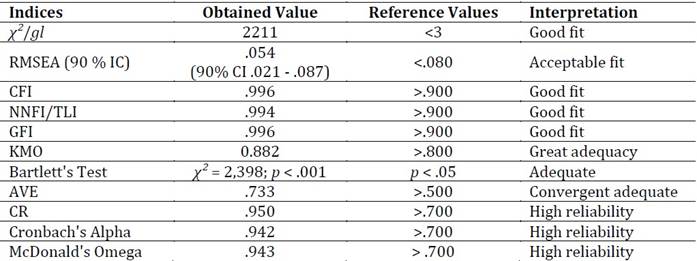
Initially, the adequacy of the correlation matrix for factorability was supported by the KMO index (KMO = .882) and Bartlett's test of sphericity (χ² = 2,398, p < .001). CFA, estimated with DWLS, tested the unidimensional structure of the SEMCD-6. The factor loadings of the six items (see Table 1) were strong, ranging from .752 to .925. As shown in Table 2, the model exhibits excellent fit indices. The instrument also demonstrated excellent internal consistency (α = .942; ω = .943) and convergent validity (AVE = .733; CR = .950), with all indicators meeting the reference criteria. Together, these results (Table 2) support the robustness of the unidimensional SEMCD-6 structure in this sample.
Relationship Among Self-Efficacy, Anxiety, and Depression
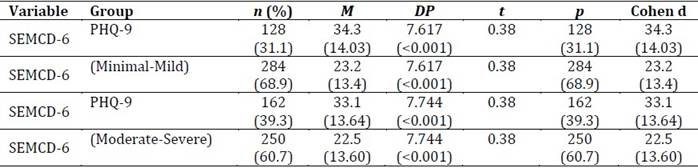
The descriptive statistics showed that 69 % (n = 284) of participants exhibited moderate to severe depressive symptomatology (PHQ-9 ≥ 10), while 60.7 % (n = 250) (Table 3) exhibited moderate to severe anxious symptomatology (GAD-7 ≥ 10).
Correlation analysis revealed significant negative associations between SEMCD-6 scores and measures of anxiety and depression. These small-to-moderate negative correlations indicate that higher self-efficacy in chronic disease management is associated with lower depressive and anxious symptomatology, consistent with the literature (Cao et al., 2022; Wang et al., 2022; Wu et al., 2013). Comparisons between groups revealed significant differences in self-efficacy scores. As detailed in Table 4, participants with “Minimal-Mild” depressive symptomatology had significantly higher mean SEMCD-6 scores than those with “Moderate-Severe” symptomatology (p < .001, d = 0.38). A similar pattern was observed when comparing groups by anxious symptomatology: participants with “Minimal-Mild” symptoms had significantly higher mean self-efficacy scores than those with “Moderate-Severe” symptomatology (p < .001, d = 0.38). The small-to-moderate effect sizes reinforce the clinical relevance of these differences, indicating that depressive and anxiety symptoms are associated with lower levels of self-efficacy in managing health conditions.
Discussion
The present study aimed to evaluate the unidimensional structure of the SEMCD-6 in a Brazilian sample of patients with chronic diseases and investigate the relationships between self-efficacy, depressive symptomatology, and anxious symptomatology. The results indicated a unidimensional structure for the scale with excellent validity based on internal structure and relationships with other variables, as theoretically expected. These findings support the relevance of its use for measuring self-efficacy in the management of chronic diseases in Brazil.
The SEMCD-6 factor structure has been consistently validated in other countries (Campos-Romero et al., 2023; Choi et al., 2024; Cudris-Torres et al., 2023; Freund et al., 2013; Hazumi et al., 2024; Marconcin et al., 2021; Ritter & Lorig, 2014). In this study, CFA validated this structure in the Brazilian context, with fit indices (χ²/gl = 2.211; NNFI = .994; CFI = .996; GFI = .996; RMSEA = .054) exceeding those reported in some international studies (Campos-Romero et al., 2023; Cudris-Torres et al., 2023; Hazumi et al., 2024). These results align with international findings, reinforcing the plausibility of the unidimensional model. It was found that the SEMCD-6 was best represented by a total score, reflecting its unidimensionality and strong item loadings on a single factor. High factor loadings (.752-.925) and communalities (.566-.856) indicated a strong association between items and the self-efficacy construct. The unidimensionality of a measure is desirable in a test, as it reflects homogeneity, which is central to the psychological instrument development process (Vitória et al., 2006).
Internal consistency was excellent (α = .942; ω = .943), surpassing values reported in previous validations, which ranged from .791 to .93 (Choi et al., 2024; Cudris-Torres et al., 2023; Marconcin et al., 2021) and .93 for McDonald's ω (Choi et al., 2024). Convergent validity was examined using AVE, with values greater than .50 expected, and construct reliability was assessed by CR, with values above .70 indicating high reliability. Regarding the validity of the SEMCD-6, the instrument showed statistically significant negative correlations with the PHQ-9, which measures depressive symptomatology (r = -.346), and with the GAD-7, which assesses the presence and intensity of anxiety symptoms (r = -.362). In summary, the higher the self-efficacy in chronic disease management, the lower the levels of depressive and anxious symptomatology. Robust evidence indicates that these variables are associated with low self-efficacy, which is identified as one of the factors related to the development of depressive and anxious symptomatology in patients with chronic conditions (Eindor-Abarbanel et al., 2021; Ren et al., 2024). These correlations align with Bandura's (1986) Social Cognitive Theory, which posits a bidirectional relationship between self-efficacy and affective state.
The high prevalence of depressive (69 %) and anxious (60.7 %) symptomatology in the study sample is alarming and consistent with previous studies on mental health in patients with chronic conditions in Brazil (Aleixo et al., 2024; Rabelo et al., 2024; Silva et al., 2024). These rates exceed global estimates (COVID-19 Mental Disorders Collaborators, 2021), possibly reflecting the Brazilian context, such as limited access to mental healthcare and health system overload. Validation of the SEMCD-6 in Brazil provides a tool for screening and monitoring self-efficacy in clinical contexts, especially in primary care. Its brevity and ease of use make it suitable for routine application, including by professionals who are not mental health specialists. Given the associations identified, interventions to strengthen self-efficacy, such as structured self-management programs, could benefit Brazilian patients with chronic diseases and may alleviate depressive and anxiety symptoms. Such programs have shown efficacy in international settings (Campbell et al., 2021; Lorig et al., 2014; Palmeirim et al., 2024) and can be adapted for Brazil. Within the Unified Health System, implementing regular self-efficacy assessments could enable early identification of patients with greater psychological vulnerability, allowing preventive interventions and more efficient allocation of mental health resources.
One limitation of this study is the predominantly female sample (92 %) and high educational level (66 % with higher or postgraduate education), which may limit its generalizability to the Brazilian population with chronic diseases. This composition does not represent people with chronic diseases in Brazil, who exhibit greater sex diversity and lower average educational attainment, according to data from the Brazilian Institute of Geography and Statistics (2020). Another limitation is the cross-sectional design, which precludes causal inference regarding self-efficacy, depression, and anxiety. Longitudinal studies are needed to clarify directionality and track how self-efficacy changes over the course of chronic diseases. Future studies should address these limitations by including more diverse, representative Brazilian samples.
The contributions of this study are as follows: first, it is the first to evaluate the internal structure of the SEMCD-6 in Brazil, supporting its adequacy for assessing self-efficacy in a Brazilian population with chronic diseases. An adequate sample size and excellent psychometric indicators across analyses demonstrate the instrument's robustness. Finally, the SEMCD-6 is recommended for research on self-efficacy in chronic diseases because it is brief and easy to understand, administer, and score.
This study confirmed the SEMCD-6’s unidimensional structure and validity in Brazil, providing a reliable instrument to assess self-efficacy in patients with chronic diseases. Significant associations between self-efficacy and depressive and anxiety symptoms underscore the need for integrated approaches addressing the psychological aspects of chronic disease management. The validated SEMCD-6 offers Brazilian researchers and health professionals an accessible tool to identify patients with low self-efficacy and, consequently, a greater risk of unfavorable health outcomes. Interventions that strengthen self-efficacy may improve clinical outcomes and quality of life for patients with chronic conditions in Brazil
References
-
Aleixo, S. B., Pulido, J. Z., Parmanhane, N., Sartoli, A. A., & Siller, A. P. (2024). Mental health prevalence in Brazil: Understanding anxiety and depression in southern Capixaba region. Journal of Clinical Oncology, 42(16). https://doi.org/10.1200/jco.2024.42.16_suppl.e23295
» https://doi.org/10.1200/jco.2024.42.16_suppl.e23295 - American Psychiatric Association. (1994). Diagnostic and statistical manual of mental disorders (4a ed.). American Psychiatric Association.
-
Bandura, A. (2004). Health promotion by social cognitive means. Health Education & Behavior, 31(2), 143-164. https://doi.org/10.1177/1090198104263660
» https://doi.org/10.1177/1090198104263660 -
Bandura, A. (1977). Self-efficacy: Toward a unifying theory of behavioral change. Psychological Review, 84(2), 191-215. https://doi.org/10.1037/0033-295X.84.2.191
» https://doi.org/10.1037/0033-295X.84.2.191 - Bandura, A. (1986). Social foundations of thought and action: A social cognitive theory Prentice-Hall, Inc.
- Bandura, A. (1997). Self-efficacy: The exercise of control W. H. Freeman and Company.
-
Borsa, J. C., Damásio, B. F., & Bandeira, D. R. (2012). Adaptação e validação de instrumentos psicológicos entre culturas: algumas considerações. Paidéia, 22(53), 423-432. https://doi.org/10.1590/1982-43272253201314
» https://doi.org/10.1590/1982-43272253201314 -
Brockwell, C., Stockl, A., Clark, A., Barton, G., Pasteur, M., Fleetcroft, R., Hill, J., & Wilson, A. M. (2020). Randomised controlled trial of the effect, cost and acceptability of a bronchiectasis self-management intervention. Chronic Respiratory Disease, 17, 1-13. https://doi.org/10.1177/1479973120948077
» https://doi.org/10.1177/1479973120948077 - Brown, T. A. (2015). Confirmatory factor analysis for applied research (2nd ed.). Guilford Publications.
-
Campbell, D., Wilson O’Raghallaigh, J., O’Doherty, V., Lunt, V., Lowry, D., Mulhern, S., Lonergan, K., McSharry, K., Lynnott, J., Forry, M., Evans, D., Pardoe, P., Ward, H., & Hevey, D. (2021). Investigating the impact of a chronic disease self-management programme on depression and quality of life scores in an Irish sample. Psychology, Health & Medicine, 27(7), 1609-1617. https://doi.org/10.1080/13548506.2021.1916953
» https://doi.org/10.1080/13548506.2021.1916953 -
Campos-Romero, S., Lucchini Raies, C., Rodríguez, C., Muñoz, P., Márquez-Doren, F., & Bustamante-Troncoso, C. (2023). Adaptación cultural y validación del instrumento de Autoeficacia para el Manejo de Enfermedades Crónicas en población chilena. Revista Médica de Chile, 151(12), 1596-1603. https://doi.org/10.4067/s0034-98872023001201596
» https://doi.org/10.4067/s0034-98872023001201596 -
Cao, Q., Gong, J., Chen, M., Lin, Y., & Li, Q. (2022). The dyadic effects of self-efficacy on quality of life in advanced cancer patient and family caregiver dyads: The mediating role of benefit finding, anxiety, and depression. Journal of Oncology https://doi.org/10.1155/2022/3073358
» https://doi.org/10.1155/2022/3073358 -
Carvalho Malta, D., Ivata Bernal, R. T., Guimarães Lima, M., Caribé de Araújo, S. S., Alves da Silva, M. M., Freitas, M. I. de F., & Berti de Azavedo Barros, M. (2017). Noncommunicable diseases and the use of health services: Analysis of the National Health Survey in Brazil. Revista de Saude Publica, 51(1). https://doi.org/10.1590/S1518-8787.2017051000090
» https://doi.org/10.1590/S1518-8787.2017051000090 -
Choi, A. K., Rapoport, C. S., Kwakkenbos, L., Carrier, M., Gottesman, K., Roesch, S. C., Harel, D., Thombs, B. D., & Malcarne, V. L. (2024). Measurement equivalence of the English and French versions of the self-efficacy to manage chronic disease scale: A scleroderma patient-centered intervention network (SPIN) study. Quality of Life Research, 33(3), 843-851. https://doi.org/10.1007/s11136-023-03571-2
» https://doi.org/10.1007/s11136-023-03571-2 -
COVID-19 Mental Disorders Collaborators. (2021). Global prevalence and burden of depressive and anxiety disorders in 204 countries and territories in 2020 due to the COVID-19 pandemic. Lancet, 398(10312), 1700-1712. https://doi.org/10.1016/S0140-6736(21)02143-7
» https://doi.org/10.1016/S0140-6736(21)02143-7 -
Cudris-Torres, L., Alpi, S. V., Barrios-Núñez, Á., Arrieta, N. G., Campuzano, M. L., Olivella-López, G., Hernández-Lalinde, J., Bermúdez, V., Pérez, O. L., Niño-Vega, J. A., Navarro-Obeid, J., Fernández, R. J., & Javela, J. J. (2023). Psychometric properties of the self-efficacy scale for chronic disease management (SEMCD-S) in older Colombian adults. BMC Psychology, 11(1). https://doi.org/10.1186/s40359-023-01347-4
» https://doi.org/10.1186/s40359-023-01347-4 -
Dabrowski, B., McKibbin, C., Carrico, C., Goodwin, L., Carling, S., Punke, E., Teply, A., & Schenck, S. (2024). Loneliness and self-efficacy among individuals with chronic conditions: The mediating role of depression. Innovation in Aging, 8(1), 935-935. https://doi.org/10.1093/geroni/igae098.3017
» https://doi.org/10.1093/geroni/igae098.3017 -
De Lima Osório, F., Vilela Mendes, A., Crippa, J. A., & Loureiro, S. R. (2009). Study of the discriminative validity of the PHQ-9 and PHQ-2 in a sample of Brazilian women in the context of primary health care. Perspectives in Psychiatric Care, 45(3), 216-227. https://doi.org/10.1111/j.1744-6163.2009.00224.x
» https://doi.org/10.1111/j.1744-6163.2009.00224.x -
Dunke Pereira, L., Veronez da Cunha Bellinati, N., & Aparecida Kanan, L. (2018). Self-Efficacy for Managing Chronic Disease 6-Item Scale: Avaliação da autoeficácia no gerenciamento da doença crônica. Revista Cuidarte, 9(3), 1-11. https://doi.org/10.15649/cuidarte.v9i3.561
» https://doi.org/10.15649/cuidarte.v9i3.561 -
Eindor-Abarbanel, A., Naftali, T., Ruhimovich, N., Bar-Gil Shitrit, A., Sklerovsky-Benjaminov, F., Konikoff, F., Matalon, S., Shirin, H., Milgrom, Y., Ziv-Baran, T., & Broide, E. (2021). Important relation between self-efficacy, sense of coherence, illness perceptions, depression and anxiety in patients with inflammatory bowel disease. Frontline Gastroenterology, 12(7), 601-607. https://doi.org/10.1136/flgastro-2020-101412
» https://doi.org/10.1136/flgastro-2020-101412 -
Ezenwaka, C. E., Nwankwo, C. U., Analike, R. A., Moriyama, M., Afonne, A. J., Ottiwu, P. C., Onyeje, B. T., Okoli, J. N., Amaechi, I. A., & Ahaneku, G. I. (2024). The baseline self-efficacy scores to manage chronic diseases amongst Nigerian patients with non-communicable diseases are sub-optimal. INQUIRY: The Journal of Health Care Organization, Provision, and Financing, 61 https://doi.org/10.1177/00469580241248102
» https://doi.org/10.1177/00469580241248102 -
Freund, T., Gensichen, J., Goetz, K., Szecsenyi, J., & Mahler, C. (2013). Evaluating self-efficacy for managing chronic disease: Psychometric properties of the six-item Self-Efficacy Scale in Germany. Journal of Evaluation in Clinical Practice, 19(1), 39-43. https://doi.org/10.1111/j.1365-2753.2011.01764.x
» https://doi.org/10.1111/j.1365-2753.2011.01764.x -
Gao, Y., Sun, D., Yu, C., Qin, F., Li, F., Jiang, Y., Du, C., & Liu, M. (2021). The mediating role of self-efficacy of managing chronic disease between the dual-mode of self-control and the fatigue in breast cancer patients undergoing postoperative chemotherapy. Journal of Cancer Research and Therapeutics, 17(7), 1643-1650. https://doi.org/10.4103/jcrt.jcrt_1422_21
» https://doi.org/10.4103/jcrt.jcrt_1422_21 -
Hazumi, M., Kataoka, M., Nakashita, A., Usuda, K., Miyake, M., Kamikawa, C., Nishi, D., & Kuroda, N. (2024). Psychometric property of the Japanese version of self-efficacy for managing chronic disease scale in individuals with chronic diseases. Heliyon, 10(22). https://doi.org/10.1016/j.heliyon.2024.e40218
» https://doi.org/10.1016/j.heliyon.2024.e40218 -
Instituto Brasileiro de Geografia e Estatística. (2020). Pesquisa nacional de saúde 2019: Informações sobre domicílios, acesso e utilização dos serviços de saúde IBGE. https://biblioteca.ibge.gov.br/visualizacao/livros/liv101748.pdf
» https://biblioteca.ibge.gov.br/visualizacao/livros/liv101748.pdf -
Incirkuş, K., & Nahcivan, N. (2020). Validity and reliability study of the Turkish version of the Self-Efficacy for Managing Chronic Disease 6-Item Scale. Turkish Journal of Medical Sciences, 50(5), 1254-1261. https://doi.org/10.3906/sag-1910-13
» https://doi.org/10.3906/sag-1910-13 -
Janjua, S., Banchoff, E., Threapleton, C. J., Prigmore, S., Fletcher, J., & Disler, R. T. (2021). Digital interventions for the management of chronic obstructive pulmonary disease. Cochrane Database of Systematic Reviews, 4(4). https://doi.org/10.1002/14651858.CD013246.pub2
» https://doi.org/10.1002/14651858.CD013246.pub2 -
Kroenke, K., Spitzer, R. L., & Williams, J. B. (2001). The PHQ-9. Journal of General Internal Medicine, 16(9), 606-613. https://doi.org/10.1046/j.1525-1497.2001.016009606.x
» https://doi.org/10.1046/j.1525-1497.2001.016009606.x -
Kroenke, K., Spitzer, R. L., Williams, J. B., Monahan, P. O., & Löwe, B. (2007). Anxiety disorders in primary care: Prevalence, impairment, comorbidity, and detection. Annals of Internal Medicine, 146(5), 317-325. https://doi.org/10.7326/0003-4819-146-5-200703060-00004
» https://doi.org/10.7326/0003-4819-146-5-200703060-00004 -
Leite, M. D., & Faro, A. (2022). Evidências de validade da GAD-7 em adolescentes brasileiros. Psico-USF, 27(2), 345-356. https://doi.org/10.1590/1413-82712022270211
» https://doi.org/10.1590/1413-82712022270211 -
Lorig, K. R., Sobel, D. S., Ritter, P. L., Laurent, D., & Hobbs, M. (2001). Effect of a self-management program on patients with chronic disease. Effective Clinical Practice, 4(6), 256-262. https://pubmed.ncbi.nlm.nih.gov/11769298/
» https://pubmed.ncbi.nlm.nih.gov/11769298/ -
Lorig, K., Ritter, P. L., Pifer, C., & Werner, P. (2014). Effectiveness of the chronic disease self-management program for persons with a serious mental illness: A translation study. Community Mental Health Journal, 50(1), 96-103. https://doi.org/10.1007/s10597-013-9615-5
» https://doi.org/10.1007/s10597-013-9615-5 -
Ma, L., Zhang, Y., Lv, G., Zhuang, H., Zhang, W., & Jiang, H. (2024). Integrated factors associated with ostomy patients' self-management behaviors and peristomal skin complications using structural equation model: A cross-sectional study in Shanghai, China. Research Square https://doi.org/10.21203/rs.3.rs-4341187/v1
» https://doi.org/10.21203/rs.3.rs-4341187/v1 -
Marconcin, P., Tomé, G., Carnide, F., Yázigi, F., Campos, P., Pais, S., & Espanha, M. (2021). Translation, cultural adaptation and validation of the Self-Efficacy to Manage Chronic Disease 6-Item Scale for European Portuguese. Acta Reumatologica Portuguesa, 46(1), 15-22. https://pubmed.ncbi.nlm.nih.gov/33820897/
» https://pubmed.ncbi.nlm.nih.gov/33820897/ -
McAuley, E. A., Ross, L. A., Hannan-Jones, M. T., & MacLaughlin, H. L. (2025). Diet quality, self-efficacy, and health literacy in adults with chronic kidney disease: A cross-sectional study. Journal of Renal Nutrition, 35(3), 410-418. https://doi.org/10.1053/j.jrn.2024.06.005
» https://doi.org/10.1053/j.jrn.2024.06.005 -
Melin, J., Fors, A., Jakobsson, S., Krabbe, D., & Björkman, I. (2023). Self-efficacy to manage chronic disease (SEMCD) scale: Translation and evaluation of measurement properties for a Swedish version. Archives of Public Health, 81(1). https://doi.org/10.1186/s13690-022-01022-x
» https://doi.org/10.1186/s13690-022-01022-x -
Ministério da Saúde. (2023). Nota Técnica Nº 25/2023-CGDANT/DAENT/SVSA/MS https://www.gov.br/saude/pt-br/centrais-de-conteudo/publicacoes/notas-tecnicas/2023/nota-tecnica-no-25-2023-cgdant-daent-svsa-ms
» https://www.gov.br/saude/pt-br/centrais-de-conteudo/publicacoes/notas-tecnicas/2023/nota-tecnica-no-25-2023-cgdant-daent-svsa-ms -
Moreno, A. L., DeSousa, D. A., Souza, A. M., Manfro, G. G., Salum, G. A., Koller, S. H., Osório, F. L., & Crippa, J. A. (2016). Factor structure, reliability, and item parameters of the Brazilian-Portuguese version of the GAD-7 questionnaire. Temas em Psicologia, 24(1), 367-376. https://doi.org/10.9788/tp2016.1-25
» https://doi.org/10.9788/tp2016.1-25 -
Müller, F., Hansen, A., Kube, M., Arnetz, J. E., Alshaarawy, O., Achtyes, E. D., & Holman, H. T. (2024). Translation, cultural adaption, and validation of the PHQ-9 and GAD-7 in Kinyarwanda for primary care in the United States. medRxiv https://doi.org/10.1101/2024.04.18.24306010
» https://doi.org/10.1101/2024.04.18.24306010 -
Newman, M. W. (2022). Value added? A pragmatic analysis of the routine use of PHQ-9 and GAD-7 scales in primary care. SSRN Electronic Journal https://doi.org/10.2139/ssrn.4175595
» https://doi.org/10.2139/ssrn.4175595 -
Oktarina, Y., & Sulistiawan, A. (2020). The self-efficacy in hemodialysis patients. Proceedings of the 2nd Sriwijaya International Conference of Public Health (SICPH 2019) https://doi.org/10.2991/ahsr.k.200612.061
» https://doi.org/10.2991/ahsr.k.200612.061 -
Palmeirim, M. S., Faber, N. H., Sørensen, K., Münter, L., Drachmann, D., Prytherch, H., Berari, D., Curteanu, A., Silitrari, N., Sava, V., & Secula, F. (2024). A pilot of a chronic disease self-management programme in Moldova. International
Journal of Health Promotion and Education, 1-13. https://doi.org/10.1080/14635240.2024.2324797
» https://doi.org/10.1080/14635240.2024.2324797 - Pasquali, L. (2010). Instrumentação psicológica: Fundamentos e práticas Artmed.
-
Rabelo, L. M., Covre Jaques, S., Szlichta, L. D., & Bessa, M. A. (2024). Prevalência de transtorno de depressão e ansiedade em pacientes com asma grave. Arquivos Médicos dos Hospitais e da Faculdade de Ciências Médicas da Santa Casa de São Paulo https://doi.org/10.26432/1809-3019.2024.69.009
» https://doi.org/10.26432/1809-3019.2024.69.009 -
Ren, D., Tamres, L. K., & Lingler, J. H. (2024). Exploring the impact of self‐efficacy on depression and anxiety symptoms in mild cognitive impairment patients and their care partners: A dyadic analysis. Alzheimer’s & Dementia: The Journal of the Alzheimer’s Association, 20(S4). https://doi.org/10.1002/alz.085568
» https://doi.org/10.1002/alz.085568 -
Ritter, P. L., & Lorig, K. (2014). The English and Spanish Self-Efficacy to Manage Chronic Disease Scale measures were validated using multiple studies. Journal of Clinical Epidemiology, 67(11), 1265-1273. https://doi.org/10.1016/j.jclinepi.2014.06.009
» https://doi.org/10.1016/j.jclinepi.2014.06.009 -
Silva da Silveira, A. D., Monteiro dos Santos, J. E., de Camargo Cancela, M., & Bezerra de Souza, D. L. (2023). Estimated multimorbity among young Brazilians: results of the 2019 National Health Survey. Ciencia & Saude Coletiva, 28(9), 2699-2708. https://doi.org/10.1590/1413-81232023289.11842022
» https://doi.org/10.1590/1413-81232023289.11842022 -
Sillva, P. H., Kaczen, M. E., Machado, G. C., Neto, J. H., Zambrano, D. N., Carli, M. A., Spiering, I., Bueno, E. C., & Catto, R. (2024). Prevalence of anxiety and depression disorders in patients with inflammatory bowel disease in a city in southern Brazil. Brazilian Journal of Health Review, 7(9). https://doi.org/10.34119/bjhrv7n9-022
» https://doi.org/10.34119/bjhrv7n9-022 -
Spitzer, R. L., Kroenke, K., Williams, J. B., & Löwe, B. (2006). A brief measure for assessing generalized anxiety disorder. Archives of Internal Medicine, 166(10). https://doi.org/10.1001/archinte.166.10.1092
» https://doi.org/10.1001/archinte.166.10.1092 -
Theme Filha, M. M., de Souza Junior, P. R. B., Damacena, G. N., & Szwarcwald, C. L. (2015). Prevalência de doenças crônicas não transmissíveis e associação com autoavaliação de saúde: Pesquisa Nacional de Saúde, 2013. Revista Brasileira de Epidemiologia, 18(2), 83-96. https://doi.org/10.1590/1980-5497201500060008
» https://doi.org/10.1590/1980-5497201500060008 -
Vitória, F., Almeida, L. S., & Primi, R. (2006). Unidimensionalidade em testes psicológicos: Conceito, estratégias e dificuldades na sua avaliação. Revista de Psicologia da Vetor Editora, 7(1), 1-7. https://pepsic.bvsalud.org/pdf/psic/v7n1/v7n1a02.pdf
» https://pepsic.bvsalud.org/pdf/psic/v7n1/v7n1a02.pdf -
Wang, L., Luo, J., Li, Y., Zhou, Y., & Wang, W. (2022). Social support, anxiety, and depression in patients with prostate cancer: complete mediation of self-efficacy. Supportive Care in Cancer: Official Journal of the Multinational Association of Supportive Care in Cancer, 30(8), 6851-6856. https://doi.org/10.1007/s00520-022-07065-8
» https://doi.org/10.1007/s00520-022-07065-8 -
Wistiani, N. M., Puspawati, N. L., & Pamungkas, M. A. (2022). Self-efficiency and quality of life coronary heart disease patients: A descriptive study. Basic and Applied Nursing Research Journal, 3(2), 51-57. https://doi.org/10.11594/banrj.03.02.04
» https://doi.org/10.11594/banrj.03.02.04 -
World Health Organization. (2018). Noncommunicable diseases country profiles 2018 https://www.who.int/publications/i/item/ncd-country-profiles-2018
» tps://www.who.int/publications/i/item/ncd-country-profiles-2018 -
Wu, S. F., Huang, Y. C., Lee, M. C., Wang, T. J., Tung, H. H., & Wu, M. P. (2013). Self-efficacy, self-care behavior, anxiety, and depression in Taiwanese with type 2 diabetes: A cross-sectional survey. Nursing & Health Sciences, 15(2), 213-219. https://doi.org/10.1111/nhs.12022
» https://doi.org/10.1111/nhs.12022 -
Wu, Y., Xiong, S., Zhu, G., Chen, X., Zhang, M., Gong, E., Li, C., Jia, P., Østbye, T., & Yan, L. L. (2024). Patient, family, and community factors associated with medication adherence among people with hypertension or diabetes: A cross-sectional analysis. Exploratory Research in Clinical and Social Pharmacy, 15 https://doi.org/10.1016/j.rcsop.2024.100482
» https://doi.org/10.1016/j.rcsop.2024.100482