Mechanisms of word identification in dyslexic children in Spanish dyslexic children: Do subtypes exist?
Abstract
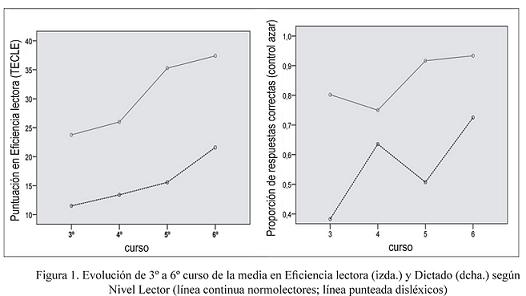
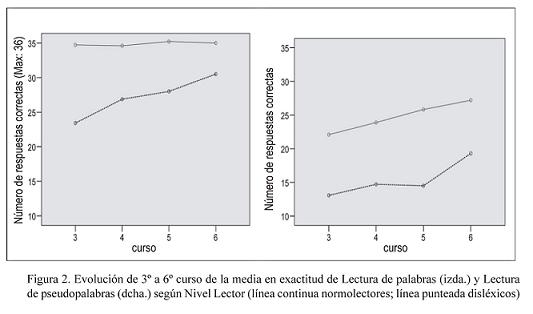
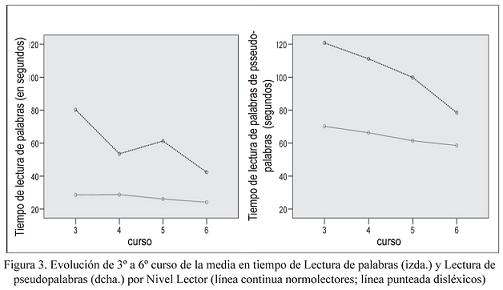
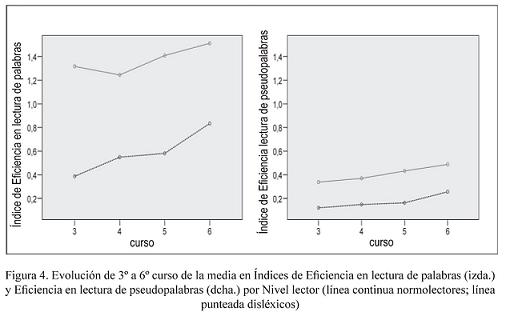
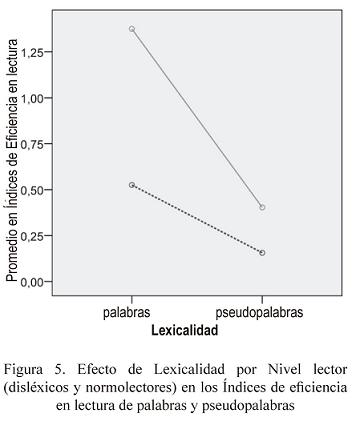
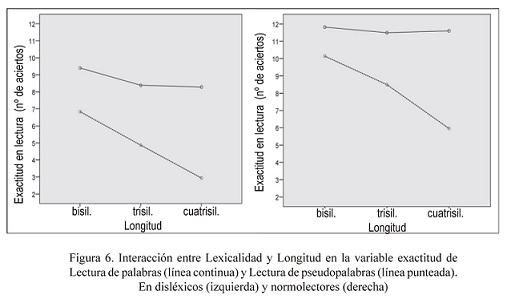
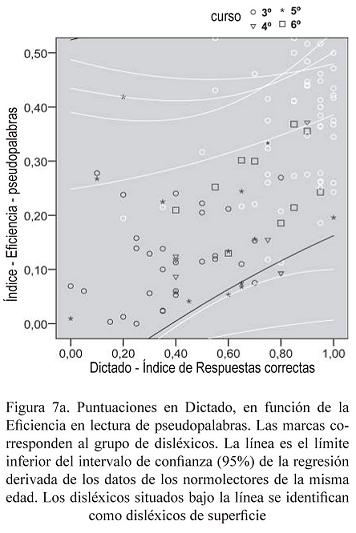
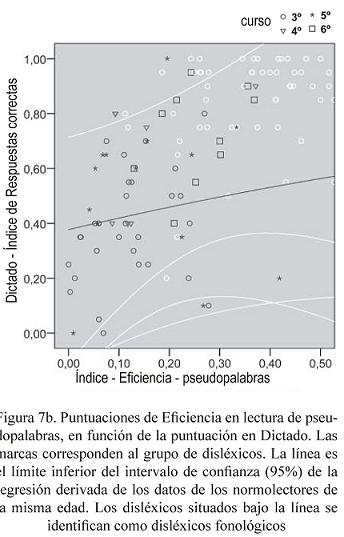
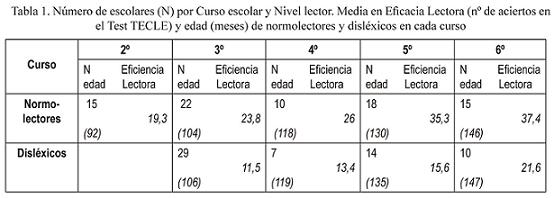
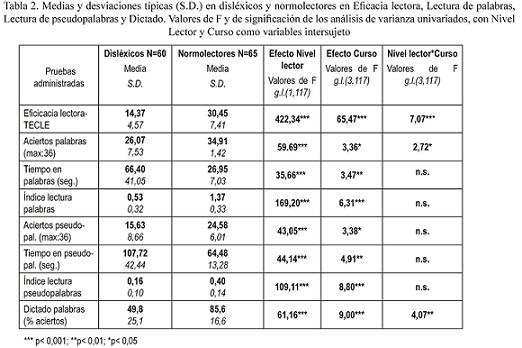
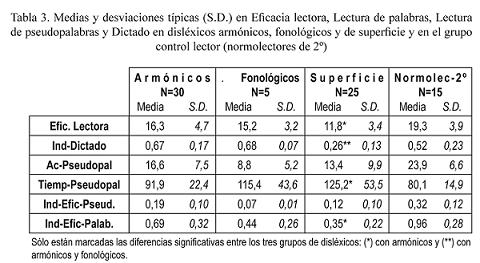
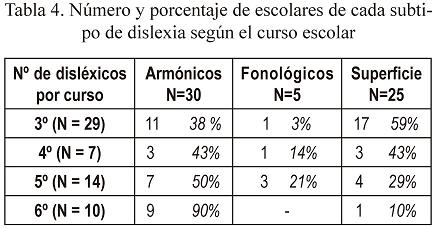
The reading efficiency level of primary education children at 3rd to 6th grade was assessed using a phrase reading test. Two groups were selected: dyslexics (n=60), which presented more than 2 years of specific reading retardation, and a control group (n=65) of age-equivalent normal readers. The aim of the study was to establish the existence of a deficit in the phonological processing mechanism (evaluated with a pseudo-word reading task) and, consequently, in the lexical-orthographic mechanism (evaluated with an inconsistent word spelling task). Dyslexic subtypes were detected by using the regression method, characterised by the fact that the score in one of the tasks was not correctly predicted by the score in the other. The global results indicate a substantial deficit in both phonological and orthographic tasks. Classification into subgroups showed that most dyslexics belonged to either “harmonic” or “surface” categories. No children could be clearly characterized as “phonological” dyslexics. The proportion of harmonic dyslexics increased with the school grade and reached 90% in 6th grade. The results are discussed in the framework of the self-teaching model. The absence of phonological dyslexics was explained by considering that these cases appear consistently in opaque orthographic systems, in which phonological coding is not reliable, and which would lead readers to memorize orthographic representations of words.
specific reading retardation; developmental dyslexia; phonological processing; dyslexia subtypes; self-teaching model
 Thumbnail
 Thumbnail
 Thumbnail
 Thumbnail
 Thumbnail
 Thumbnail
 Thumbnail
 Thumbnail