Trolling on Social Media. Psychological Well-being and Normal, Pathological, and Positive Personality
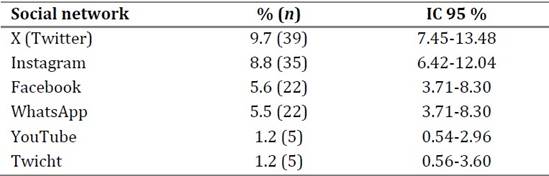
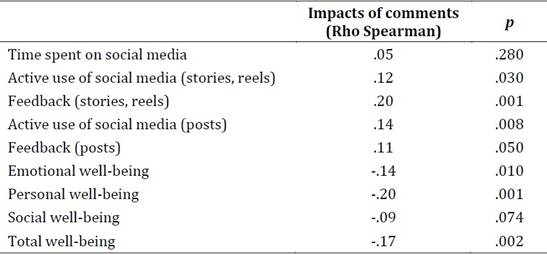
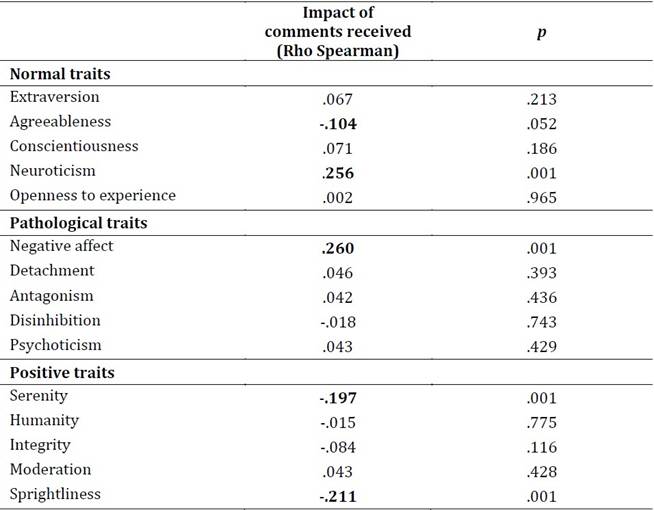
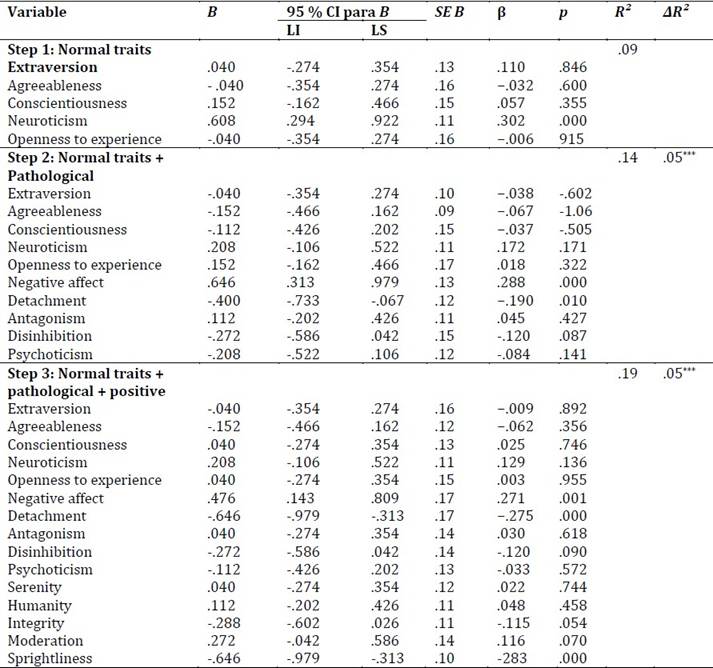
Objective. This study examined the relationships among the reception of negative comments on social media; psychological well-being; and normal, pathological, and positive personality traits. Method. A total of 799 social media users residing in Argentina participated (338 men, 461 women; M = 39.7 years, SD = 13.84). The following instruments were used: the Big Five Inventory, the Mental Health Continuum-Short Form, the Inventory of the Five Personality Continuums-Short Version, and an ad hoc survey on the reception of negative comments on social media. The design was cross-sectional, nonexperimental, and correlational. The results. The frequency of negative comments was less than 10 % across all analyzed social media platforms. The degree of self-perceived distress was significantly associated with active use of social media (r = .24, p < .001) and with lower levels of psychological well-being (r = -.30, p < .001). Normal personality traits explained 9 % of the variance in the level of distress; when pathological and positive traits were added, they accounted for an additional 10 % of the total. Conclusions. Distress associated with the reception of negative comments on social media is linked to lower well-being and to a personality profile characterized by neuroticism and negative affect. The inclusion of pathological and positive traits improves the explanation of distress beyond normal traits.
Keywords:
trolling; positive personality traits; pathological personality traits; normal personality traits; psychological well-being