Paranormal Beliefs and Understanding of Causality: Behavioral and Electrophysiological ERP N400 Response
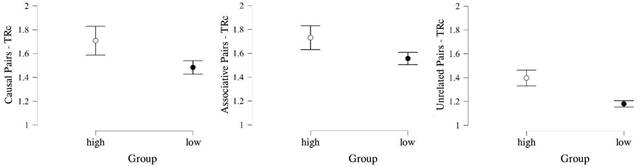
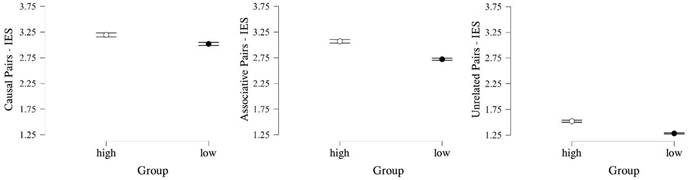
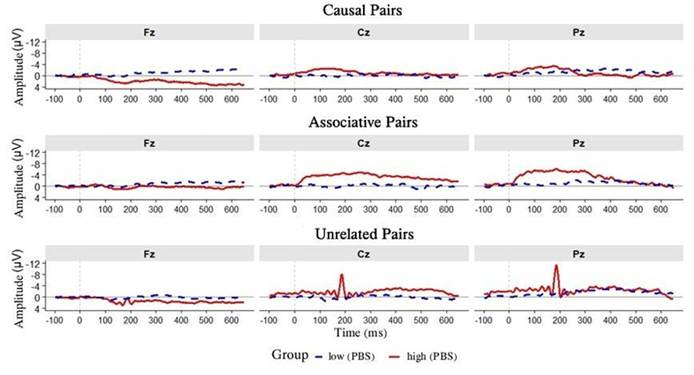
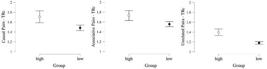
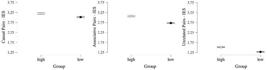
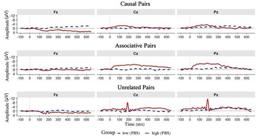
Paranormal beliefs are a widespread phenomenon, associated with intuitive thinking and cognitive biases. This study investigated differences in the semantic processing of causality between believers and sceptics. University students completed the Paranormal Beliefs Scale (PBS) and performed a judgement task with 150 word pairs (causal, associative, unrelated), with their behavioural and electroencephalogram (EEG) responses recorded. The results showed that the high-belief group was less efficient (Inverse Efficiency Score) across all conditions and less accurate (hits) on associative pairs. However, the evoked potential analysis revealed no significant differences between groups in the amplitude of the N400 component. Nevertheless, when the PBS scale was treated as a continuous variable in the analysis, a significant negative correlation was found between the total PBS score and the N400 amplitude difference for the causal vs. unrelated contrast. The results partially explain differences in the processing of causality between paranormal believers and sceptics.
Keywords:
paranormal belief; N400 ERP; causality; cognitive style
 Thumbnail
 Thumbnail
 Thumbnail
 Thumbnail
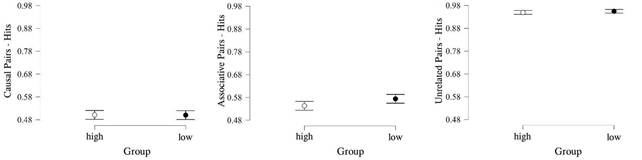 Figure 1: