Does deliberation improve civic competences in adolescents? A systematic review of deliberative experiments
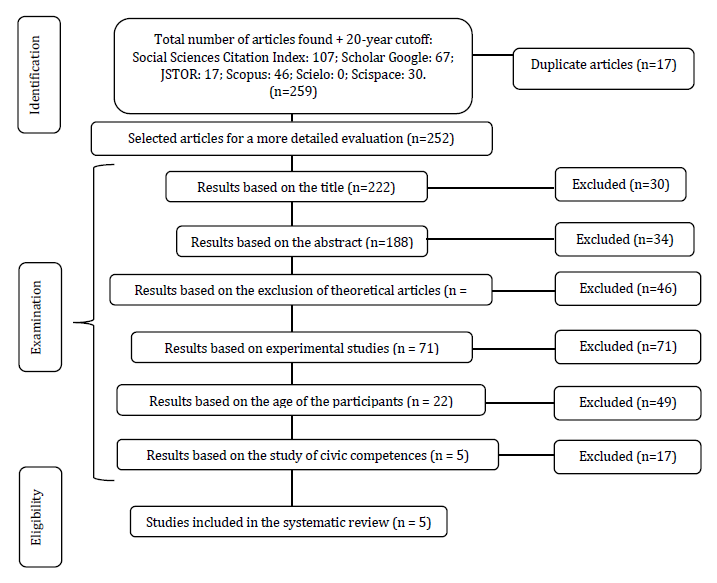
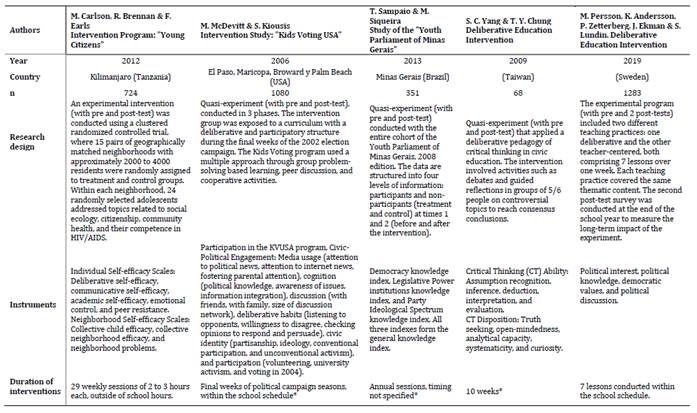
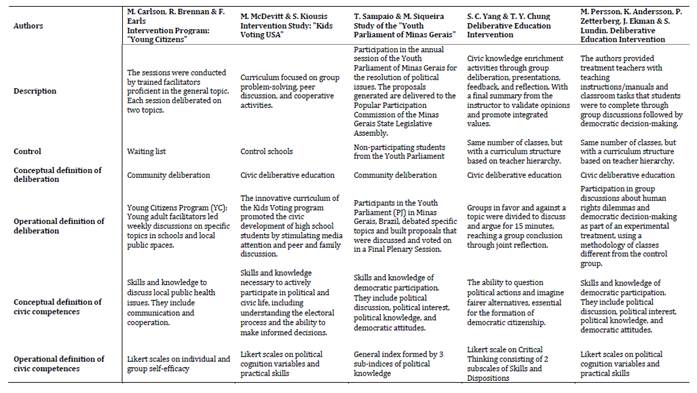
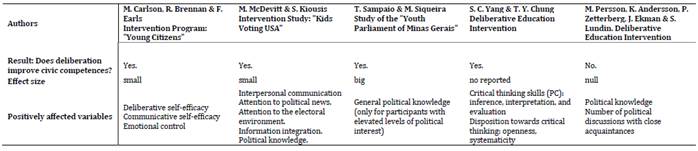
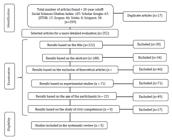
The deliberation process fosters citizen participation by enhancing civic competences such as political knowledge and interest, argumentative and deliberative quality, levels of political engagement, and tolerance for disagreement. However, is this indeed the case? Which civic competences are effectively modified after participating in a deliberative process? Despite extensive research on adults, there are few studies on adolescence, a pivotal stage for the development of civic competences. A systematic review was conducted following the PRISMA method to examine the effects of adolescent deliberation on their civic competences. A total of 252 articles were identified, but only five corresponding to experimental trials and were thus included in the present review. The results indicated that generally deliberation has positive effects on adolescents' civic competences. However, the reported effects are smaller in studies with larger sample sizes, and one study found no effects. Therefore, while there are indications that deliberation can enhance civic competences in adolescents, this enhancement would be modest, and only certain types of interventions would produce it.
Keywords:
deliberation; civic competences; adolescents; experimental psychology
 Thumbnail