Effects of depression on cognition of patients with mild neurocognitive disorder due to possible Alzheimer’s disease
Abstract
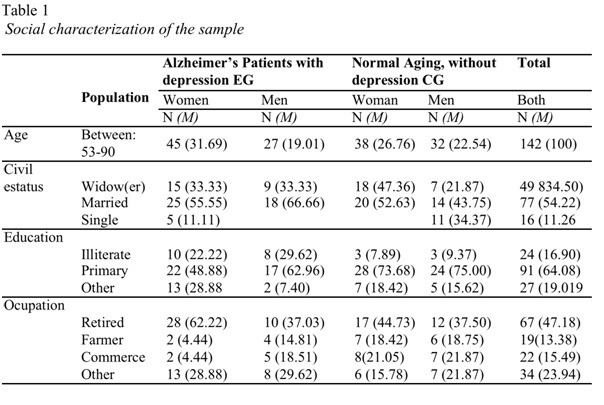
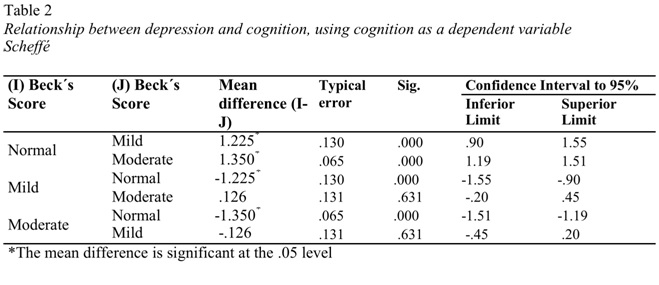
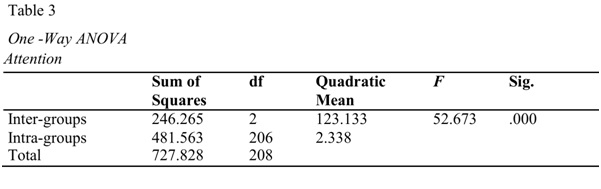
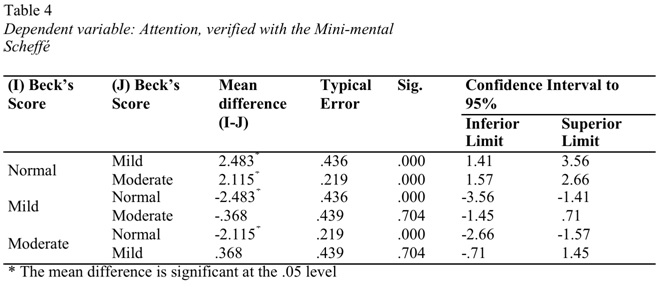
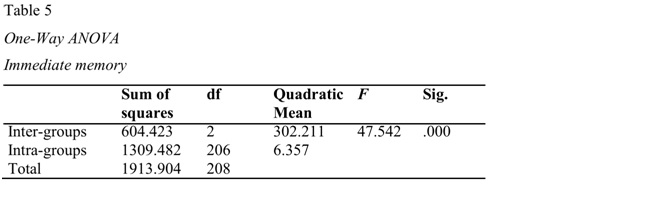
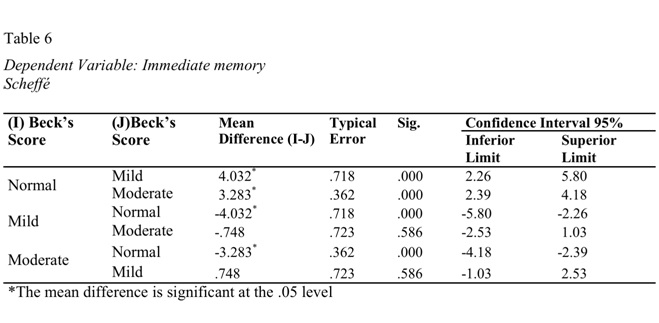
Abstract: Objective: To identify the level of the relationship between depression and cognitive functions of early-stage Alzheimer’s patient. Theoretical framework: Depression is a risk factor for dementia and consequently Alzheimer’s disease (AD), due to loss of memory, which tends to be associated with difficulties in orientation, learning, and recognition. Methodology: A total of 142 older adults participated in this study. Participants were divided into two groups, with and without a clinical diagnosis of Alzheimer’s disease and depression. Participants were evaluated through the application of the Beck Depression Inventory-II (BDI-II) and the Folstein Mini-Mental State Exam (MMSE). Results: We found statistically significant effects between cognition and depression in older adults with early-stage AD. Conclusions: We conclude that there is a high possibility of cognitive changes of patients with Alzheimer’s, when their disease is associated with depression. Furthermore, the results suggest cognition is responsible for the behavioral alterations of the patient, as a consequence of worsening depression
Key Words:
Alzheimer’s disease; cognition; behavior; depression; neurocognitive disorder