Gaslighting in Intimate Relationships: A Scoping Review
Abstract:
This study carried out a scoping review on gaslighting in intimate relationships, with the aim of analyzing how the scientific literature has studied the phenomenon in adults, without restricting the studies according to sex, gender identity or the type of affective relationship of the partners involved. The search was conducted in the databases Scopus, CINAHL, MEDLINE, PsycNet, PubMed, PsycInfo and Sage Journals, and a complementary search in Google Scholar with the aim of screening out national studies not indexed in high-impact journals. The findings resulted in 14 studies considered eligible for inclusion in the main analysis. The results showed that gaslighting in intimate relationships has been investigated from seven main perspectives: risk factors and predictors, tactics or mechanisms, motivations, assessment tools, harm caused to victims, coping strategies and correlated variables of gaslighting. It is important to note that the articles selected adopted a convenience sample design, composed predominantly of female samples, which may influence the understanding of this phenomenon. In short, it is hoped that the findings of this study can contribute to the development of new research into the phenomenon, especially in the Brazilian context, and enable a discussion of intervention strategies that seek to identify, prevent and deal with this form of violence in love relationships, in order to promote healthier relationships.
Keywords:
gaslighting; intimate relationships; psychological violence; scoping review
Resumo:
Este estudo realizou uma revisão de escopo sobre o gaslighting em relacionamentos íntimos, com o objetivo de analisar como a literatura científica tem estudado o fenômeno, em adultos, sem restringir os estudos com base no sexo, identidade de gênero ou tipo de relação afetiva dos parceiros envolvidos. A pesquisa foi conduzida nas bases de dados Scopus, CINAHL, MEDLINE, PsycNet, PubMed, PsycInfo e Sage Journals, e uma busca complementar no Google Acadêmico com o objetivo de rastrear estudos nacionais não indexados em periódicos de alto impacto. Os achados resultaram em 14 estudos considerados elegíveis para a inclusão na análise principal. Os resultados demonstraram que o gaslighting em relacionamentos íntimos tem sido investigado sob sete perspectivas principais: fatores de risco e preditores, táticas ou mecanismos, motivações, instrumentos de avaliação, danos causados às vítimas, estratégias de coping e variáveis correlatas do gaslighting. É importante destacar que os artigos selecionados adotaram um delineamento amostral de conveniência, composto predominantemente com amostras do gênero feminino, o que pode influenciar a compreensão deste fenômeno. Em suma, estima-se que os achados desse estudo possam contribuir para o desenvolvimento de novas pesquisas sobre o fenômeno, especialmente em contexto brasileiro e possibilitem uma discussão de estratégias de intervenção que busquem identificar, prevenir e enfrentar essa forma de violência nas relações amorosas, a fim de promover relacionamentos mais saudáveis.
Palavras-chave:
gaslighting; relacionamentos íntimos; violência psicológica; revisão de escopo
Resumen:
Este estudio realizó una revisión de alcance sobre el gaslighting en las relaciones íntimas, con el objetivo de analizar cómo la literatura científica ha estudiado el fenómeno en adultos, sin restringir los estudios en función del sexo, la identidad de género o el tipo de relación afectiva de los miembros de la pareja implicados. La búsqueda se realizó en las bases de datos Scopus, CINAHL, MEDLINE, PsycNet, PubMed, PsycInfo y Sage Journals, y una búsqueda complementaria en Google Scholar con el objetivo de localizar estudios nacionales no indexados en revistas de alto impacto. Los resultados dieron lugar a 14 estudios considerados aptos para su inclusión en el análisis principal. Los resultados mostraron que el gaslighting en las relaciones íntimas ha sido investigado desde siete perspectivas principales: factores de riesgo y predictores, tácticas o mecanismos, motivaciones, herramientas de evaluación, daño causado a las víctimas, estrategias de afrontamiento y variables correlacionadas con el gaslighting. Es importante señalar que los artículos seleccionados adoptaron un diseño muestral de conveniencia, compuesto predominantemente por muestras femeninas, lo que puede influir en la comprensión de este fenómeno. En resumen, se espera que los resultados de este estudio puedan contribuir al desarrollo de nuevas investigaciones sobre el fenómeno, especialmente en el contexto brasileño, y posibilitar la discusión de estrategias de intervención que busquen identificar, prevenir y lidiar con esa forma de violencia en las relaciones amorosas, a fin de promover relaciones más saludables.
Palabras clave:
gaslighting; relaciones íntimas; violencia psicológica; revisión de alcance
In recent years, discussions about psychological violence have grown significantly (Capezza et al., 2021; Keatley et al., 2022; Martínez-González et al., 2021). A specific type of this subtle form of abuse that has stood out from others and attracted considerable attention is gaslighting. The term gaslighting has become increasingly popular and is widely used to describe abusive manipulation strategies in various interpersonal relationships (e.g., familial, romantic, or workplace), with the aim of making the victim doubt their own judgment (Gass & Nichols, 1988; Klein et al., 2023; Sweet, 2019).
The growing public interest in the topic is evidenced by the increasing number of online searches for the term, which led Merriam-Webster to select “gaslighting” as its 2022 Word of the Year (Merriam-Webster, 2022). Television programs such as the British reality show Love Island have attracted a global audience, including viewers in Brazil, have sparked online discussions (e.g., on X, Instagram, and Facebook) about intimate partner violence, specifically focusing on gaslighting. The show’s popularity, combined with its social media visibility, has contributed to the cultural dissemination of this type of abuse (Porter & Standing, 2020).
Furthermore, the subject has attracted the attention of authors and filmmakers, who have explored the topic in productions such as the films Your Reality and Captain Marvel (Hammer & Kavanaugh, 2024), in which the female protagonists experience gaslighting by their intimate partners. The theme also appears in self-help books such as The Gaslight Effect: How to Spot and Survive the Hidden Manipulation Others Use to Control Your Life (Stern, 2019) and Gaslighting: Recognize Manipulative and Emotionally Abusive People-and Break Free (Sarkis, 2019). These visual and literary representations of violence featured in films, television shows, and books have helped raise public awareness of gaslighting as a form of psychological abuse, enabling individuals to recognize these behaviors in their own lives (Ghaltakhchyan, 2024; Hammer & Kavanaugh, 2024).
In this context, the growing attention and popularity surrounding the phenomenon have also had repercussions in the legal sphere. According to Mikhailova (2018, as cited in Sweet, 2019), gaslighting was officially incorporated into domestic violence legislation in the United Kingdom in 2015, resulting in more than 300 individuals being charged with this type of abuse. In Brazil, although the term gaslighting is not yet explicitly mentioned in the legislation, the phenomenon is legally recognized as a form of psychological violence against women. As established in Law No. 14,188/2021, specifically Article 147-B of the Penal Code, criminal behaviors include manipulation, threats, ridicule, and isolation with the intent to degrade or control a woman’s behaviors, beliefs, and decisions, thereby harming her mental health and self-determination (Brazil, 2021).
Relevant data indicate that gaslighting is a central characteristic of intimate partner violence (Bhatti et al., 2023; Hailes & Goodman, 2023; Sweet, 2019), although it may also occur in intimate relationships that are not considered abusive (Klein et al., 2023; Sweet, 2019). This expands concern about the potential impact on victims’ health and well-being. Moreover, evidence suggests that psychological violence may be more harmful and have longer-lasting effects than physical violence (Hester et al., 2017), highlighting the urgency of addressing it as a public health issue.
Given the relevance of the topic, it is essential to conduct studies that contribute to a deeper understanding of the phenomenon, particularly in the context of romantic relationships, which are often reported as the most common interpersonal setting in which this type of abuse occurs (Akdeniz & Cihan, 2023; Stern, 2007).
Gaslighting: “Which One of Us is Crazy?”
Gaslighting is currently defined as a form of psychological abuse in which one person manipulates another’s judgment, causing them to question their mental capacity to perceive reality (Abramson, 2014; Calef & Weinshel, 1981; Sweet, 2019). This phenomenon involves two agents: the perpetrator, referred to as the gaslighter, who employs tactics such as lying, denial, and concealment; and the victim, often called the gaslightee, who begins to doubt their own ability to perceive, judge, and make decisions about their experiences (Calef & Weinshel, 1981; Hailes & Goodman, 2023; Sweet, 2019). However, the concept has not always been defined this way, and its understanding has evolved over time.
The term gaslighting originated from the 1938 play and subsequent film Gaslight, written by Patrick Hamilton. The story portrays an abusive relationship in which a woman is led to believe she is going insane due to manipulations by her husband, who plans to have her institutionalized in order to steal her inheritance (Calef & Weinshel, 1981; Kutcher, 1982). Gregory, the husband, communicates with his wife Paula in a controlling and ambiguous manner, creating situations that lead her to question her own perceptions of reality. One of the methods he uses to confuse her involves dimming the gaslights, hence the title of the work, and denying any change in the lighting, accusing her of imagining things (Calef & Weinshel, 1981; Sweet, 2019).
Following this popular portrayal, similar patterns of manipulative behavior began to be observed in various social contexts, prompting scientific investigations into the phenomenon (Calef & Weinshel, 1981; Kutcher, 1982). The earliest accounts in the literature appeared in the 1960s and 1970s (Barton & Whitehead, 1969; Sheikh, 1979; Smith & Sinanan, 1972), describing gaslighting as the perpetrator’s attempt to convince third parties, especially psychiatrists, that the victim had mental disorders that rendered them unfit for social life. At the time, gaslighting was viewed as a deliberate act motivated by personal or financial gain or as a way to resolve family problems, and little to no attention was given to the victim (Barton & Whitehead, 1969; Sheikh, 1979).
In the 1980s, a significant shift occurred in how gaslighting was described and understood. Researchers began to define it as a process in which the perpetrator no longer sought to deceive others, but rather the victim themselves, convincing them of their cognitive inability to comprehend and deal with everyday situations (Calef & Weinshel, 1981; Kutcher, 1982), which remains the dominant understanding today. Despite this conceptual shift, behaviors associated with gaslighting have been present since Hamilton’s play, including deceptive and insidious acts of manipulation such as denying facts the victim has reason to believe, distorting reality, assigning undue blame, and using verbal insults to undermine the victim’s mental state (Hailes & Goodman, 2023; Klein et al., 2023; Sweet, 2019).
Although women can also employ abusive gaslighting tactics against men (Graves & Samp, 2021; Stern, 2007; Tager-Shafrir et al., 2024), gaslighting is frequently associated with gender-based violence, with most studies portraying men as perpetrators and women as victims (Abramson, 2014; Bhatti et al., 2023; Sweet, 2019). Early studies reported cases in which husbands with extramarital affairs used tactics such as lies and accusations to confuse their wives, often relying on sexist stereotypes, e.g., “women are overreactive,” “jealous,” and “emotional,” to invalidate women’s feelings and perceptions (Calef & Weinshel, 1981; Gass & Nichols, 1988).
In this context, research has emphasized that gaslighting is rooted in gender stereotypes. As a result, verbal insults such as “slut,” “crazy,” and “hysterical” are frequently used to delegitimize women’s beliefs, judgments, and behaviors (Boring, 2020; Sweet, 2019). Although gaslighting shares characteristics with psychological violence and coercive control, it is distinguished by its primary goal: to undermine the victim’s self-confidence so they accept the reality imposed by the perpetrator (Abramson, 2014; Sweet, 2019).
Given the various impacts this behavior can produce, some studies have sought to investigate the motivations of perpetrators and the consequences for gaslighting victims (Calef & Weinshel, 1981; Klein et al., 2023). Although it can be difficult to determine the intention behind these actions, different studies show that the perpetrator’s motivation may be either conscious, driven by personal or financial gain, or unconscious, stemming from psychological disorders, a need to control the partner, or a desire to avoid accountability for their actions (Bashford & Leschziner, 2015; Calef & Weinshel, 1981; Klein et al., 2023). In this regard, the literature suggests that aversive personality traits, such as psychoticism, sadism, Machiavellianism, and narcissism, may be linked to gaslighting behaviors (March et al., 2023; Miano et al., 2021).
Victims of gaslighting report long-lasting emotional harm, with negative impacts on health and well-being that persist even after the end of the abusive relationship (Hailes & Goodman, 2023; Klein et al., 2023). Studies highlight loss of self-confidence, feelings of confusion, doubt about memory and perception of reality, and self-perceptions of being “crazy.” While some victims report being able to overcome the trauma after the relationship ends, others experience a slower recovery, with emotional consequences (e.g., sadness, guilt, a sense of helplessness) and social consequences (e.g., difficulty trusting others, isolation, and lower relationship quality) that may persist over time (Hailes & Goodman, 2023; Klein et al., 2023).
Given the notable public attention and growing academic interest in gaslighting, it is important to understand how scientific studies have addressed the topic, especially in romantic relationships, where such abuse is particularly common (Akdeniz & Cihan, 2023; Stern, 2007). Thus, the general objective of this study was to analyze how the scientific literature has examined gaslighting in intimate relationships. Specifically, the study aims to: (1) identify predictors of gaslighting; (2) examine gaslighting tactics or mechanisms; (3) explore the motivations behind the perpetration of gaslighting; (4) identify instruments used to assess gaslighting; (5) investigate coping strategies adopted by victims of gaslighting; and finally, (6) identify variables associated with gaslighting.
Method
This exploratory study conducted a scoping review of national and international publications on the phenomenon of gaslighting in intimate relationships. A scoping review is a rigorous and transparent method that aims to map the existing literature in a specific area, allowing for both the analysis of research characteristics and the identification of gaps in the available literature (Munn et al., 2018). It is important to note that this type of review does not include the assessment of the methodological quality of the studies analyzed (Pham et al., 2014). The scoping review conducted in this study followed the methodological guidelines proposed by the Joanna Briggs Institute (Aromataris et al., 2020) and the checklist Preferred Reporting Items for Systematic Reviews and Meta-Analyses for Scoping Reviews (PRISMA-ScR; Page et al., 2021; Tricco et al., 2018). This review was also registered on the Open Science Framework platform and can be accessed via the following DOI https://doi.org/10.17605/OSF.IO/Z7RCW.
Search Strategy
This review aimed to answer the following question: How has the scientific literature addressed gaslighting in intimate relationships? To guide the research process, the PCC framework (Population, Concept, and Context) was applied. The population comprised individuals aged 18 and older; the concept focused on studies examining the phenomenon of gaslighting; and the context was restricted to intimate relationships.
As this was a scoping review, no restrictions were applied regarding participants’ sex, gender identity, or type of romantic relationship. This decision was based on the exploratory nature of scoping reviews (Peters et al., 2020). This strategy aimed to provide a broader overview of how gaslighting has been conceptualized, studied, and discussed in the scientific literature, enabling the identification of knowledge gaps and informing future studies with more specific scopes.
The search strategy covered the period from September 2023 to August 2024 and included the following databases: Scopus, CINAHL, MEDLINE, PsycNet, PubMed, PsycInfo, and Sage Journals. No publication date restrictions were applied, in order to capture the full body of scientific literature available on gaslighting in intimate relationships. Search techniques were developed to be applicable across all databases, using the following keyword strategy: (relationships OR "intimate relationships" OR "interpersonal relationships" OR "romantic relationship") AND ("gasli" OR "gaslight" OR "gaslighted" OR "gaslit" OR "gaslights" OR "gaslighting")*, considering both abstracts and titles.
Eligibility Criteria
The inclusion criteria for selecting studies were as follows: empirical scientific articles that (1) involved research studies, interventions, case reports, or experiential accounts; (2) were published at any time; (3) addressed gaslighting in intimate relationships; (4) included samples composed of individuals aged 18 or older; (5) were available via open or restricted access; (6) were written in any language; and (7) were conducted in any country.
Exclusion criteria included documents meeting at least one of the following conditions: (1) titles, abstracts, or full texts unrelated to gaslighting in intimate relationships; (2) publications in the form of book chapters, reviews, theses, dissertations, or theoretical studies; (3) samples including participants under 18 years of age; and (4) full texts not available.
Data Extraction and Synthesis
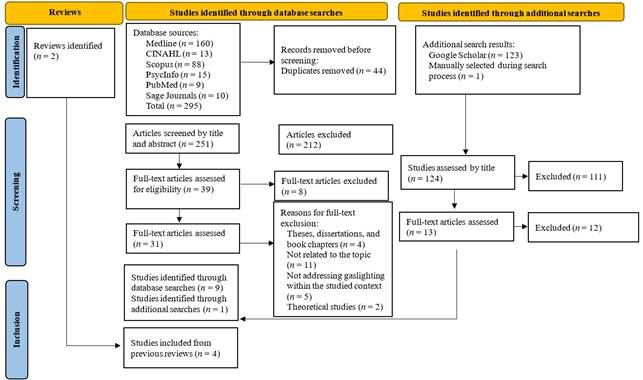
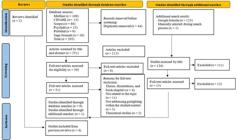
This scoping review was conducted in accordance with the Preferred Reporting Items for Systematic Reviews and Meta-Analyses (PRISMA) guidelines. The PRISMA flowchart detailing the article selection process is presented in Figure 1. Metadata from the articles identified in the selected databases were exported in Research Information Systems (RIS) format. To ensure comprehensive coverage, previous reviews on the topic were also consulted, and backward and forward citation tracking strategies were applied (Haddaway et al., 2022). Additionally, a supplementary search was conducted on Google Scholar to identify non-indexed national studies.
All metadata were imported into Rayyan, a software developed by the Qatar Computing Research Institute, where duplicate records were removed. Study selection and screening were independently conducted by two reviewers across the stages of title and abstract screening, eligibility assessment, and final inclusion. In cases of disagreement, alignment meetings were held, and, when necessary, a third reviewer was consulted to ensure impartiality and rigor. Articles deemed relevant were subjected to full-text content analysis.
Results
Study Selection Results
The initial search across the Medline, CINAHL, Scopus, PsycInfo, PsycNet, PubMed, and Sage Journals databases yielded 295 records (Figure 1). After removing duplicates, 251 records remained. Of these, 212 were excluded based on title and abstract screening, and 8 were excluded for not meeting the inclusion criteria. Among the remaining 31 full-text articles assessed, 9 were included in the final review. Additionally, findings from previous reviews identified four more studies. The complementary searches conducted during the review process generated 125 results, from which 13 studies were fully assessed, and 12 were excluded. This process resulted in a final inclusion of 14 studies considered eligible for the main analysis.
Characteristics of the Studies
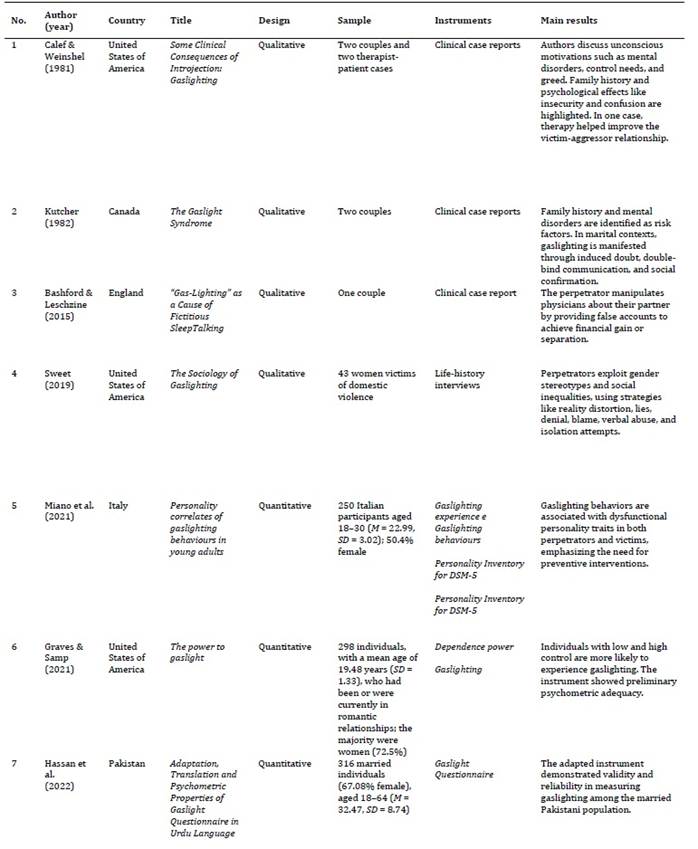
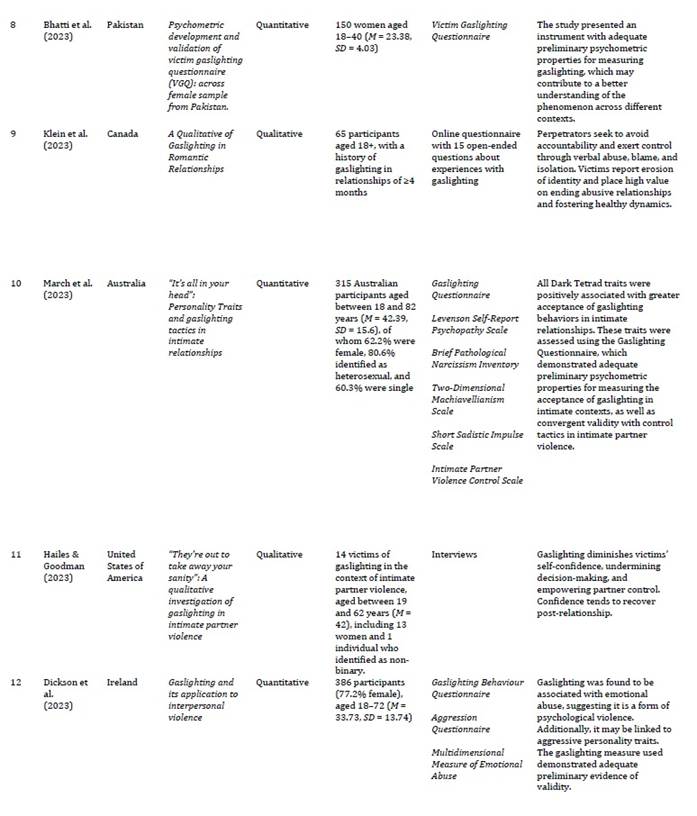
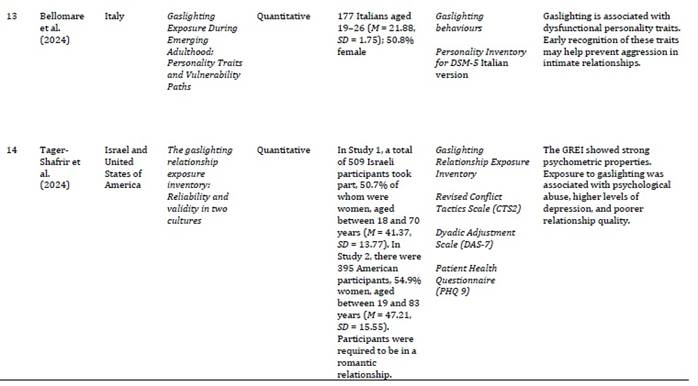
In terms of time frame, the year 2023 stood out with the highest number of publications, totaling four articles. This was followed by 2021 with three articles and 2024 with two publications. The years 1981, 1982, 2015, 2019, and 2022 each had only one study. No eligible publications were found between 1983 and 2014 or in the years 2016, 2017, and 2018.
Regarding geographic origin, most of the articles were from the United States (n = 5). Other contributions came from Canada (n = 2), Italy (n = 2), Pakistan (n = 2), England (n = 1), Ireland (n = 1), Israel (n = 1), and Australia (n = 1). Notably, one study (Tager-Shafrir et al., 2024) was conducted simultaneously in two countries, Israel and the United States.
As for the type of scientific production, all selected articles were published in English and adopted convenience sampling, predominantly with female participants. Most studies used a cross-sectional design. Seven studies employed qualitative methodologies, using instruments such as case reports (n = 4), interviews (n = 2), and questionnaires with open-ended questions (n = 1). In contrast, eight studies used quantitative methods, relying on self-report instruments (e.g., Revised Conflict Tactics Scale, Aggression Questionnaire, Multidimensional Measure of Emotional Abuse) to analyze antecedent and consequent variables associated with gaslighting. Among these, five studies conducted psychometric analyses to validate specific instruments for assessing gaslighting, including the Victim Gaslighting Questionnaire (VGQ; Bhatti et al., 2023), the Gaslight Questionnaire (Stern, 2007) adapted by Hassan et al. (2022), the Gaslighting Behaviour Questionnaire (GBQ; Dickson et al., 2023), the Gaslighting Questionnaire (March et al., 2023), and the Gaslighting Relationship Exposure Inventory (GREI; Tager-Shafrir et al., 2024).
Summary of the Selected Evidence Sources
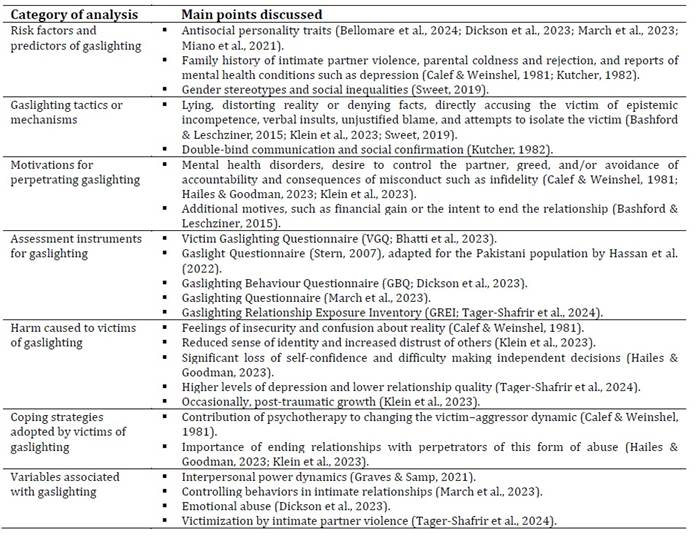
Table 1.. presents a synthesis of the studies mapped according to the objectives of this scoping review.
Analyzed Content
Based on the findings of the selected studies, the following categories of analysis were identified: (1) risk factors and predictors of gaslighting, (2) gaslighting tactics or mechanisms, (3) motivations for perpetrating gaslighting, (4) assessment instruments for gaslighting, (5) harm caused to victims of gaslighting, (6) coping strategies adopted by victims of gaslighting, and (7) variables associated with gaslighting. It is important to note that some articles were included in more than one category of analysis, as detailed in Table 2.
Risk factors and predictors of gaslighting. This category includes seven studies that investigated factors influencing the likelihood of perpetrating or experiencing gaslighting. The findings point to antisocial personality traits (e.g., narcissism, Machiavellianism, sadism, psychopathy) as prevalent in both perpetrators and victims (Bellomare et al., 2024; Dickson et al., 2023; March et al., 2023; Miano et al., 2021). Family background is also identified as a relevant factor, with specific mention of a history of intimate partner violence between the victim’s parents, parental coldness and rejection, and mental health conditions such as depression in the victim's family (Calef & Weinshel, 1981; Kutcher, 1982). Additionally, gender stereotypes and social inequalities are considered mechanisms that facilitate this form of violence (Sweet, 2019).
Gaslighting tactics or mechanisms. This category comprises four studies describing behaviors commonly associated with this form of violence. These include lying, distorting reality, or denying facts, directly accusing the victim of epistemic incompetence, verbal insults, unjustified blame, and attempts to isolate the victim (Bashford & Leschziner, 2015; Klein et al., 2023; Sweet, 2019). Furthermore, tactics such as double-bind communication and social confirmation are also reported (Kutcher, 1982).
Motivations for perpetrating gaslighting. This category encompasses four studies examining the underlying motivations for engaging in gaslighting within intimate relationships. The findings suggest both conscious and unconscious motivations, including mental health issues, a desire to control the partner, greed, as well as efforts to avoid accountability or the consequences of undesirable behavior (Calef & Weinshel, 1981; Hailes & Goodman, 2023; Klein et al., 2023). Gaslighting may also be driven by financial gain or the intent to provoke a breakup (Bashford & Leschziner, 2015).
Assessment instruments for gaslighting. This category includes five studies focused on the psychometric validation of self-report instruments for assessing gaslighting in intimate relationships. The instruments demonstrated preliminary evidence of adequate validity and reliability, including: the Victim Gaslighting Questionnaire (VGQ; Bhatti et al., 2023), the Gaslight Questionnaire (Stern, 2007), adapted for the Pakistani population by Hassan et al. (2022), the Gaslighting Behaviour Questionnaire (GBQ; Dickson et al., 2023), the Gaslighting Relationship Exposure Inventory (GREI; Tager-Shafrir et al., 2024), and the Gaslighting Questionnaire (March et al., 2023).
Harm caused to victims of gaslighting. This category includes four studies that detail the psychological consequences experienced by gaslighting victims. Reported harms include feelings of insecurity and confusion about reality (Calef & Weinshel, 1981), reduced sense of identity and increased distrust of others (Klein et al., 2023), significant loss of self-confidence, and difficulties making independent decisions (Hailes & Goodman, 2023). In addition, higher levels of depression and lower relationship quality were observed (Tager-Shafrir et al., 2024). In some cases, after overcoming the violence, victims also reported post-traumatic growth (Klein et al., 2023).
Coping strategies adopted by victims of gaslighting. This category consists of three studies exploring ways in which victims recover from gaslighting. One study highlights the effectiveness of psychotherapy in facilitating significant changes in the victim-aggressor dynamic (Calef & Weinshel, 1981). Other studies emphasize the importance of ending the relationship with the perpetrator as a key strategy to overcome this type of violence and rebuild self-confidence (Hailes & Goodman, 2023; Klein et al., 2023).
Variables associated with gaslighting. This category comprises four studies investigating the relationship between gaslighting and various psychosocial variables. Findings show associations between gaslighting and interpersonal power dynamics (Graves & Samp, 2021), controlling behaviors in intimate relationships (March et al., 2023), emotional abuse (Dickson et al., 2023), and victimization by intimate partner violence (Tager-Shafrir et al., 2024).
Discussion
This scoping review analyzed studies on gaslighting in intimate relationships, examining how the scientific literature has addressed the phenomenon. It was observed that the highest number of publications on the topic occurred in 2023, reflecting the recent popularization of the subject, as evidenced by the surge in online searches, which led Merriam-Webster to name “gaslighting” the word of the year in 2022 (Merriam-Webster, 2022). This visibility has drawn the attention of researchers to recent scientific investigations. However, despite the growing interest, the amount of scientific literature on the topic remains limited, indicating the need for further studies (Hailes & Goodman, 2023; Tager-Shafrir et al., 2024).
In addition, a publication gap of more than three decades was identified, from the early studies in the 1980s until 2015. This gap may be related to shifts in the conceptualization of the phenomenon, which initially involved attempts to convince third parties, especially psychiatrists, of the partner’s epistemic incompetence (Barton & Whitehead, 1969; Smith & Sinanan, 1972), but later shifted toward convincing the victim themself of their mental incapacity (Calef & Weinshel, 1981; Gass & Nichols, 1988). This change may have been influenced by the closure of psychiatric hospitals in various parts of the world during that period, which made institutionalization less feasible and contributed to a shift in the definition and understanding of gaslighting (Klein et al., 2023).
The analysis also revealed a greater concentration of scientific publications on the topic in the United States, followed by other English-speaking countries such as Canada (Klein et al., 2023; Kutcher, 1982), the United Kingdom (Bashford & Leschziner, 2015; Dickson et al., 2023), and Australia (March et al., 2023). This may be due to the use of the English term to describe the phenomenon and the fact that all identified articles were published in English. However, the borrowing of English terms into other languages, such as Portuguese and Spanish, has been increasing, with words like stalking, cyberstalking, bullying, and gaslighting entering Brazilian vocabulary. This phenomenon is linked to advances in communication technologies and social media platforms (e.g., Facebook, Instagram, WhatsApp), which facilitate the global dissemination of a language (García & Bove, 2022). In light of globalization, the use of an English term should not limit the expansion of knowledge about a phenomenon that occurs in diverse sociocultural contexts.
The content analysis of the reviewed studies revealed the influence of both individual (e.g., gender, personality traits) and social factors (e.g., family history, gender stereotypes, social inequalities) on the perpetration and victimization of gaslighting. Regarding gender, findings suggest that women are predominantly victims and men are predominantly perpetrators of this form of abuse (Bhatti et al., 2023; Hailes & Goodman, 2023; Klein et al., 2023; Sweet, 2019). However, it is important to note that this understanding may be influenced by the use of convenience samples, which were mostly composed of women. In this direction, some studies suggest that there is no gender difference in gaslighting exposure (Miano et al., 2021), and one recent cross-cultural study found that men may be more likely to experience this type of abuse (Tager-Shafrir et al., 2024).
Researchers have argued that gaslighting is more effective when gender stereotypes and social inequalities are used to manipulate victims’ perception of reality (Abramson, 2014; Gass & Nichols, 1988; Sweet, 2019). Discrediting women’s judgment with statements like “women are crazy,” “overreacting,” or “emotionally unstable” has long been a strategy for constructing rationality based on gender and social power. Therefore, this aspect should be considered by scholars when discussing public policies aimed at preventing, educating, and raising awareness about intimate partner violence, specifically gaslighting (Sweet, 2019).
Personality traits have also been identified as important predictors of gaslighting. Studies show that individuals with high levels of antisocial traits are more likely to experience gaslighting, either as victims or perpetrators (Bellomare et al., 2024; March et al., 2023; Miano et al., 2021). These findings align with prior studies showing that dysfunctional personality traits increase the risk of engaging in abusive relationships (Kasowski & Anderson, 2019). Traits such as impulsivity, aggression, emotional coldness, sensation seeking, and antisocial behavior may lead individuals to minimize their own aggressive behavior or deny abusive behavior from their partners (Asen & Fonagy, 2017; Tetreault et al., 2021), thus increasing the likelihood of becoming involved in and maintaining violent relationships.
Family background also appears to influence both victims and perpetrators of gaslighting. Aspects such as exposure to interparental violence, emotional coldness and rejection from caregivers, and the presence of mental disorders such as depression are highlighted as relevant factors (Calef & Weinshel, 1981; Kutcher, 1982). These findings are consistent with evidence suggesting that individuals who grow up in violent or neglectful family environments are more likely to replicate these patterns in their own intimate relationships, mistakenly viewing the perpetration of violence as a conflict resolution strategy (Borges & Dell’Aglio, 2020; Zhu et al., 2023).
In terms of gaslighting tactics, perpetrators commonly employ confusion-based strategies, including lying, distorting reality, denying facts, direct accusations of epistemic incompetence, verbal insults, blame-shifting, and attempts to isolate the victim (Bashford & Leschziner, 2015; Klein et al., 2023; Sweet, 2019), along with double-bind communication and social reinforcement (Kutcher, 1982). These tactics are insidious and difficult to detect. The invisibility of this type of violence makes it especially harmful, as it isolates victims from support and protection, potentially increasing dependence on their abuser. These effects can be as severe, or even more so, than those caused by physical violence (Sweet, 2019).
Regarding the motivations for gaslighting perpetration, early literature characterized this behavior as a conscious manipulation strategy driven primarily by external factors, such as financial gain or the desire to end the relationship (Bashford & Leschziner, 2015). More recent research suggests that perpetrators may not always be fully aware of their motives, which can be emotional or psychopathological in nature, including mental disorders, a need for control, greed, or efforts to avoid accountability for misconduct, such as infidelity (Calef & Weinshel, 1981; Hailes & Goodman, 2023; Klein et al., 2023).
The consequences of gaslighting span psychological, social, and legal domains. Studies point to serious psychological harm for victims, including feelings of insecurity and confusion about their perception of reality (Calef & Weinshel, 1981), diminished sense of identity and distrust of others (Klein et al., 2023), significant loss of self-confidence, and difficulties in making independent decisions (Hailes & Goodman, 2023). Additional outcomes include increased levels of depression and decreased relationship quality (Tager-Shafrir et al., 2024). These findings are consistent with research on psychological abuse, which shows profound impacts on victims’ mental health and well-being, including the development of disorders such as anxiety and depression, along with reduced autonomy due to social isolation. In Brazil, such effects may also have legal implications, since psychological violence is classified as a criminal offense (Brazil, 2021; Capezza et al., 2021; Martínez-González et al., 2021).
Regarding coping strategies adopted by victims of gaslighting, prior research has shown that ending abusive relationships is a crucial step toward recovery (Hailes & Goodman, 2023; Klein et al., 2023). Psychotherapy is identified as a valuable tool, helping victims recognize and respond more effectively to abusive patterns and encouraging them to prioritize healthier relationships (Calef & Weinshel, 1981). Some victims may also experience post-traumatic growth after overcoming the effects of abuse (Klein et al., 2023). These findings are supported by other studies that underscore the importance of therapy and ending abusive partnerships for the well-being of intimate partner violence survivors (Augustin & Bandeira, 2020).
Finally, this review identified associations between gaslighting and various psychosocial constructs, such as interpersonal power dynamics (Graves & Samp, 2021), control tactics in intimate relationships (March et al., 2023), emotional abuse (Dickson et al., 2023), and victimization by intimate partner violence (Tager-Shafrir et al., 2024). These findings suggest the importance of considering both individual and social variables to better understand the phenomenon. Future research should explore previously established associations, such as personality and gender, in diverse contexts and investigate additional constructs such as attitudes and human values, which are important factors in decision-making and social behavior, particularly in the field of social psychology.
Conclusions
Gaslighting in intimate relationships is a complex and increasingly recognized phenomenon, representing a significant social concern. This scoping review provides an overview of how the topic has been investigated to date, addressing the scarcity of such reviews in the literature, particularly in Portuguese. It makes a valuable contribution as the first review to specifically map research on gaslighting within intimate relationships. Previous reviews have focused on other contexts, such as politics, parent-child interactions, and workplace dynamics. The studies included here are relevant to social psychology, examining the influence of psychosocial factors such as personality traits, gender stereotypes, social inequalities, and family violence history.
Despite the strengths of this review, it is subject to certain limitations: (1) the strict definition of inclusion and exclusion criteria may have led to the omission of studies that, while not meeting all criteria, could still offer important insights into gaslighting in intimate relationships; (2) the choice of descriptors may have excluded relevant studies that addressed gaslighting implicitly or in connection with other forms of psychological abuse. Future reviews should consider broader descriptors, such as “psychological violence” or “emotional abuse,” to capture a wider range of related research; (3) the absence of Brazilian samples among the selected studies limits the applicability of findings to the national context; and (4) the predominance of women in the samples may affect the way the phenomenon is understood.
Given these considerations, future research should include cross-cultural studies in non-English-speaking countries to investigate cultural and social differences in perceptions of gaslighting, thereby expanding our understanding of the phenomenon. Additionally, it is important to examine how gaslighting has evolved over time and how social changes, such as the rise of social media, have affected its occurrence and the effectiveness of prevention strategies. Researchers should also aim for more diverse samples, including more male participants, to uncover aspects that may have been overlooked in previous studies.
Finally, the legal and political implications of gaslighting deserve attention, particularly in the Brazilian context. Understanding how gaslighting is being addressed in the legal system and its implications for justice may help identify gaps in victim protection and improve public policy. These avenues for future research may deepen the understanding of gaslighting in intimate relationships and strengthen both academic knowledge and strategies for intervention and prevention.
References
-
Abramson, K. (2014). Turning up the Lights on Gaslighting. Philosophical Perspectives, 28(1), 1-30. https://doi.org/10.1111/phpe.12046
» https://doi.org/10.1111/phpe.12046 -
Akdeniz, B., & Cihan, H. (2023). Gaslighting and interpersonal relationships: Systematic review. Psikivatride Güncel Yaklaslmlar-Current Approaches in Psychiatry, 16(1), 146-158. https://doi.org/10.18863/pgy.1281632
» https://doi.org/10.18863/pgy.1281632 -
Aromataris, E., Lockwood, C., Porritt, K., Pilla, B., & Jordan, Z. (Eds.) (2020). JBI manual for evidence synthesis JBI. https://doi.org/10.46658/JBIMES-24-01
» https://doi.org/10.46658/JBIMES-24-01 -
Asen, E., & Fonagy, P. (2017). Mentalizing family violence Part 2: Techniques and interventions. Family Process, 56(1), 22-44. https://doi.org/10.1111/famp.12276
» https://doi.org/10.1111/famp.12276 -
Augustin, L. W., & Bandeira, C. C. de A. (2020). Postura e intervenções do gestalt-terapeuta frente à violência psicológica contra a mulher por parceiro íntimo. Revista da Abordagem Gestáltica, 26(SPE), 449-459. https://doi.org/10.18065/2020v26ne.9
» https://doi.org/10.18065/2020v26ne.9 -
Barton, R., & Whitehead, J. A. (1969). The Gas-light phenomenon. The Lancet, 293(7608), 1258-1260. https://doi.org/10.1016/S0140-6736(69)92133-3
» https://doi.org/10.1016/S0140-6736(69)92133-3 -
Bashford, J., & Leschziner, G. (2015). Bed partner “Gas-Lighting” as a cause of fictitious sleep-talking. Journal of Clinical Sleep Medicine: JCSM: Official Publication of the American Academy of Sleep Medicine, 11(10), 1237-1238. https://doi.org/10.5664/jcsm.5102
» https://doi.org/10.5664/jcsm.5102 -
Bellomare, M., Genova, V. G., & Miano, P. (2024). Gaslighting exposure during emerging adulthood: Personality traits and vulnerability paths. International Journal of Psychological Research, 17(1), 29-39. https://doi.org/10.21500/20112084.6306
» https://doi.org/10.21500/20112084.6306 -
Bhatti, M. M., Shuja, K. H., Aqeel, M., Bokhari, Z., Gulzar, S. N., Fatima, T., & Sama, M. (2023). Psychometric development and validation of victim gaslighting questionnaire (VGQ): Across female sample from Pakistan. International Journal of Human Rights in Healthcare, 16(1), 4-18. https://doi.org/10.1108/IJHRH-12-2020-0119
» https://doi.org/10.1108/IJHRH-12-2020-0119 -
Borges, J. L., & Dell'Aglio, D. D. (2020). Early maladaptive schemas as predictors symptomatology among victims and non-victims of dating violence. Contextos Clínicos, 13(2), 424-450. https://doi.org/10.4013/ctc.2020.132.04
» https://doi.org/10.4013/ctc.2020.132.04 - Boring, R. L. (2020). Implications of narcissistic personality disorder on organizational resilience. Em P. Arezes, & R. Boring (Eds.), Advances in Safety Management and Human Performance (pp. 259-266). Springer.
- Brasil. (2021). Lei nº 14.188, de 28 de julho de 2021. Dispõe sobre o programa de cooperação Sinal Vermelho contra a Violência Doméstica como uma das medidas de enfrentamento da violência doméstica e familiar contra a mulher. Brasília, DF.
-
Calef, V., & Weinshel, E. M. (1981). Some clinical consequences of introjection: Gaslighting. The Psychoanalytic Quarterly, 50(1), 44-66. https://doi.org/10.1080/21674086.1981.11926942
» https://doi.org/10.1080/21674086.1981.11926942 -
Capezza, N. M., D’Intino, L. A., Flynn, M. A., & Arriaga, X. B. (2021). Perceptions of psychological abuse: The role of perpetrator gender, victim’s response, and sexism. Journal of Interpersonal Violence, 36(3-4), 1414-1436. https://doi.org/10.1177/0886260517741215
» https://doi.org/10.1177/0886260517741215 -
Dickson, P., Ireland, J., & Birch, P. (2023). Gaslighting and its application to interpersonal violence. Journal of Criminological Research, Policy and Practice, 9(1), 31-46. https://doi.org/10.1108/JCRPP-07-2022-0029
» https://doi.org/10.1108/JCRPP-07-2022-0029 -
García, I. R., & Bove, K. P. (2022). Ghosting, Breadcrumbing, Catfishing: A corpus analysis of English borrowings in the Spanish speaking world. Languages, 7(2), 119. https://doi.org/10.3390/languages7020119
» https://doi.org/10.3390/languages7020119 -
Gass, G. Z., & Nichols, W. C. (1988). Gaslighting: A marital syndrome. Contemporary Family Therapy, 10(1), 3-16. https://doi.org/10.1007/BF0092242
» https://doi.org/10.1007/BF0092242 -
Ghaltakhchyan, S. (2024). Linguistic portrayal of gaslighting in interpersonal relationships. Armenian Folia Anglistika, 20(1 (29)), 61-79. https://doi.org/10.46991/AFA/2024.20.1.61
» https://doi.org/10.46991/AFA/2024.20.1.61 -
Graves, C. G., & Samp, J. A. (2021). The power to gaslight. Journal of Social and Personal Relationships, 38(11), 3378-3386. https://doi.org/10.1177/02654075211026975
» https://doi.org/10.1177/02654075211026975 -
Haddaway, N., Grainger, M., & Gray, C. (2022). Citationchaser: A tool for transparent and efficient forward and backward citation chasing in systematic searching. Research Synthesis Methods, 13(4), 533-545. https://doi.org/10.1002/jrsm.1563
» https://doi.org/10.1002/jrsm.1563 -
Hailes, H., & Goodman, L. (2023). “They’re out to take away your sanity”: A qualitative investigation of gaslighting in intimate partner violence. Journal of Family Violence, 40, 269-282. https://doi.org/10.1007/s10896-023-00652-1
» https://doi.org/10.1007/s10896-023-00652-1 -
Hammer, T. R., & Kavanaugh, K. E. (2024). A relational exploration of Captain Marvel as a therapeutic tool to understand gaslighting. Journal of Creativity in Mental Health, 19(2), 244-250. https://doi.org/10.1080/15401383.2023.2166185
» https://doi.org/10.1080/15401383.2023.2166185 -
Hassan, A., Iqbal, N., & Hassan, B. (2022). Adaptation, translation and psychometric properties of Gaslight Questionnaire in Urdu language. Journal of Professional & Applied Psychology, 3, 417-427. https://doi.org/10.52053/jpap.v3i4.146
» https://doi.org/10.52053/jpap.v3i4.146 -
Hester, M., Jones, C., Williamson, E., Fahmy, E., & Feder, G. (2017). Is it coercive controlling violence? A cross-sectional domestic violence and abuse survey of men attending general practice in England. Psychology of Violence, 7(3), 417-427. https://doi.org/10.1037/vio0000107
» https://doi.org/10.1037/vio0000107 -
Kasowski, A. E., & Anderson, J. L. (2020). The association between sexually aggressive cognitions and pathological personality traits in men. Violence Against Women, 26(12-13), 1636-1655. https://doi.org/10.1177/1077801219873436
» https://doi.org/10.1177/1077801219873436 -
Keatley, D. A., Quinn-Evans, L., Joyce, T., & Richards, L. (2022). Behavior sequence analysis of victims’ accounts of intimate partner violence. Journal of Interpersonal Violence, 37(21-22), NP19290-NP19309. https://doi.org/10.1177/08862605211043587
» https://doi.org/10.1177/08862605211043587 -
Klein, W., Wood, S., & Li, S. (2023). A qualitative analysis of gaslighting in romantic relationships. Personal Relationships, 30, 1316-1340 https://doi.org/10.31234/osf.io/cjrpq
» https://doi.org/10.31234/osf.io/cjrpq -
Kutcher, S. P. (1982). The gaslight syndrome. Canadian Journal of Psychiatry. Revue Canadienne De Psychiatrie, 27(3), 224-227. https://doi.org/10.1177/070674378202700310
» https://doi.org/10.1177/070674378202700310 -
March, E., Kay, C. S., Dinić, B. M., Wagstaff, D., Grabovac, B., & Jonason, P. K. (2023). “It’s all in your head”: Personality traits and gaslighting tactics in intimate relationships. Journal of Family Violence, 40(2), 259-268. https://doi.org/10.1007/s10896-023-00582-y
» https://doi.org/10.1007/s10896-023-00582-y -
Martínez-González, M. B., Pérez-Pedraza, D. C., Alfaro-Álvarez, J., Reyes-Cervantes, C., González-Malabet, M., & Clemente-Suárez, V. J. (2021). Women facing psychological abuse: How do they respond to maternal identity humiliation and body shaming? International Journal of Environmental Research and Public Health, 18(12), 6627. https://doi.org/10.3390/ijerph18126627
» https://doi.org/10.3390/ijerph18126627 -
Merriam-Webster. (2022). Word of the Year: Gaslight https://www.merriamwebster.com/words-at-play/word-of-the-year
» https://www.merriamwebster.com/words-at-play/word-of-the-year -
Miano, P., Bellomare, M., & Genova, V. G. (2021). Personality correlates of gaslighting behaviours in young adults. Journal of Sexual Aggression, 27(3), 285-298. https://doi.org/10.1080/13552600.2020.1850893
» https://doi.org/10.1080/13552600.2020.1850893 -
Munn, Z., Peters, M. D. J., Stern, C., Tufanaru, C., McArthur, A., & Aromataris, E. (2018). Systematic review or scoping review? Guidance for authors when choosing between a systematic or scoping review approach. BMC Medical Research Methodology, 18(1), 143. https://doi.org/10.1186/s12874-018-0611-x
» https://doi.org/10.1186/s12874-018-0611-x -
Page, M. J., McKenzie, J. E., Bossuyt, P. M., Boutron, I., Hoffmann, T. C., Mulrow, C. D., Shamseer, L., Tetzlaff, J. M., Akl, E. A., Brennan, S. E., Chou, R., Glanville, J., Grimshaw, J. M., Hróbjartsson, A., Lalu, M. M., Li, T., Loder, E. W., Mayo-Wilson, E., McDonald, S., … Moher, D. (2021). The PRISMA 2020 statement: An updated guideline for reporting systematic reviews. BMJ, 372(71). https://doi.org/10.1136/bmj.n71
» https://doi.org/10.1136/bmj.n71 -
Peters, M. D. J., Godfrey, C. M., McInerney, P., Munn, Z., Tricco, A. C., & Khalil, H. (2020). Scoping reviews (2020 version). Em E. Aromataris & Z. Munn (Eds.), JBI Manual for Evidence Synthesis. Joanna Briggs Institute (pp. 407-452). https://doi.org/10.46658/JBIMES-20-12
» https://doi.org/10.46658/JBIMES-20-12 -
Pham, M. T., Rajić, A., Greig, J. D., Sargeant, J. M., Papadopoulos, A., & McEwen, S. A. (2014). A scoping review of scoping reviews: Advancing the approach and enhancing the consistency. Research Synthesis Methods, 5(4), 371-385. https://doi.org/10.1002/jrsm.1123
» https://doi.org/10.1002/jrsm.1123 -
Porter, J., & Standing, K. (2020). Love island and relationship education. Frontiers in Sociology, 4, 79. https://doi.org/10.3389/fsoc.2019.00079
» https://doi.org/10.3389/fsoc.2019.00079 - Sarkis, S. (2019). O Fenômeno Gaslighting: Saiba como funciona a estratégia de pessoas manipuladoras para distorcer a verdade e manter você sob controle. Editora Cultrix.
-
Sheikh, I. H. (1979). The misuse of psychiatry: The “Gas Light” phenomenon. The International Journal of Social Psychiatry, 25(2), 131-132. https://doi.org/10.1177/002076407902500209
» https://doi.org/10.1177/002076407902500209 -
Smith, C. G., & Sinanan, K. (1972). The ‘Gaslight Phenomenon’ reappears: A modification of the Ganser Syndrome. British Journal of Psychiatry, 120(559), 685-686. https://doi.org/10.1192/bjp.120.559.685
» https://doi.org/10.1192/bjp.120.559.685 - Stern, R. (2007). The Gaslight Effect: How to spot and survive the hidden manipulations other people use to control your life. Morgan Road Books.
- Stern, R. (2019). O Efeito Gaslight: como identificar e sobreviver à manipulação velada que os outros usam para controlar sua vida. Alta Books.
-
Sweet, P. L. (2019). The sociology of gaslighting. American Sociological Review, 84(5), 851-875. https://doi.org/10.1177/0003122419874843
» https://doi.org/10.1177/0003122419874843 -
Tager-Shafrir, T., Szepsenwol, O., Dvir, M., & Zamir, O. (2024). The gaslighting relationship exposure inventory: Reliability and validity in two cultures. Journal of Social and Personal Relationships, 41(10), 3123-3146. https://doi.org/10.1177/02654075241266942
» https://doi.org/10.1177/02654075241266942 -
Tetreault, C., Bates, E. A., & Bolam, L. T. (2021). How dark personalities perpetrate partner and general aggression in Sweden and the United Kingdom. Journal of Interpersonal Violence, 36(9-10), NP4743-NP4767. https://doi.org/10.1177/0886260518793992
» https://doi.org/10.1177/0886260518793992 -
Tricco, A. C., Lillie, E., Zarin, W., O’Brien, K. K., Colquhoun, H., Levac, D., Moher, D., Peters, M. D. J., Horsley, T., Weeks, L., Hempel, S., Akl, E. A., Chang, C., McGowan, J., Stewart, L., Hartling, L., Aldcroft, A., Wilson, M. G., Garritty, C., … Straus, S. E. (2018). PRISMA extension for scoping reviews (PRISMA-ScR): Checklist and explanation. Annals of Internal Medicine, 169(7), 467-473. https://doi.org/10.7326/M18-0850
» https://doi.org/10.7326/M18-0850 -
Zhu, J., Exner-Cortens, D., Dobson, K., Wells, L., Noel, M., & Madigan, S. (2023). Adverse childhood experiences and intimate partner violence: A meta-analysis. Development and Psychopathology, 36(2), 1-17. https://doi.org/10.1017/S0954579423000196
» https://doi.org/10.1017/S0954579423000196