Perception of digital technologies and intercultural competence in university education
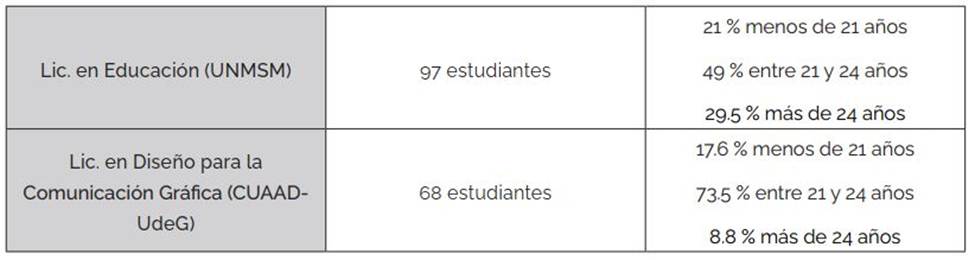
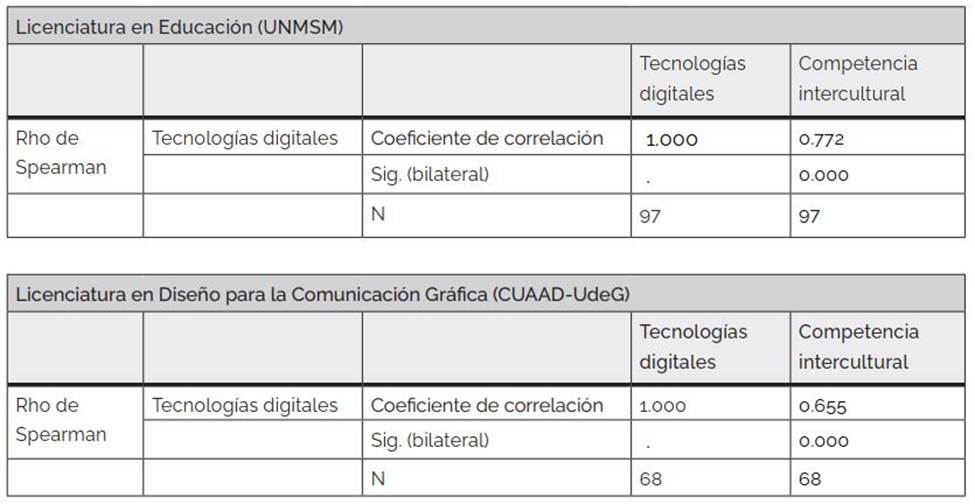
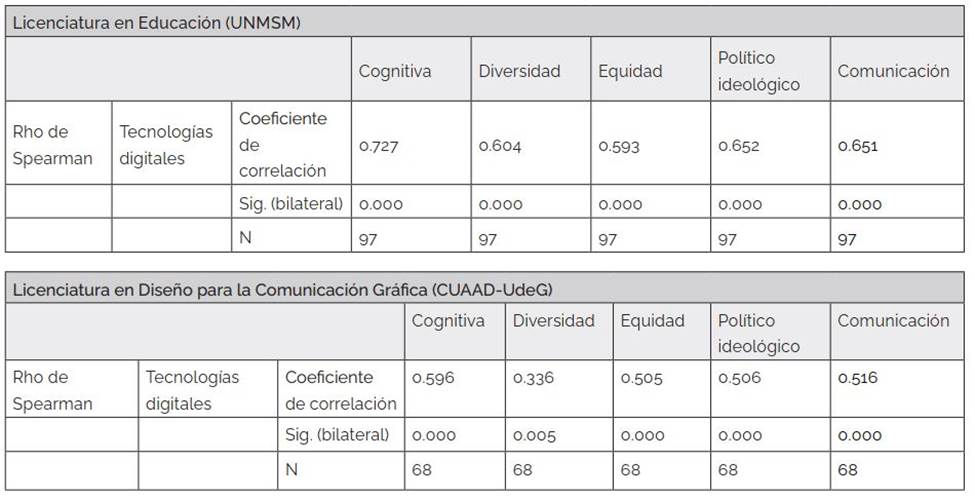
The aim of this study is to provide information to support academic decision-making regarding the benefits and advantages of digital technologies for the development of intercultural competence, respect, and inclusion of cultural diversity, as well as their use in both virtual and face-to-face education, contributing to the learning of competencies and the quality training of students. This research was conducted in the Bachelor's Degree in Education of the Faculty of Education of the Universidad Nacional de San Marcos (UNMSM) in Peru and in the Bachelor's Degree in Design for Graphic Communication of the University Center of Art, Architecture and Design of the University of Guadalajara (CUAAD-UdeG) in México. Through descriptive-comparative research, the impact of digital technologies on intercultural competence was analyzed through the application of 165 surveys: 97 in the Bachelor's Degree in Education and 68 in the Bachelor's Degree in Graphic Design, using Likert scale questions. As part of the results, it was obtained that Spearman's coefficient showed a correlation of variables of moderate and positive levels, 0.772 at the University of San Marcos, and 0.655 at the University of Guadalajara, and p-value <0.05. The study concludes that digital technologies affect intercultural competence in both universities. These are interrelated with educational quality. The current professional teaching profile requires technological proficiency for the training of students.
Keywords:
competences; technologies; intercultural education; professional training; globalization