Emotional competencies in higher education students in Argentina, Chile, and Colombia
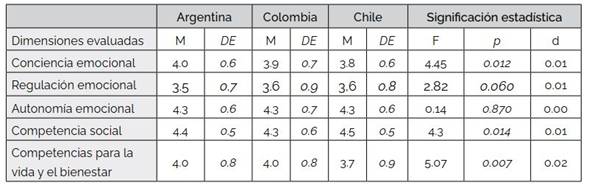
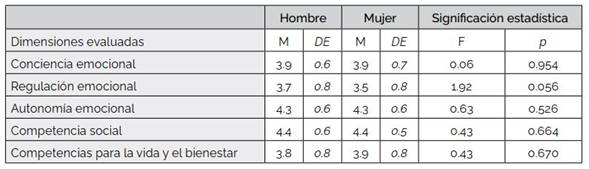
In the context of teacher training, the development of emotional skills is important, especially due to the increase in problems associated with school coexistence and the mental health of the population in general. The study's objective was to describe levels of achievement of emotional competencies in initial teacher-training students from Chile, Colombia, and Argentina. The study is framed in a descriptive quantitative methodological design. The participants are 626 students from three universities, one Chilean (n= 241), one Argentine (n= 201), and one Colombian (n= 184), with ages between 18 and 60 years old (M= 21.3, SD= 4.6), 498 women and 128 men (79.7% and 20.30%). The instrument is the ICEA Emotional Competencies Inventory for Adults, which measures the level of achievement of five competencies (emotional awareness, emotional regulation, emotional autonomy, social competence, and life and well-being skills). The results show moderate to optimal scores in all groups of students, as well as statistically significant differences in emotional awareness in favor of the Argentine sample, in social competence in favor of the Chilean student body, and life and well-being skills in favor of the Argentine sample. of the Colombian and Argentine samples. From these results, it is possible to indicate that there is a good starting point for the development of emotional competencies in the three groups evaluated and clarity about the most strengthened dimensions on which to support an emotional education process.
Keywords:
emotional competencies; higher education; university students; comparative study; pentagonal model