Dimensions of teachers' collaborative learning in Professional Learning Communities in Chile
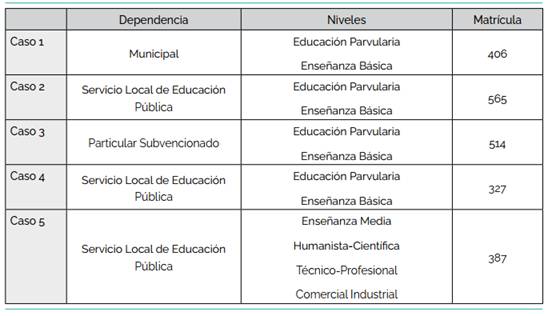
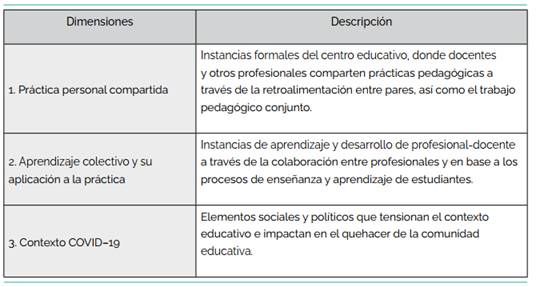
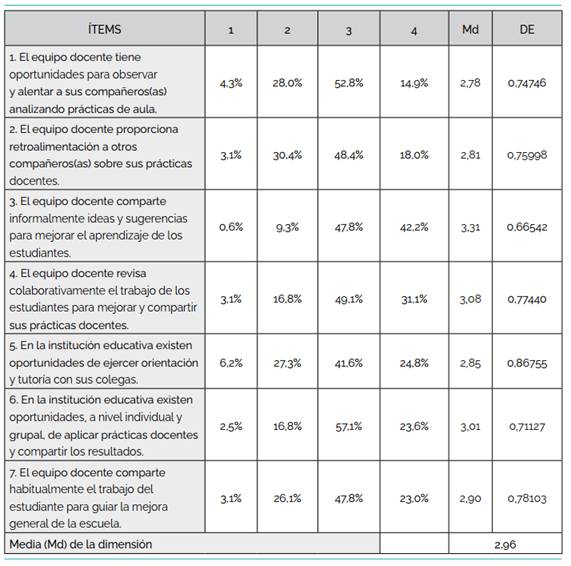
Teacher collaboration in recent decades has become increasingly important as a strategy for school improvement and innovation (Hargreaves & O'Connor, 2020). A Professional Learning Community emphasizes the development of collaborative cultures that encourage learning in both teachers and students (Bolam et al., 2007; Hord et al., 2010; Hord & Hirsh, 2008). The present study analyzes the appraisals of teachers, managers and educational assistants on the dimensions of collaboration that a CPA contemplates. The research method corresponds to a concurrent mixed study (Creswell, 2009) with a multiple case study strategy (Stake, 1998) in five educational centers in Chile. A questionnaire was applied to 161 informants, together with the development of 10 discussion groups. The main findings establish that the perceptions regarding peer relationships when sharing their practices are positive; however, there is a lack of spaces for peer accompaniment, observation and feedback that would deepen collective learning. There is a need to advance in specialized deepening spaces in teaching practice based on the documentation of research in educational subjects, together with enhancing the strengths found in educational centers with positive social relations for learning.
Keywords:
teacher collaboration; collegiality; situated learning; organizational learning; communities of practice; cooperative learning; professional development