Model to support the academic progression of online students
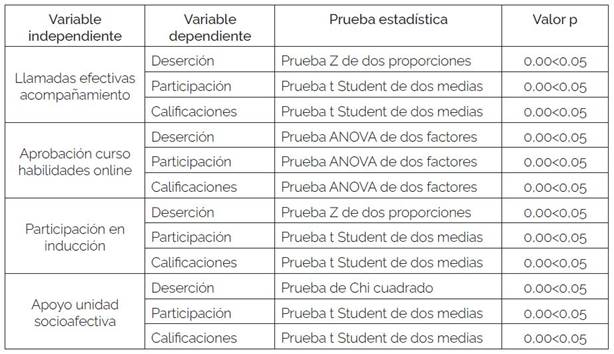
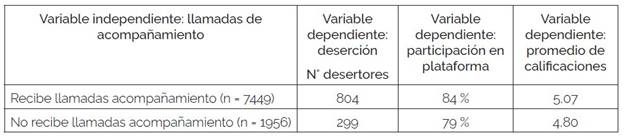
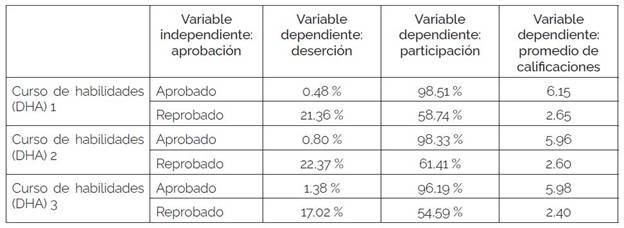
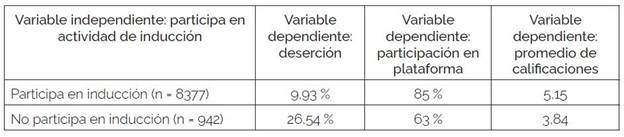
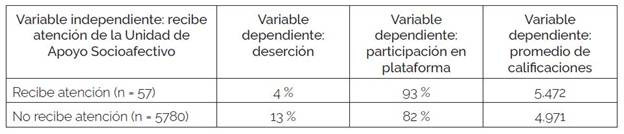
Introduction: During the last years there has been a progressive increase in the training offer of online programs, being an opportunity for those who need to reconcile the study with other activities. Retention rates in this type of training are low. There are multiple factors that have been identified as part of the problem of continuity in studies for adult students in online programs. Methodology: The method design is mixed of the sequential explanatory type. The quantitative phase is an ex post facto study of the causal comparative type that allowed to identify significant differences between groups for the variables under study, from a sample of 9,405 first-year students. The qualitative phase included the application of interviews. Results: It was found that the tutor's orientation, the approval of the basic skills courses, the participation of the students in induction activities and having the attention of the socio-affective support unit, directly influence in academic persistence of the students, in their participation in the online platform and in the grade point average. The students value effective communication with teachers and tutors. Discussion: It is from the diversity of actions undertaken that a containment network is generated to support the process of continuity of studies. It is not possible to attribute success to a single action separately, and we deduce from in-depth interviews that, also, the influence of each program is different in relation to the needs presented by each student, showing the importance of institutions deploying a diversity of supports, which will be used by students to the extent of their needs.
Keywords:
electronic learning; distance education; higher education; adult dropout; academic persistence; adult learners; academic support services
 Thumbnail
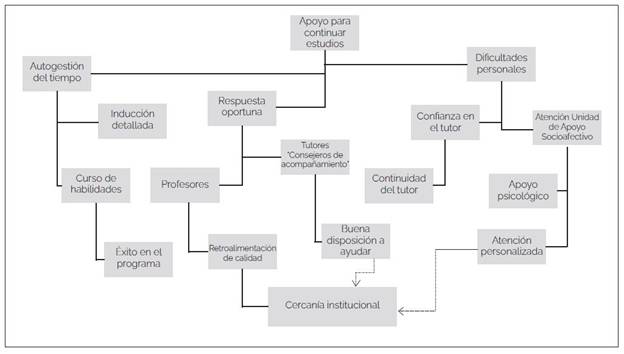 Nota: Elaboración de los autores en base a categorías levantadas en el estudio