Neurodidactic strategies, satisfaction and academic performance of university students
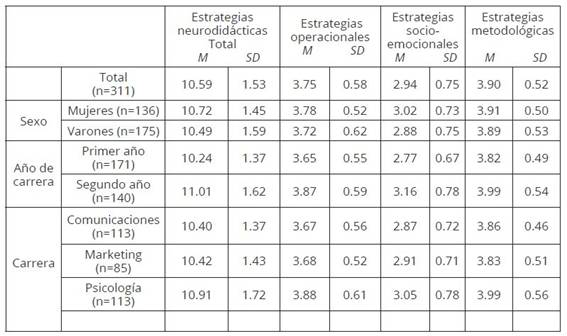
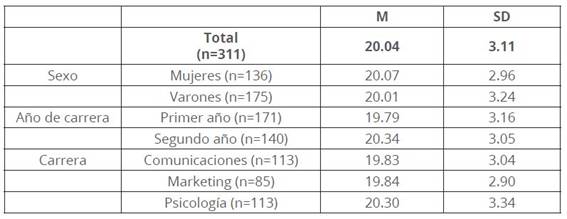
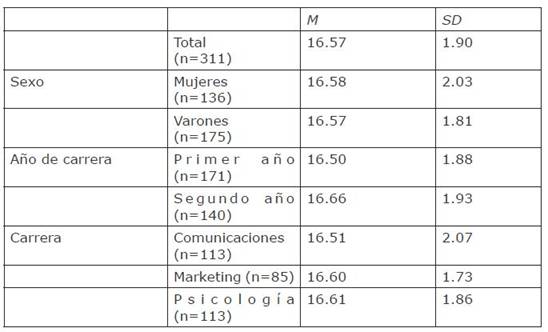
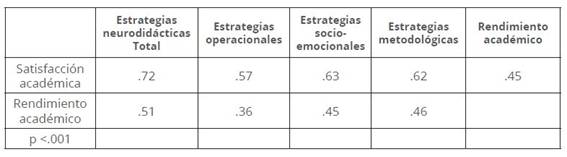
In recent years, university didactics is adapting to the learning styles of the students and Neuroscience has become a discipline that provides a large amount of information about the functioning of the brain, its implications in the construction of knowledge and the importance of considering the cognitive, affective and social aspects involved in the learning process. The main purpose of the research was to know the relation between the neurodidactic strategies of the professor and both the satisfaction and the academic performance of the students at a university in Lima, Peru. The research was quantitative, correlational, transversal and with a sample of 311 freshmen and sophomores. According to the results, the neurodidactic strategies correlate positively with the students’ satisfaction and the academic performance (.72 and .51 respectively.) Additionally, a moderate correlation was evidenced between satisfaction and academic performance (.45). In the analysis of the types of neurodidactic strategies, it was found that the professors use the methodological strategies more frequently. However, it was observed that socio-emotional strategies have a higher correlation rate with satisfaction (.63), in comparison with other strategies.
Keywords:
educational strategies; neurosciences; learning experience; student satisfaction; scores