Selection of school principals in Bolivia, Chile, and Costa Rica: lessons for Latin America
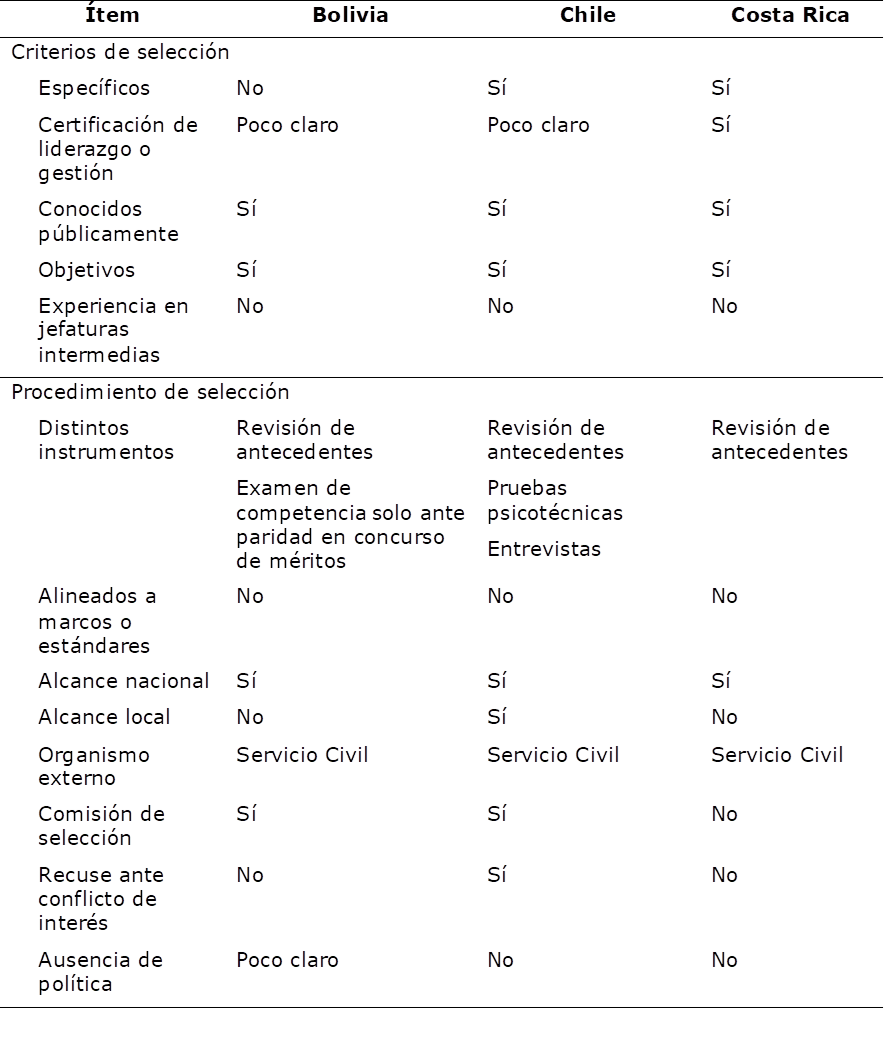
Educational leadership is a key factor in student learning, and specialists have tended in recent years to talk about the need for professionalization. However, scientific evidence is scarce, particularly in Latin America, and in a comparative manner. In an effort to foster debate on one of the key aspects of the professionalization of school leadership, this study aims to identify common strengths and challenges in the criteria and procedures for selecting school principals in Bolivia, Chile, and Costa Rica. Through an analysis of official documents and scientific literature, the selection criteria and processes in these three countries are examined. The results identify four strengths and six weaknesses, including, on the one hand, the presence of publicly known and objective criteria among the three countries analyzed and, on the other, the absence of selection instruments updated to daily practice and linked to leadership frameworks. The conclusion confirms the need to advance in a leadership career on the continent and, in terms of research, the importance of advancing in the analysis of other critical areas of the professionalization of the management role, such as initial and continuous training, evaluation, and contractual conditions.
Keywords:
education; leadership; principals; personnel selection; education professionals; Latin America