Virtual education in health emergency: evaluations of university students of engineering careers
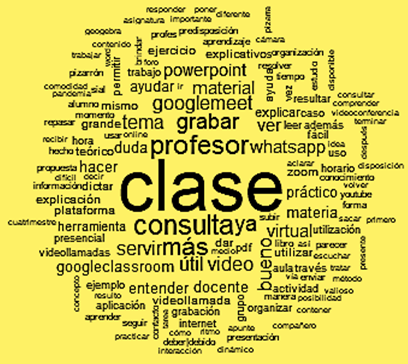
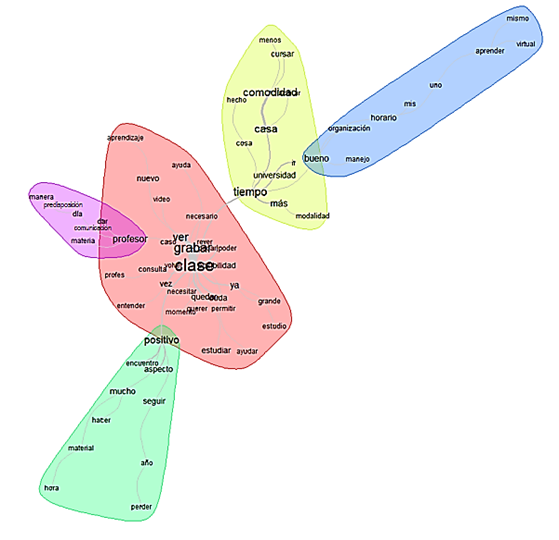
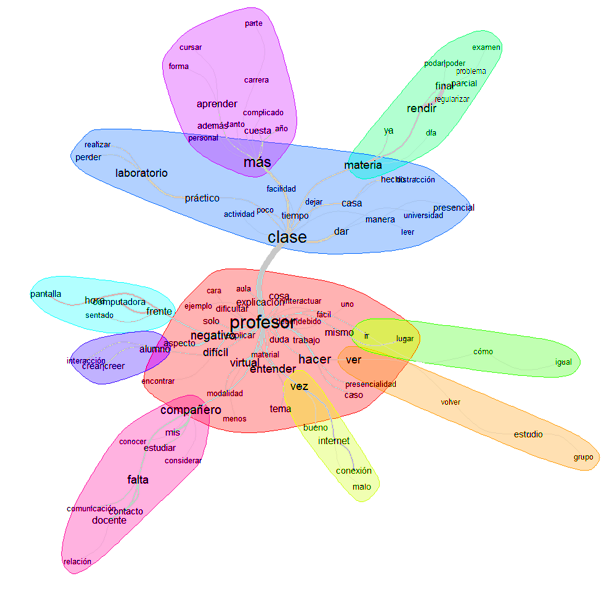
The spread of COVID-19 produced an unprecedented global crisis in all areas, especially education. In response to the cessation of face-to-face activities, virtual resources were consecrated as fundamental means to ensure learning. When faced with this reality, the study presented in this article aims to explore and describe the positive and negative evaluations of university entrants after completing the first semester, having to face the mandatory change in the modality of their studies, going from face-to-face to virtual. Regarding this study, 199 entrants to Engineering studies from the National University of Río Cuarto, cohorts 2020 and 2021, participated. The data was collected from an online questionnaire on academic trajectories in the first year. Open questions are analyzed from a qualitative logic with the support of the Iramuteq software. The results show that virtuality favored the appropriation of multiple web resources that were unknown before the pandemic or little considered as an alternative for teaching and learning. As positive aspects, the students valued the possibility that virtuality gave them to guarantee the continuity of learning -mainly through video call classes- making their times more flexible and organizing, developing self-learning strategies, and providing comfort. Among the negative aspects, the students pointed out the impossibility of taking exams, difficulties in understanding, absence of practical instances, and low quality of interactions despite the multiple alternative communication channels.
Keywords:
entrants university; virtuality; teaching; engineering; iramuteq
 Thumbnail
 Thumbnail
 Thumbnail