The Development of Modelling Skills in Teaching Large Numbers
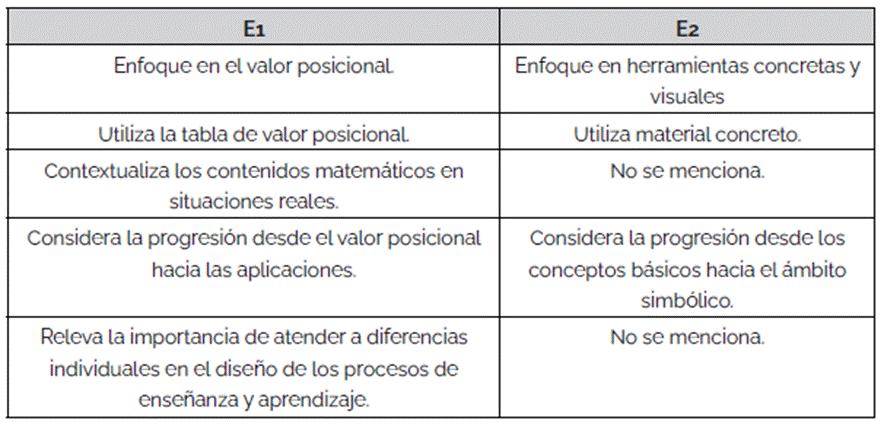
Teaching large numbers in primary education poses both conceptual and pedagogical challenges, particularly when integrated with mathematical competencies such as modelling. This qualitative study explores how two fifth-grade teachers incorporate modelling into their instruction and what strategies they use to link content with meaningful, real-life situations. Semi-structured interviews were conducted with in-service teachers to examine their pedagogical approaches, use of materials, types of tasks, and student difficulties related to understanding large numbers. Findings reveal two contrasting practices: one grounded in real-world contexts, supported by structured modelling stages and visual representations; and another, more symbolic and fragmented, focused on operations. Both cases reflect gaps in initial teacher education, particularly in designing authentic modelling tasks and selecting appropriate instructional materials. The discussion highlights the need to strengthen teacher training programs by integrating modelling as a central pedagogical tool. Promoting teaching practices that connect mathematics with real-world contexts can foster a deeper, more structured understanding of mathematical concepts. This study contributes valuable insights for developing effective educational strategies and enhancing teacher preparation programs aligned with current challenges in school mathematics.
Keywords:
mathematical modelling; primary education; teacher training; mathematics didactics; mathematical representation; teaching strategies
 Thumbnail
 Thumbnail