Beliefs About English Learning Among Pedagogy and Translation Studies Students
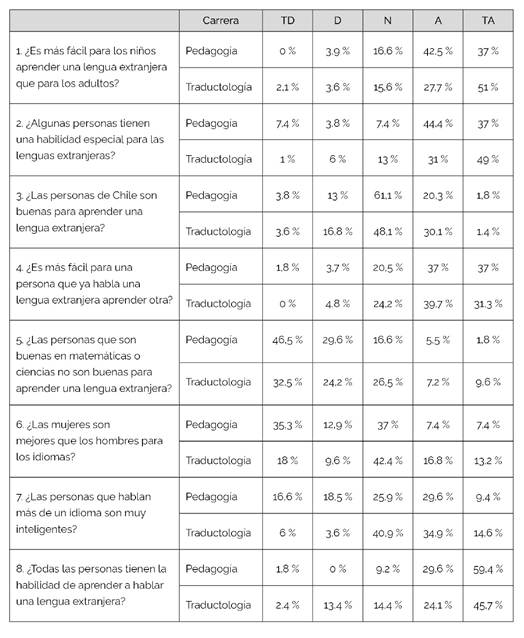
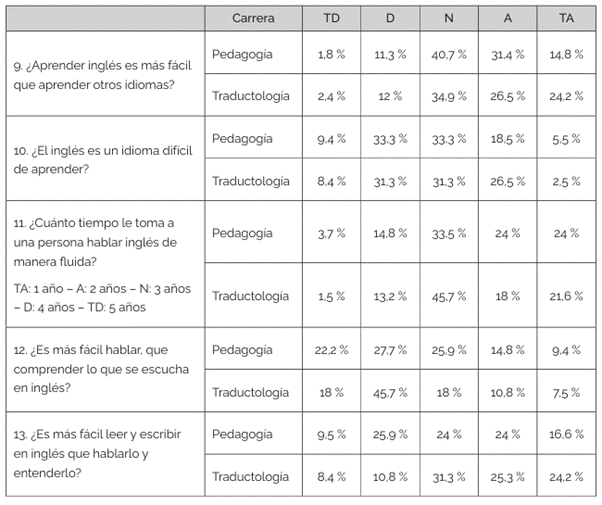
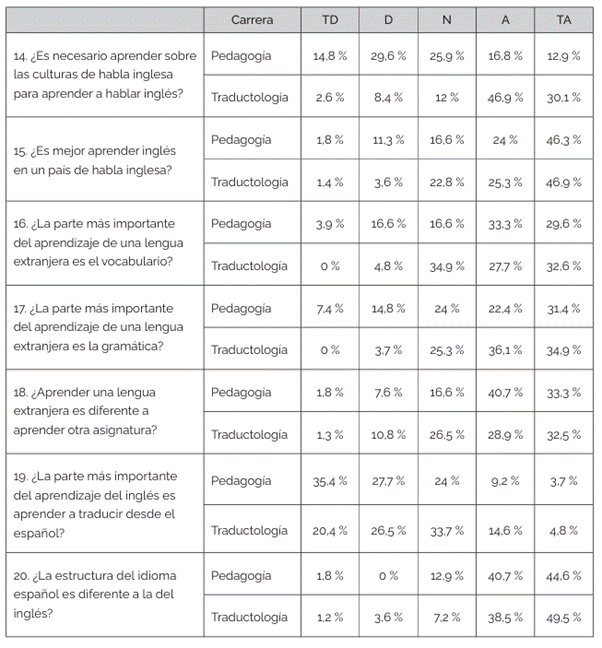
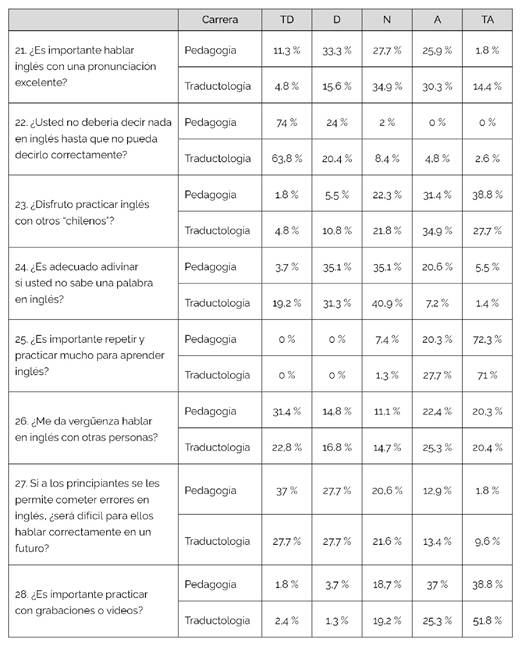
Beliefs are based on ideas that individuals construct through their experiences and interactions with the environment, and these can influence both academic and professional processes. This study sought to identify and compare the beliefs regarding English language acquisition of students from two different undergraduate programs in which learners focus on the study of English as a foreign language (EFL): English Pedagogy and English-Spanish Translation and Interpretation. This involved a quantitative, descriptive method with 137 students from two Chilean universities. An adapted version of the BALLI (Beliefs About Language Learning Inventory) instrument across five dimensions was utilized: foreign language aptitude; the difficulty of language learning; the nature of language learning; learning and communication strategies; and motivation and expectations. The results highlight similarities-such as the importance of practice and confidence in learning-but also key differences related to the perceived difficulty of specific English skills and the value placed on learning culture. This research informs the development of multidisciplinary approaches that facilitate a more supportive and effective English learning experience in these professional fields.
Keywords:
beliefs about language learning; English as a foreign language; BALLI; undergraduate learners; pedagogy; translation; English teaching