Stroke Unit at the Hospital de Clínicas: clinical-epidemiological behavior in patients with stroke (2007-2012)
Abstract
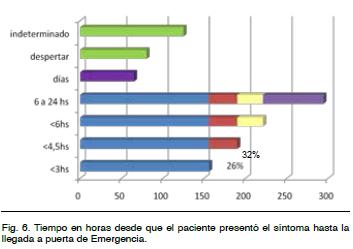
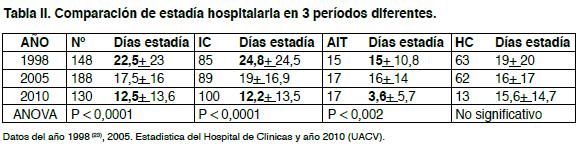
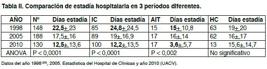
Introduction: stroke is a major cause of mortality, disability and dementia all over the world as well as in our country. It has a significant economic impact due to direct or indirect costs. Objectives: to describe clinical aspects, risk factors and indicators allowing an adequate management of stroke in the acute phase. Material and Methods: we performed a prospective descriptive study of all stroke patients admitted into the Hospital de Clínicas from 2007 to 2012 using a protocol with clinical, etiopathogenic and functional scales and adequate statistical tests. Results: The protocol was used on 784 patients: 75% with brain infarcts, 16% with hemorrhages and 9% with TIA. High blood pressure was the most frequent risk factor. One third of the patients arrived at the ER before 4 ½ hours. Hospital stay days were reduced in strokes infarctions and TIAs and functionality was improved to 6 months. Conclusions: the setting up of teams trained in the diagnosis and treatment of stroke reduced the number of days of stay at hospital as well as the outcome of these patients.
Stroke infarction; TIA; Stroke Unit; Cerebral infarction; Cerebral hemorrhage
 Thumbnail
 Thumbnail