Molecular analysis of the Uruguayan families with Huntington’s Disease
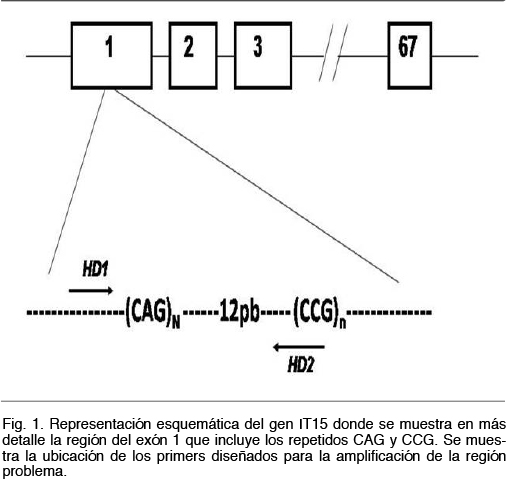
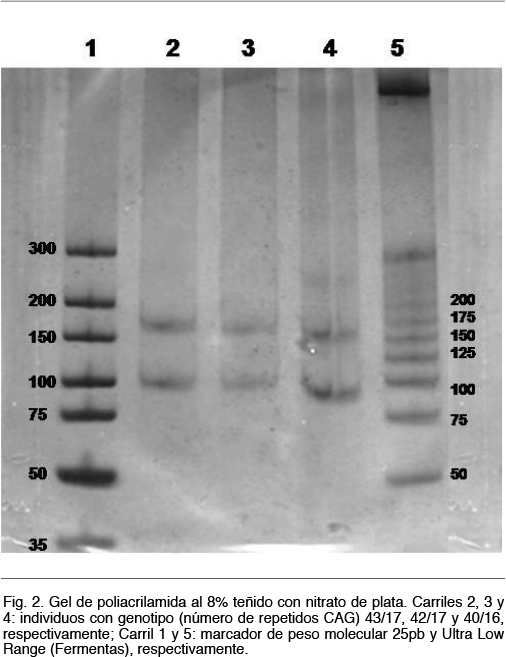
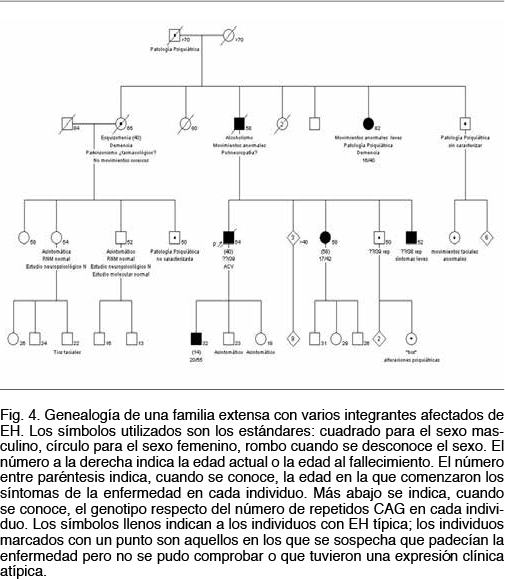
Introduction: Huntington disease (HD) is a neurodegenerative disorder with an autosomal dominant inheritance mode, complete penetrance and variable clinical expressivity. The estimated prevalence is 1 to 4 per 100.000 individuals. It is caused by a CAG triplet expansion in exon 1 of the IT-15 gene which codes for a protein with an enlarged polyglutamine region. This leads to the formation of protein aggregates in the cell nucleus and induces apoptosis. Normal alleles show less than 26 CAG repeats, and those over 40 always lead to the disease. Alleles with 26 to 36 repeats are considered normal “mutable” alleles and those between 36 to 39, are considered in a gray zone with increased risk of developing the disease. Aims: To develop a diagnosis of HD in a uruguayan population and determine the exact size of the mutation in clinically affected subjects using molecular biology techniques. Methods: Patients were derived from Neurology Clinic of the “Hospital de Clínicas”. The determination of the CAG repeat number was done using polymerase chain reaction (PCR) technique, subsequent analysis on polyacrilamide gels and sequencing. Results: We performed the molecular diagnosis in 18 patients with clinical suspicion of HD. Fifteen of them had a previous clinical diagnosis and one had no symptoms. Besides, in two additional individuals this test allowed us to discard HD. Conclusions: A molecular diagnostic for HD disease was developed for the first time in our country. This test is of great clinical utility as a confirmatory, etiological, or differential diagnosis.
Huntington’s disease; Neurogenetics; Clinical Genetics; Molecular genetics; Dynamic mutations
 Thumbnail
 Thumbnail
 Thumbnail