Corn Stover Harvest Strategy Effects on Grain Yield and Soil Quality Indicators
Abstract
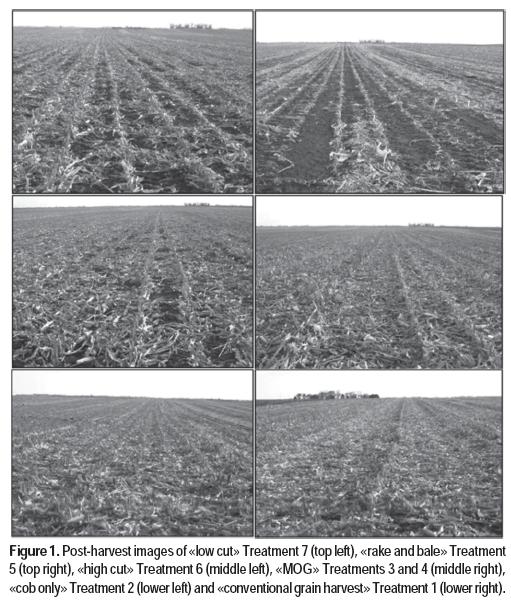
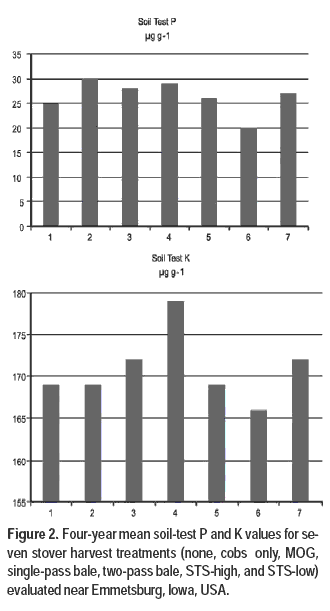
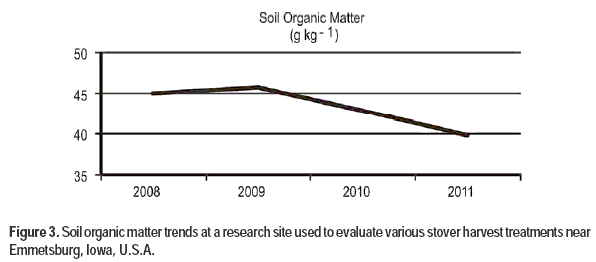
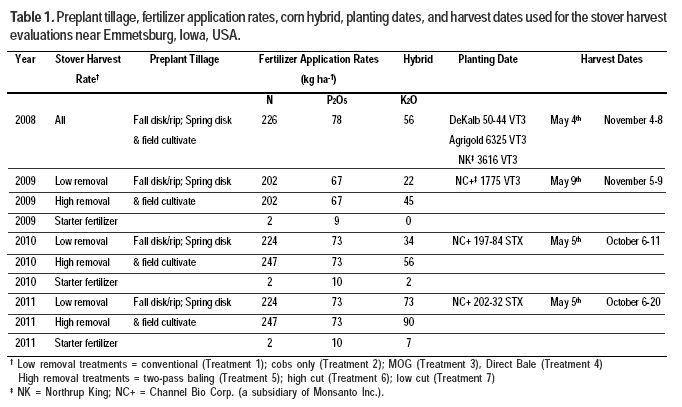
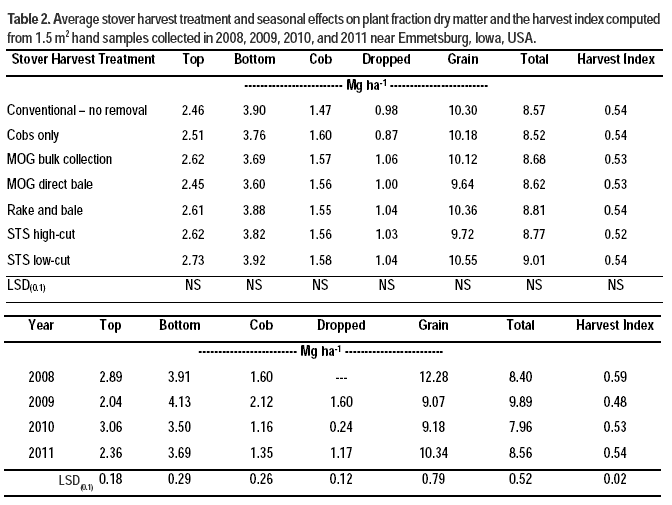
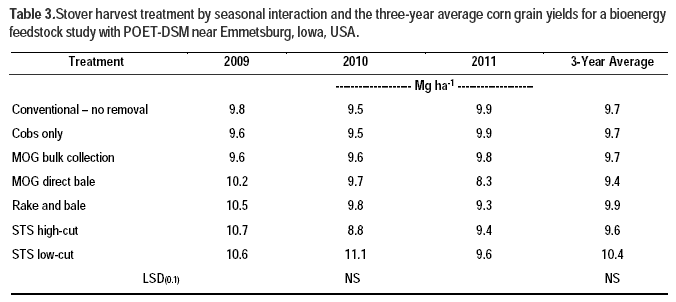
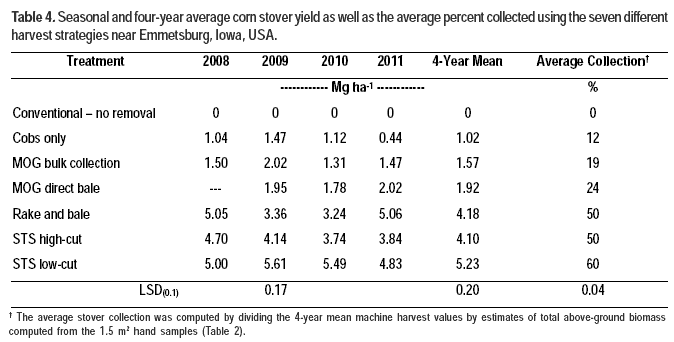
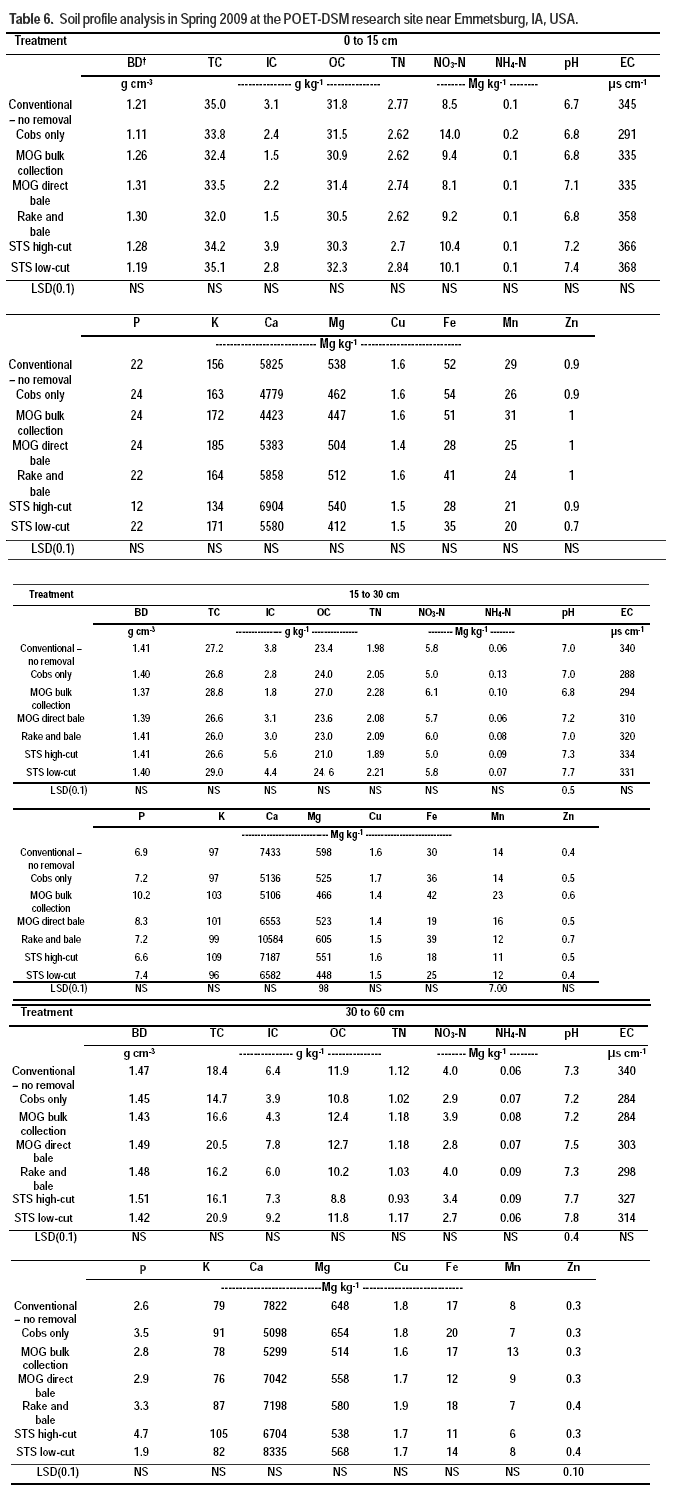
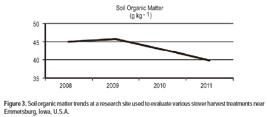
Developing strategies to collect and use cellulosic biomass for bioenergy production is important because those materials are not used as human food sources. This study compared corn (Zea mays L.) stover harvest strategies on a 50 ha Clarion-Nicollet-Webster soil Association site near Emmetsburg, Iowa, USA. Surface soil samples (0 to 15 cm) were analyzed after each harvest to monitor soil organic carbon (SOC), pH, phosphorus (P) and potassium (K) changes. Grain yields in 2008, before the stover harvest treatments were imposed, averaged 11.4 Mg ha-1. In 2009, 2010, and 2011 grain yields averaged 10.1, 9.7, and 9.5 Mg ha-1, respectively. Although grain yields after stover harvest strategies imposed were lower than in 2008, there were no significant differences among the treatments. Four-year average stover collection rates ranged 1.0 to 5.2 Mg ha-1 which was 12 to 60% of the above-ground biomass. SOC showed a slight decrease during the study, but the change was not related to any specific stover harvest treatment. Instead, we attribute the SOC decline to the tillage intensity and lower than expected crop yields. Overall, these results are consistent with other Midwestern USA studies that indicate corn stover should not be harvested if average grain yields are less than 11 Mg ha-1
BIOENERGY; BIOMASS; SUSTAINABLE FEEDSTOCK; SOIL MANAGEMENT; SOIL QUALITY
 Thumbnail
 Thumbnail
 Thumbnail