Different leaf water dynamics post-anthesis affects the final kernel weight in wheat
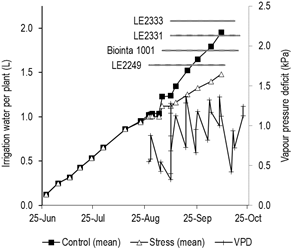
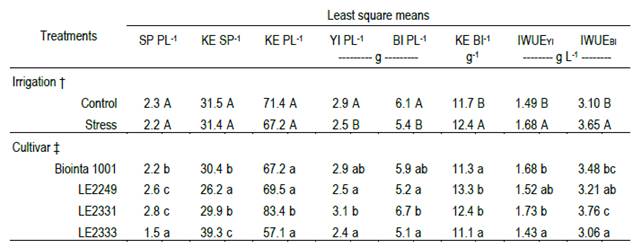
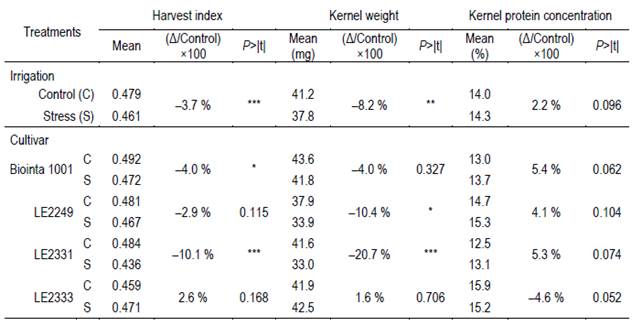
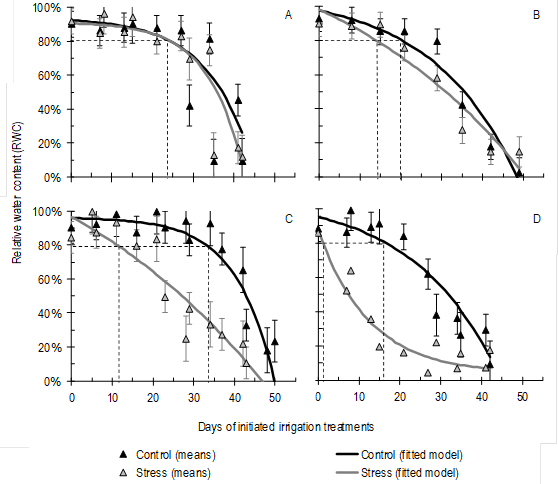
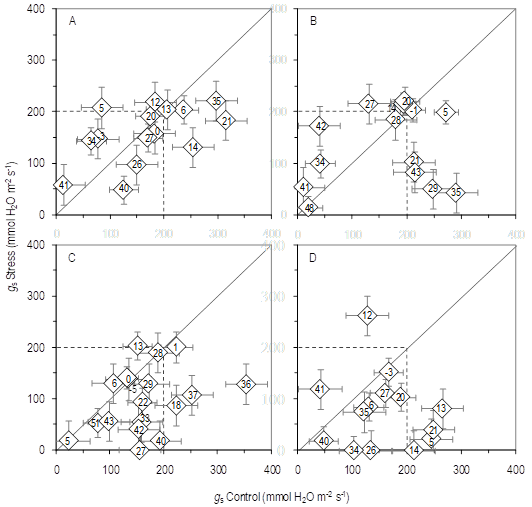
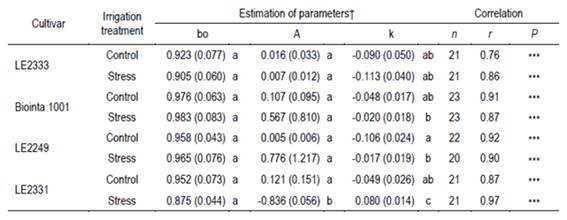
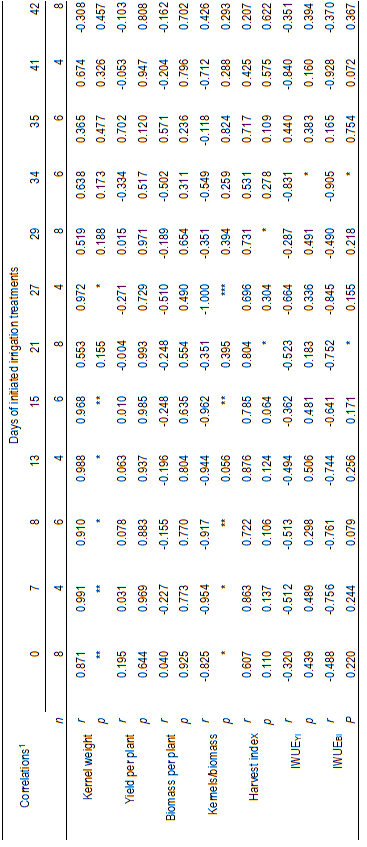
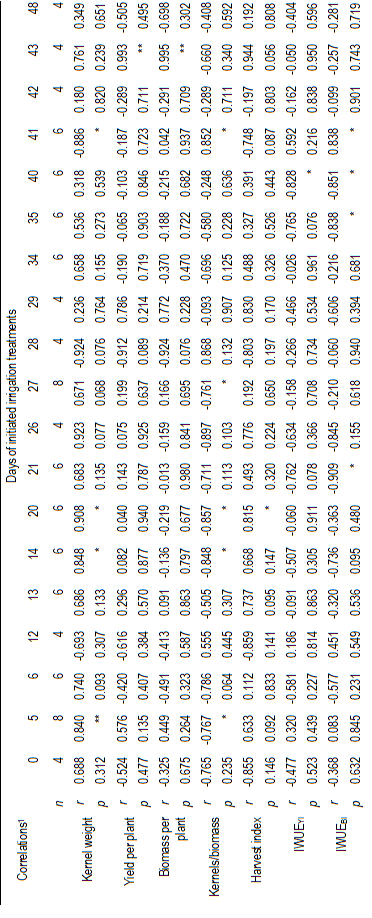
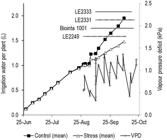
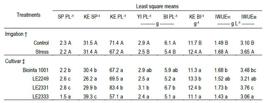
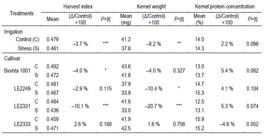
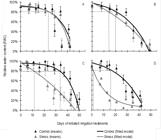
Drought stress during wheat (Triticum aestivum L.) grain filling can affect the grain yield and its quality; effects that in some regions can be increased by the event La Niña, the cold phase of the climatic phenomenon El Niño Southern Oscillation. The aim was to evaluate if the evolution of relative water content (RWC) and stomatal conductance (g s) can be related to grain yield and its quality. Four spring wheat cultivars grown in the southern cone of South America were subjected to two levels of irrigation applied after anthesis, a well-watered treatment (Control), and another with 50 % of the Control (Stress). RWC and g s were determined weekly during the stress period and agronomic traits at harvest. With a mean grain yield decrease of 14.8 % (P<0.05), two types of response to water deficit were identified for RWC and g s. Two cultivars (Biointa 1001 and LE2333) had slower RWC and g s decreases, which were related to a lower ratio of kernels to aerial biomass (P<0.05), and to a non-significant effect in kernel weight. While, in the other cultivars (LE2249 and LE2331), the water deficit caused a more rapid RWC and g s decrease related to a higher ratio of kernels to aerial biomass, and a significant kernel weight decrease (10.4 and 20.7 %, respectively). The latter cultivars, that had more rapid leaf dehydration under water stress, may also have been source-limited during the grain-filling period.
Keywords:
biomass allocation; relative water content (RWC); stomatal conductance (g s), Triticum aestivum; water stress
 Thumbnail
 Thumbnail
 Thumbnail
 Thumbnail
 Thumbnail
 Thumbnail
 Thumbnail
 Thumbnail