Energy Efficiency of Dairy Systems in Uruguay
Abstract
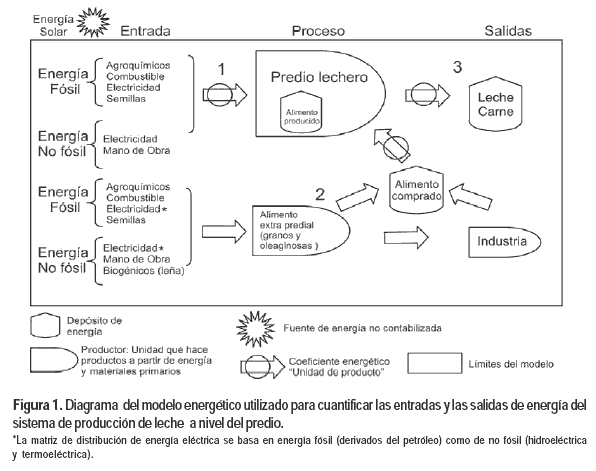
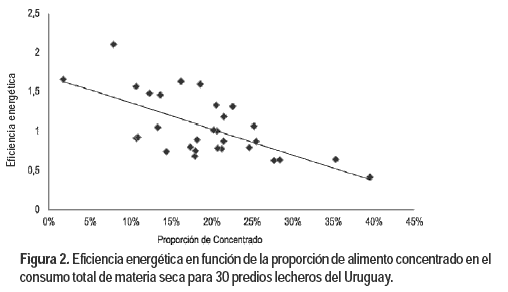
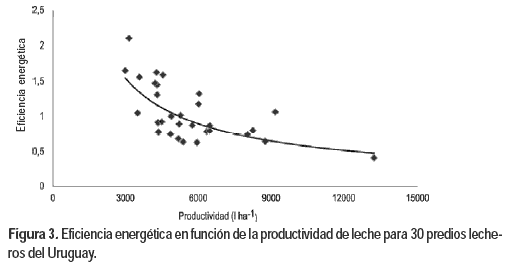
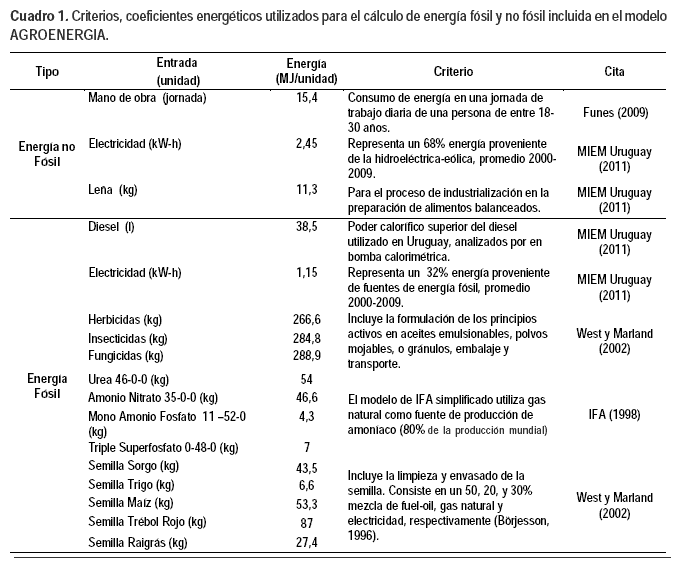
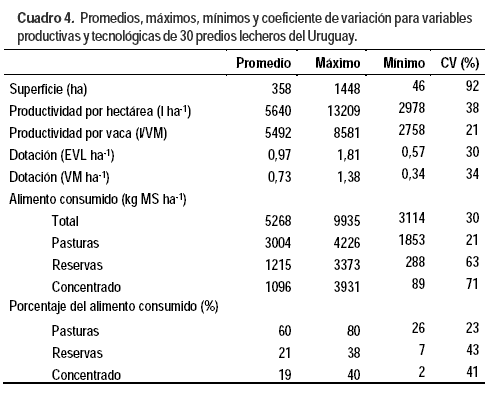
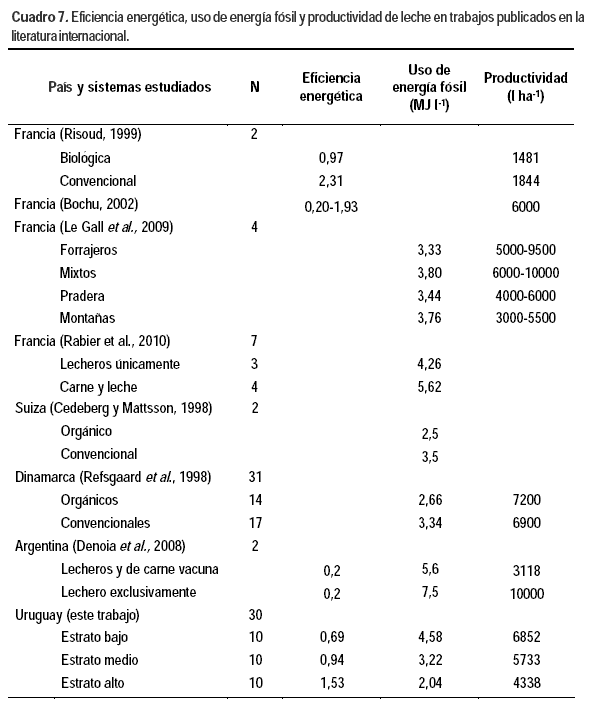
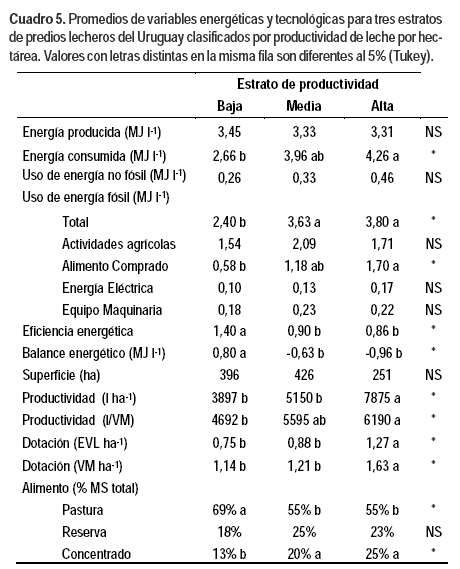
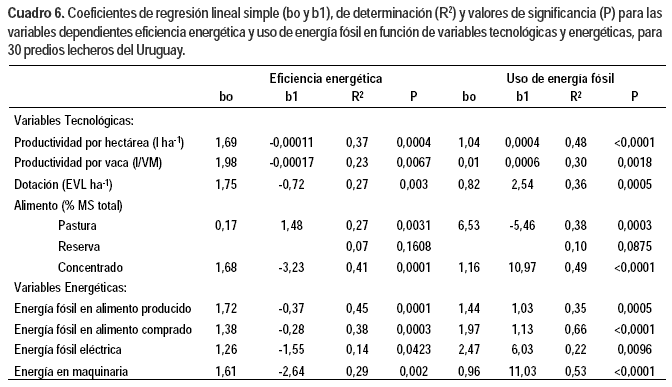
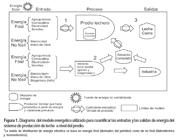
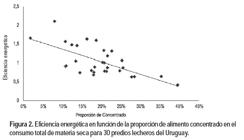
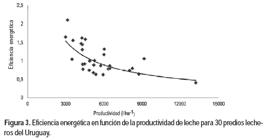
Reducing fossil fuel consumption and increasing energy efficiency of agricultural systems may result in environmental and economic benefits. The aim of this study was to analyze dairy production systems from an energy perspective, to identify the main variables affecting energy efficiency and fossil energy consumption, through a model of inputs and outputs. The model included as inputs energy costs of food, labor, electricity, agrochemicals, fuels and machinery, and as outputs dairy and meat production. We analyzed a database of 30 dairy farms from southern Uruguay, from the Cooperativa Nacional de Productores de Leche (Conaprole), organized in three strata based on their dairy productivity per hectare. The fossil energy use was 2.40, 3.63 y 3.80 MJ.l-1 for productivity strata low, medium and high respectively (P<0.01). Energy efficiency averages were 1.40, 0.90 y 0.86 for the same strata (P<0.01). Fossil energy of agrochemicals and fuel accounted for more than 80% of the energy consumed in the three strata. The greater the percentage of concentrate in the diet, the lower energy efficiency (P<0.01). These results suggest the existence of a negative relationship between the intensification of dairy production and energy efficiency.
FOSSIL ENERGY; ENERGY BALANCE; INTENSIFICATION; SUSTAINABILITY
 Thumbnail
 Thumbnail
 Thumbnail