Variability of Alfalfa (Medicago sativa L.) Seasonal Forage Production in the Southwest of Uruguay
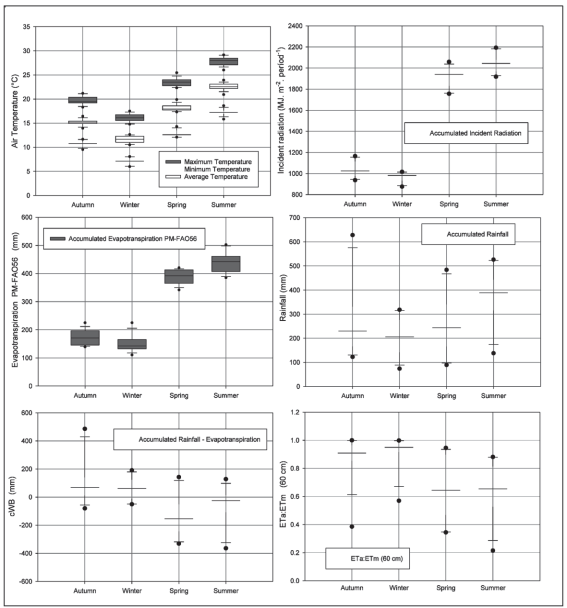
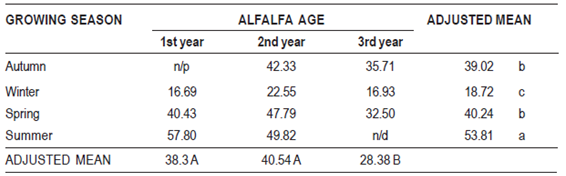
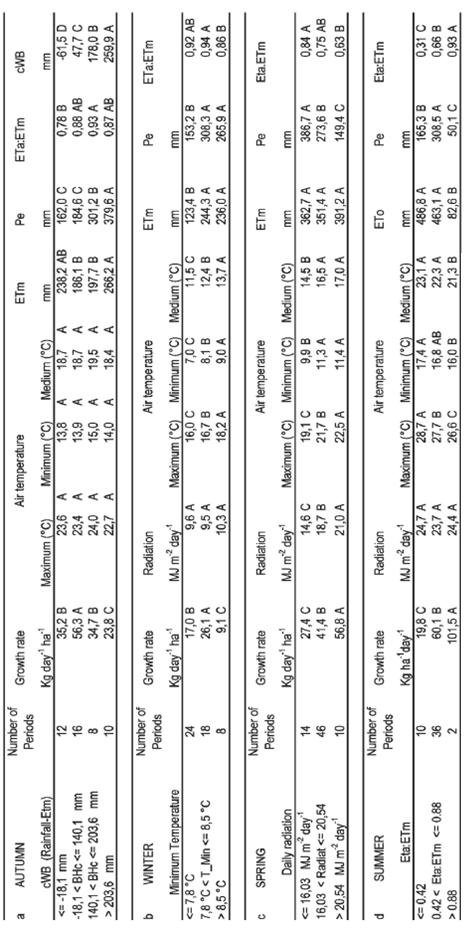
Weather conditions determine seasonal forage production. Air temperature, solar radiation, and soil water availability are the main variables affecting alfalfa growth. This study analyzed the relationship between alfalfa growth (Medicago sativa L.) and some climatic variables along 15 years (1997 to 2011) of production and climate data, collected in the southwest of Uruguay. The results highlighted that alfalfa growth rate (GR) presented significant differences among seasons and varied with pasture age. The alfalfa growth rate increased in autumn when the accumulated radiation was less than or equal to 1095 MJ m-2 period-1 and the difference between atmospheric demand and rainfall (cWB) was close to 0 mm. In winter, the GR increased with minimum temperatures up to 8.4 °C and daily average radiation higher than 11 MJ m-2 day-1. In spring the GR was higher during the years with daily radiation higher than 16 MJ m-2 day-1. Maximum air temperatures above 27.5 °C affected negatively summer GR. The highest GR (62.5 kg ha-1 day-1) was achieved in summer when the ETa:ETm ratio was close to one. This result suggests the implementation of field techniques that increase water-use efficiency, as well as summer irrigation as a management practice to achieve alfalfa forage potential.
Keywords:
water deficit; growth rate
 Thumbnail
 Thumbnail
 Thumbnail
 Thumbnail