Response of Olive (Olea europaea) Cultivars Against Venturia oleaginea Causing Olive Scab in Uruguay
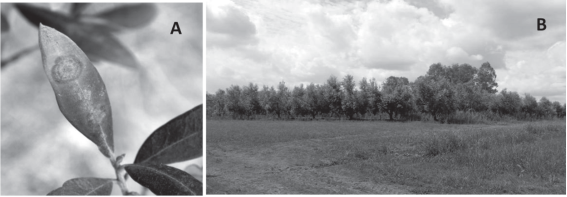
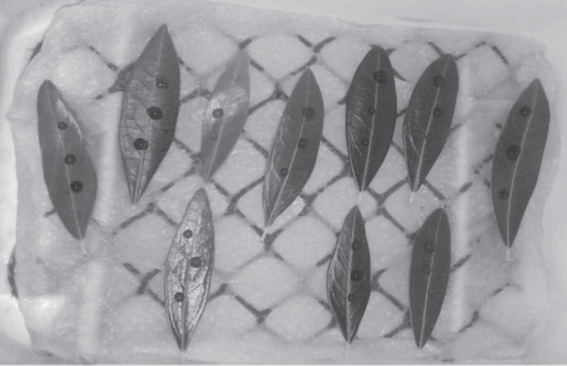
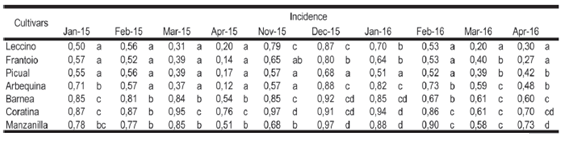
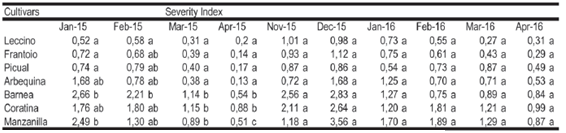
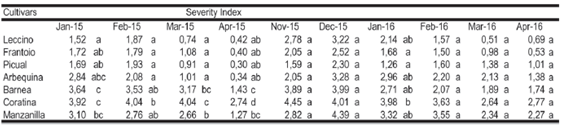
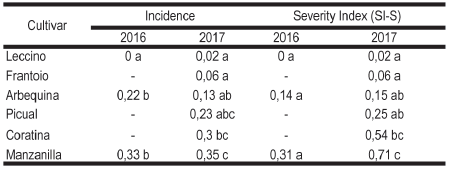
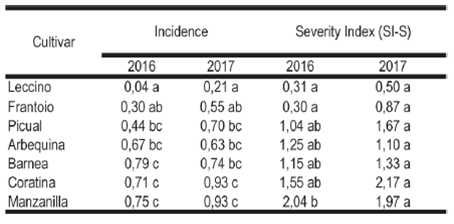
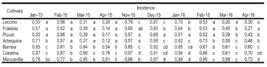
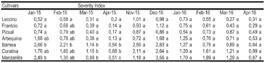
In Uruguay, the area cultivated with olive (Olea europaea) has increased in recent years reaching approximately 10,000 hectares. Among the foliar diseases favored by mild temperatures, high relative humidity, and abundant rainfall, olive scab or peacock spot caused by the fungus Venturia oleaginea is the most important. In 2015 and 2016, with the objective of knowing the response of olive cultivars introduced in Uruguay against this fungus, field, greenhouse, and laboratory trials were carried out. Disease incidence and severity were recorded based on a scale of the affected leaf area and/or the number of lesions per leaf, considering both visible and latent lesions after NaOH treatment. Results from field data, greenhouse and laboratory trials indicated that ´Frantoio´, ´Leccino´ and ´Picual´ were the cultivars with the best behavior against V. oleaginea. ´Arbequina´ had intermediate values while ´Barnea´, ´Coratina´ and ´Manzanilla´ were the most susceptible.
Keywords:
fungi; Venturiaceae; phytopathogens; foliar diseases; fruit crops
 Thumbnail
 Thumbnail
 Thumbnail
 Thumbnail
 Thumbnail
 Thumbnail
 Thumbnail
 Thumbnail