In vitro evaluation of the nematicide activity of the liquid fermentation of Purpureocillium sp. UdeA 0106 strain on pineapple and flower soils
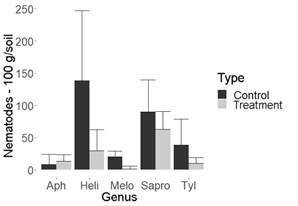
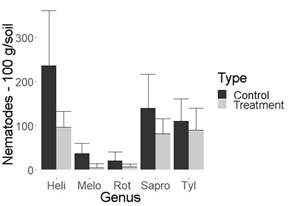
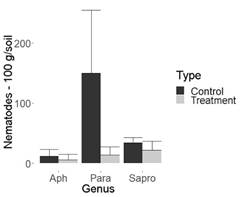
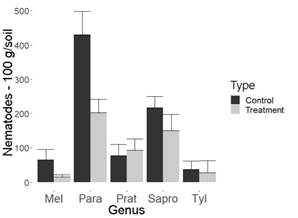
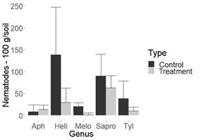
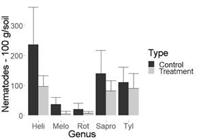
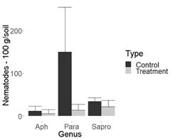
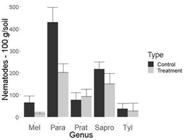
Colombia is recognized as an important agricultural producer of pineapple and flowers. One of the most significant phytosanitary problems of these crops is pathogenic nematodes and it is necessary to find biocontrol alternatives for their management. This study evaluated the effect of Purpureocillium sp., strain UdeA0106, over the number of nematodes. Soil from pineapple and flower crops was collected on expanded polystyrene containers and suspension of the fungi was multiplied in a bioreactor (1x10⁸ conidia/mL), then homogenized and finally applied. The control consisted of the containers with soil and sterile distilled water (SDW) and 4 to 6 repetitions were evaluated on each crop. The number of individuals of each genus on 100g of soil was analyzed using R studio®, Kruskal-Wallis, and van der Waals tests were applied to evaluate significant differences between strain and control (P=0.05). The results showed that the strain did not affect the saprophytic nematodes but decreased the number of Meloidogyne spp., Paratylenchus spp., Helicotylenchus spp., and Tylenchus spp; no biocontrollers had been reported before for the last two genera.
Keywords:
biocontrol; biocontroller fungi; Purpureocillium spp.; pineapple; flowers
 Thumbnail
 Thumbnail
 Thumbnail
 Thumbnail