The 2007 Uruguayan Soil Classification Changes the Inference of Vertisols and Brunosols Properties
Abstract
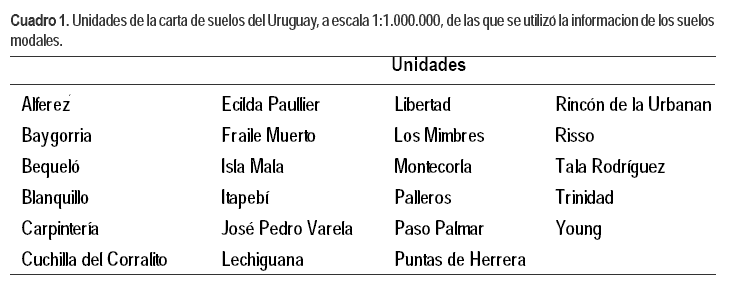
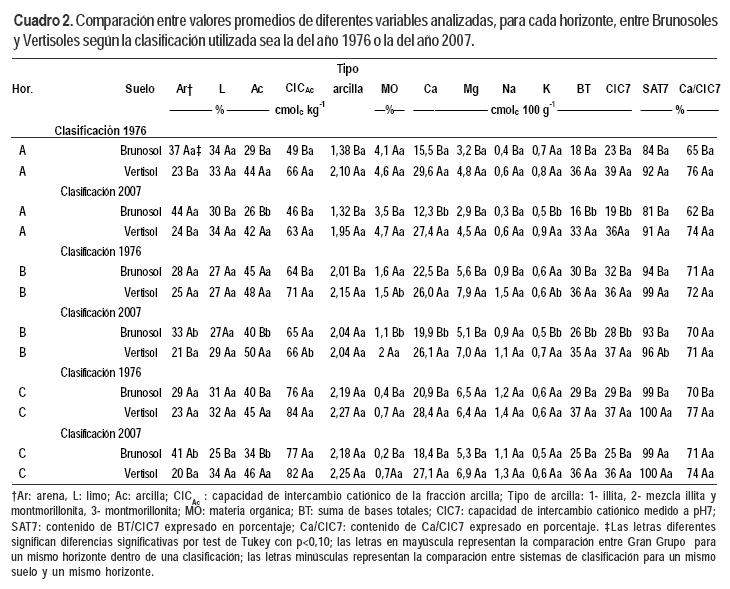
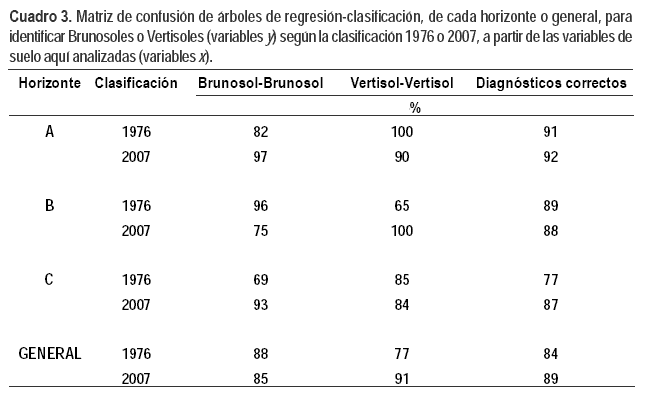
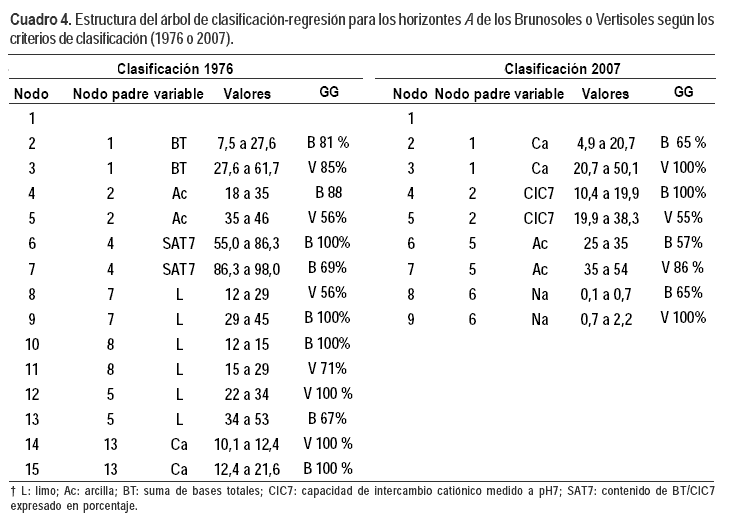
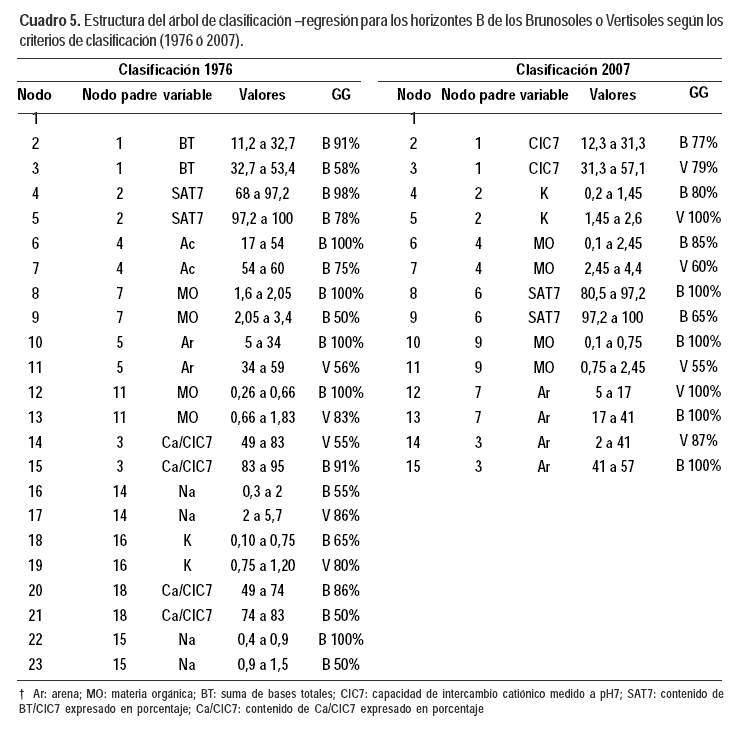
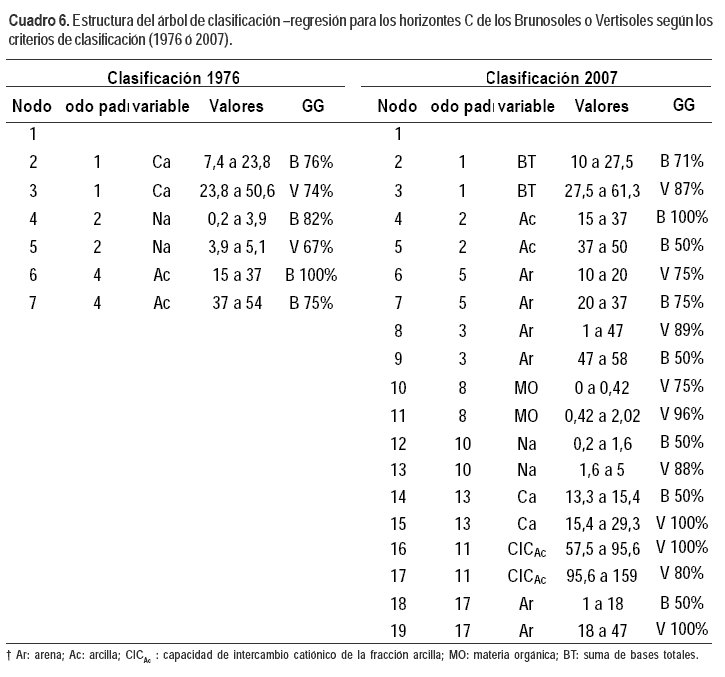
Altamirano et al. (1976a) soil classification sets the clay content limit for Vertisols at 35 %. Durán and García Préchac (2007) propose to reduce this to 30 % in the entire solum, in order to bring the national classification closer to the international tendency. To evaluate the effect of this change on the characteristics associated to Vertisols, I used modal soil analysis data of the map units of ‘Carta de Reconocimiento de Suelos del Uruguay’ that included both the Great Groups ‘Brunosols’ and ‘Vertisols’. I compared the changes in Great Group mean percentages of: sand, silt and clay; Ca, Na, Mg, K and total bases; CEC at pH=7, base saturation, percentage of CECpH7 represented by Ca; and the type of clay estimated. With the 2007 classification, there would be less specificity in the nature of the B horizons, which could negatively affect the understanding of their physical behavior. However, from the point of view of production, it would allow to differentiate a greater number of variables, especially in the A horizon. With these variables the superior natural fertility of Vertisols could be inferred. Soil classification 2007 presented a higher inference capacity to determine the Great Group expected from a set of quantifiable analysis variables. This aspect introduces greater objectivity, practicality and reliability to the new soil classification.
DURÁN 2007; MELANIC SOILS